The Hydrodynamic Failure: Why Fluid Starvation Destroys Axles
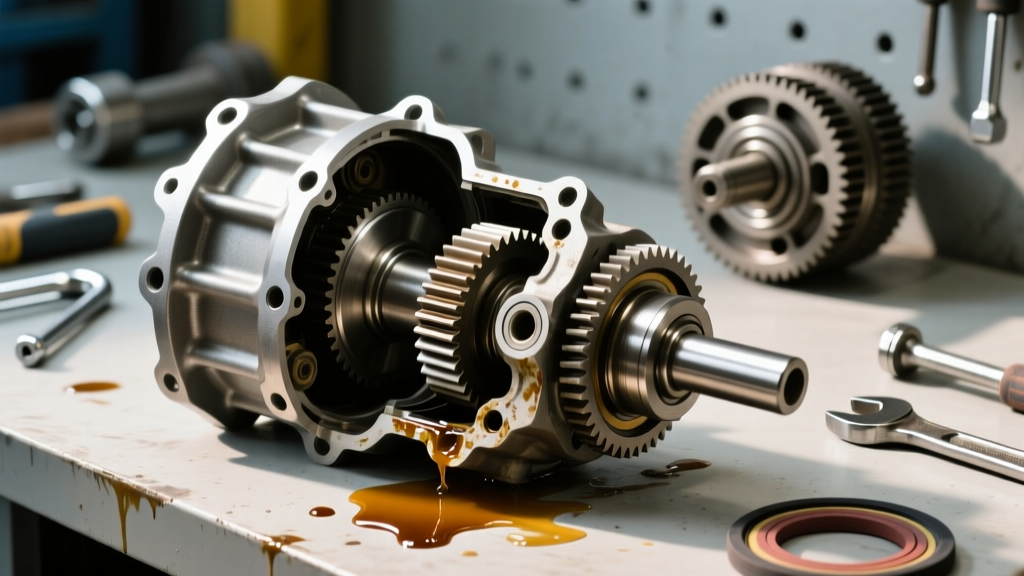
When a customer complains of a low differential fluid sound, they are typically describing a high-frequency whine, a rhythmic rumble, or a pronounced howl that changes pitch with vehicle speed. As drivetrain specialists, we know that this acoustic signature is not merely a nuisance; it is the audible result of hydrodynamic lubrication failure. In a standard solid-axle or independent rear suspension (IRS) differential, the ring gear acts as a slinger, relying on splash lubrication to coat the pinion bearings, carrier bearings, and gear teeth.
When the fluid level drops even 0.5 quarts below the fill plug threshold, the pinion bearings—which sit higher in the housing—are the first to starve. Without a sufficient hydrodynamic wedge of GL-5 gear oil to separate the bearing rollers from the races, metal-on-metal contact occurs. The extreme pressure (EP) additives, typically zinc and phosphorus-sulfur compounds, are overwhelmed by localized heat spikes exceeding 250°F (121°C), leading to rapid micro-pitting and eventual catastrophic spalling of the ring and pinion gears.
Acoustic Mapping: Identifying the Low Differential Fluid Sound
Diagnosing differential noise requires isolating the sound based on load state, vehicle speed, and frequency. A low differential fluid sound often mimics mechanical wear, but specific auditory clues can help you determine if the issue is purely fluid starvation or if permanent mechanical damage has already occurred.
| Acoustic Signature | Load State | Probable Failure Mode / Starvation Point | Expert Action |
|---|---|---|---|
| High-pitch whine (siren-like) | Deceleration (coasting) | Pinion bearing preload loss; pinion gear tooth wear from oil starvation. | Check pinion snout temp; inspect pinion nut torque. |
| Low-frequency rumble | Above 20 mph (any load) | Carrier bearing starvation; differential case flexing under load. | Verify fluid level; inspect carrier bearing caps for fretting. |
| Rhythmic chirping or clicking | Acceleration | Ring gear runout; localized spalling on ring gear teeth due to EP additive depletion. | Fluid change will not fix; requires gear replacement. |
| Clunking on load reversal | Shifting Drive to Reverse | Excessive backlash; cross-pin and spider gear wear from lack of splash lubrication. | Measure backlash with dial indicator; inspect LSD clutches. |
Advanced Diagnostic Protocol for Drivetrain Specialists
Before pulling the differential cover or dropping the third member, execute this non-invasive diagnostic protocol to confirm the root cause of the noise.
1. Thermal Imaging (FLIR) Analysis
Use an infrared thermal camera to scan the differential housing after a 20-mile highway drive. Under normal conditions, the differential carrier and pinion snout should read between 140°F and 180°F. If the fluid is low, the pinion snout will often show a localized thermal hotspot exceeding 220°F due to the starved pinion bearings generating excessive friction. Compare the pinion snout temperature to the differential cover; a variance of more than 40°F indicates targeted lubrication failure.
2. Acoustic Stethoscope Isolation
Using a mechanic's stethoscope (such as the OTC 7225 or an electronic chassis ear), probe the pinion housing and the carrier bearing caps while the vehicle is running on a lift at 30 mph. A low differential fluid sound originating specifically from the pinion snout confirms upper-bearing starvation, whereas noise radiating from the carrier bearings points to a general fluid level drop or degraded fluid viscosity.
3. Fluid Tribology and Metallurgical Inspection
When you extract the fluid, do not just check the level; analyze the debris.
- Brass/Gold flakes: Indicates synchro or thrust washer wear. In differentials, this points to spider gear thrust washers failing due to low fluid.
- Steel wool / fine metallic paste: Normal for the first 30,000 miles, but excessive paste indicates the GL-5 EP additives have sheared and broken down.
- Chunky ferrous metal: The low differential fluid sound has progressed to bearing cage disintegration or gear tooth shear. A rebuild is mandatory.
Reference Chart: Common Axle Capacities and Torque Specifications
Proper refilling is critical. Overfilling can cause fluid aeration and seal blowouts, while underfilling restarts the starvation cycle. Below are exact specifications for common light-truck and SUV axles.
| Axle Model | Fluid Capacity | Fill Plug Torque | Cover Bolt Torque | Fluid Spec & Additive |
|---|---|---|---|---|
| GM 8.6' 10-Bolt | 2.4 Pints | 24 lb-ft | 22 lb-ft (Star Pattern) | 75W-90 GL-5 + GM 10-9004 (if LSD) |
| Ford 8.8' Super 8.8 | 2.5 Pints | 25-33 lb-ft | N/A (Drop-out carrier) | 75W-140 Synthetic + Ford XL-3 |
| Dana 44 (JK/JL Wrangler) | 2.0 Pints | 25-35 lb-ft | 30 lb-ft (RTV Sealant) | 80W-90 GL-5 + Mopar 04318060AD |
| GM 9.5' / 9.76' 14-Bolt | 3.5 Pints | 24 lb-ft | 25 lb-ft | 75W-90 GL-5 Synthetic |
Corrective Action: Best Practices for Refilling and Sealing
If your diagnosis confirms that the low differential fluid sound was caused by a leak or neglected maintenance, and the gears have not yet suffered spalling, follow these expert service practices:
Expert Tip: Never use a squeeze bottle to fill a differential. The air pockets created by makeshift tubes lead to inaccurate fill levels. Always use a dedicated fluid pump, such as the Mityvac MV6840, to push fluid into the axle until it reaches the exact bottom lip of the fill hole. Allow the fluid to sit for 5 minutes to let trapped air escape, then top off if necessary before torquing the fill plug.
Limited-Slip Differential (LSD) Friction Modifier Protocol
If the axle is equipped with a clutch-type limited-slip differential (e.g., Eaton Positraction, Ford Traction-Lok), the friction modifier is not optional. Without it, the clutches will grab and release rapidly, creating a 'chatter' that customers frequently misdiagnose as a low differential fluid sound.
- Add the exact OEM friction modifier (typically 4 oz) before pumping in the base gear oil.
- Perform 10 slow, tight figure-eight turns in a parking lot immediately after service to work the modifier into the clutch packs.
- Note: Torsen (helical gear) and Detroit Locker differentials do not require friction modifiers. Adding them to a Torsen unit can actually reduce the bias ratio and cause gear slip.
Sealing the Differential Cover
For axles utilizing RTV silicone rather than a pre-cut gasket, surface prep is paramount. Clean both the axle housing and cover mating surfaces with brake cleaner and a brass wire brush. Apply a continuous 3/16-inch bead of high-temp RTV (such as Permatex Ultra Black) around the bolt holes and outer perimeter. Torque the cover bolts in a crisscross star pattern in three progressive steps (10 lb-ft, 15 lb-ft, and final spec) to prevent housing distortion and subsequent fluid weeping.
When to Recommend a Rebuild Over a Fluid Service
It is vital to manage customer expectations. If the low differential fluid sound has been present for several thousand miles, the ring and pinion gear teeth have likely suffered irreversible micro-pitting. According to drivetrain engineering standards, once the case-hardened surface of a gear is breached, the softer core steel is exposed. This leads to rapid fatigue and tooth shearing. In these scenarios, a fluid change will only temporarily mask the whine by dampening the acoustic resonance. The only permanent fix is a complete ring and pinion replacement, including new carrier and pinion bearings, crush sleeves, and a precise backlash setup using a dial indicator.
For further technical specifications on gear patterns and lubrication requirements, consult the Dana Spicer Drivetrain Lubrication Guidelines and the Ring-Pinion Technical Support Database. Proper diagnosis of axle noise separates parts-changers from true drivetrain experts, ensuring the longevity of the vehicle's final drive assembly.