The Anatomy of Clutch Pedal Vibration on GM LS/T56 Platforms
When enthusiasts and daily drivers of GM LS-powered vehicles—specifically those equipped with the Tremec T56 Magnum or TR-6060 transmissions—experience clutch pedal problems, the immediate suspect is often the hydraulic system. However, a vibrating, abnormally hard, or suddenly spongy clutch pedal is frequently the secondary symptom of a catastrophic mechanical failure deep inside the bellhousing: a seized clutch pilot bearing.
In the 2010–2015 Camaro SS, C6 Corvette, and Holden Commodore SS platforms, the pilot bearing serves a critical role. It supports the tip of the transmission input shaft within the crankshaft flange, ensuring perfect rotational alignment between the engine and the gearbox. When this component fails, it fundamentally alters the mechanical feedback loop, translating directly into severe clutch pedal anomalies. As of 2026, with many of these LS/T56 vehicles crossing the 100,000-mile threshold, original equipment (OE) pilot bearings are reaching the end of their service life, making accurate diagnosis essential before secondary damage destroys the transmission input shaft or the hydraulic slave cylinder.
Why the Clutch Pilot Bearing Dictates Pedal Feel
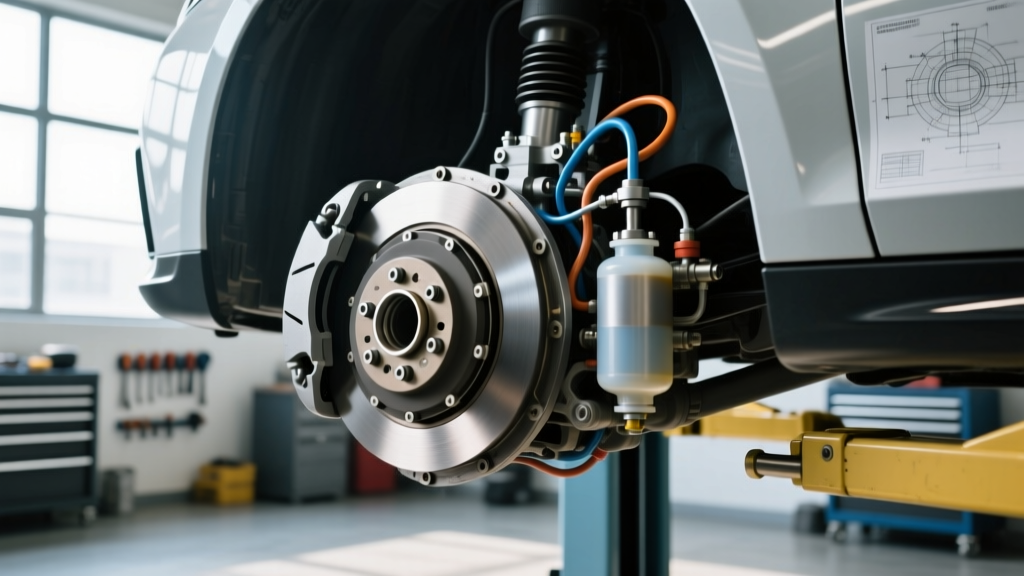
The clutch pedal is connected to the master cylinder, which pushes fluid to the concentric slave cylinder (CSC) or external slave. This actuates the release bearing against the diaphragm spring fingers of the pressure plate. If the clutch pilot bearing seizes, the transmission input shaft becomes effectively welded or bound to the rotating crankshaft. When you press the clutch pedal, the release bearing attempts to pull the clutch disc away from the flywheel, but the disc remains friction-locked and rotationally dragged by the bound input shaft. This immense rotational resistance fights the hydraulic pressure, resulting in a pedal that feels like it is vibrating violently or hitting a solid brick wall.
Symptom Matrix: Pilot Bearing vs. Hydraulics
Misdiagnosing a mechanical bind as a hydraulic issue leads to wasted labor and blown master cylinders. Use the following diagnostic matrix to isolate the root cause of your clutch pedal problems.
| Pedal Symptom | Mechanical Reality | Pilot Bearing Involvement | Secondary Damage Risk |
|---|---|---|---|
| Violent Vibration (Engine running, pedal depressed) | Input shaft wobbling or clutch disc shuddering against the flywheel due to uneven drag. | High. Needle bearings or ball cages have shattered, causing severe misalignment. | Transmission input shaft bearing wear; bellhousing runout. |
| Hard Pedal (Cannot push past mid-travel) | Input shaft galling; clutch disc splines bound to the shaft, preventing disengagement. | Critical. The inner race has seized to the input shaft tip. | Bent clutch fork (if external); shattered diaphragm spring fingers. |
| Spongy / Dead Pedal (Sudden loss of pressure) | Hydraulic seal bypass or rupture due to excessive back-pressure from a mechanical bind. | Indirect. The seized bearing caused the hydraulic system to over-pressurize and fail. | FTE Concentric Slave Cylinder (CSC) blowout; master cylinder seal failure. |
Model-Specific Diagnostic Protocol (Camaro SS / SS Sedan)
Before dropping the transmission on a GM LS3/L99 platform, perform these non-invasive diagnostic steps to confirm clutch pilot bearing failure.
Step 1: The "Engine Off vs. Engine On" Pedal Test
With the engine OFF, press the clutch pedal. On a healthy T56/TR-6060 setup, the pedal should feel smooth, with a distinct engagement point and roughly 10-15 lbs of initial resistance, ramping up to 45-60 lbs at the firewall. Now, start the engine and press the pedal again. If you feel a high-frequency buzzing or violent vibration traveling up the pedal arm the moment the engine fires, the input shaft is spinning inside a destroyed pilot bearing. The vibration is transmitted through the release bearing, down the hydraulic fluid column, and into the pedal.
Step 2: The Gear Engagement Crunch Test
With the engine running and the pedal fully depressed, attempt to shift into first or reverse. If the gears grind aggressively despite the pedal being on the floor, the clutch is not disengaging. While this can indicate air in the hydraulic lines, combined with pedal vibration, it almost guarantees the clutch disc is being dragged by a seized pilot bearing.
Step 3: Hydraulic Bypass Check
If the pedal was hard yesterday but is spongy and on the floor today, do not assume a simple leak. The GM FTE concentric slave cylinder (Part #19300040) operates under immense pressure. When a pilot bearing seizes, drivers often use two feet to force the pedal down. This spikes the hydraulic pressure past 1,500 PSI, blowing the internal seals of the CSC or the master cylinder (GM #92245495). The spongy feel is the aftermath of the mechanical bind destroying the hydraulics.
Precision Repair Guide: Extracting and Seating the Bearing
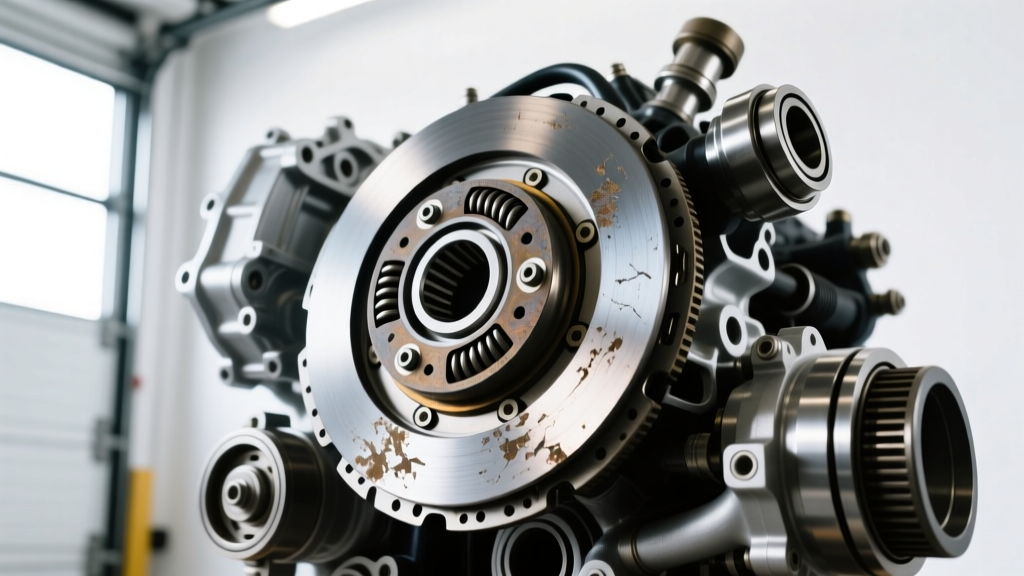
Once the transmission is removed, inspect the input shaft tip. If it is scored, blued from heat, or has metal shavings wrapped around it, the pilot bearing has failed. The OE GM pilot bearing (Part #12557583) is an open-style ball bearing that is highly susceptible to moisture ingress and dust contamination. For 2026 rebuilds, we mandate upgrading to a sealed bearing.
Critical Tooling and the "Grease Extraction" Method
LS crankshafts have a deep blind hole for the pilot bearing. Standard two-jaw pullers often fail to grip the small outer race. The most effective, field-proven extraction method is the hydraulic grease method:
- Clean the old bearing and the crankshaft flange area.
- Pack the center hole of the old bearing and the blind cavity behind it completely full of heavy, high-viscosity grease (e.g., Lucas Red 'N' Tacky).
- Insert a tight-fitting steel dowel, an old input shaft, or a specialized blind-hole bearing puller mandrel into the bearing bore.
- Strike the dowel sharply with a 3 lb dead-blow hammer. The incompressible hydraulic pressure of the grease will force the seized bearing out of the crankshaft flange cleanly.
Upgrading to Sealed Bearings and Depth Measurements
Replace the open OE bearing with a sealed SKF 6203-2RS or a National 202-FF sealed pilot bearing. These feature rubber contact seals that prevent the clutch dust and moisture that plague the LS platform.
Depth Specification: The pilot bearing must be seated flush to a maximum of 0.050 inches below the crankshaft flange surface. If seated too deep, the input shaft will bottom out against the crank, causing instant thrust bearing failure and severe pedal vibration. Use a dedicated pilot bearing installer tool that indexes off the crank flange to press the bearing in perfectly square.
Expert E-E-A-T Tip: Never use a hammer and socket to tap a new pilot bearing into the crankshaft. Striking the inner race or applying uneven force will Brinell the ball bearings, guaranteeing a vibrating pedal upon reassembly. Always use a threaded press tool or a machined installer that applies force exclusively to the outer race.
Bellhousing Runout: The Hidden Pilot Bearing Killer
Why do some LS/T56 platforms eat through pilot bearings every 20,000 miles? The answer is bellhousing misalignment. Tremec's T56 Magnum service guidelines dictate a maximum bellhousing runout of 0.005 inches. If the dowel pins on the LS block are misaligned, the transmission bellhousing sits slightly crooked. This forces the input shaft to bend microscopically to reach the pilot bearing, creating a side-load that destroys the bearing and causes chronic clutch pedal vibration.
During reassembly, mount a dial indicator to the crankshaft flange and measure the inside bore of the bellhousing. If runout exceeds 0.005 inches, install offset dowel pins (available in 0.007", 0.014", and 0.021" offsets from ARP or Lakewood) to dial in perfect concentricity.
Torque Specifications and Reassembly
Proper clamping force is vital to prevent harmonic vibrations that translate to the clutch pedal. Follow these exact torque specs for the GM LS/T56 platform:
- Flywheel to Crankshaft (OEM TTY Bolts): 59 lb-ft + 50 degrees of rotation. (Discard after one use).
- Flywheel to Crankshaft (ARP 200-2806): 85 lb-ft using ARP Ultra-Torque fastener assembly lubricant.
- Clutch Pressure Plate (M8 Bolts): 35 lb-ft in a crisscross star pattern.
- Bellhousing to Block (M10x1.5): 37 lb-ft (50 Nm).
2026 Cost Analysis: OEM vs. Aftermarket Solutions
Addressing clutch pedal problems rooted in the pilot bearing requires a holistic approach. Budgeting for the correct preventative parts will save thousands in secondary transmission repairs.
- OE GM Pilot Bearing (12557583): $18 (Not recommended due to open design).
- SKF 6203-2RS Sealed Upgrade: $14 (Highly recommended).
- FTE KN19546 Concentric Slave Cylinder: $145 - $185 (Mandatory replacement if pedal was forced while seized).
- Professional Shop Labor (R&R Transmission & Flywheel): $950 - $1,400 depending on regional 2026 labor rates.
By understanding the mechanical relationship between the clutch pilot bearing and the hydraulic feedback loop, technicians and owners can accurately diagnose pedal vibration and hard engagement, preventing catastrophic drivetrain failure on the GM LS/T56 platform.