The Verdict: Can Dirty Transmission Fluid Cause Shifting Problems?
The short answer is an unequivocal yes. If you are experiencing delayed engagements, harsh 2-3 upshifts, or torque converter clutch (TCC) shudder, degraded automatic transmission fluid (ATF) is often the primary culprit. Modern automatic transmissions are essentially hydraulic computers. They rely on precise fluid pressure and specific friction coefficients to command clutch packs and band servos. When fluid degrades, its viscosity breaks down, and its friction modifiers deplete, directly leading to erratic shift scheduling and mechanical slip.
In this preventive maintenance guide, we will explore the exact mechanical reasons behind fluid-induced shifting problems and provide a masterclass on how to check automatic transmission fluid across both traditional dipstick-equipped units and modern 'sealed' transmissions.
The Hydraulics of Shifting: Why Fluid Degradation Destroys Drivability
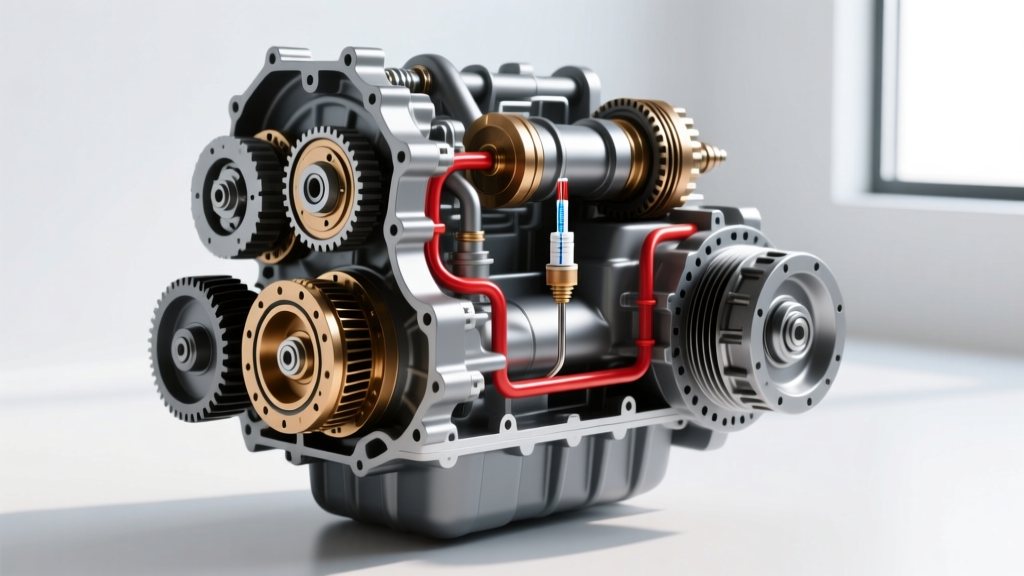
Automatic transmission fluid serves four critical roles: hydraulic actuation, lubrication, cooling, and friction modulation. Over time, thermal cycling and mechanical shear break down the fluid's chemical bonds.
- Varnish and Valve Body Clogging: As ATF oxidizes, it forms a sticky varnish. In complex valve bodies like the ZF 8HP mechatronic unit or the GM 6L80 TEHCM (Transmission Electro-Hydraulic Control Module), this varnish restricts the microscopic clearances inside shift valves and solenoids. A restricted solenoid cannot modulate line pressure smoothly, resulting in harsh, banging shifts.
- Friction Modifier Depletion: Clutch packs rely on specific friction modifiers to engage smoothly. When these additives burn off, the clutch material grabs aggressively or slips excessively, causing RPM flares between gears.
- Viscosity Loss: Thinned-out fluid bypasses the sealing rings on clutch pistons, leading to a loss of hydraulic pressure and delayed forward or reverse engagements.
How to Check Automatic Transmission Fluid: Two Distinct Methods
Checking ATF is not a one-size-fits-all procedure. The methodology depends entirely on the transmission architecture. Below are the precise protocols for the two most common designs.
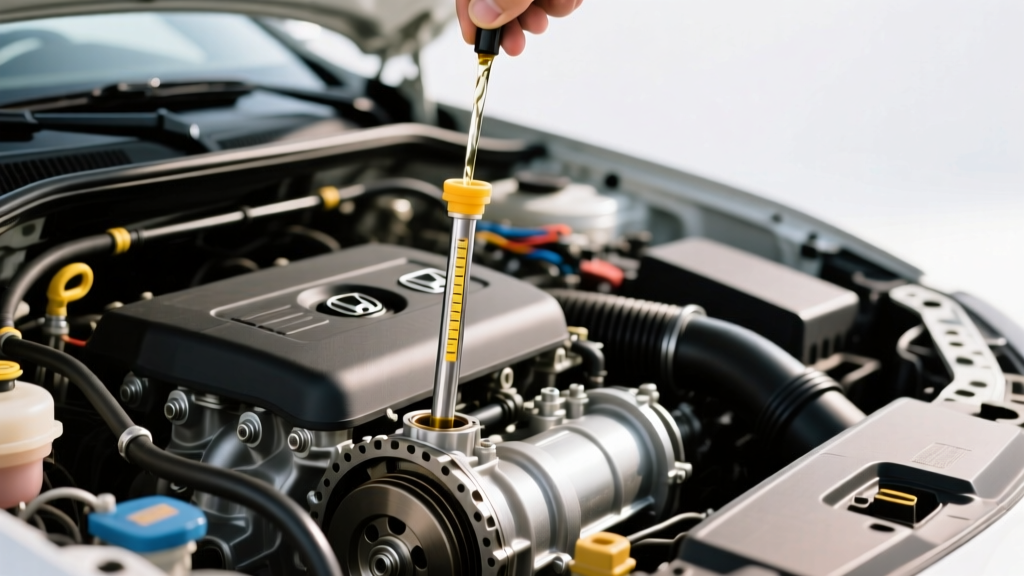
Method 1: The Traditional Dipstick (e.g., GM 4L60E, Early 6L80)
For transmissions equipped with a dipstick tube, accuracy relies heavily on temperature and operational state.
- Warm Up the Drivetrain: Drive the vehicle for at least 15 miles. The ATF must reach normal operating temperature, typically between 180°F and 200°F (82°C–93°C). Checking cold fluid will yield a falsely high reading.
- Cycle the Gears: With the engine idling and the parking brake engaged, move the shifter through every gear position (P-R-N-D-L), pausing for three seconds in each. This fills the clutch apply cavities and torque converter.
- Read the Dipstick: Leave the engine running. Pull the dipstick, wipe it with a lint-free white cloth, reinsert it fully, and pull it again. The fluid level should be within the 'HOT' crosshatched area.
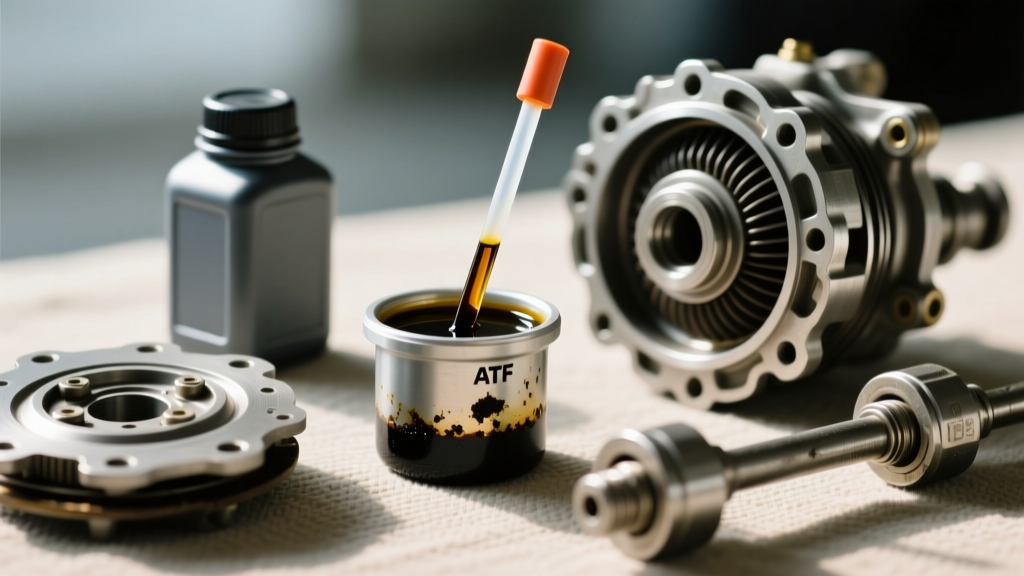
- Assess Condition: Rub the fluid between your fingers. It should feel slick, not gritty. Smell it; a burnt toast odor indicates severe thermal breakdown.
Method 2: The Sealed Overflow Plug (e.g., ZF 8HP, Ford 10R80)
Most modern transmissions have eliminated the dipstick to prevent overfilling and contamination. Checking these requires a scan tool and a lift.
- Monitor Fluid Temperature: Connect an OBD2 bidirectional scan tool to read the Transmission Fluid Temperature (TFT) sensor. For the ZF 8HP, the target leveling temperature is strictly between 86°F and 122°F (30°C–50°C). For the GM 6L80/10L80, it is typically 180°F–200°F.
- Position the Vehicle: The vehicle must be perfectly level on a hoist. With the engine idling, remove the inspection cover (if applicable) to access the transmission pan.
- Check the Overflow Plug: Place a drain pan underneath. Remove the leveling plug (often an 8mm or 10mm hex). If a steady stream of fluid flows out and slows to a drip, the level is correct. If nothing comes out, the unit is low and requires fluid to be pumped in through the fill plug until it overflows.
Diagnostic Matrix: Fluid Condition and Shifting Symptoms
Use this diagnostic table to correlate your fluid inspection with specific drivability complaints.
| Fluid Appearance | Odor | Associated Shifting Problems | Preventive Action Required |
|---|---|---|---|
| Bright, Translucent Red | Slightly Sweet / Chemical | None. Shifts are crisp and timed correctly. | Continue normal monitoring. No service needed. |
| Dark Ruby / Opaque Brown | Sharp / Acidic | Delayed reverse engagement, slight TCC shudder at 45-55 mph. | Perform a drain-and-fill and replace the inline filter. |
| Black / Particulate Visible | Severe Burnt Toast | Harsh 1-2 and 2-3 shifts, RPM flaring, solenoid codes (e.g., P0756). | Pan drop, filter replacement, and valve body inspection required. |
| Milky Pink / Frothy | None / Coolant Smell | Immediate clutch slip, catastrophic hydraulic failure. | Stop driving. Radiator ATF cooler has ruptured; requires full flush and rebuild. |
Sensor Interference: Sludge vs. the TCM
When addressing the question of whether dirty fluid causes shifting problems, we must also look at the electronic side of the hydraulic system. Modern transmissions utilize a Transmission Fluid Temperature (TFT) sensor and various pressure switches to dictate shift firmness and timing.
If the ATF is heavily contaminated with clutch material and sludge, a microscopic layer of debris can coat the TFT thermistor. This acts as an insulator, causing the sensor to read temperatures sluggishly. If the Transmission Control Module (TCM) believes the fluid is colder than it actually is, it will artificially increase line pressure to compensate for perceived high cold-viscosity, resulting in jarring, neck-snapping upshifts. Similarly, sludge can lodge inside the 3-2-1 pressure switch orifice on units like the 4L60E, causing the TCM to log false ratio error codes and trigger limp mode.
Preventive Maintenance: Intervals, Costs, and Torque Specs
To prevent shifting problems before they start, adhere to strict preventive maintenance intervals. Ignore the 'lifetime fluid' marketing myth promoted by some European automakers. The original equipment manufacturer of the ZF 8HP transmission, ZF Friedrichshafen AG, explicitly states on their official aftermarket portal that under high-stress or towing conditions, the fluid and filter should be changed between 60,000 and 80,000 miles.
Real-World Service Costs and Specifications
When performing a pan-drop service, using the exact OEM fluid is non-negotiable. Friction modifiers are proprietary. Using generic 'multi-vehicle' ATF in a ZF 8HP or Ford 10R80 will almost guarantee shift shudder within 1,000 miles.
- GM 6L80 / 6L90: Requires ACDelco Dexron VI (ACDelco Part #10-9395). Total capacity is 11.2L; a pan drop yields roughly 6.0L. Pan bolt torque spec: 12 Nm (106 lb-in).
- ZF 8HP (BMW/Audi/Chrysler): Requires ZF LifeguardFluid 8. Total capacity is ~9.5L; pan drop yields ~5.5L. Note: The filter is integrated into the plastic pan. You must replace the entire pan assembly. Plastic pan bolt torque spec: 10 Nm (89 lb-in).
- Ford 10R80: Requires Motorcraft MERCON ULV. Total capacity is 13.1L; pan drop yields ~6.5L. Pan bolt torque spec: 11 Nm (97 lb-in).
Cost Expectations: A professional drain-and-fill service with OEM fluid typically ranges from $180 to $280. A full pan-drop service with a new filter/pan assembly and OEM fluid will range from $350 to $650 depending on the vehicle. Avoid high-pressure power flushing machines on neglected, high-mileage transmissions, as the aggressive flow can dislodge varnish and lodge it directly into the valve body solenoids, instantly causing the very shifting problems you were trying to prevent.
Final Thoughts
Dirty transmission fluid is the silent killer of modern drivetrains. By understanding how to properly check your ATF—whether via a traditional dipstick or a sealed overflow plug—and by interpreting the color, smell, and texture of the fluid, you can diagnose shifting anomalies long before they result in catastrophic mechanical failure. Treat your ATF as a vital, consumable wear item, and your transmission will reward you with hundreds of thousands of miles of seamless operation.