Understanding Hydraulic Clutch Engagement and Disengagement
For beginners stepping into the world of manual transmissions, the clutch pedal can sometimes feel like a mystery. When you press the pedal, you expect the engine to disconnect from the transmission, allowing you to shift gears smoothly. When you release it, you expect the power to re-engage. However, when you experience clutch engagement and disengagement issues—such as a spongy pedal, grinding gears, or a car that creeps forward with the pedal fully depressed—the culprit is often hiding in plain sight: your hydraulic fluid.
Most modern manual vehicles (from the Honda Civic Si to the Ford Mustang GT equipped with the Tremec MT-82) utilize a hydraulic clutch system. This system shares the same fundamental physics as your brakes. A master cylinder at the pedal pushes fluid through a hard line and flexible hose to a slave cylinder, which then actuates the clutch fork or concentric slave cylinder (CSC) to disengage the pressure plate. If the fluid is compromised, the entire engagement process fails.
Why Fluid Quality Dictates Disengagement
To understand why your clutch might fail to disengage, you need to understand the enemy of hydraulic systems: water. Brake and clutch fluids are hygroscopic, meaning they naturally absorb moisture from the atmosphere through microscopic pores in rubber hoses and reservoir caps.
When water contaminates the fluid, two disastrous things happen:
- Boiling Point Depression: Water boils at 212°F (100°C). Under heavy use, the slave cylinder absorbs heat from the transmission bell housing. If the fluid boils, it turns into a gas. Gases are compressible; liquids are not. Your pedal effort compresses the vapor bubbles instead of moving the slave cylinder, resulting in a pedal that goes straight to the floor.
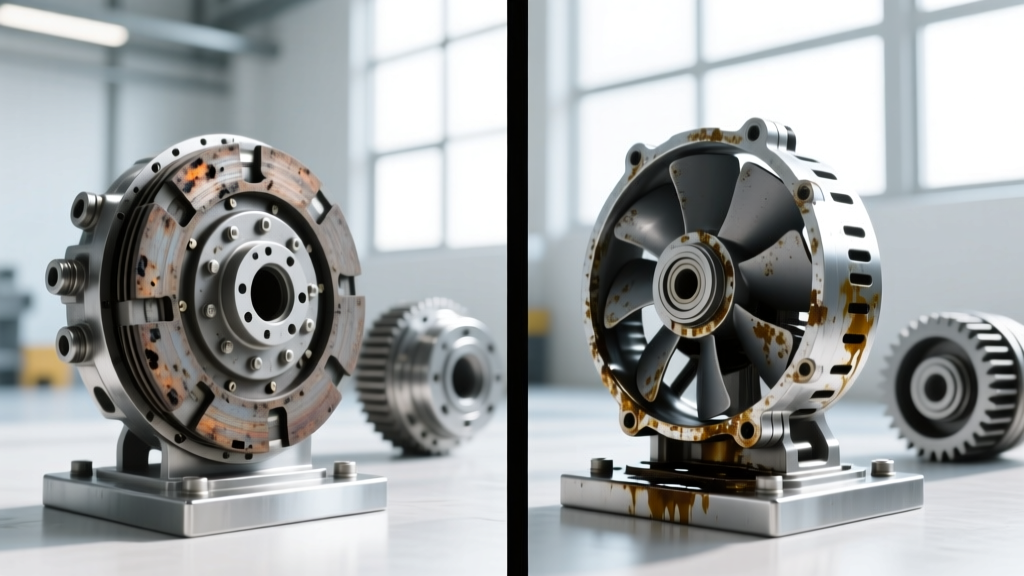
- Corrosion and Seal Degradation: Moisture causes internal pitting in the master and slave cylinders, tearing the delicate EPDM rubber seals. This leads to internal bypassing, where fluid sneaks past the piston instead of pushing it, causing slow or incomplete clutch disengagement.
The Science Behind Valvoline Brake & Clutch Fluid DOT 4
Upgrading to a high-quality fluid is the first line of defense. Valvoline Brake & Clutch Fluid DOT 4 (often found under part number VV327 or 822346) is formulated with a glycol-ether base and advanced borate ester additives. These additives act as a buffer, maintaining a high boiling point even as the fluid ages and absorbs moisture.
According to the Federal Motor Vehicle Safety Standard (FMVSS) 116 and SAE J1703 specifications, DOT 4 fluid must meet strict thermal thresholds. Valvoline's DOT 4 formulation typically boasts a Dry Boiling Point of 446°F (230°C) and a Wet Boiling Point (at 3.7% water content) of 311°F (155°C). This thermal stability ensures that even when your clutch slave cylinder is baking next to a 200°F exhaust downpipe, the fluid remains an incompressible liquid, guaranteeing crisp disengagement.
Diagnosing Engagement & Disengagement Symptoms
Before you rush to buy a new clutch kit, you must accurately diagnose the symptom. Use the matrix below to determine if your issue is hydraulic (fluid-related) or mechanical.
| Symptom | Probable Cause | Diagnostic Test | Solution |
|---|---|---|---|
| Spongy pedal, low engagement point | Air in the hydraulic line or boiled fluid | Pump pedal 5 times, hold pressure. If it sinks, air/bypass is present. | Flush system with Valvoline Brake & Clutch Fluid DOT 4 and bleed. |
| Grinding into 1st or Reverse | Incomplete disengagement (clutch dragging) | Start car in neutral, press clutch, wait 3 seconds, shift to Reverse. Grinding means drag. | Bleed hydraulics; check for worn CSC or bent clutch fork. |
| Pedal stays on the floor | Blown master/slave seal or empty reservoir | Check fluid level. Look for leaks at the firewall or bell housing weep hole. | Replace failed cylinder, flush fluid, and bleed. |
| Slipping under heavy throttle | Worn friction disc or oil contamination | Put car in 3rd gear at 20mph, floor the throttle. RPMs rise but speed doesn't. | Fluid won't fix this. Requires transmission removal and clutch replacement. |
Step-by-Step: Flushing and Bleeding the Clutch Hydraulics
If your diagnosis points to air or degraded fluid, a complete flush is required. The clutch hydraulic circuit typically holds between 0.3L and 0.8L of fluid. Because the clutch slave cylinder is often the lowest point in the system (or features a long, looping hard line), air bubbles love to get trapped here.
Tools and Materials Required
- 2 bottles of Valvoline Brake & Clutch Fluid DOT 4 (approx. $6-$9 each)
- 8mm or 10mm flare nut wrench (for the bleeder valve)
- Clear vinyl tubing and a catch bottle
- Torque wrench (inch-pounds or Newton-meters)
The Manual Bleeding Procedure
- Prep the Master Cylinder: Clean the reservoir cap to prevent dirt ingress. Remove the cap and use a turkey baster to extract the old, dark fluid. Refill with fresh Valvoline DOT 4 to the MAX line.
- Locate the Bleeder: Find the slave cylinder. On external setups (like a Nissan 370Z or Chevy Colorado), it is mounted on the outside of the bell housing. On internal CSC setups (like a Subaru WRX or VW GTI), you may need to remove the undertray and locate the bleeder nipple protruding from the transmission housing.
- Attach the Hose: Place your wrench on the bleeder valve, attach the clear tube, and submerge the other end in a bottle with an inch of fresh fluid at the bottom.
- The Pump-and-Hold Method: Have an assistant press the clutch pedal to the floor and hold it. Open the bleeder valve. Fluid and air bubbles will shoot into the tube. Close the valve before the assistant releases the pedal, otherwise, you will suck air back into the system.
- Repeat and Refill: Repeat this process 15-20 times. Constantly monitor the master cylinder reservoir; never let it drop below the MIN line, or you will introduce air into the master cylinder and have to start over.
- Verify Pedal Feel: The pedal should feel firm, with the disengagement point occurring about 1 to 2 inches off the floor.
Critical Torque Specifications
When reassembling or checking fittings, adhere to these general automotive torque specs to prevent stripping soft aluminum transmission housings or snapping steel bleeders:
- Bleeder Valve (M8x1.0 or M10x1.0): 8 to 12 Nm (70 to 105 in-lbs). Do not overtighten; these snap easily.
- External Slave Cylinder Mounting Bolts: 20 to 25 Nm (15 to 18 ft-lbs).
- Master Cylinder to Firewall Nuts: 15 to 20 Nm (11 to 15 ft-lbs).
- Hydraulic Line Banjo Bolt (if equipped): 25 to 30 Nm (18 to 22 ft-lbs), always using two new crush washers.
When Fluid Isn't Enough: Mechanical Failures
While Valvoline Brake & Clutch Fluid DOT 4 is essential for maintaining hydraulic integrity, it cannot cure mechanical wear. If you have performed a thorough bleed with fresh fluid and still experience disengagement issues, you are likely facing a mechanical failure.
Concentric Slave Cylinder (CSC) Collapse: Modern vehicles use a CSC that wraps around the transmission input shaft. Over 80,000 to 120,000 miles, the internal bearing and hydraulic seals wear out. If the CSC is leaking internally into the bell housing, no amount of bleeding will fix the spongy pedal. Replacement requires dropping the transmission. Expect to pay $40 to $150 for an OEM or high-quality aftermarket CSC (like a Sachs or LuK unit), but labor will range from $600 to $1,200 depending on the vehicle.
Worn Clutch Fork Pivot Ball: On vehicles with external slave cylinders, the steel clutch fork rides on a pivot ball stud. Over time, the fork wears a groove into the ball, altering the geometry. This results in a loss of mechanical advantage, making the pedal feel stiff and preventing full disengagement. Upgrading to an adjustable pivot ball (common in the Mustang and Camaro aftermarket) allows you to restore the correct geometry without replacing the entire fork.
Master Cylinder Pushrod Play: If the pedal has 1 to 2 inches of 'dead travel' at the very top before you feel resistance, the pushrod connecting the pedal to the master cylinder may be out of adjustment or the pedal return spring is weak. Adjusting the pushrod length to eliminate this free-play ensures the master cylinder piston fully retracts, allowing the fluid to return to the reservoir and preventing the clutch from slipping due to trapped hydraulic pressure.
Final Thoughts on Clutch Maintenance
Treating your clutch hydraulics with the same respect as your brake system is the key to longevity and drivability. By flushing the system every 2 to 3 years with a high-quality, high-boiling-point glycol-ether fluid, you protect expensive internal components from corrosion and vapor lock. Understanding the difference between a hydraulic failure and a mechanical wear issue will save you hundreds of dollars in unnecessary diagnostic fees and premature clutch replacements.