The Mechanics of 1 Inch Bore Centrifugal Clutch Slipping
In heavy-duty small engine applications, industrial PTO systems, and high-performance off-road karts, the 1 inch bore centrifugal clutch is the critical link between the crankshaft and the drivetrain. Unlike manual automotive friction clutches that rely on pedal-actuated clamping force, a centrifugal clutch utilizes rotational mass and centrifugal force to push friction shoes outward against a rotating drum. When functioning correctly, the clutch achieves full mechanical lock-up, transferring 100% of the engine’s torque to the output sprocket.
However, when a 1 inch bore centrifugal clutch begins to slip, it fails to achieve or maintain this lock-up. Slipping generates immense parasitic heat, rapidly degrading the friction material, warping the drum, and ultimately leading to catastrophic drivetrain failure. As of 2026, advancements in sintered bronze and asbestos-free organic friction compounds have extended clutch lifespans, but improper maintenance, shaft misalignment, and thermal overloading remain primary culprits behind slipping. This preventive maintenance guide details the exact symptoms, root causes, and diagnostic protocols required to keep your centrifugal clutch operating at peak efficiency.
Primary Symptoms of a Failing Centrifugal Clutch
Diagnosing clutch slip in a centrifugal system requires observing both the engine’s behavior and the physical characteristics of the clutch assembly under load. Because there is no pedal to provide tactile feedback, operators must rely on auditory, thermal, and performance cues.
Performance and Auditory Cues
- RPM Flare Under Load: The most definitive symptom of slipping. When ascending an incline or accelerating from a dead stop, the engine RPMs will surge past the normal lock-up range (typically 3,000 to 3,400 RPM) without a proportional increase in ground speed or drivetrain output.
- Engagement Chatter: A violent shuddering or rattling noise occurring precisely at the engagement threshold (usually 2,000 to 2,300 RPM). This indicates that the shoes are grabbing and releasing rapidly, often due to weak tension springs or uneven friction material wear.
- Failure to Disengage (Creep): While technically a disengagement issue, a clutch that drags at idle forces the engine to lug, which can cause the shoes to slip continuously at low RPMs, generating excessive heat before the vehicle even moves.
Thermal and Visual Indicators
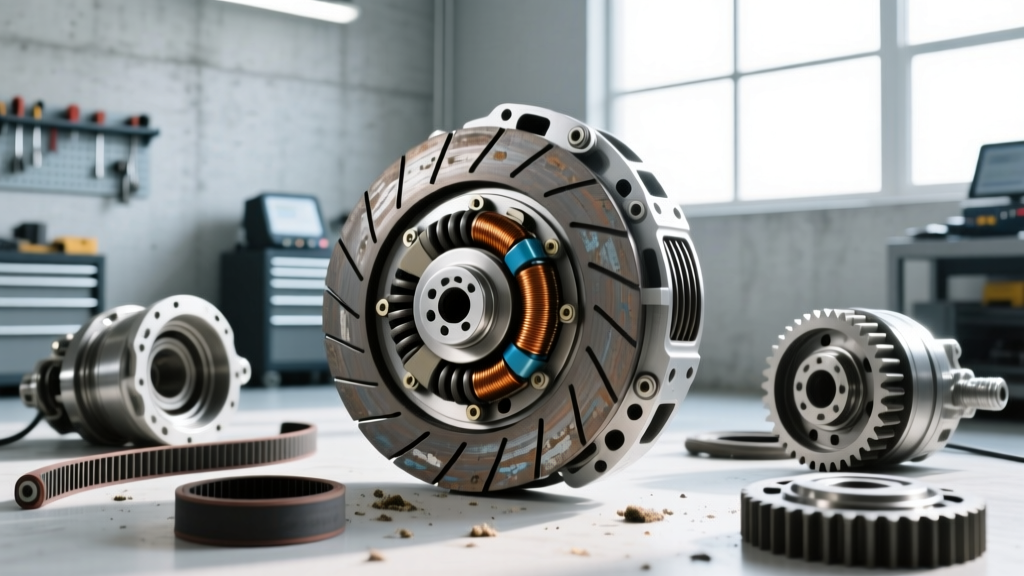
Slipping converts kinetic energy into thermal energy. A slipping clutch drum can easily exceed 400°F in a matter of minutes. If you notice a distinct acrid, burning odor (reminiscent of burning brakes or hot metal), the organic friction lining is glazing or carbonizing. Visually, a slipping clutch drum will often exhibit a bluish or purplish heat-tint on the steel, and the interior surface will appear mirror-smooth (glazed) rather than matte.
Diagnostic Matrix: Troubleshooting Slipping and Engagement Issues
Use the following matrix to isolate the root cause of your clutch slipping. Proper diagnosis prevents unnecessary part replacement and addresses the underlying mechanical flaw.
| Symptom | Probable Root Cause | Diagnostic Check | Corrective Action |
|---|---|---|---|
| RPM flare under heavy load | Glazed shoes or oil contamination | Inspect drum interior for mirror finish; check shaft seal for leaks | Scuff shoes with 120-grit sandpaper; replace shaft seal; clean with non-chlorinated brake cleaner |
| Chatter at 2,000 RPM engagement | Spring fatigue or broken tension springs | Remove clutch and inspect extension springs for stretching or heat discoloration | Replace spring set; ensure matching spring color/tension rating for application |
| Uneven shoe wear and localized slipping | Shaft runout or bent crankshaft | Mount dial indicator on shaft; measure Total Indicator Runout (TIR) | Replace bent shaft or address engine bearing play; TIR must be under 0.005" |
| Clutch binds and slips simultaneously | Chain over-tension causing axial loading | Measure chain deflection; check for lateral drag on the drum | Adjust chain to 1/4" - 3/8" deflection; align sprockets with a laser or straight-edge |
Preventive Maintenance: Shaft, Bore, and Keyway Tolerances
The most overlooked cause of premature slipping in a 1 inch bore centrifugal clutch is poor fitment between the clutch bore and the drive shaft. A 1-inch bore is designed to slide onto a shaft machined to exactly 1.000" to 1.002". Over time, keyway wallowing and shaft wear can reduce the shaft diameter to 0.990" or less.
When the bore is larger than the shaft, the clutch operates off-center. This eccentric rotation causes the shoes to contact the drum unevenly. Only a fraction of the friction surface makes contact, drastically reducing the coefficient of friction and causing immediate slipping under load. According to SKF Power Transmission guidelines, maintaining strict shaft tolerances is critical for any rotating power transmission component.
Keyway and Retaining Hardware Specs
Always use a precision-machined 1/4" square steel key. If the keyway exhibits slop, do not attempt to shim it with brass or aluminum foil; this will lead to catastrophic shearing under torque. The retaining bolt (typically a 1/2"-20 UNF fine-thread bolt) must be torqued to 45-50 ft-lbs using a hardened flat washer and a split lock washer. Failure to achieve proper clamping force allows the clutch to wobble axially, pulling the shoes away from the drum and inducing slip.
Drum and Shoe Inspection Protocol
Routine teardown and inspection are mandatory for preventive maintenance, especially in high-cycle environments like agricultural PTOs or rental equipment.
- Remove the Clutch Assembly: Pull the clutch from the shaft using a dedicated gear puller. Never strike the backplate with a hammer, as this will deform the needle bearings or bushings inside the bore.
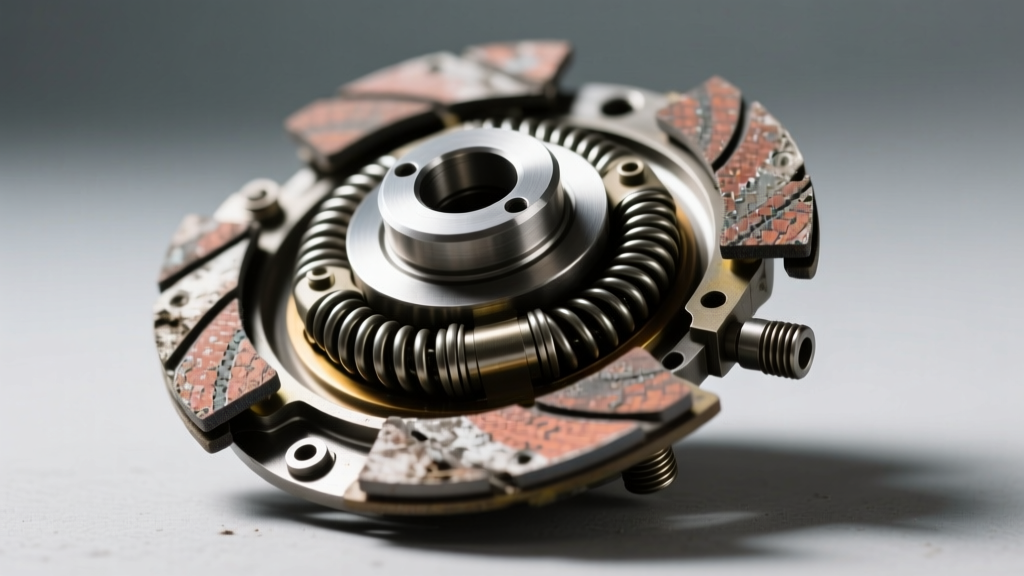
- Measure Shoe Thickness: Using digital calipers, measure the friction material thickness. Standard new shoes measure approximately 0.180" to 0.200". If the material is worn down to 1/8" (0.125") or less, the shoes lack the mass to generate sufficient centrifugal force, resulting in slipping. Replace the shoes immediately.
- Check the Drum Interior: Run your fingernail across the inside of the drum. Deep scoring or gouges indicate that the friction material has worn completely through, and the steel shoe base is gouging the drum. A scored drum cannot be repaired and must be replaced.
- Deglazing Procedure: If the shoes are within thickness specs but exhibit a shiny, glazed surface, they have been thermally shocked. Lightly scuff the friction surface with 120-grit garnet sandpaper to expose fresh, porous material. Never use petroleum-based solvents like WD-40 or motor oil for cleaning, as these will permanently ruin the friction coefficient.
Drivetrain Matching and Chain Tension
Slipping is not always a failure of the clutch itself; it can be a symptom of drivetrain mismatching. A centrifugal clutch relies on the engine’s ability to push past the engagement RPM and reach the lock-up RPM. If the final drive ratio is too tall (over-geared) for the engine’s torque curve, or if the vehicle is overloaded, the engine will bog down in the engagement zone. The clutch will remain in a perpetual state of partial slip, generating massive heat.
Furthermore, excessive chain tension pulls the clutch drum laterally against the engine block or mounting bracket. This axial binding prevents the drum from spinning freely and can cause the internal bushing to gall against the shaft. Maintain a strict chain deflection of 1/4" to 3/8" at the midpoint of the chain run, and verify sprocket alignment using a precision straight-edge to eliminate lateral drag.
Rebuild Kits vs. Complete Assembly Replacement
When diagnosis confirms internal failure, technicians must decide between rebuilding the existing clutch or installing a new unit. For a standard 1 inch bore clutch (such as the popular Hilliard Extreme-Duty or Comet TAV2 series), a complete replacement assembly typically costs between $45.00 and $75.00 depending on the torque rating and bearing type (bushing vs. sealed ball bearing).
A rebuild kit, which includes replacement friction shoes, extension springs, and a new needle bearing or bronze bushing, costs between $15.00 and $25.00. Rebuilding is highly cost-effective if the outer steel drum and the inner driver hub are free of heat warping and scoring. However, if the drum shows blueing or the hub splines are deformed, a complete assembly replacement is the only safe option to prevent recurring slip and drivetrain damage. For detailed specifications on torque-a-verter and centrifugal systems, refer to the Comet Industries TAV2 technical documentation or the Hilliard Corporation centrifugal clutch engineering guides.
Conclusion
Preventing 1 inch bore centrifugal clutch slipping requires a holistic approach to drivetrain maintenance. By strictly monitoring shaft tolerances, maintaining proper chain alignment, and conducting routine friction material inspections, operators can maximize the lifespan of their clutch assemblies. Addressing the root causes of thermal overload and mechanical misalignment ensures that your equipment delivers reliable, slip-free power transfer in the most demanding conditions.