Decoding the Symptoms of a Bad AC Clutch: An Expert's Diagnostic Guide
While AutoGearNexus is the premier destination for drivetrain and manual transmission diagnostics, the modern automotive technician must master all friction and engagement systems. As of 2026, despite the rise of electric compressors in EV platforms, over 75% of the global ICE and light-hybrid fleet still relies on traditional electromagnetic AC compressor clutches. When a customer complains of engine bay noises, the symptoms of a bad AC clutch—specifically grinding, squealing, and chirping—can easily be misdiagnosed as a failing transmission release bearing, a worn serpentine belt tensioner, or drivetrain clutch chatter. This expert guide bridges the gap, providing a definitive diagnostic framework for isolating AC compressor clutch noise.
The Anatomy of the Electromagnetic AC Clutch
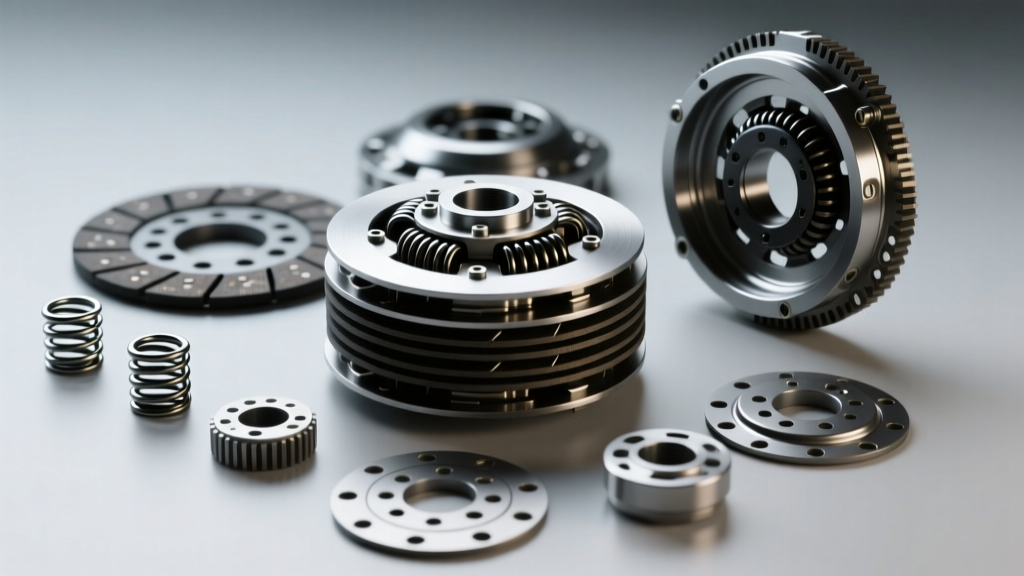
Before diagnosing noise, you must understand the mechanical interface. A standard electromagnetic clutch (found on common Denso 10S17C or Sanden SD7V16 variable-displacement compressors) consists of three primary components:
- The Pulley and Bearing Assembly: Driven continuously by the serpentine belt. The bearing allows the pulley to freewheel when the AC is off.
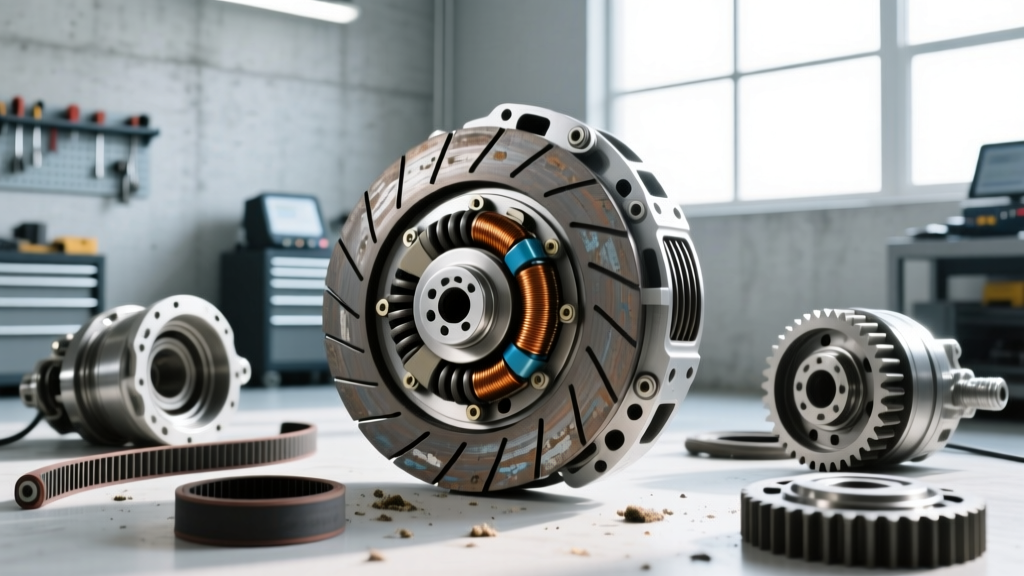
- The Electromagnetic Coil: A stationary copper winding mounted behind the pulley that generates a magnetic field when energized.
- The Friction Hub (Drive Plate): Splined to the compressor input shaft. When the coil is energized, the hub is pulled against the spinning pulley, engaging the compressor.
Noise can originate from any of these three components, and the specific auditory signature will dictate your diagnostic path.
Auditory Diagnostics: Isolating Grinding, Squealing, and Chirping
1. Grinding: Bearing Failure vs. Internal Seizure
A continuous metallic grinding or growling noise that is present even when the AC system is turned off is the hallmark of a failing pulley bearing. The bearing is a sealed, double-row angular contact unit. Once the grease degrades or the seal fails, the balls score the races.
Expert Test: With the engine off, remove the serpentine belt. Spin the AC pulley by hand. It should rotate smoothly with slight viscous drag. If you feel gritty resistance, hear a crunching sound, or detect lateral play exceeding 1mm, the bearing is condemned. Conversely, if the pulley is locked or requires immense force to turn, the internal compressor swashplate has seized, transferring the mechanical bind to the clutch assembly.
2. Squealing: Belt Slip vs. Magnetic Drag
A high-pitched squeal that occurs only when the AC is commanded on usually indicates the clutch hub is slipping against the pulley face. This friction generates intense heat, glazing the mating surfaces. However, do not immediately condemn the clutch. In 2026 diagnostic workflows, we must first rule out weak magnetic pull caused by voltage drop, an excessive air gap, or a failing coil. If the magnetic force is insufficient to fully lock the hub to the pulley, micro-slipping occurs, resulting in a squeal that mimics a loose drive belt.
3. Chirping and Rattling: Hub and Shim Issues
A rhythmic chirping or metallic rattling that changes pitch with engine RPM often points to a loose friction hub or improper shimming. The hub is retained by a central bolt (often M6x1.0 or M8x1.25). If this bolt was under-torqued during a previous service, the hub will wobble on the shaft splines. Additionally, if the clutch was recently replaced and the air gap is too wide, the magnetic field will pull the hub unevenly, causing a rapid engage-disengage chatter that sounds exactly like a chirping serpentine belt.
Precision Testing: Moving Beyond the Stethoscope
Relying solely on a mechanic's stethoscope is an outdated practice. True E-E-A-T in AC clutch diagnosis requires quantitative measurement. According to guidelines published by Mobile Air Climate Systems (MACS) and standard SAE International service procedures, you must verify the following three parameters:
Air Gap Measurement
The air gap between the friction hub and the pulley face is critical. If it is too wide, the magnetic field cannot overcome the gap, leading to slipping and squealing. If it is too tight, the clutch may drag when disengaged, causing premature wear and chirping.
- Specification: Most OEM clutches require an air gap between 0.020" and 0.030" (0.50mm - 0.75mm).
- Procedure: Use a flat blade feeler gauge, checking at three equidistant points around the perimeter. Adjust by removing or adding internal shims located between the hub and the compressor shaft snap ring.
Electromagnetic Coil Resistance
A failing coil will draw excessive amperage or fail to generate sufficient magnetic flux. Disconnect the clutch electrical connector and measure resistance across the coil terminals using a digital multimeter.
- Specification: A healthy 12V coil typically reads between 3.5 and 4.5 ohms at 68°F (20°C).
- Diagnosis: A reading below 3.0 ohms indicates shorted internal windings (which will blow fuses). A reading above 6.0 ohms or an open circuit (OL) means the coil is internally broken and must be replaced.
Voltage Drop Under Load
As noted in the AA1Car Automotive Library, a good coil will still fail to engage if the wiring harness is degraded. Measure voltage directly at the clutch connector with the engine running and the AC commanded to MAX.
- Specification: You must see a minimum of 11.5V to 12.0V under load.
- Diagnosis: If battery voltage is 13.8V but the clutch only sees 9.5V, you have a severe voltage drop in the relay, wiring harness, or ground circuit, causing the clutch to slip and squeal.
Diagnostic Matrix: AC Clutch Noise Troubleshooting
| Auditory Symptom | Operational State | Probable Root Cause | Corrective Action |
|---|---|---|---|
| Grinding / Growling | AC OFF (Engine Running) | Pulley bearing failure | Press out old bearing, install new sealed bearing (e.g., 35BD5520). |
| Grinding / Lock-up | AC ON or OFF | Internal compressor seizure | Replace entire compressor assembly, flush system, replace orifice/expansion valve. |
| Squealing | AC ON (Initial Engagement) | Excessive air gap or weak coil | Measure gap (adjust to 0.020"-0.030"); test coil ohms (3.5-4.5Ω). |
| Chirping / Rattling | AC ON (RPM Dependent) | Loose hub bolt or missing shim | Verify hub bolt torque; inspect splines for wear; re-shim air gap. |
Best Practices for Replacement and Torque Specifications
When the diagnosis confirms a mechanical failure of the clutch assembly, precision during reassembly is non-negotiable. Improper torque is the leading cause of warranty returns on aftermarket clutch replacements.
- Hub Bolt Torque: The central friction hub bolt is typically an M6x1.0 (for smaller Denso units) or M8x1.25 (for larger Harrison/Sanden units). The standard torque spec for an M6 bolt is 8 to 10 Nm (71 to 89 in-lb). For an M8 bolt, torque to 18 to 22 Nm (13 to 16 lb-ft). Always apply a medium-strength threadlocker (e.g., Loctite 243) to prevent vibration-induced loosening.
- Shimming Protocol: Never guess the air gap. A gap that is 0.005" too tight will result in the clutch failing to disengage when the AC is turned off, dragging the hub against the pulley and generating intense heat that will melt the coil winding insulation.
- Cost Expectations (2026 Market): An aftermarket electromagnetic coil typically costs between $35 and $85. A complete clutch assembly (pulley, coil, hub) ranges from $90 to $180 depending on the vehicle application. Specialized bearing pullers and clutch holding tools (like the OTC 4799 or equivalent) are required to prevent transferring torsional shock into the compressor's internal swashplate.
Final Expert Takeaway
Diagnosing the symptoms of a bad AC clutch requires the same analytical rigor as diagnosing a manual transmission release bearing or a torque converter clutch shudder. By isolating the noise based on the AC system's operational state, verifying the air gap with feeler gauges, and validating the electrical circuit with a multimeter, you eliminate guesswork. This data-driven approach ensures accurate repairs, prevents collateral damage to the serpentine drive system, and restores optimal cabin climate performance.