Understanding the Heart of Your Cargo Truck
When fleet managers and owner-operators search for clutch cargo Detroit solutions, they are typically dealing with heavy-freight engagement issues in Detroit Diesel-equipped trucks. Whether you are hauling 80,000 pounds of freight across the country or navigating a local distribution yard, the clutch is the critical bridge between your engine and your drivetrain. For beginners, understanding how this bridge connects (engagement) and disconnects (disengagement) is the first step toward diagnosing costly drivetrain failures.
In the heavy-duty trucking sector, you will primarily encounter two setups: traditional manual transmissions (like the iconic Eaton Fuller RTLO series) paired with a 15.5-inch friction clutch, and Automated Manual Transmissions (AMTs) like the Detroit DT12, which utilize computer-controlled pneumatic and hydraulic actuators to manage clutch engagement. While the DT12 removes the physical clutch pedal from the cab, the underlying physics of friction, hydraulic pressure, and mechanical wear remain exactly the same.
The Anatomy of Engagement and Disengagement
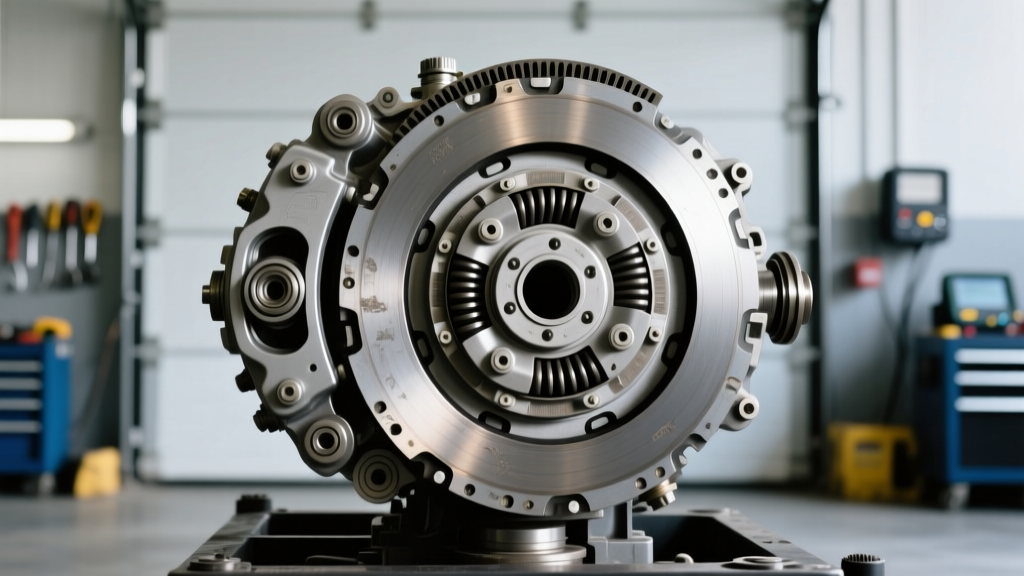
Before diagnosing a problem, you must understand the mechanical sequence. Think of the clutch assembly as a high-torque sandwich.
- The Flywheel: Bolted directly to the Detroit Diesel engine crankshaft, spinning at engine RPM.
- The Friction Disc: Splined to the transmission input shaft. It features high-friction ceramic or organic material designed to grip the flywheel.
- The Pressure Plate (Clutch Cover): Bolted to the flywheel, it uses heavy-duty diaphragm springs to clamp the friction disc against the flywheel.
- The Release Bearing & Hydraulics: When you press the pedal (or the DT12 actuator engages), hydraulic fluid pushes the release bearing against the pressure plate fingers, releasing the clamping force.
Disengagement occurs when the clamping force is released, allowing the engine to spin independently of the transmission (essential for shifting gears). Engagement happens when the pedal is released, and the springs clamp the disc, transferring engine torque to the wheels.
Symptom Mapping: What Your Truck is Telling You
Diagnosing clutch issues requires listening to the physical feedback of the truck. Below is a diagnostic matrix to help beginners map symptoms to specific component failures.
| Symptom | Phase | Most Likely Culprit | Beginner Check |
|---|---|---|---|
| Gears grind when shifting into 1st or Reverse | Disengagement | Clutch Drag / Hydraulic Air | Check master cylinder fluid and bleed lines |
| RPMs flare but truck speed doesn't increase on hills | Engagement | Worn Friction Disc / Oil Contamination | Perform high-gear stall test |
| Violent shudder or vibration upon taking off | Engagement | Warped Flywheel / Broken Damper Springs | Inspect flywheel runout and disc hub |
| Clutch pedal feels spongy or falls to the floor | Disengagement | Failed Master/Slave Cylinder Seals | Inspect for DOT 4 fluid leaks at bellhousing |
| Difficulty finding neutral or floating gears | Disengagement | Improper Clutch Brake Squeeze | Measure pedal free-play and clutch brake gap |
Deep Dive: Disengagement Failures (Clutch Drag)
Clutch drag happens when the friction disc does not fully separate from the flywheel, even when the pedal is fully depressed. In a heavy-duty cargo truck, this is incredibly dangerous and damaging. It causes severe gear grinding and can shear the splines off the transmission input shaft.
The Hydraulic Factor: Most modern Detroit-backed setups use a hydraulic release system. If air enters the hydraulic lines, the fluid compresses, and the release bearing fails to travel the full distance required to disengage the pressure plate. According to Eaton's technical service bulletins, a spongy pedal is the number one indicator of aerated hydraulic fluid or a failing internal seal in the clutch master cylinder (OEM Part # A06-25051-000 for many Freightliner/Detroit applications).
The Clutch Brake: Heavy-duty manual transmissions feature a 'clutch brake'—a friction ring that stops the transmission input shaft from spinning to allow smooth stationary shifting. If your clutch linkage or hydraulic stroke is out of adjustment, the clutch brake will not engage properly. The industry standard for clutch brake 'squeeze' is exactly 1.0 to 1.5 inches from the fully depressed pedal position to the floor mat.
Deep Dive: Engagement Failures (Slipping and Shuddering)
Engagement issues manifest when the clutch is supposed to be locked, but fails to hold the massive torque output of a Detroit Diesel DD15 engine (which can produce up to 1,750 lb-ft of torque).
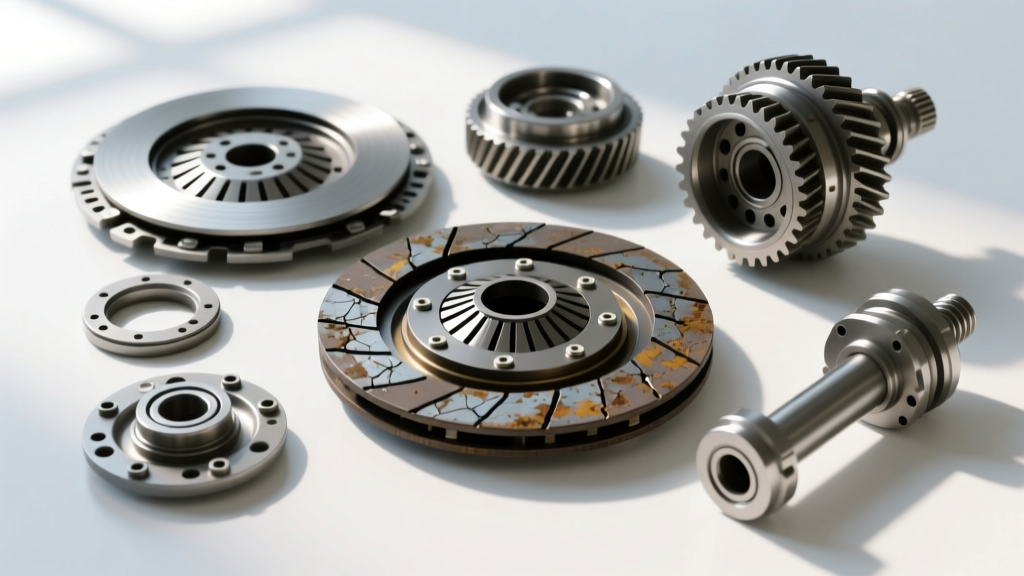
Friction Disc Wear: Over time, the ceramic or organic friction material wears down. When the material is gone, the metal rivets contact the flywheel, causing catastrophic scoring. A slipping clutch will emit a distinct burning odor (similar to burning brake pads) and cause engine RPMs to surge without a corresponding increase in vehicle speed.
Oil Contamination: A common failure point on the Detroit DD15 is a rear main crankshaft seal leak. If engine oil bypasses the seal and contaminates the friction disc, the clutch will slip violently under heavy cargo loads. No amount of adjustment can fix an oil-soaked disc; the seal and the entire clutch kit must be replaced.
Actionable Diagnostic Tests for Beginners
You do not need to drop the transmission to perform preliminary diagnostics. Use these two safe, industry-standard tests:
1. The Clutch Drag Test (Disengagement)
With the engine off, depress the clutch pedal fully and shift into first gear. Keep the pedal depressed and start the engine. If the truck lurches forward or the starter motor struggles heavily against the drivetrain, your clutch is dragging. This confirms a hydraulic issue, a warped disc, or incorrect pedal free-play.
2. The Stall Test (Engagement)
Find a safe, open, flat area. Drive the truck up to 25 MPH, then shift into your highest gear (e.g., 10th or 12th). While maintaining speed, floor the accelerator. If the engine RPMs immediately spike but the truck does not accelerate, the clutch is slipping. Note: Do not hold this test for more than 3 seconds, or you will generate enough heat to glaze the friction material or crack the flywheel.
2026 Repair Costs, Torque Specs, and OEM Data
Replacing a heavy-duty clutch is a major service event. Below is a realistic breakdown of what to expect in the current market, including critical torque specifications for the Detroit DD15 platform.
| Component / Service | OEM / Aftermarket Reference | Estimated Cost (2026) | Critical Specification |
|---|---|---|---|
| 15.5" Clutch Kit (Solo Advantage) | Eaton Part # 0130-006-000 | $950 - $1,400 | Cover to Flywheel Torque: 37 lb-ft (50 Nm) |
| Flywheel Resurfacing / Replacement | Detroit DD15 OEM Flywheel | $400 (Resurface) / $1,200 (New) | Max Runout: 0.005 inches |
| Flywheel to Crankshaft Bolts | OEM M16 Stretch Bolts (Replace Every Time) | $85 (Set of 8) | Torque: 140 lb-ft + 90-degree turn |
| Clutch Master & Slave Cylinder Kit | OEM Hydraulic Release Assembly | $350 - $600 | Fluid: DOT 4 Heavy Duty Synthetic |
| Shop Labor (R&R Transmission) | 8 to 14 Hours (Depends on chassis) | $1,600 - $2,500 | Bellhousing to Block: 85 lb-ft |
Source for engine specifications: Detroit Diesel DD15 Official Documentation.
A Note on the Detroit DT12 Automated Manual Transmission
If your cargo truck is equipped with the Detroit DT12 AMT, you will not have a clutch pedal. However, engagement and disengagement issues still occur. The DT12 uses a pneumatic clutch actuator and electronic sensors to manage the release bearing. Symptoms of DT12 clutch wear include 'Code 52' (Clutch Slip) on the dash, harsh automated shifts, or the transmission refusing to engage a gear from a stop. Diagnosing the DT12 requires a proprietary Detroit DiagnosticLink software scan to read the clutch wear index and recalibrate the clutch actuator position after a replacement.
Final Thoughts on Drivetrain Longevity
Managing a heavy-duty clutch requires respect for the physics of freight. Riding the clutch on an incline, 'floating' gears without matching RPMs, or ignoring a spongy hydraulic pedal will turn a minor adjustment into a $4,000 drivetrain catastrophe. By understanding the difference between engagement (gripping) and disengagement (releasing), and by utilizing the diagnostic tests outlined above, you can accurately communicate with your service technician and keep your Detroit-powered cargo truck on the road where it belongs.
For more in-depth reading on commercial drivetrain maintenance, industry resources like Heavy Duty Trucking Magazine regularly publish updated fleet maintenance guidelines and OEM service bulletins.