Continuously Variable Transmissions (CVTs) have become the default automatic transmission for millions of modern vehicles, prioritizing fuel economy and seamless power delivery. However, when a CVT fails, owners are faced with a complex and expensive decision. If you are researching a CVT transmission rebuild, 11758 area vehicle owners (covering Levittown, Massapequa, and the broader Long Island metro) face unique market dynamics in 2026. With regional shop labor rates averaging between $185 and $225 per hour, the financial line between a local rebuild and a factory-grade remanufactured unit is narrower than ever.
Unlike traditional planetary gear automatics like the GM 6L80 or Ford 6R80, CVTs rely on high-friction push-belts or tensioned chains clamped between variable-diameter pulleys. This fundamental difference drastically alters the rebuild process. In this comprehensive cost analysis, we break down the exact pricing, technical limitations, and long-term viability of choosing a locally rebuilt CVT versus a remanufactured replacement.
The Core Dilemma: Rebuilt vs. Remanufactured CVTs
To make an informed financial decision, you must understand the mechanical distinction between these two repair paths. The terminology is often used interchangeably by service advisors, but in the transmission engineering world, they represent vastly different standards of repair.
What Defines a 'Rebuilt' CVT?
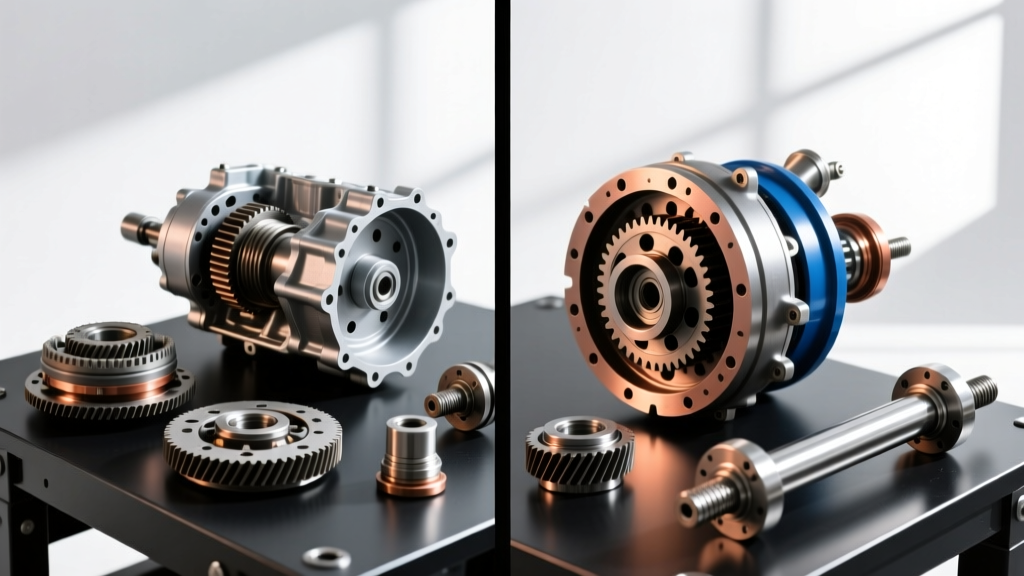
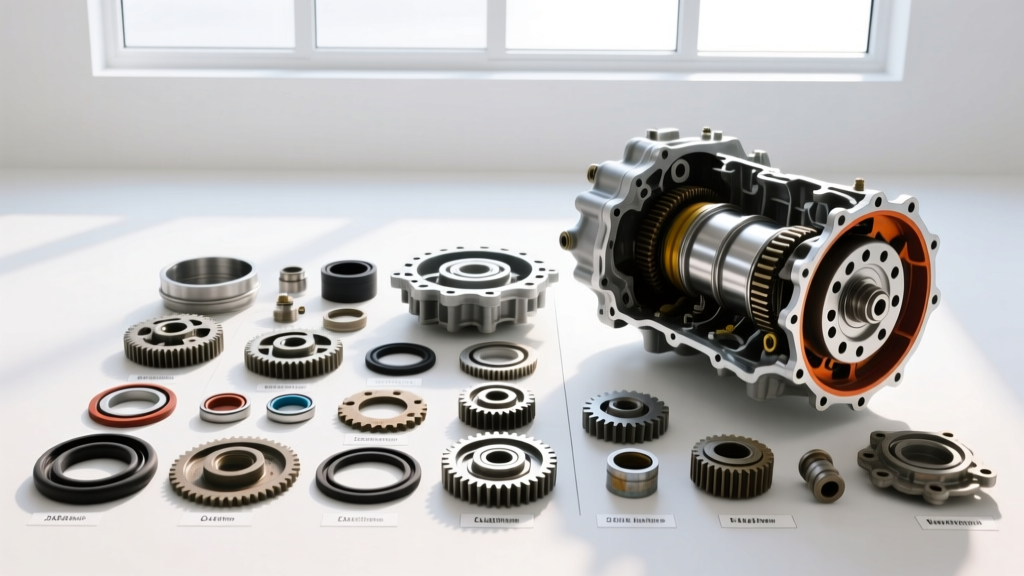
A local rebuild involves removing the transmission, tearing it down on a bench, and replacing only the visibly worn or broken components. A typical CVT rebuild kit (from suppliers like Precision International or TransTec) includes new seals, O-rings, clutch plates, and gaskets. However, the push-belt, chain, and variator pulleys are often reused if they pass a visual inspection. The valve body is usually cleaned and reused, with only failed solenoids replaced. This approach is cheaper upfront but carries a higher risk of secondary failures due to microscopic valve body bore wear or fatigued belt elements that visual inspections cannot catch.
The Remanufactured CVT Standard
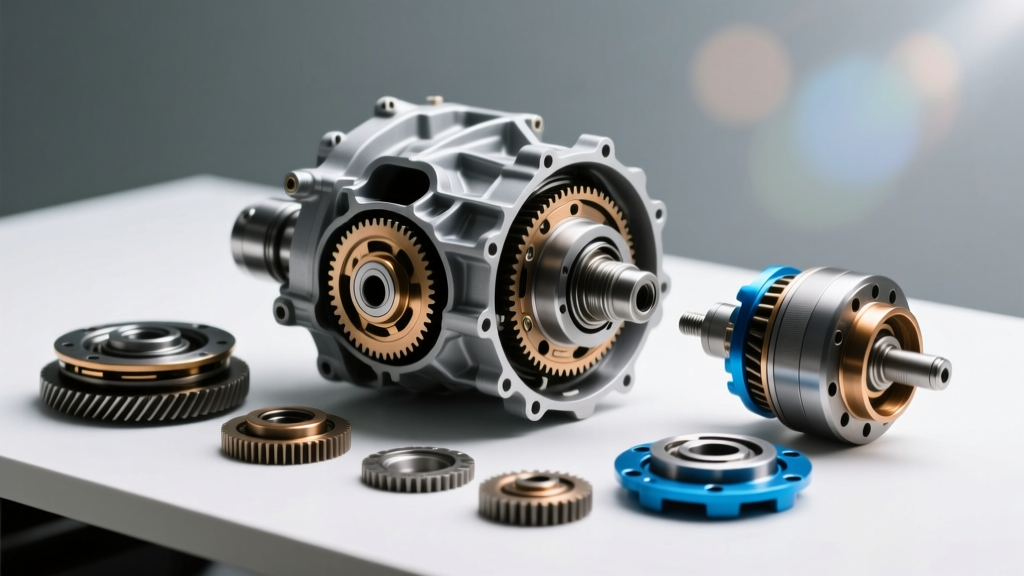
A remanufactured CVT is restored to original equipment manufacturer (OEM) specifications or better. The core unit is completely disassembled, and the case is hot-tanked. Crucially, the valve body is tested on a hydraulic dyno (such as those engineered by Sonnax) to verify Pulse Width Modulation (PWM) solenoid response times and check for cross-leaking. The push-belt or chain is replaced with a brand-new OEM assembly, and the torque converter is cut open, cleaned, and rebalanced. Finally, remanufactured units undergo rigorous hot-and-cold dynamometer testing before shipping.
Cost Breakdown: CVT Transmission Rebuild 11758 Market
The 11758 zip code and surrounding Long Island markets feature high overhead costs for specialized transmission shops. Below is a realistic 2026 cost comparison for a standard front-wheel-drive CVT application (e.g., Nissan Altima or Subaru Impreza).
| Cost Factor | Local Rebuilt CVT | Remanufactured CVT |
|---|---|---|
| Parts / Unit Cost | $1,200 - $1,800 | $2,800 - $3,900 |
| Labor (R&R, 8-11 Hrs @ $195/hr) | $1,560 - $2,145 | $1,560 - $2,145 |
| Valve Body Reconditioning | $350 - $600 (if needed) | Included |
| OEM Fluid (10-12 Qts) | $140 - $180 | $140 - $180 |
| Core Charge / Deposit | N/A (Uses your core) | $500 - $850 (Refundable) |
| J2534 Programming / Flashing | $150 - $250 | $150 - $250 |
| Estimated Total (Out-the-Door) | $3,400 - $4,975 | $5,150 - $7,325 |
| Typical Warranty | 1 Year / 12,000 Miles | 3 Year / 100,000 Miles |
Expert Insight: While the local rebuild appears to save $1,500 to $2,000 upfront, the limited warranty often leaves the owner liable for a second $2,000+ labor bill if a reused variator pulley fails at 15,000 miles. According to the Automatic Transmission Rebuilders Association (ATRA), CVTs represent the highest comeback rate for shops attempting bench rebuilds without specialized hydraulic testing equipment.
Model-Specific CVT Cost & Technical Analysis
Not all CVTs are created equal. The engineering differences between major manufacturers drastically affect rebuild feasibility and remanufactured pricing.
Nissan & Infiniti (Jatco CVT8 / RE0F10D)
Nissan vehicles utilizing the Jatco CVT8 are notorious for stepper motor failures and valve body bore wear. The push-belt in these units is under immense clamping pressure. If a local rebuilder attempts to reuse a fatigued push-belt, the transmission will typically slip under heavy acceleration within 5,000 miles. Furthermore, the oil pan bolts on the RE0F10D are M6x1.0 and require a strict torque spec of 7.9 Nm (69 in-lbs). Over-torquing these during a local rebuild will warp the valve body separator plate, causing immediate cross-leaking and limp-mode engagement. A remanufactured Jatco CVT8 with an updated Sonnax valve body kit (Part #84716-01K) costs around $3,200 for the unit, but it eliminates the catastrophic failure points inherent to the original design.
Subaru (Lineartronic TR690)
Subaru’s Lineartronic TR690 uses a heavy-duty Luk chain rather than a push-belt, designed to handle the torque of their turbocharged Boxer engines and AWD systems. Rebuilding a TR690 locally is exceptionally difficult. The chain tensioner and oil pump require precise priming procedures; if the oil pump is not primed and torqued to 18 Nm during reassembly, initial startup will result in catastrophic chain slip and pulley scoring. Because of the specialized tooling required to compress the chain and set the variator clearances, most shops in the 11758 area refuse to bench-rebuild the TR690, opting instead for a remanufactured exchange unit costing between $3,600 and $4,400.
Toyota (K120 Direct Shift-CVT)
Toyota’s K120 Direct Shift-CVT introduces a physical launch gear (shifted via a multi-plate clutch) to eliminate the traditional CVT 'rubber-band' feel off the line. This adds immense mechanical complexity. When a K120 fails, it is often due to the launch gear clutch pack burning up or the transition solenoids failing. Sourcing OEM replacement clutch packs for the K120 launch gear is heavily restricted by Toyota, forcing local rebuilders to rely on aftermarket workarounds. Consequently, a remanufactured K120 is the only reliable path, with unit prices hovering near $3,800 in the NY metro market.
Hidden Costs & Edge Cases in 2026
When budgeting for a CVT repair, consumers must look beyond the base quote. Several hidden costs frequently appear on final invoices:
- OEM Fluid Mandates: CVTs are hyper-sensitive to fluid friction modifiers. Using generic 'universal' CVT fluid will destroy the clamping friction of the variators. Nissan requires NS-3 ($13-$16/qt), Subaru requires High-Torque CVTF-II ($14-$18/qt), and Toyota requires CVTF-FE. A dry-fill requires 10-12 quarts, adding $150+ to the bill.
- TCM Programming: Modern Transmission Control Modules (TCMs) store 'learned' adaptions for belt slip. If you install a rebuilt or remanufactured CVT and do not perform a TCM reset and relearn procedure via a J2534 pass-through tool, the transmission will shift harshly or limit RPMs. Shops charge $150-$250 for this software integration.
- Cooler Flushing: When a CVT fails, metallic debris from the chain or belt contaminates the transmission cooler lines and the radiator's internal cooler. If the shop does not perform a pressurized cooler flush, this debris will circulate into the new unit, destroying it within weeks. Expect a $125-$175 charge for proper cooler flushing equipment usage.
Verdict: Which Route Saves Money Long-Term?
If you are navigating a CVT transmission rebuild, 11758 residents must weigh the high local labor rates against the cost of the unit. Because CVT bench-rebuilding requires hydraulic dyno testing, proprietary variator compression tools, and OEM-restricted software, the 'local rebuild' is largely a relic of the past for these specific transmissions.
While a remanufactured CVT demands a higher initial investment (often crossing the $5,000 threshold installed), the inclusion of updated valve body components, brand-new belts/chains, and a 3-year/100,000-mile warranty provides genuine peace of mind. For vehicles you intend to keep beyond 2028, the remanufactured route is not just a mechanical upgrade—it is the most financially sound decision to prevent paying for the same labor twice.
For more technical data on OEM repair procedures, refer to the Nissan USA Service & Maintenance portal or consult a certified transmission specialist in your local area.