The Thermal Vulnerability of Modern CVTs
Continuously Variable Transmissions (CVTs) represent a marvel of automotive efficiency, relying on a complex system of steel push-belts, variable-diameter pulleys, and highly specialized hydraulic fluids. However, this efficiency comes with a severe Achilles heel: extreme thermal sensitivity. Whether you are driving a Nissan equipped with the Jatco JF016E (CVT8) or a Subaru with the Lineartronic TR690, heat is the primary catalyst for catastrophic failure. When CVT fluid exceeds 235°F (112°C), the shear stability of the fluid breaks down, friction modifiers vaporize, and the delicate valve body solenoids begin to stick. To prevent this, selecting the right cvt transmission cooler is only half the battle; integrating a precise temperature monitoring system is mandatory for any vehicle used for towing, off-roading, or aggressive driving.
In this 2026 buyer's guide, we bypass generic advice and dive deep into the exact hardware, thread specifications, and CAN-bus data extraction methods required to properly monitor your CVT's thermal state. According to transmission engineering experts at Sonnax, valve body bore wear in CVTs accelerates exponentially when fluid temperatures routinely exceed 220°F, making real-time monitoring a critical investment.
Inline Fluid Sensors vs. OBD2 CAN-Bus Monitors
When building a CVT cooling and monitoring setup, you have two distinct paths: physical inline thermistors or digital OBD2 PID (Parameter ID) extraction. Each method has unique advantages, hardware requirements, and cost profiles.
1. Physical Inline NTC Thermistors
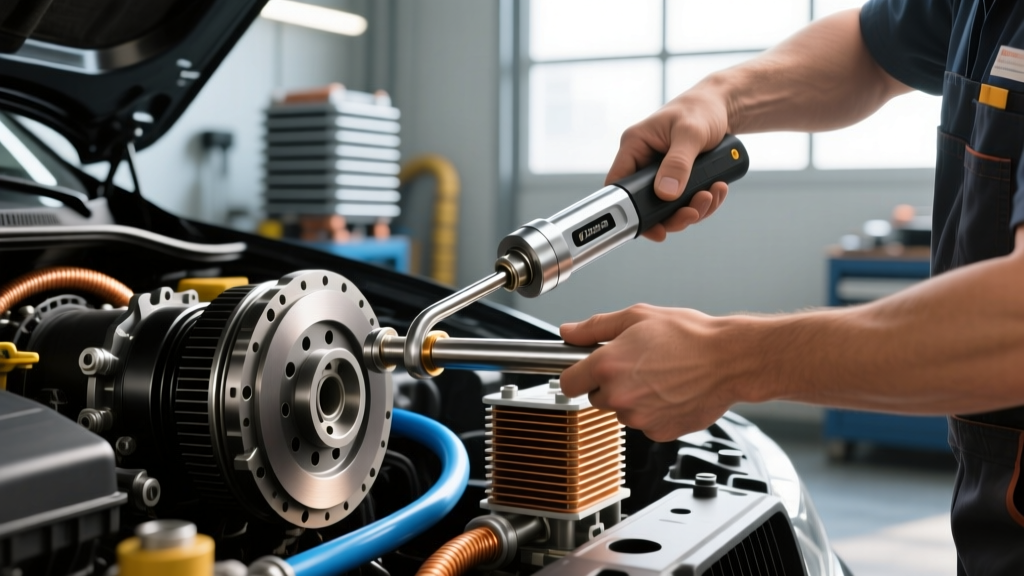
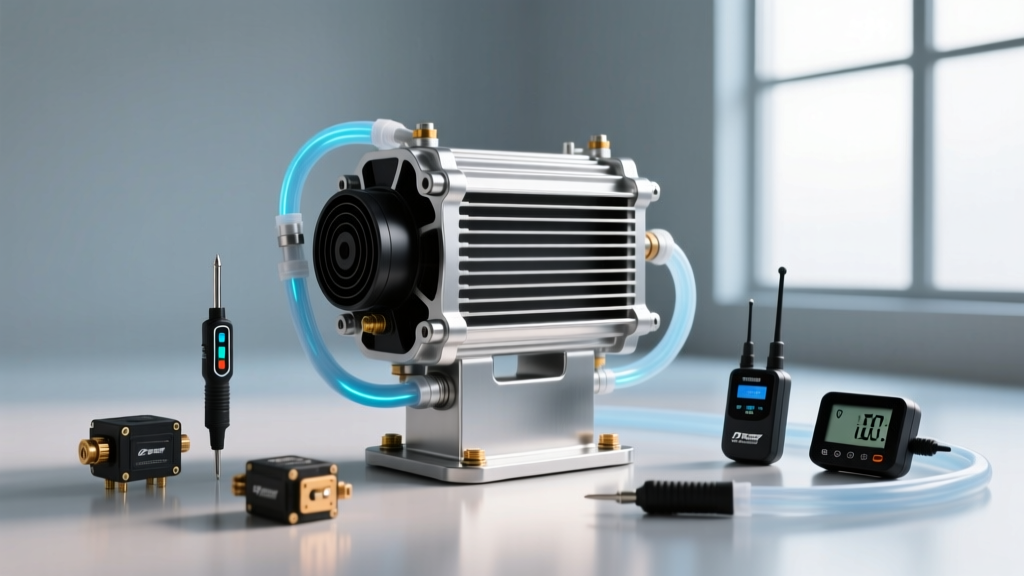
Inline sensors utilize Negative Temperature Coefficient (NTC) thermistors housed in brass or stainless steel probes. These are plumbed directly into the transmission cooler lines. The primary advantage is universal compatibility; the sensor reads the physical heat of the fluid regardless of the vehicle's computer protocols. The disadvantage is the invasive installation, which requires cutting factory lines and threading adapters.
2. OBD2 CAN-Bus Extraction
Modern CVTs already have internal temperature sensors (usually located in the valve body or pan) that report to the Transmission Control Module (TCM). However, standard OBD2 scanners cannot read this data. You must use an advanced monitor capable of reading manufacturer-specific CAN-bus PIDs. This requires zero plumbing modifications but demands custom gauge programming.
| Monitoring Method | Accuracy | Install Difficulty | Avg Cost (2026) | Best Application |
|---|---|---|---|---|
| Inline Analog Gauge | ± 5°F | Moderate (Line Cutting) | $80 - $130 | Older CVTs (2007-2014 JF011E) |
| Inline Digital Sensor | ± 2°F | Moderate (Line Cutting) | $110 - $160 | Heavy Towing / Off-Road |
| OBD2 PID Monitor | ± 1°F (TCM Data) | Easy (Plug & Play) | $180 - $250 | Modern CVTs (2018+ TR690, K120) |
Top CVT Transmission Cooler & Monitoring Combos
Based on thermal dissipation rates, sensor reliability, and real-world CVT line pressures, here are the top three cooler and monitoring combinations for 2026.
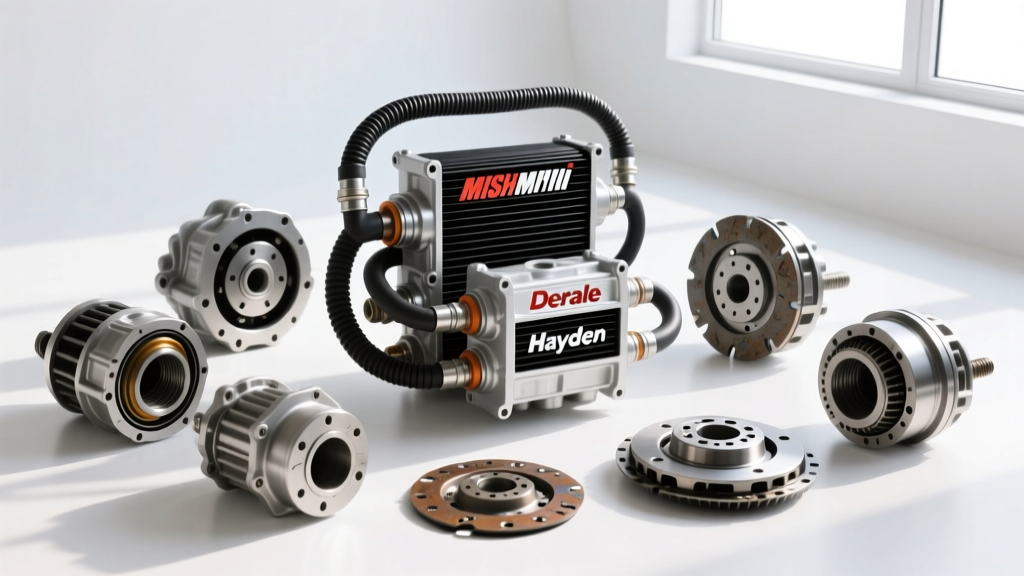
Combo 1: Derale Series 9000 Plate-and-Fin + Inline Digital Gauge
The Hardware: Derale Series 9000 (Part #13960) paired with the Derale Inline Fluid Temp Gauge (Part #32202).
Price Range: $145 (Cooler) + $65 (Gauge) = $210 Total.
Why it Works: The Series 9000 is a plate-and-fin design that offers 15% more surface area than standard tube-and-fin coolers, crucial for the low-flow, high-pressure nature of CVT hydraulic circuits. The inline gauge features a 1/8' NPT brass probe.
Expert Install Note: CVT lines operate at high pressures (up to 120 PSI in the pressure line). When installing the 1/8' NPT probe into a 3/8' inverted flare adapter, torque the brass fitting to exactly 15-18 lb-ft. Use Permatex 56521 Thread Sealant. Never use Teflon tape; tape shreds can bypass the cooler and lodge in the CVT's stepper motor or pressure control solenoids, causing immediate ratio-drop failures.
Combo 2: Mishimoto Stacked-Plate + ScanGauge III OBD2 Monitor
The Hardware: Mishimoto Universal Stacked-Plate Cooler (MMTC-U14) paired with the ScanGauge III.
Price Range: $160 (Cooler) + $229 (Monitor) = $389 Total.
Why it Works: Stacked-plate coolers offer the highest thermal transfer rates and lowest pressure drop, ensuring the CVT oil pump isn't overworked. The ScanGauge III allows you to program custom 'X-Gauges' to read the TCM's internal fluid temp sensor.
Expert Install Note: For Nissan Jatco CVTs, the standard OBD2 PID for transmission temp is often hidden. You will need to program an X-Gauge using the CAN ID 0x743 (varies by year) and the specific RX/TX hex codes to extract the CVTF temperature. This provides the most accurate reading of the fluid *inside* the transmission, rather than just the fluid exiting the cooler.
Combo 3: Hayden Rapid-Cool + Autometer Electrical Gauge
The Hardware: Hayden Rapid-Cool 678 (Plate-and-Fin) + Autometer 2 1/16' Electrical Temp Gauge (Part #3442).
Price Range: $75 (Cooler) + $115 (Gauge) = $190 Total.
Why it Works: A budget-friendly, highly reliable setup for daily drivers who occasionally tow. The Autometer gauge uses a 1/8' NPT sender and features a programmable warning light set to trigger at 225°F, giving you a visual cue to reduce load before CVTNS-3 fluid degradation begins.
Installation Physics: Pressure Line vs. Return Line
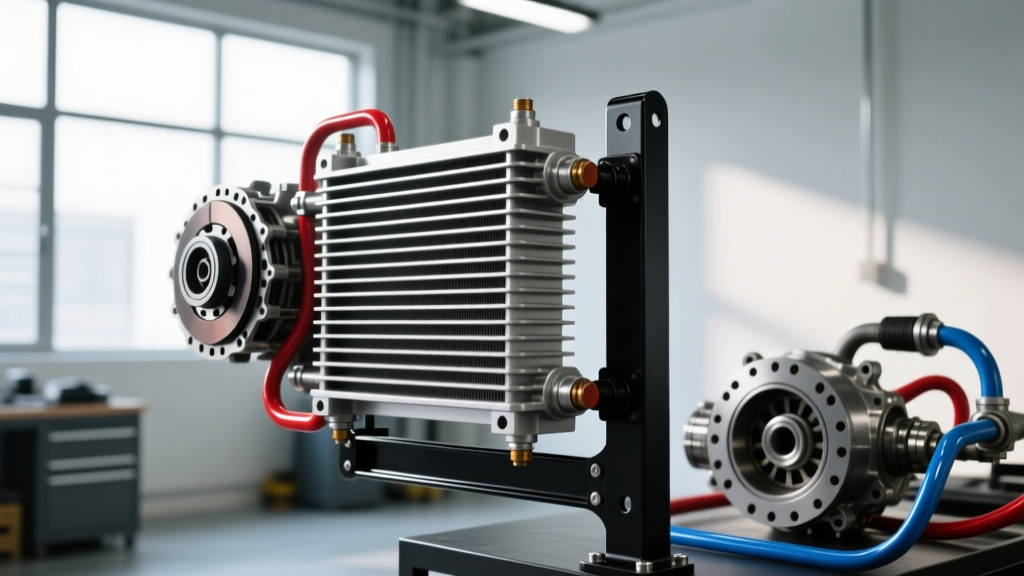
Where you place your inline temperature sensor fundamentally changes the data you receive. CVT cooling systems generally consist of a pressure line (fluid leaving the transmission toward the cooler) and a return line (fluid leaving the cooler back to the transmission/lube circuit).
- Pressure Line (Hot Side): Mounting the sensor here measures the peak thermal load generated by the torque converter and the push-belt/pulley friction. This is the best location for transmission health monitoring. If this sensor reads 240°F, your CVT is in immediate danger, regardless of cooler efficiency.
- Return Line (Cold Side): Mounting the sensor here measures the fluid temperature after it has passed through the radiator and auxiliary cvt transmission cooler. This is the best location for cooler efficiency monitoring. If the hot side reads 210°F and the cold side reads 185°F, you know your cooler is shedding 25°F of heat. If the delta shrinks to 5°F, your cooler fins are clogged or airflow is restricted.
For the ultimate setup, dual inline sensors with a differential digital gauge provide a complete thermodynamic picture of your CVT's cooling circuit.
Fluid Chemistry and the 220°F Threshold
Understanding why we monitor these temperatures requires a brief look at CVT fluid chemistry. Fluids like Nissan CVTNS-3, Subaru CVTF-II, and Toyota CVTF-FE rely on specialized friction modifiers designed specifically for steel-on-steel push-belt grip. Unlike traditional ATF (like Dexron VI), which primarily lubricates and actuates clutches, CVT fluid must maintain a precise coefficient of friction under extreme shearing forces.
When fluid temperatures cross the 220°F (104°C) threshold, the base oil begins to oxidize, and the friction modifiers burn off. This results in 'micro-slip' between the pulleys and the belt. The TCM detects this slip and commands higher line pressures to compensate, which generates more heat in a vicious cycle that ends in belt scoring and total transmission destruction. By pairing a high-capacity auxiliary cooler with a calibrated temp monitor, you can manually downshift or reduce load the moment the gauge crosses 210°F, preserving the fluid's chemical integrity.
The Verdict: Protecting Your CVT Investment
A CVT replacement in 2026 costs between $4,500 and $7,200. Spending $200 to $400 on a premium cvt transmission cooler and a dedicated temperature monitoring system is not just an upgrade; it is essential drivetrain insurance. For older vehicles lacking robust CAN-bus telemetry, the Derale Series 9000 with an inline digital gauge remains the gold standard for physical reliability. For newer platforms, leveraging the ScanGauge III to extract factory TCM data alongside a Mishimoto stacked-plate cooler offers the cleanest, most data-rich solution. Whichever route you choose, respect the thread torque specs, avoid Teflon tape, and never let your fluid cross the 225°F danger zone.