The Mechanics of 'Slip' in Cummins ISX Fan Drives
When automotive technicians hear the term 'clutch slipping,' they typically envision a worn friction disc in a manual transmission failing to transfer engine torque. However, in the context of heavy-duty diesel thermal management, a slipping fan clutch for Cummins ISX and X15 platforms refers to a completely different failure mode. Here, 'slip' means the viscous or electro-viscous fan drive fails to lock up and engage the engine fan at high temperatures, leaving the fan freewheeling when maximum airflow is critically required.
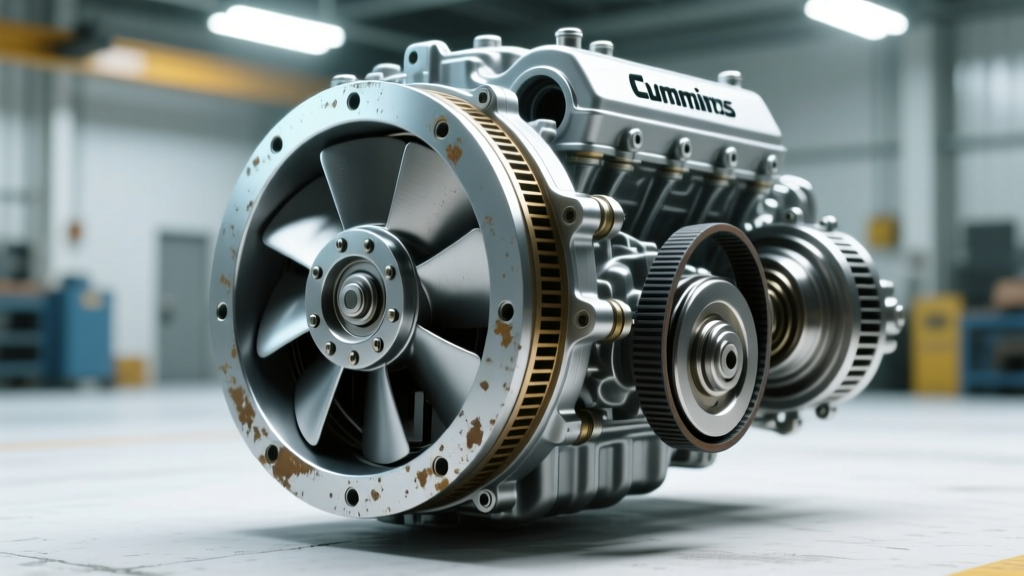
The Cummins ISX15 and subsequent X15 engines generate massive thermal loads, particularly under high-load, low-speed conditions like pulling a grade or idling in high ambient temperatures. These engines rely on advanced fan drives—such as the Horton High Torque Fan System (HTFS) or Schwitzer electro-viscous clutches—to modulate fan speed. When the internal silicone fluid degrades, the bimetallic spring fatigues, or the Pulse Width Modulation (PWM) solenoid fails, the clutch slips. This results in catastrophic thermal inefficiency, leading to engine derates, blown head gaskets, and HVAC system failure.
Primary Symptoms of a Slipping Fan Clutch
Diagnosing a slipping fan clutch requires looking beyond the temperature gauge. Modern Cummins ECMs will actively protect the engine by derating fuel delivery before the coolant reaches boiling point. Watch for these core symptoms:
- Creeping Engine Coolant Temperature (ECT): The most obvious sign. Under heavy load, the ECT will steadily climb past 220°F (104°C) and trigger a derate, yet the mechanical fan 'roar' is entirely absent.
- HVAC System Failure at Idle: The A/C condenser sits directly in front of the radiator. If the fan clutch is slipping and not pulling air across the condenser at idle, high-side A/C pressures will spike, causing the compressor to cycle off and blow warm air into the cab.
- Missing Auditory Engagement: A functioning heavy-duty fan clutch produces a distinct, aggressive mechanical roar when the thermal spring or ECM commands full lockup. A slipping clutch remains eerily quiet even when the engine is lugging.
- Active Diagnostic Trouble Codes (DTCs): Electronic fan clutches will log specific faults when the ECM detects a circuit anomaly or a rationality error (commanding engagement but seeing no RPM change).
Common Cummins Fan Clutch Fault Codes
| SPN (Suspect Parameter Number) | FMI (Failure Mode Identifier) | Description & Diagnostic Meaning |
|---|---|---|
| 3563 | 3 | Engine Fan Clutch Circuit - Voltage Above Normal (Short to Power) |
| 3563 | 5 | Engine Fan Clutch Circuit - Current Below Normal (Open Circuit/Slipping Solenoid) |
| 647 | 7 | Engine Fan Clutch - Mechanical System Not Responding (ECM commands lockup, but fan RPM does not increase; indicates severe viscous slip) |
Step-by-Step Diagnostic Protocol
To accurately diagnose a slipping fan clutch for Cummins ISX engines, technicians must move past visual inspections and leverage both thermal imaging and ECM data logging. Follow this preventive maintenance and diagnostic workflow:
Step 1: The Cold Spin and Mechanical Inspection
With the engine off and completely cold, attempt to spin the fan blade by hand. A healthy viscous clutch should offer noticeable resistance due to the silicone fluid resting in the working chamber. If the fan spins freely with zero resistance, the internal fluid reservoir has likely leaked out or severely sheared over high mileage. Inspect the clutch body for streaks of oily residue, which indicates a blown shaft seal.
Step 2: Cummins INSITE ECM Override
For electro-viscous clutches, connect to the ECM using Cummins INSITE software. Navigate to the Cylinder Cutout / Fan Override tests. Command the fan clutch solenoid to a 100% PWM duty cycle.
Expected Result: The fan should aggressively engage, and you should hear the mechanical roar.
Failure Result: If the solenoid clicks but the fan continues to freewheel (slip), the internal friction lining or viscous fluid is compromised, requiring full assembly replacement. If the solenoid does not click, trace the wiring harness for chafing against the front gear cover.
Step 3: Infrared Thermal Testing
For purely thermal/viscous clutches without electronic overrides, use an infrared thermometer gun. Run the engine until the ECT reaches 205°F (96°C). Aim the thermometer directly at the bimetallic spring on the front face of the fan clutch. The spring is calibrated to open the internal valve and allow fluid into the shear chamber typically between 190°F and 210°F (88°C - 99°C). If the spring temperature reads 215°F+ but the fan remains disengaged and quiet, the internal valve is seized or the clutch is slipping internally.
Preventive Maintenance Guide
While fan clutches are generally considered 'run-to-failure' components, specific preventive maintenance tasks can extend their lifespan and prevent false 'slipping' symptoms caused by external factors. According to data from Cummins QuickServe Online, maintaining the thermal envelope around the clutch is vital.
| Maintenance Task | Interval | Impact on Fan Clutch Performance |
|---|---|---|
| Radiator & CAC Cleaning | Every 150,000 miles or annually | Packed dirt insulates the radiator, preventing ambient air from reaching the clutch's thermal spring, causing delayed engagement and perceived slipping. |
| Serpentine Belt & Tensioner Check | Every 50,000 miles | A weak automatic tensioner allows the belt to slip on the fan pulley under high torque load, mimicking a slipping fan clutch. |
| Wiring Harness Inspection | During every oil change | Inspect the pigtail connector for brittleness and ensure the harness is not rubbing against the vibration damper or front cover. |
Replacement Specifications and Torque Data
When diagnosis confirms the fan clutch is internally slipping and beyond repair, replacement must be executed with precision. Heavy-duty fan blades are under immense centrifugal stress; improper torque can lead to catastrophic fan detachment and radiator destruction.
Note: Always verify exact specifications against the specific Horton or Schwitzer part number installed, as aftermarket variations exist.
- OEM Cummins / Horton Assembly Cost: $650 - $950 USD (New)
- Remanufactured Unit Cost: $350 - $500 USD
- Standard Labor Time: 1.5 to 2.5 Hours
Critical Torque Specifications (Typical ISX15 / X15 Applications)
| Component Interface | Hardware Size | Torque Specification |
|---|---|---|
| Fan Blade to Fan Clutch Flange | M8 / M10 Bolts | 25 - 35 lb-ft (34 - 47 Nm) |
| Fan Clutch Hub to Pulley / Adapter | M12 x 1.75 Bolts | 65 - 80 lb-ft (88 - 108 Nm) |
| Pulley to Water Pump / Front Cover | M10 / M12 Bolts | 45 - 60 lb-ft (61 - 81 Nm) |
Final Thoughts on Thermal Management
A slipping fan clutch on a Cummins ISX is rarely a sudden event; it is usually the culmination of silicone fluid shearing, thermal spring fatigue, or electrical degradation over hundreds of thousands of miles. By understanding the difference between viscous slip and electronic rationality faults, and by utilizing INSITE overrides alongside thermal imaging, technicians can accurately pinpoint the failure. Adhering to strict preventive maintenance regarding the cooling stack and belt drive ensures that when the ECM or thermal spring calls for maximum airflow, the fan clutch locks up exactly as engineered.