The Baseline: Understanding the Conventional Rear Axle
When outfitting a modern truck or SUV for heavy towing, off-road trailering, or high-mileage durability, the drivetrain's weakest link is often overlooked. While enthusiasts obsess over transmission coolers and engine tuning, the conventional differential rear axle quietly handles immense rotational stress. A conventional, or "open," differential is standard equipment on most half-ton and three-quarter-ton trucks straight from the factory. While adequate for light commuting, pushing a 7,000-pound trailer up a 6% grade generates extreme heat in the rear axle housing, rapidly degrading standard gear oil and accelerating wear on the ring and pinion. This performance and upgrade guide details exactly how to maintain, fortify, and upgrade your conventional differential rear axle to handle severe-duty cycles in 2026 and beyond.
Most factory trucks—including the Ford F-150 (8.8-inch and 9.75-inch axles), Chevrolet Silverado 1500 (8.6-inch and 9.5-inch), and Ram 1500 (ZF 8HP-equipped models with AAM 9.25 axles)—utilize a conventional open differential. In an open setup, torque is distributed equally to both wheels, but the path of least resistance dictates wheel spin. If one tire loses traction, all power routes to that spinning wheel, leaving the truck stranded. From a maintenance perspective, the open differential is robust and relatively simple, featuring a carrier, spider gears, side gears, and a ring and pinion set. However, under heavy towing loads, the hypoid gear contact pattern generates massive sliding friction. If the fluid shears or oxidizes, the extreme pressure (EP) additives fail, leading to micro-pitting on the gear teeth and eventual catastrophic bearing failure.
Fluid Dynamics: Upgrading Gear Oil for Heavy-Duty Cycles
The most immediate and cost-effective performance upgrade for any conventional differential rear axle is abandoning factory-fill conventional or synthetic-blend gear oils in favor of severe-duty full synthetics. Factory specifications typically call for 75W-90 API GL-5 gear oil. While sufficient for empty-bed commuting, towing heavy fifth-wheel or travel trailers pushes differential sump temperatures past 250°F (121°C). At these temperatures, standard 75W-90 fluids experience viscosity shear, thinning out and compromising the protective hydrodynamic film between the ring and pinion gears.
Upgrading to a 75W-140 full synthetic gear oil, such as AMSOIL Severe Gear or Royal Purple Max Gear, provides a thicker protective film at high operating temperatures. Synthetic base stocks resist oxidation and thermal breakdown far better than petroleum-based oils, ensuring that the EP additives (like zinc and phosphorus) remain active on the gear surfaces. For trucks frequently towing over 6,000 pounds or operating in steep mountain grades, the 75W-140 viscosity is practically mandatory to protect the hypoid gear set.
Fluid Capacities & Upgrade Specifications for Popular Truck Axles
| Axle Model | Common Vehicles | Factory Fill | Severe Duty Upgrade | Capacity (Approx.) |
|---|---|---|---|---|
| Ford 9.75-inch | F-150 (Heavy Duty Payload) | 75W-140 Synthetic | 75W-140 Full Synth + Friction Mod | 2.0 - 2.2 Quarts |
| GM 9.5-inch 14-Bolt | Silverado/Sierra 2500HD | 75W-90 Synthetic | 75W-140 Full Synthetic | 2.75 Quarts |
| AAM 11.5-inch | Ram 2500/3500, GM 3500HD | 75W-90 Synthetic | 75W-140 Full Synthetic | 3.5 - 4.0 Quarts |
| Dana 60 | F-250 Super Duty (Front/Rear) | 80W-90 or 75W-140 | 75W-140 Severe Duty Synth | 3.0 - 3.5 Quarts |
Traction & Hardware Upgrades Beyond the Open Diff
While fluid maintenance preserves the hardware, upgrading the internal carrier transforms the truck's performance. If your conventional differential rear axle constantly suffers from one-wheel peel on wet boat ramps or muddy job sites, it is time to swap the open carrier for a limited-slip differential (LSD) or a locking differential.
For towing and daily driving, the Eaton Truetrac is the gold standard. Unlike traditional clutch-type LSDs that require periodic friction modifier additives and eventually wear out, the Truetrac uses a helical gear design. It operates smoothly as an open diff on the highway but automatically multiplies torque to the wheel with traction when slip occurs. Because it contains no clutch packs, it requires zero friction modifiers—just your high-quality 75W-140 synthetic gear oil.
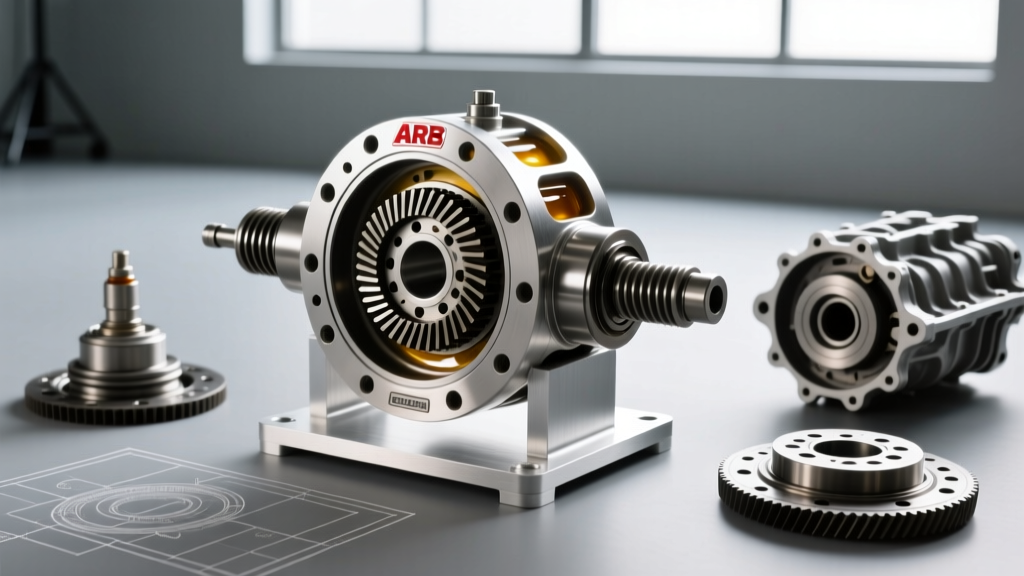
For dedicated off-road SUVs and heavy-duty trail trucks, full locking differentials like the Detroit Locker or ARB Air Locker provide 100% lockup. However, lockers can cause drivetrain binding and tire chirping on dry pavement during tight turns, making them less ideal for daily-driven tow rigs compared to helical or automatic lockers.
Step-by-Step Heavy-Duty Maintenance Protocol
Performing a differential fluid service on a truck axle requires precision to avoid stripped threads and over-torqued covers. Many DIYers mistakenly use RTV silicone on differential covers that were designed to use reusable rubber or cork gaskets, leading to silicone chunks breaking off and clogging the oil pickup or scoring bearings.
Essential Torque Specifications & Procedures
- Differential Cover Bolts: Over-tightening cover bolts will warp the stamped steel or cast aluminum cover, causing leaks. For the GM 9.5-inch and AAM 11.5 axles, torque the cover bolts to exactly 25-30 lb-ft. For the Ford 8.8 and 9.75, aim for 21-26 lb-ft. Always use a star-pattern tightening sequence.
- Fill and Drain Plugs: Most modern truck axles use a 3/8-inch or 1/2-inch square drive fill plug. Torque these to 18-22 lb-ft. Do not use an impact wrench, as the plug heads are prone to rounding off.
- Magnetic Plugs: Upgrade your factory fill plug to a magnetic drain/fill plug (e.g., PPE or Mishimoto). This captures microscopic ferrous shavings from the ring and pinion break-in process, keeping the fluid cleaner for longer.
- Pinion Seal Inspection: While the fluid is draining, inspect the pinion seal for weeping. A leaking pinion seal will sling gear oil directly onto the brake rotors or drums, causing severe braking hazards. Replacement requires a pinion nut torque wrench (typically 150-250 lb-ft to maintain bearing preload) and a new crush sleeve.
For a complete synthetic fluid swap, expect to spend between $80 and $130 on premium fluids and gaskets if doing it yourself, or $180 to $280 at a specialized drivetrain shop.
Troubleshooting Conventional Axle Whine and Chatter
Even with meticulous maintenance, high-mileage truck axles can develop acoustic anomalies. Diagnosing the noise accurately prevents unnecessary teardowns.
Gear Whine on Deceleration: A howling or whining noise that peaks when you let off the throttle (driving the coast side of the gear teeth) typically indicates excessive backlash or worn pinion bearings. This is common on trucks that have towed heavy loads without frequent fluid changes, as the bearings wear and allow the pinion gear to deflect away from the ring gear.
Chatter During Turns: If you have upgraded from a conventional open differential to a clutch-type LSD and experience a shuddering chatter during low-speed parking lot turns, your friction modifier is either depleted or was never added. Adding 4 to 6 ounces of a high-quality LSD additive (like Torco or Red Line ShockProof with friction modifier) and performing several figure-eight maneuvers will burnish the clutches and eliminate the noise.
Growling at Highway Speeds: A continuous low-frequency growl that changes pitch with vehicle speed, regardless of throttle position, usually points to failing carrier bearings or axle shaft bearings, rather than the ring and pinion gears themselves. Sourcing replacement bearings from Spicer Parts (Dana) or Timken ensures OEM-level durability and precise tolerances for heavy-duty applications.
Final Thoughts on Axle Reliability
Maintaining and upgrading a conventional differential rear axle is a cornerstone of truck and SUV reliability. By transitioning to severe-duty 75W-140 synthetic fluids, adhering to strict torque specifications, and selectively upgrading traction components like the Eaton Truetrac, you transform a vulnerable factory weak point into a bulletproof asset capable of handling the most demanding towing and off-road environments. Treat your differential maintenance with the same rigor as your engine oil, and your drivetrain will deliver hundreds of thousands of trouble-free miles.