The Physics of Commercial Clutch Slippage in Class 8 Trucks
When operating a Class 8 commercial vehicle at an 80,000 lbs Gross Combination Weight Rating (GCWR), the drivetrain is subjected to immense parasitic and shock loads. Heavy-duty clutch slippage is not merely a symptom of wear; it is a critical thermal failure point. As we navigate the 2026 automotive landscape, stringent EPA and CARB Omnibus emission standards have forced OEMs like Cummins and Detroit Diesel to tune engines for aggressive low-end torque delivery. This down-speeding strategy places unprecedented thermal stress on the friction interface, making traditional organic clutches highly susceptible to glazing and slippage under heavy grade loads.
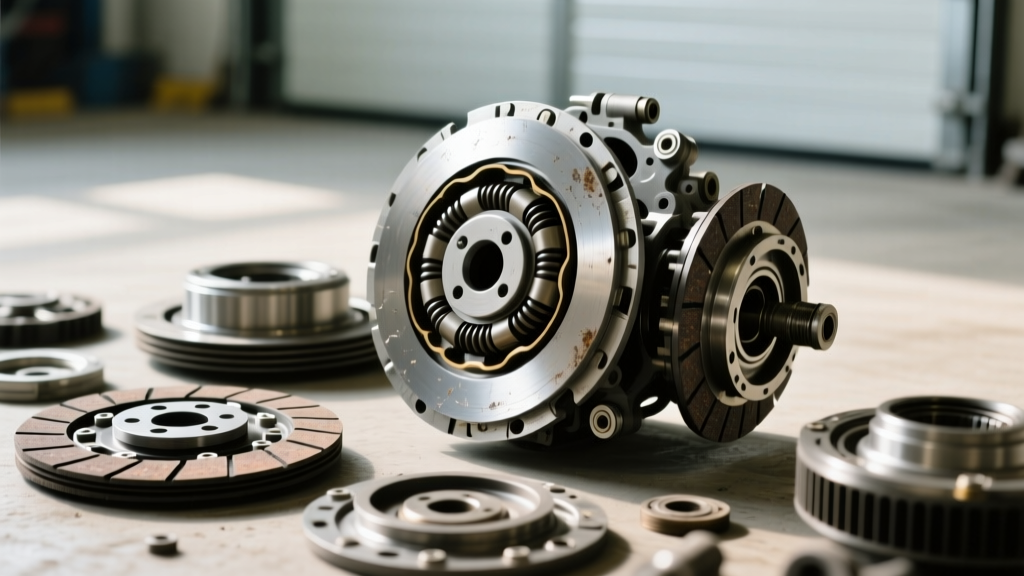
In a standard 15.5-inch twin-plate heavy-duty clutch assembly, the diaphragm spring must generate upwards of 3,800 to 4,200 lbs of clamp load. When the coefficient of friction drops due to thermal decay, oil contamination from a failing rear main seal, or improper clutch brake clearance, the kinetic energy is converted into heat rather than rotational force. This results in rapid facing degradation, flywheel scoring, and ultimately, catastrophic driveline disconnect.
Diagnostic Protocols: Manual vs. AMT Drivetrains
Diagnosing slippage in modern commercial fleets requires a bifurcated approach, depending on whether the vehicle utilizes a traditional manual transmission (e.g., Eaton Fuller RTLO-18918B) or an Automated Manual Transmission (AMT) like the Eaton Endurant XD or Volvo I-Shift.
The Lug-Down Test (Manual Transmissions)
For manual gearboxes, the definitive field test for clutch slippage is the lug-down test. Find a safe, steep incline or use a loaded dyno. Engage the highest gear that allows the engine to maintain 1,100 RPM at 55 MPH. Apply full throttle. If the engine RPM climbs disproportionately to the vehicle speed or the pyrometer shows a sudden, massive spike in Exhaust Gas Temperatures (EGTs) without corresponding acceleration, the friction discs are slipping.
Electronic Clutch Actuator (ECA) Drift (AMT Systems)
In AMT systems, clutch slippage often masquerades as electronic fault codes. The Electronic Clutch Actuator (ECA) uses a brushless motor and ball-screw mechanism to modulate the release bearing. If the friction disc wears beyond the ECA's software compensation threshold (typically around 2.5mm of facing loss per plate), the ECA cannot achieve full clamp load, triggering a 'Clutch Slip' limp-mode code. Before condemning the clutch, technicians must perform an ECA recalibration via the OEM diagnostic software (e.g., Eaton ServiceRanger) to reset the clutch wear index and touch-point parameters.
Friction Material Upgrades: Organic vs. Ceramic vs. Aramid
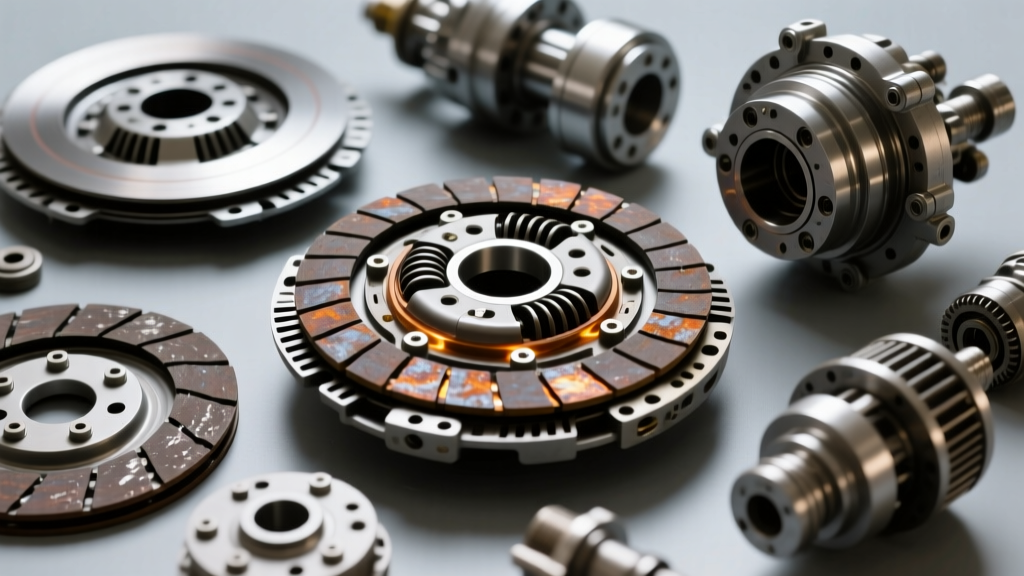
When clutch slippage is confirmed, the performance upgrade path depends on the specific duty cycle of the vehicle. Upgrading from OEM organic facings to advanced metallurgical or synthetic compounds is essential for heavy-haul, logging, or vocational applications.
| Material Type | Torque Capacity | Heat Threshold | Engagement Profile | Best Application |
|---|---|---|---|---|
| Organic (OEM) | Base (1,850 lb-ft) | Up to 400°F | Smooth, progressive | Line-haul, highway cruising |
| Cerametallic | +35% over OEM | Up to 800°F | Aggressive, abrupt | Heavy-haul, logging, oil fields |
| Aramid (Kevlar) | +20% over OEM | Up to 600°F | Smooth, high burst strength | Vocational, stop-and-go PTO |
For fleets experiencing chronic slippage on steep grades, a LuK Cerametallic twin-plate upgrade provides the necessary bite. However, ceramic materials require a specific break-in procedure (typically 500 miles of moderate engagement) to properly seat the friction matrix to the cast-iron flywheel. Failure to bed-in a ceramic clutch will result in immediate micro-slippage and chatter.
Precision Installation: Torque Specs and Alignment
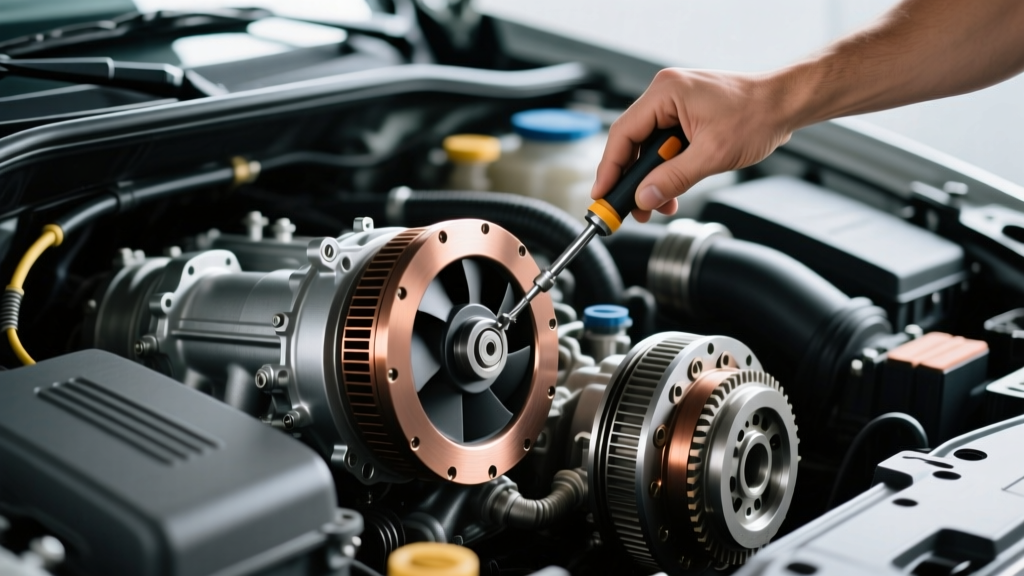
Heavy-duty clutch replacement is an exercise in precision. A misaligned 15.5-inch clutch or improperly torqued flywheel will induce harmonic vibrations that shatter the friction facings, leading to premature slippage. According to SAE International drivetrain guidelines, concentricity between the crankshaft pilot bearing, flywheel, and transmission input shaft must be within 0.005 inches.
Expert Technician Note: Never use an impact wrench to seat heavy-duty clutch cover bolts. The uneven clamping force will warp the diaphragm spring, permanently reducing clamp load by up to 15% and guaranteeing future clutch slippage under load.
Cummins X15 & Detroit DD15 Flywheel Specifications
- Cummins X15 (Flywheel to Crank): 125 lb-ft (169 Nm). Use OEM forged steel bolts; do not reuse stretch bolts.
- Detroit DD15 (Flywheel to Crank): 110 lb-ft + 60-degree turn. Ensure the mating surface is machined to a 32-64 RA micro-finish to prevent organic or ceramic facing tearing.
- Clutch Cover to Flywheel (1/2-inch bolts): 55-65 lb-ft in a strict star pattern, incrementally tightening in three passes to ensure even diaphragm spring seating.
Eaton Solo Advantage Free-Play Calibration
One of the leading causes of clutch slippage in heavy-duty trucks is improper clutch brake adjustment. The Eaton Solo and Solo Advantage clutches require precise release bearing clearance. After installation, adjust the external linkage so that there is exactly 1/2-inch (12.7mm) of free-play at the clutch pedal before the release bearing contacts the clutch brake. If the clearance is too tight, the release bearing will ride on the clutch brake during highway cruising, preventing the diaphragm spring from applying full clamp load and causing continuous, low-level slippage that will destroy the assembly within 20,000 miles.
Cost Analysis: OEM Replacement vs. Performance Upgrades
Upgrading a heavy-duty clutch system requires a financial calculus that weighs initial parts cost against downtime and replacement labor. Replacing a heavy-duty clutch requires dropping the entire axle and driveshaft assembly, with shop labor rates averaging $165 to $225 per hour in 2026.
- OEM Organic Replacement (e.g., Eaton Solo Advantage 15.5"): Parts cost ranges from $900 to $1,300. Ideal for standard 80,000 lbs GCWR line-haul operations.
- Performance Cerametallic Upgrade (e.g., Ramco or LuK Heavy-Duty Twin-Plate): Parts cost ranges from $1,600 to $2,400. Includes upgraded marcel springs and heavy-duty dampers to absorb the torsional spikes of high-horsepower (500+ HP) tuning.
- Labor & Ancillaries: Expect 12 to 18 hours of labor ($2,000 - $4,000). It is mandatory to replace the rear main seal, pilot bearing, and resurface or replace the dual-mass or rigid flywheel during this service.
For commercial operators, investing in a ceramic performance upgrade is highly recommended if the vehicle frequently operates in mountainous terrain or exceeds standard GCWR limits. By addressing the root thermal causes of clutch slippage through advanced friction materials and strict adherence to torque and free-play specifications, fleets can extend clutch service life from the OEM average of 350,000 miles to well over 600,000 miles, drastically reducing total cost of ownership. For further technical bulletins on AMT calibration and manual clutch mechanics, refer to the Eaton commercial drivetrain portal.