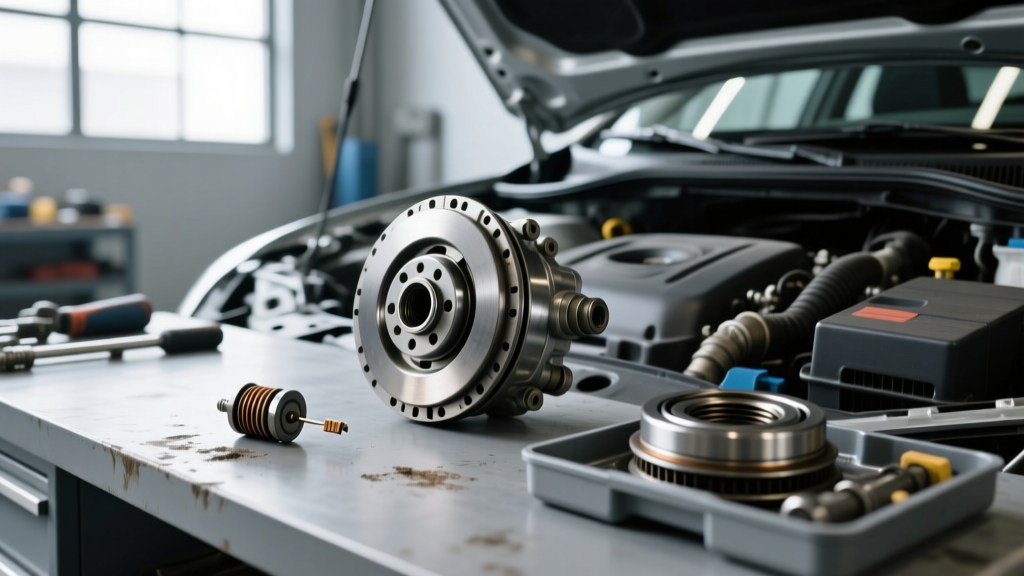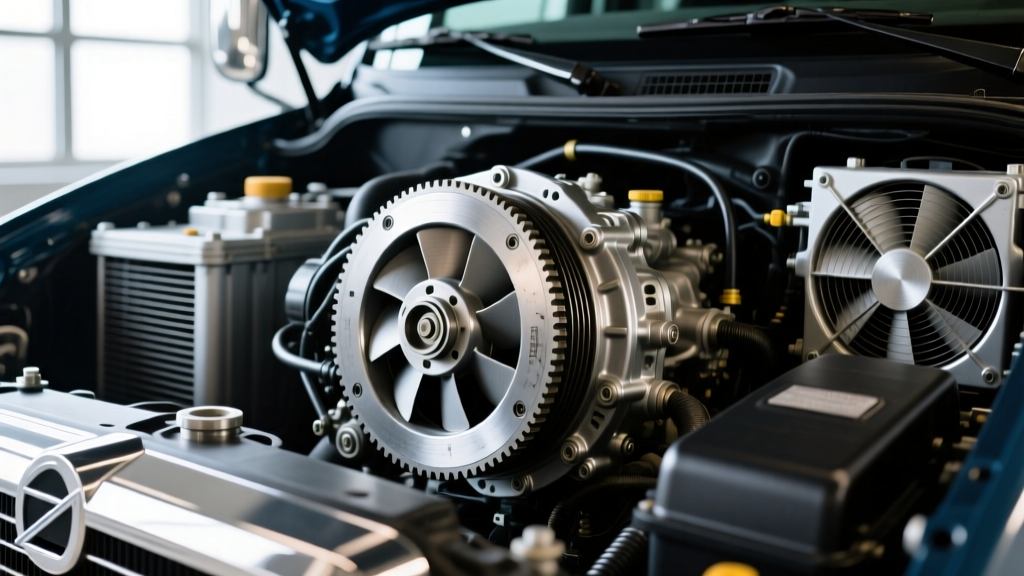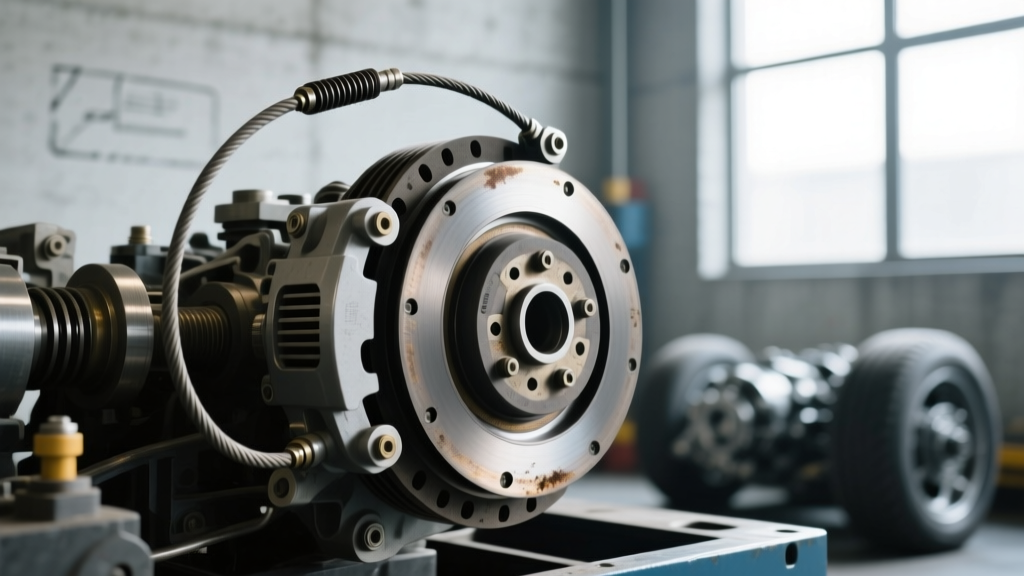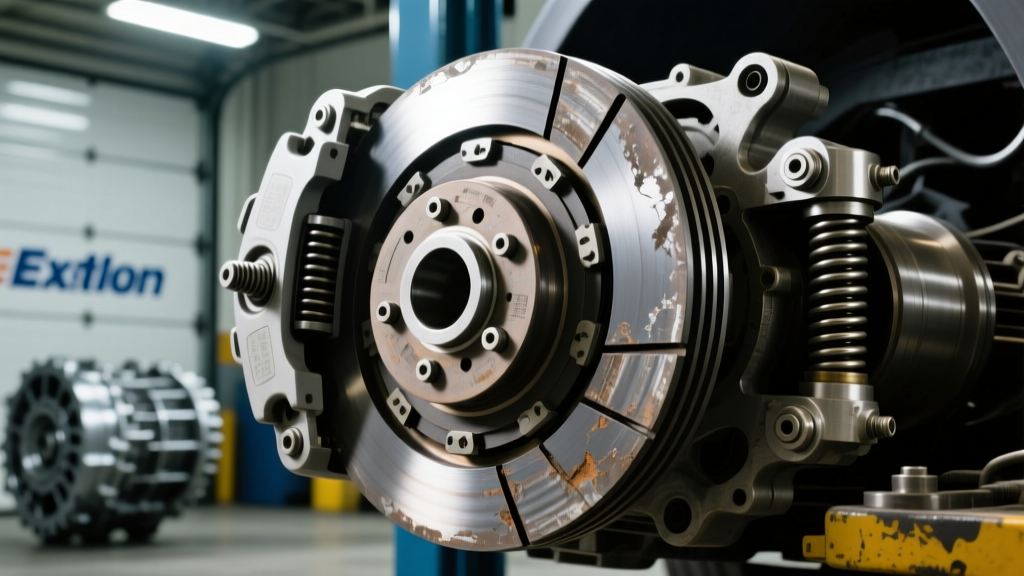
The Precision Paradigm: From Sportbikes to Class 8 Rigs
When high-performance drag racers tune a Suzuki GSX1300R Hayabusa to handle 600+ horsepower, they rely on meticulous clutch stack height measurements, exact spring tension mapping, and flawless cable freeplay adjustments. A fraction of a millimeter in stack height deviation can mean the difference between a holeshot-winning launch and a burnt friction pack. In the heavy-duty commercial vehicle sector, diagnosing and upgrading clutch systems demands this exact same 'micrometer mindset.' Modern Class 8 trucks pulling 80,000 lbs GCW with engines like the Cummins X15 Efficiency Series generate up to 2,050 lb-ft of torque. When fleet technicians ignore the precision principles akin to a Hayabusa clutch adjustment, the result is catastrophic drivetrain shock, premature release bearing failure, and severe clutch chatter.
This 2026 performance and upgrade guide bridges the gap between extreme sportbike tuning methodologies and heavy-duty commercial clutch diagnostics. We will explore how applying hyper-precise adjustment tactics solves chronic clutch problems in heavy-duty and commercial vehicles, while outlining the best performance upgrades for modern fleet operations.
Top Commercial Clutch Problems in Heavy-Duty Fleets
Before applying advanced adjustment tactics, we must identify the failure modes unique to high-torque diesel applications. Unlike passenger vehicles, commercial drivetrains suffer from low-RPM torsional resonance and massive thermal inertia.
- Torsional Chatter and Gear Rattle: Diesel engines produce aggressive torque pulses at low RPMs. If the clutch disc's multi-stage torsional dampers (creep springs and arc springs) fail or are mismatched to the engine's firing frequency, the drivetrain experiences violent chatter upon engagement, often destroying transmission input shafts.
- Clutch Brake Failure and Gear Grinding: Manual transmissions like the Eaton Fuller RTLO-18918B rely on a clutch brake to stop the input shaft for smooth first-gear engagement. If the clutch brake squeeze is out of spec, the brake fails to engage, resulting in severe gear grinding and synchronizer damage.
- Thermal Slipping Under Load: Glazed organic friction discs lose their coefficient of friction when subjected to prolonged slip on steep grades. This is often misdiagnosed as a weak pressure plate when the true culprit is improper pedal free travel causing constant, microscopic release bearing contact.
- Release Bearing and Fork Wear: Automated Manual Transmissions (AMTs) like the ZF TraXon use pneumatic or electromechanical actuators. Incorrect calibration of the actuator stroke mimics the symptoms of a rider resting their foot on a manual clutch pedal, leading to premature bearing disintegration.
Applying Hayabusa Clutch Adjustment Methodology to Commercial Diagnostics
The core philosophy of a Hayabusa clutch adjustment is the strict adherence to stack height and freeplay mapping. In a sportbike dry-clutch conversion, technicians measure the pressure plate stack height to ensure the diaphragm spring operates exactly in its optimal load-deflection curve. We apply this exact methodology to heavy-duty 15.5-inch and 14-inch commercial clutches.
Mapping Free Travel and Clutch Brake Squeeze
In a commercial truck, the equivalent of sportbike stack height tuning is the precise calibration of the clutch pedal free travel and the clutch brake squeeze. For an Eaton Fuller Solo Advantage clutch, the pedal free travel must be exactly 1.5 inches (38mm). This ensures the release bearing has a minimum of 0.125 inches of clearance from the clutch brake when engaged.
The critical metric is the clutch brake squeeze—the distance the pedal travels after the freeplay is taken up, before hitting the floor or firewall stop. This must measure between 0.500 and 0.625 inches. If the squeeze is less than 0.500 inches, the clutch brake cannot fully compress, causing gear clash. If it exceeds 0.625 inches, the release bearing is over-traveling, causing the diaphragm spring to invert and slip under high torque loads. Just as a Hayabusa tuner uses feeler gauges to set pack clearance, a master diesel technician must use a ruler and calipers to verify these clearances at the bellhousing inspection cover, not just at the pedal.
Performance Upgrades: Organic vs. Cerametallic Twin-Plate
When commercial vehicles are uprated for heavy-haul, logging, or extreme terrain applications, standard 15.5-inch organic single-plate clutches reach their thermal limits rapidly. Upgrading to a twin-plate cerametallic setup provides the necessary torque capacity, but requires strict adherence to manufacturer break-in procedures and linkage adjustments.
| Feature | Eaton Solo Advantage (OEM Organic) | Twin-Plate Cerametallic (Performance Upgrade) | ZF TraXon AMT (Automated) |
|---|---|---|---|
| Max Torque Capacity | 1,850 lb-ft | 2,250+ lb-ft | 2,550 lb-ft (w/ over-torque) |
| Friction Material | Organic / Kevlar Blend | Cerametallic / Sintered Iron | Organic Multi-Plate Wet/Dry |
| Torsional Damping | Standard Arc Springs | Heavy-Duty Multi-Stage Creep Springs | Active Torsional Damper (Software) |
| Clutch Brake Squeeze | 0.500' - 0.625' | 0.500' - 0.625' (Requires heavy-duty brake) | Actuator Calibrated (No manual adjustment) |
| Estimated 2026 Cost | $900 - $1,400 (Kit) | $2,800 - $4,500 (Kit) | $12,000+ (Full Assembly) |
| Best Application | Line-haul, Regional Freight | Heavy Haul, Oilfield, Logging | Modern Fleet, Mixed Terrain |
Heavy-Duty Torque Specifications and Installation Data
A performance upgrade is only as reliable as its installation. Torsional vibration in heavy-duty diesets will quickly loosen improperly torqued fasteners, leading to catastrophic flywheel separation. When performing a clutch replacement or upgrade, adherence to OEM torque specifications is non-negotiable.
Critical Fastener Torques (Cummins X15 / Eaton Fuller Setup)
- Flywheel to Crankshaft (Grade 12.9 Bolts): 125 lb-ft, followed by an additional 60-degree turn. Always use new, oiled bolts. Reusing stretch bolts will result in flywheel walk and clutch chatter.
- Clutch Cover to Flywheel (15.5-inch): 120 lb-ft. Must be tightened in a star-pattern sequence, drawing the cover down evenly to prevent warping the diaphragm spring housing.
- Bellhousing to Engine Block: 105 lb-ft. Bellhousing bore runout must be measured with a dial indicator; it must not exceed 0.008 inches TIR (Total Indicator Reading). Excessive runout causes the transmission input shaft to bind, mimicking clutch drag symptoms.
- Clutch Brake Mounting Hardware: 35 lb-ft with medium-strength threadlocker. A loose clutch brake will rattle and fail to stop the input shaft.
The Break-In Protocol: A Lesson in Thermal Management
Just as a high-performance Hayabusa requires a specific bedding-in procedure for its drag clutch to seat the friction surfaces without glazing, heavy-duty cerametallic twin-plate clutches require a strict break-in protocol. For the first 500 miles, the vehicle must be operated without exceeding 70% of its rated torque capacity. Avoid 'dumping' the clutch or slipping it excessively on inclines. The sintered iron material requires heat cycling to transfer a uniform layer of friction material to the flywheel and intermediate plates. Skipping this step will result in permanent chatter and a 40% reduction in the clutch's operational lifespan.
Conclusion: Precision is Profitability
Diagnosing clutch problems in heavy-duty and commercial vehicles is not about brute force; it is about precision. By adopting the exact, measurement-driven tactics used in Hayabusa clutch adjustment—focusing on stack height equivalents, strict freeplay mapping, and meticulous torque application—fleet technicians can eliminate chronic drivetrain complaints. Whether you are calibrating a manual Eaton Fuller 18-speed or upgrading to a high-capacity twin-plate cerametallic setup for heavy-haul operations, the data is clear: micrometer-level attention to detail is the ultimate performance upgrade.