The Hidden Drivetrain: Understanding VNL Fan Clutch Dynamics
When heavy-duty diesel technicians hear the word 'clutch,' their minds immediately jump to the transmission bell housing. However, the auxiliary drivetrain components bolted to the front of the engine—specifically the fan clutch—operate on the exact same friction and fluid-shear principles as your primary driveline. For fleet owners and owner-operators running Volvo VNL models equipped with D11 and D13 engines, a failing fan clutch doesn't just cause overheating; it introduces severe chatter, harmonic vibration, and parasitic drag that mimics a failing transmission.
In this 2026 performance and upgrade guide, we are treating the Volvo VNL fan clutch with the diagnostic rigor it deserves. We will dissect the root causes of clutch chatter and vibration, map out precision diagnostic protocols, and explore high-performance Electromagnetic Actuated (EMA) upgrades that outperform aging OE viscous units under heavy haulage loads.
Anatomy of Chatter: Viscous Shear vs. EMA Friction
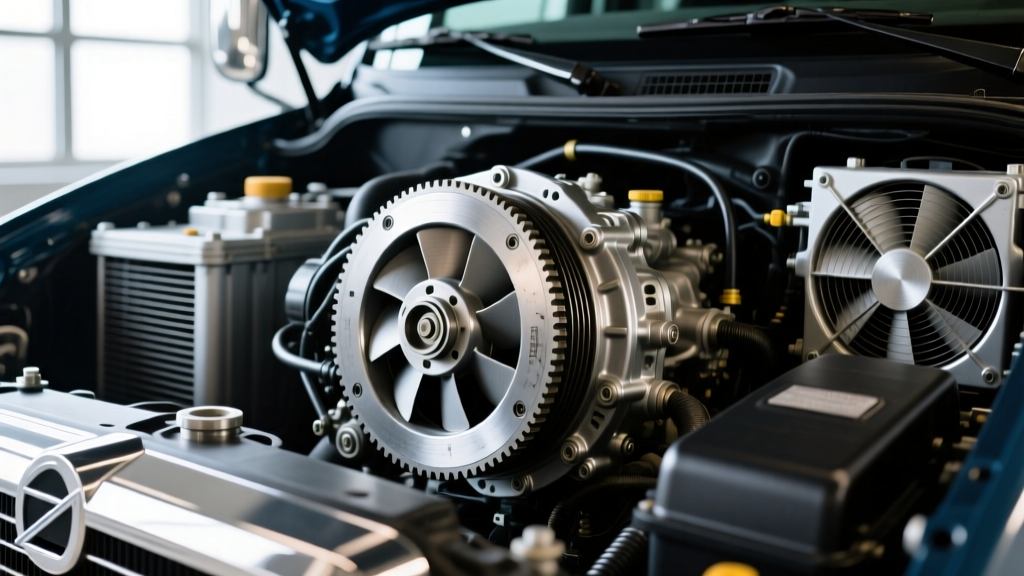
To diagnose chatter, you must first understand the architecture of your specific Volvo VNL cooling drive. Historically, VNL trucks utilized thermal-viscous fan clutches (often manufactured by Kysor or Horton). These rely on a bimetallic strip that opens a valve, allowing silicone fluid to transfer torque from the input shaft to the fan blade assembly.
The Physics of Viscous Cavitation and Chatter
Chatter in a viscous Volvo VNL fan clutch rarely stems from friction material. Instead, it is a fluid dynamics issue. When the internal silicone fluid degrades due to prolonged thermal cycling (common in stop-and-go regional haul), it loses its shear stability. As the clutch attempts to engage, the degraded fluid cavitates, causing a rapid 'grab-and-release' cycle. This translates into a low-frequency shudder (typically between 15Hz and 25Hz) that resonates through the engine mounts and into the chassis, feeling exactly like a slipping drivetrain clutch under load.
EMA Stick-Slip Phenomenon
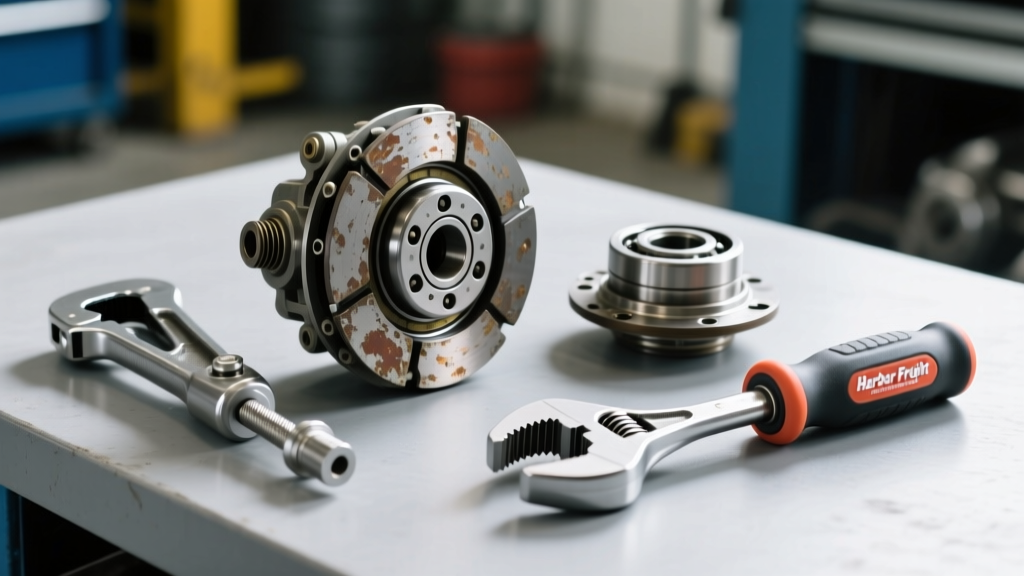
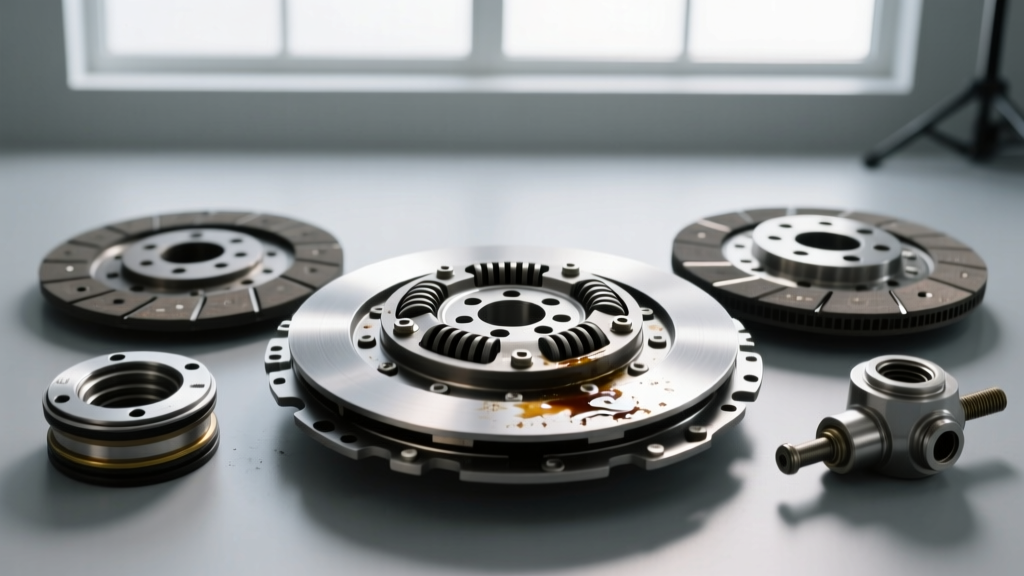
Modern 2024-2026 Volvo VNL models increasingly rely on Electromagnetic Actuated (EMA) fan clutches, such as the Horton DriveMaster series. EMA clutches use a physical friction liner, much like an A/C compressor clutch or a traditional manual transmission disc. Chatter here is classic 'stick-slip' friction. If the friction liner becomes glazed from oil contamination (often from a leaking front crank seal or power steering pump), or if the armature air gap drifts out of specification, the electromagnetic coil cannot maintain a solid lock. The armature slips, grabs, slips, and grabs, creating a high-pitched chatter and severe axial vibration.
2026 Diagnostic Matrix: Isolating the Vibration Source
Before tearing into the front cover or ordering replacement parts, use this diagnostic matrix to isolate the exact failure mode of your fan clutch assembly. You will need a mechanic's electronic stethoscope and a laser tachometer.
| Symptom Profile | Probable Failure Mode | Diagnostic Protocol | Corrective Action |
|---|---|---|---|
| Low-frequency shudder at 1,200-1,500 RPM; worsens when A/C is on. | Viscous fluid degradation / Shear instability. | Measure fan RPM with laser tachometer. Compare to water pump shaft RPM. Slippage >15% indicates fluid failure. | Replace viscous unit or upgrade to EMA. |
| High-pitched metallic chatter at idle; disappears above 1,800 RPM. | EMA friction liner glazing or excessive air gap. | Check armature air gap with feeler gauges. Inspect liner for power steering fluid contamination. | Resurface armature, adjust gap, or replace EMA coil. |
| Constant axial vibration; harmonic resonance in the steering wheel. | Fan clutch pilot bearing failure or fan blade mass imbalance. | Use electronic stethoscope on the fan hub mounting bracket. Listen for bearing growl. | Replace hub bearing assembly; check fan blade for micro-fractures. |
| Chatter only during initial cold start; smooths out after 3 minutes. | Bimetallic valve sticking (Viscous) or coil resistance drop (EMA). | Test EMA coil resistance with a multimeter (Spec: 2.5 - 3.5 Ohms). | Replace thermal spring or EMA coil pack. |
Performance Upgrades: Escaping OE Viscous Limitations
For owner-operators running heavy freight through mountain passes or high-ambient-temperature regions, the OE viscous fan clutch is a bottleneck. Viscous clutches suffer from 'hysteresis'—a delayed reaction time between the engine's heat output and the fan's engagement. This lag causes the ECU to dump excess fuel to compensate for thermal derating, killing your MPG.
The Heavy-Duty EMA Upgrade Path
Upgrading to a severe-duty EMA fan clutch (such as the Horton HT7400 or equivalent Kysor EMA) is the premier performance modification for the D13 engine. EMA clutches offer near-instantaneous engagement (under 0.4 seconds) via the engine's CAN-bus network. By eliminating the fluid shear delay, the engine maintains optimal thermal efficiency, reducing parasitic horsepower loss by up to 14 HP during cruising phases compared to a locked-up viscous unit.
Key Upgrade Benefits for 2026 Haulage:
- Elimination of Fluid Chatter: Solid-state electromagnetic locking removes the possibility of viscous cavitation.
- Predictive Cooling: Modern EMA units integrate with the VNL's predictive cruise control, ramping up fan speed before a grade based on GPS topography.
- Reduced NVH: Precision-machined armatures reduce axial runout to less than 0.005 inches, virtually eliminating harmonic vibration.
Precision Installation: Torque Specs and Air Gap Calibration
The most common cause of post-replacement chatter in a Volvo VNL fan clutch is improper installation. The tolerances on these auxiliary drivetrain components are incredibly tight. If you are upgrading from a viscous unit to an EMA, or simply replacing a failing OE unit, you must adhere to strict torque and clearance specifications.
Step-by-Step Air Gap Calibration (EMA Units)
If the air gap between the EMA rotor and the armature is too wide, the magnetic field will be too weak, resulting in slip and chatter. If it is too tight, the armature will drag when disengaged, causing overheating and bearing wear.
- Mount the EMA rotor to the fan hub. Torque the mounting bolts to 45 Nm (33 lb-ft) in a star pattern.
- Install the armature and friction disc assembly.
- Using a non-magnetic brass feeler gauge, measure the air gap at three equidistant points around the circumference.
- The target specification is 0.020' to 0.030' (0.5mm to 0.76mm).
- If the gap is out of spec, remove the armature and swap the precision shims located behind the friction disc until the 0.025' sweet spot is achieved.
Fastener Torque Specifications (D11/D13 Engines)
- Fan Clutch Hub to Water Pump/Fan Drive: M10x1.5 bolts — 47 to 61 Nm (35 to 45 lb-ft).
- Fan Blade to Clutch Flange: 3/8'-16 bolts — 34 to 41 Nm (25 to 30 lb-ft). Always apply blue threadlocker (Loctite 243) to prevent backing out, which causes severe mass-imbalance vibration.
- Drive Belt Tensioner: Ensure the automatic tensioner is providing 450-500 N of force. A weak tensioner will cause the fan clutch pulley to slip on the serpentine belt, mimicking internal clutch chatter.
Cost vs. Longevity: The Fleet Owner's Calculus
When diagnosing chatter, the immediate instinct is to replace the unit with a like-for-like OE part. However, analyzing the lifecycle cost reveals why performance upgrades are dominating the 2026 heavy-duty market.
- OE Viscous Replacement (e.g., Volvo OE 21836604): $450 - $600. Expected lifespan: 250,000 - 350,000 miles. High susceptibility to fluid degradation and cavitation chatter in high-heat environments.
- Performance EMA Upgrade (e.g., Horton DriveMaster): $750 - $950. Expected lifespan: 500,000+ miles. The friction liner is serviceable, meaning a $60 rebuild kit can resolve chatter without replacing the entire $800 assembly.
Furthermore, the fuel savings generated by the EMA's precise CAN-bus engagement typically yield a 1.5% to 2.2% improvement in highway fuel economy. For a truck running 120,000 miles annually, the EMA upgrade pays for itself in fuel savings alone within 14 months, while permanently eliminating the driveline-shaking chatter associated with aging viscous fluid.
Final Diagnostics: Verifying the Repair
After installation and calibration, the final verification requires a loaded road test. Monitor the engine coolant temperature (ECT) and fan RPM via the VNL's digital dash or an OBD-II heavy-duty scanner. When the ECU commands a fan engagement, the transition should be seamless. If you feel a sudden jolt or hear a metallic clack followed by vibration, immediately shut down the engine and re-verify your air gap shims and hub torque. A properly calibrated Volvo VNL fan clutch should operate as a silent, invisible extension of the drivetrain, keeping your D13 running at peak thermal efficiency without sending a single harmonic vibration into the cab.
For more technical service bulletins and heavy-duty cooling specifications, refer to the official Volvo Trucks North America service portal, and stay updated on fleet maintenance trends via FleetOwner.