Pop Culture vs. Powertrain: The "Clutch Cargo Cartoon" Myth
If you grew up watching the 1959 Clutch Cargo cartoon, you might associate the word "clutch" with exaggerated, jerky Syncro-Vox animations, impossible physics, and cartoonish escapes. In that animated universe, vehicles defied gravity and mechanical limits. But in modern powertrain diagnostics, there is absolutely no room for cartoon logic. Real-world clutch wear signs and lifespan indicators demand precise measurement, strict adherence to torque specifications, and a deep understanding of tribology (the science of friction and wear).
As we navigate the automotive landscape of 2026, manual transmissions and automated manual gearboxes are increasingly paired with high-output, turbocharged engines. The thermal and mechanical loads placed on the clutch assembly are higher than ever. This technical deep-dive explores the quantifiable metrics of clutch degradation, moving past generic "slipping" symptoms into exact diagnostic procedures, Dual Mass Flywheel (DMF) tolerances, and friction material lifespans.
The Anatomy of Friction Material Degradation
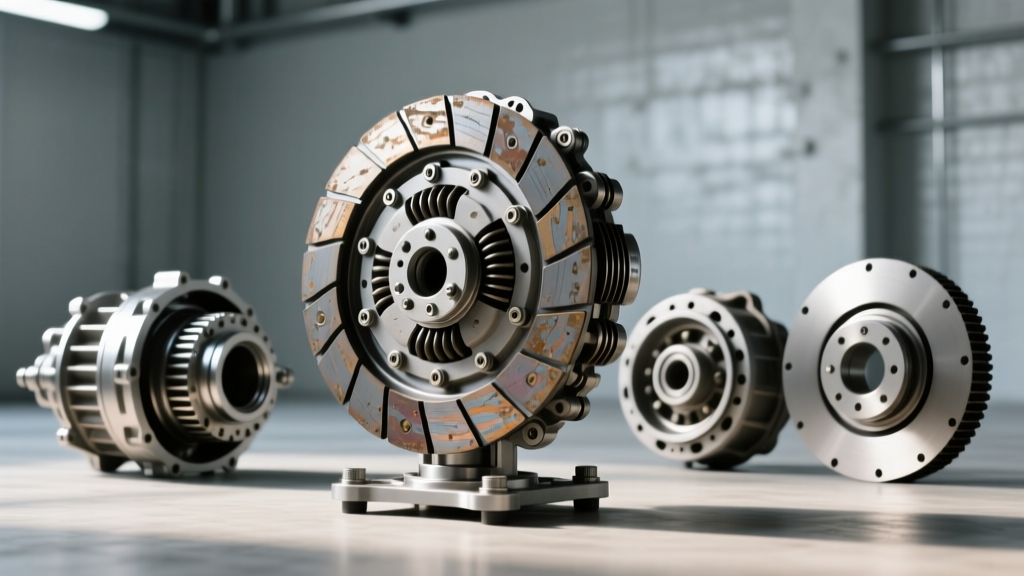
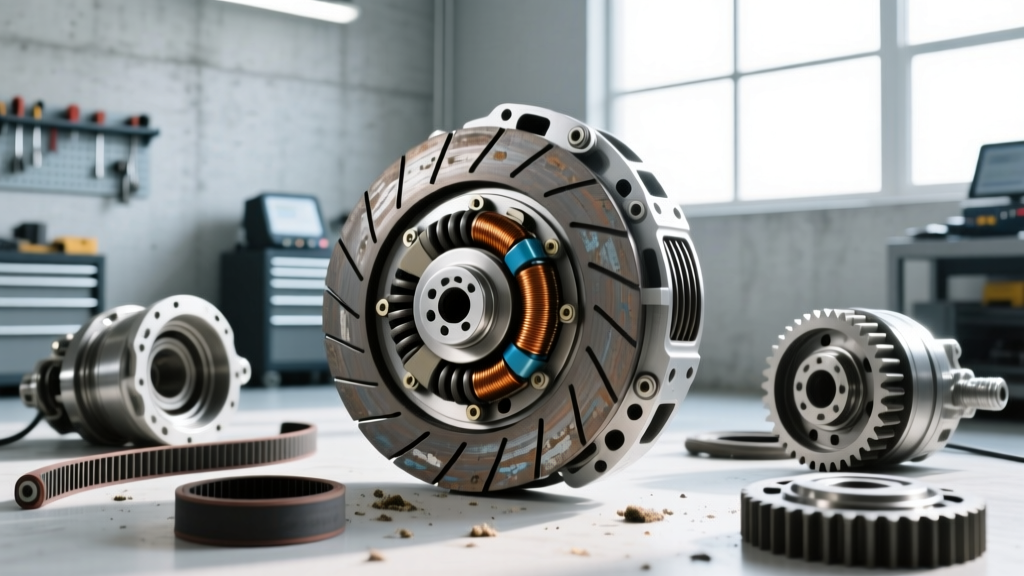
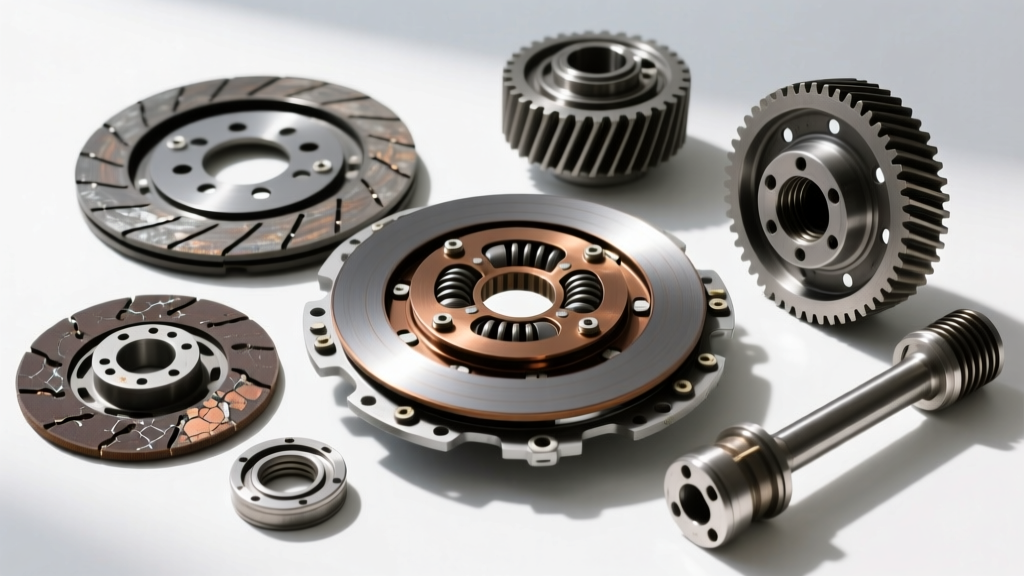
Clutch wear is not a binary state of "good" or "bad"; it is a progressive degradation of the friction interface. The clutch disc's facing material is bonded or riveted to a marcel (wave) spring, which in turn is riveted to the hub assembly. Understanding the specific material composition is critical for diagnosing lifespan indicators.
Organic vs. Cerametallic Facing Wear Patterns
Original Equipment (OE) clutches typically utilize organic friction materials—a composite of fiberglass, Kevlar, carbon, and phenolic resins. These offer a high coefficient of friction (μ ≈ 0.28 to 0.33) at low temperatures, providing smooth engagement. However, organic facings begin to experience severe fade and glazing when interface temperatures exceed 450°F (232°C).
Conversely, aftermarket performance clutches (such as those from ACT or Exedy) often use cerametallic or sintered iron facings. While these can withstand temperatures exceeding 1,000°F (537°C) and handle immense torque loads, their coefficient of friction actually increases as they heat up. The primary wear sign for sintered iron is not glazing, but rather the physical shearing of the friction pucks and accelerated wear on the flywheel friction surface due to the abrasive nature of the material.
Quantifiable Lifespan Indicators and Diagnostic Metrics
Rather than relying on the subjective "feel" of the pedal, professional drivetrain technicians rely on hard data. Below is a comparative matrix outlining the expected lifespan, torque thresholds, and primary failure modes for common clutch materials in modern applications.
| Friction Material | Coefficient (μ) | Typical Lifespan (Miles) | Max Torque Capacity | Primary Failure Mode & Wear Sign |
|---|---|---|---|---|
| OE Organic Composite | 0.28 - 0.33 | 60,000 - 90,000 | 250 - 350 lb-ft | Thermal glazing; facing wear down to rivets. |
| Kevlar/Carbon Blend | 0.35 - 0.40 | 40,000 - 60,000 | 350 - 450 lb-ft | Hub spring fatigue; chatter on cold engagement. |
| Cerametallic (Puck) | 0.40 - 0.48 | 30,000 - 50,000 | 500 - 700 lb-ft | Flywheel scoring; marcel spring crushing. |
| Sintered Iron | 0.50+ | Race Use Only | 800+ lb-ft | Extreme driveline shock; transmission gear rattle. |
Advanced Diagnostic Procedures: Slipping, Chatter, and Hydraulics
When a customer reports a slipping clutch, the immediate assumption is a worn friction disc. However, in modern vehicles equipped with Concentric Slave Cylinders (CSC) and hydraulic release bearings, the root cause is often hydraulic or mechanical interference.
Hydraulic Pre-Load and CSC Diagnostics
Many modern manual transmissions (such as the Tremec TR-4050 or various Getrag 6-speeds) utilize a self-adjusting hydraulic release bearing. If the hydraulic system is not bled perfectly, or if the pushrod clearance is out of spec, the release bearing may remain in constant contact with the diaphragm spring fingers. This prevents the pressure plate from applying its full clamping load (often exceeding 2,500 lbs of force), resulting in slip under high boost.
Diagnostic Step: Measure the clutch pedal free-play. Most OE specifications dictate 10mm to 15mm of free-play at the pedal pad before the master cylinder piston engages. If free-play is zero, the clutch is being artificially slipped by the hydraulic system.
Dual Mass Flywheel (DMF) Runout and Free Play Limits
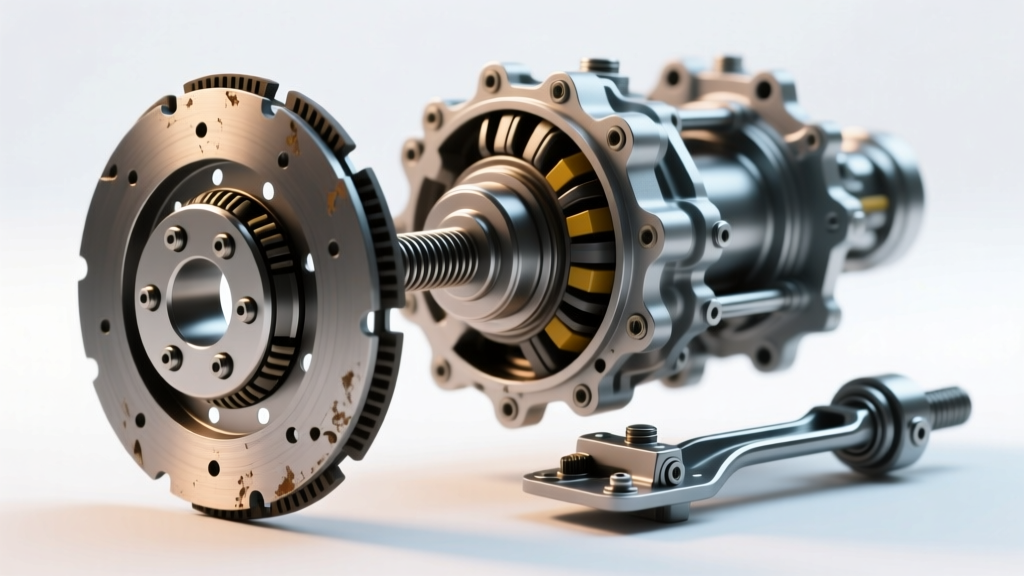
The Dual Mass Flywheel is a torsional dampener designed to absorb the low-frequency vibrations of modern, high-torque, low-RPM engines. A failing DMF will mimic clutch chatter and cause severe gear rattle. According to Schaeffler/LuK engineering guidelines, diagnosing a DMF requires precise measurement of both axial runout and radial free play.
- Axial Runout: Using a dial indicator on the secondary friction mass, the runout must not exceed 1.2mm (0.047 inches). Anything greater indicates internal grease breakdown and spring failure.
- Radial Free Play: By locking the primary mass and rotating the secondary mass, you can measure the rotational lash. For most passenger applications, free play should not exceed 2 to 3 teeth on the ring gear (approximately 15 to 20 degrees of rotation). Excessive play will cause a distinct "clunk" upon engine shutdown and severe chatter during clutch engagement.
Measuring Wear: Flywheel Step Height and Facing Thickness
When the transmission is removed, visual inspection is insufficient. You must use a micrometer and a straight edge. The "step height" of the flywheel—the distance between the friction surface and the pressure plate mounting pad—is critical. If a flywheel is resurfaced without restoring the correct step height (typically between 0.500" and 0.550" for many Japanese applications, though specific OE service manuals must be consulted), the pressure plate's diaphragm spring will operate outside its optimal mechanical advantage curve, leading to premature wear and heavy pedal effort.
Furthermore, the clutch facing must be measured with a caliper. Most manufacturers mandate replacement when the friction material wears to within 0.3mm (0.012 inches) of the rivet heads. However, relying on rivet depth is a flawed metric for marcel-spring discs, as the wave spring compresses differently as the material thins, altering the engagement bite point.
The Economics of Replacement: 2026 Market Pricing
Replacing a clutch assembly in 2026 requires a holistic approach. Swapping only the friction disc while reusing a fatigued DMF or a scored pressure plate is a guaranteed comeback. A complete Exedy or LuK RepSet includes the disc, pressure plate, release bearing, flywheel (or DMF), and alignment tool.
Typical Parts Cost Breakdown (2026 Estimates):
- OE Organic Clutch Kit (w/ Solid Flywheel Conversion): $350 - $550
- OE DMF Replacement Kit (e.g., LuK 415022009 for VW/Audi 2.0T): $700 - $1,100
- Performance Cerametallic Kit (e.g., ACT SB3-XT6): $800 - $1,300
Labor times typically range from 5.5 to 8.5 hours depending on whether the vehicle is FWD (requiring subframe dropping and axle removal) or RWD. With shop rates averaging $150-$225 per hour, total out-the-door costs for a comprehensive clutch and DMF replacement generally fall between $1,400 and $3,200.
Final Diagnostic Verdict
Diagnosing clutch wear signs and lifespan indicators requires abandoning assumptions and embracing metrology. Whether you are measuring the 76 lb-ft + 90-degree torque sequence on a Honda K20C1 flywheel, checking the 8 Nm torque spec on a Concentric Slave Cylinder mounting bolt, or verifying the 1.2mm axial runout on a ZF Sachs DMF, precision is paramount. The days of guessing based on pedal feel are over. By utilizing OBD2 PID monitoring for engine load discrepancies, dial indicators for flywheel trueness, and strict adherence to material-specific wear limits, technicians can accurately predict clutch lifespan and prevent catastrophic drivetrain failures. Leave the cartoon physics to the archives; modern powertrain diagnostics demands exact science.