The Hidden Diagnostic Window: Engine Clutch Actuator Fluid
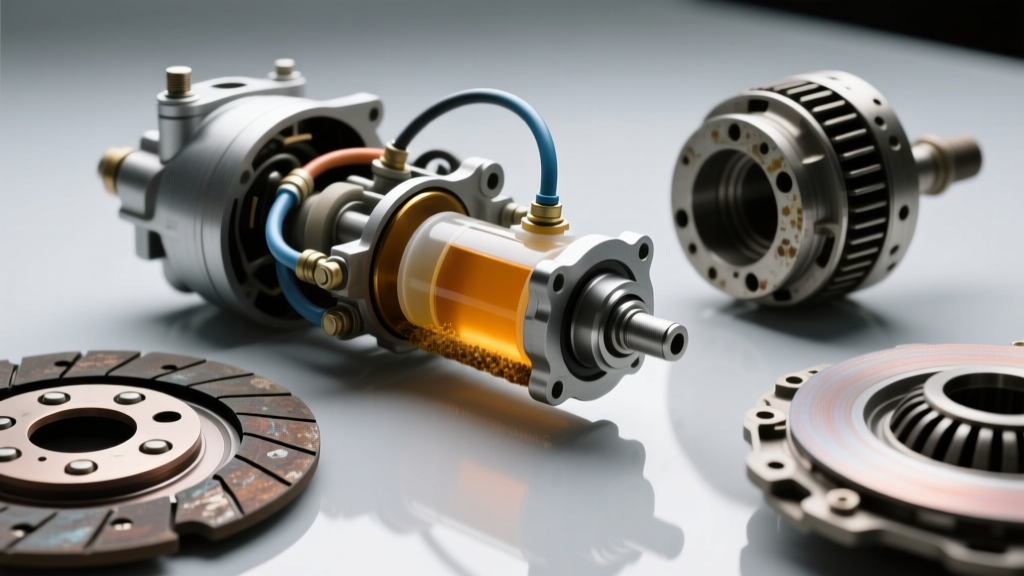
When evaluating manual transmission longevity, most enthusiasts and technicians immediately inspect the friction disc, pressure plate, or dual-mass flywheel. However, one of the most accurate, non-invasive lifespan indicators is often overlooked: the engine clutch actuator fluid. In modern 2026 hydraulic architectures, the fluid volume, condition, and pressure dynamics within the master cylinder reservoir and concentric slave cylinder (CSC) provide a real-time telemetry feed of mechanical wear inside the bellhousing.
Understanding the symbiotic relationship between the hydraulic actuator and the physical friction assembly allows you to diagnose clutch wear signs long before catastrophic slip or complete disengagement failure occurs. This technical deep-dive explores how to read hydraulic fluid behavior to determine the remaining lifespan of your clutch system.
The Physics of Fluid Displacement and Clutch Wear
To use the fluid as a diagnostic tool, you must first understand the kinematics of the clutch release mechanism. When a new OEM clutch assembly (such as a LUK RepSet or Sachs Performance kit) is installed, the diaphragm spring fingers of the pressure plate sit at a precise engineered height. As the friction disc wears down—typically losing between 3.0mm and 5.0mm of material over its 60,000 to 100,000-mile lifespan—the pressure plate moves closer to the flywheel to maintain clamping force.
This inward movement of the pressure plate causes the diaphragm fingers to pivot outward, toward the transmission. Consequently, the release bearing and the piston inside the internal CSC are pushed deeper into their bore. Because the hydraulic system is a closed, incompressible loop, this piston displacement forces fluid out of the master cylinder reservoir and down into the actuator.
Fluid Level Drop vs. Leak Diagnosis
A common misdiagnosis by junior technicians is assuming a dropping fluid level in the clutch master cylinder reservoir indicates a catastrophic external leak. If the underside of the bellhousing is dry, and the master cylinder pushrod seal is intact, a gradual drop in the engine clutch actuator fluid level from the MAX to the MIN line over 20,000 miles is a primary indicator of normal friction material wear. The fluid hasn't leaked; it has simply relocated into the expanded volume of the CSC bore to compensate for the thinner clutch disc.
Diagnostic Matrix: Fluid Symptoms vs. Mechanical Wear
Use the following diagnostic table to cross-reference hydraulic fluid behavior with physical clutch wear signs and actuator health.
| Fluid / Hydraulic Symptom | Mechanical Reality & Wear Indicator | Recommended Action |
|---|---|---|
| Reservoir level drops 10-15mm over 15k miles | Normal friction material wear displacing fluid into the CSC bore. | Monitor level; top off with OEM-spec DOT fluid. Plan for replacement at next service. |
| Fluid is dark/black with visible rubber particulates | CSC internal seal degradation or flexible hydraulic hose breakdown. | Immediate CSC replacement and full system flush. Seal failure imminent. |
| Spongy pedal, fluid level remains perfectly static | Master cylinder internal bypass failure or severe hygroscopic moisture boiling. | Replace master cylinder; inspect clutch disc for heat-glazing from partial engagement. |
| Engagement point migrates to the very top of pedal travel | Friction disc is near minimum thickness; CSC is at maximum extension. | Measure pedal freeplay. Prepare for transmission removal and clutch replacement. |
5 Critical Clutch Wear Signs Masked by Hydraulic Issues
Clutch wear does not always manifest as obvious slipping under wide-open throttle. Modern hydraulic systems can mask or mimic these symptoms. Here are the nuanced wear indicators you must evaluate:
- Engagement Point Migration: As the disc wears and the CSC piston extends, the hydraulic engagement point rises closer to the top of the pedal travel. If your engagement point has moved more than 15mm from its baseline, the friction material is likely below the 4.0mm wear threshold.
- Incomplete Disengagement (Grinding into Reverse): Counterintuitively, a severely worn clutch can cause grinding when shifting into reverse. As the fingers pivot outward, the mechanical advantage changes, and the CSC may lack the hydraulic stroke volume to fully retract the pressure plate, leaving the input shaft spinning.
- High-RPM Slip Under Load: If the friction material is thin, the diaphragm spring's clamping force geometry alters. The spring loses its mechanical advantage, reducing clamping pressure (measured in Newtons) right when you need it most, such as in 4th gear at 4,500 RPM.
- Release Bearing Chatter: A worn clutch alters the preload on the CSC release bearing. If you hear a high-pitched whirring that changes pitch when you depress the pedal by exactly 10mm, the bearing is riding on the worn, uneven tips of the diaphragm fingers.
- Pedal Return Lethargy: The engine clutch actuator fluid relies on the return spring force of the pressure plate fingers to push fluid back to the reservoir. Worn, heat-cycled fingers lose their spring tension, resulting in a pedal that slowly returns to the top position.
Actuator Fluid Condition and Hygroscopy Analysis
The chemical state of the fluid is just as critical as its volume. Most OEMs specify DOT 3 or DOT 4 glycol-based brake fluid for clutch hydraulics. These fluids are highly hygroscopic, meaning they absorb ambient moisture through the porous rubber hydraulic lines and the reservoir breather cap.
According to fluid manufacturers like Motul, standard DOT 4 fluid can absorb up to 3% water content over two years of normal driving. When the clutch is slipped during hill starts or low-speed maneuvering, the CSC and release bearing generate immense friction heat. This heat transfers directly into the actuator fluid. If the fluid's water content is high, the localized boiling point drops drastically, creating vapor lock. This vapor lock mimics the symptom of a severely worn, slipping clutch by preventing full hydraulic clamping force.
Expert Tip: Always test the moisture content of your engine clutch actuator fluid using a digital brake fluid tester before condemning a clutch assembly for slipping. A 5-minute fluid flush can cure what feels like a $2,000 mechanical failure.
Measuring Physical Wear: Specs and Tolerances
When the hydraulic diagnostics confirm that the clutch has reached the end of its lifespan, precise measurement and installation are required. Relying on the "feel" of the pressure plate is a recipe for premature failure. Below are standard tolerances and torque specifications for common performance applications, such as the Tremec T56 Magnum and GM LS platforms:
- Friction Disc Thickness: New OEM discs typically measure between 8.5mm and 9.5mm. The absolute minimum service limit is usually 7.0mm, or when the rivet heads are within 0.5mm of the friction surface.
- Flywheel Runout: Must not exceed 0.10mm (0.004 inches). Excessive runout causes uneven wear and rapid CSC seal failure.
- Pressure Plate Torque (GM LS V8): 30 Nm (22 lb-ft) in a multi-pass star pattern. Over-torquing warps the cover, altering the finger height and ruining your hydraulic baseline.
- Flywheel to Crankshaft (GM LS V8): 74 Nm (55 lb-ft) plus an additional 90-degree angle turn. Always use new TTY (Torque-To-Yield) bolts.
- Bellhousing Alignment: When installing transmissions like the Tremec T56 Magnum, dial-indicate the bellhousing to the engine block. Total Indicated Runout (TIR) must be under 0.005 inches. Misalignment forces the CSC to operate at an angle, wearing the internal seals asymmetrically and contaminating the fluid with rubber debris.
System Bleeding: Restoring the Hydraulic Baseline
After replacing a worn clutch and CSC, the hydraulic system must be bled to establish a new baseline. Air trapped in the engine clutch actuator fluid will compress, leading to a spongy pedal and incomplete disengagement, which will prematurely wear the new friction material.
For high-temperature applications, upgrade to a high-performance DOT 4 or DOT 5.1 fluid. Always use a pressure bleeder set to 15-20 PSI to force fluid through the system without introducing micro-bubbles. For internal CSCs, utilize a reverse-bleeding syringe to push fluid from the slave cylinder bleeder valve up to the master cylinder reservoir, as air naturally rises and can become trapped in the high loops of the hard lines.
By treating the engine clutch actuator fluid as a vital diagnostic fluid rather than just a hydraulic medium, you can accurately predict clutch lifespan, prevent catastrophic drivetrain failures, and maintain the precise pedal feel required for high-performance manual driving. For more advanced drivetrain maintenance procedures, consult the Hagerty maintenance and tech archives or your vehicle's specific OEM service documentation.