The Magnuson-Moss Warranty Act: Your Baseline Protection
When navigating the complex landscape of automotive repairs, understanding your legal rights is just as critical as knowing your way around a torque wrench. As of 2026, dealership warranty claim algorithms have become increasingly stringent, often leading to premature denials for both drivetrain and accessory components. The foundation of your protection lies in the Magnuson-Moss Warranty Act. This federal law dictates that a manufacturer cannot void your vehicle's warranty simply because you used an aftermarket part, provided that the aftermarket part did not directly cause the failure in question. Whether you are dealing with a manual transmission friction disc or an electromagnetic HVAC pulley, this legislation is your primary shield against bad-faith warranty denials.
Drivetrain Clutches: Navigating the Wear and Tear Exclusion
In the realm of manual transmissions, the clutch assembly is almost universally classified by manufacturers as a "wear and tear" item. This means that the friction disc itself is rarely covered under the standard 5-year/60,000-mile powertrain warranty. If you burn through a friction disc due to aggressive driving or riding the pedal, the replacement cost falls entirely on you. However, the nuance lies in how the clutch fails. If a clutch fails at 12,000 miles due to a manufacturing defect in the marcel spring or a warped pressure plate from the factory, it is a warrantable defect, not normal wear.
When performing a warranty-adjacent replacement, adherence to exact torque specifications is mandatory to preserve any remaining coverage on adjacent components. For example, when reinstalling a LuK RepSet (Part #04-115) on a GM LS-based powertrain, the pressure plate bolts must be torqued to 15 lb-ft in a star pattern, while the flywheel-to-crankshaft bolts require 15 lb-ft plus an additional 50 degrees of rotation. Failure to document these specs can give a dealership an excuse to deny subsequent powertrain claims.
Hydraulic Slave Cylinders and Dual Mass Flywheels
While the friction disc is a wear item, the hydraulic release system is often treated differently. Concentric slave cylinders (CSCs), such as those manufactured by FTE Automotive for modern European manuals, are hydraulic components. If a CSC seal blows at 25,000 miles, it is frequently covered under the powertrain warranty as a defective hydraulic component, distinct from friction wear. Similarly, Dual Mass Flywheels (DMFs) occupy a gray area. If a DMF's internal damping springs collapse prematurely, causing severe driveline shudder, expert technicians can successfully argue this is a material defect rather than consumable wear, forcing the manufacturer to cover the replacement under the drivetrain warranty.
Automatic Transmissions: Torque Converter Clutch (TCC) Coverage
Clutch replacement warranties are not exclusive to manual transmissions. Modern automatic transmissions rely heavily on the Torque Converter Clutch (TCC) for fuel efficiency. In units like the GM 6L80 or the ZF 8HP, the TCC is a sophisticated friction assembly modulated by Pulse Width Modulation (PWM) solenoids. If your vehicle experiences TCC shudder between 40 and 55 mph, this is a recognized failure mode often linked to the degradation of the apply valve bore or contaminated friction material. Unlike a manual clutch pedal, the TCC is fully encapsulated within the powertrain. Therefore, TCC solenoid and torque converter replacements are almost always covered under the powertrain warranty, provided the transmission fluid has not been contaminated by an external cooler failure or incorrect fluid top-offs.
Accessory Clutches: Analyzing the AC Compressor Clutch Replacement Cost
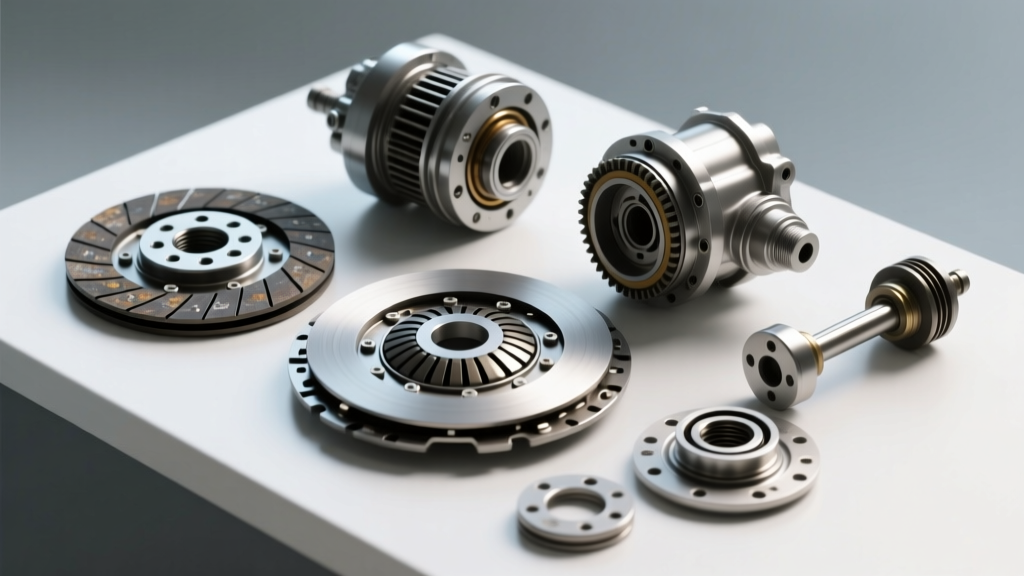
Moving away from the drivetrain, accessory clutches present a completely different warranty profile. When evaluating the ac compressor clutch replacement cost, vehicle owners are often shocked to learn how dealership service departments handle these failures. The AC compressor clutch is an electromagnetic assembly consisting of a coil, a pulley, and a friction hub. On common units like the Denso 10S17C or Sanden SD7H15, the clutch air gap must be maintained between 0.020 and 0.030 inches. As the friction hub wears over time, the gap widens. Once it exceeds 0.035 inches, the electromagnetic coil cannot generate enough magnetic force to engage the clutch, resulting in a warm cabin.
The actual ac compressor clutch replacement cost for the parts (coil, pulley, and hub) is remarkably low, typically ranging from $80 to $150. Labor to swap just the clutch assembly on the front of the compressor usually adds another $100 to $150, bringing the total out-of-pocket expense to roughly $250 to $300. However, under the standard 3-year/36,000-mile bumper-to-bumper warranty, this repair should be entirely free. The conflict arises when dealerships refuse to replace just the clutch, instead quoting $1,200 to $1,600 to replace the entire compressor assembly, claiming the internal seals are compromised. To protect your warranty claim, insist that the technician measure the clutch coil resistance (which should read between 3.5 and 4.5 ohms at 20°C) and verify the air gap before condemning the entire compressor.
Comparative Data: Drivetrain vs. HVAC Clutch Warranty Profiles
| Component | Typical Warranty Status | Common Failure Mode | Out-of-Pocket Cost Estimate |
|---|---|---|---|
| Manual Friction Disc | Wear Item (Not Covered) | Glazing, uneven wear, marcel spring failure | $400 - $900 |
| Concentric Slave Cylinder | Powertrain (Covered) | Internal seal blowout, fluid bypass | $0 (Under Warranty) |
| TCC Solenoid (Auto) | Powertrain (Covered) | PWM screen clogging, valve bore wear | $0 (Under Warranty) |
| AC Compressor Clutch | Bumper-to-Bumper (Covered) | Air gap widening, coil burnout | $250 - $350 (If denied) |
Expert Best Practices for Filing Clutch Warranty Claims
To ensure your clutch replacement warranty claim is honored, whether for a drivetrain or HVAC component, follow these strict best practices:
- Maintain Fluid Documentation: For hydraulic manual clutches, always use the exact DOT specification (e.g., DOT 4 Low Viscosity for modern BMWs). For AC systems, ensure the shop uses the correct PAG oil viscosity (e.g., ND-8 or PAG 46) and adheres to EPA refrigerant handling guidelines. Incorrect fluids are the number one excuse for warranty denial.
- Demand Diagnostic Data: If a dealership claims your AC clutch coil is burnt out, demand to see the multimeter reading. A reading of infinite resistance (OL) confirms a burnt coil (warrantable), while a reading of 4.0 ohms means the coil is fine, and the issue is likely a widened air gap or a faulty relay.
- Photograph Wear Patterns: If a manual clutch is denied for "driver abuse," but the friction material is worn evenly down to the rivets without heat checking or blueing on the flywheel, photograph the assembly. Even wear indicates a defective pressure plate clamp load, not abuse.
Defeating Improper Dealership Warranty Denials
Dealerships frequently deny warranty claims by citing "aftermarket contamination" or "unauthorized modifications." For instance, if you installed an aftermarket short-throw shifter, a dealer might try to deny a warranty claim on a failing hydraulic master cylinder. Under the Magnuson-Moss Warranty Act, the burden of proof is on the manufacturer to prove that your shifter caused the hydraulic failure. If they cannot prove causation, they must honor the warranty. Similarly, if you are facing an inflated ac compressor clutch replacement cost because the dealer insists the system was "contaminated" by an independent shop, request the UV dye test results and refrigerant purity analysis. Without empirical data proving contamination, their denial holds no legal weight. Always escalate denied claims to the manufacturer's regional zone representative and reference the FTC guidelines on automotive warranties to force a resolution.