The Hidden Variable in Subaru WRX Clutch Replacement
When planning a Subaru WRX clutch replacement, enthusiasts and professional technicians alike often hyper-focus on the friction disc and pressure plate. However, treating the flywheel as an afterthought is the leading cause of premature clutch failure, drivetrain shudder, and warranty disputes. From a preventive maintenance perspective, the flywheel is not merely a mounting surface; it is a critical thermal mass and harmonic dampener that dictates the longevity of your entire manual transmission ecosystem.
As we navigate the 2026 automotive landscape, the Subaru WRX lineup spans multiple generations—from the legendary EJ255-powered GR/GV chassis to the modern FA24-equipped VB models. Each platform presents unique flywheel dynamics. This guide provides a comprehensive, data-driven approach to pairing your WRX clutch replacement with the correct flywheel service, ensuring maximum durability and optimal power transfer.
Why the Flywheel Dictates Clutch Longevity
The friction surface of a flywheel endures extreme thermal cycling. During aggressive launches or stop-and-go traffic, clutch slip generates temperatures exceeding 800°F (426°C) at the friction interface. Over time, this causes micro-fractures, heat checking, and uneven friction material transfer (glazing).
If you install a brand-new organic or cerametallic clutch disc onto a worn flywheel without resurfacing or replacing it, the new disc will mate unevenly. This leads to:
- Localized Hot Spots: Accelerated wear on specific segments of the new friction material.
- Runout Vibrations: A warped flywheel causes the throwout bearing to cycle rapidly, leading to premature bearing failure and clutch fork pivot ball wear.
- Chatter and Shudder: Uneven clamping force from the pressure plate, resulting in violent drivetrain oscillations during first-gear engagement.
According to Subaru Technical Information, maximum allowable flywheel runout is typically 0.10 mm (0.004 inches). Exceeding this spec during a WRX clutch replacement guarantees a compromised feel and reduced component lifespan.
Platform-Specific Flywheel & Spline Data
Selecting the correct replacement components requires precise identification of your WRX's drivetrain configuration. The spline count and input shaft diameter vary significantly between the 5-speed and 6-speed transmissions, as well as across engine generations.
| Platform / Years | Engine | Transmission | Flywheel Type | Input Shaft / Spline | Alignment Tool Size |
|---|---|---|---|---|---|
| GR / GV WRX | EJ255 | 5-Speed Manual | Dual-Mass (DMF) | 24.0mm / 25-Spline | 24mm Pilot |
| VA WRX | FA20DIT | 6-Speed Manual | Dual-Mass (DMF) | 25.0mm / 25-Spline | 25mm Pilot |
| VB WRX | FA24F | 6-Speed Manual | Dual-Mass (DMF) | 25.0mm / 25-Spline | 25mm Pilot |
| GE / GV STI | EJ257 | 6-Speed Manual | Single-Mass (SMF) | 25.0mm / 25-Spline | 25mm Pilot |
Note: Always verify spline count using the physical input shaft or OEM part catalog before ordering, as transmission swaps are common in the Subaru community.
OEM Dual-Mass vs. Aftermarket Single-Mass Flywheels
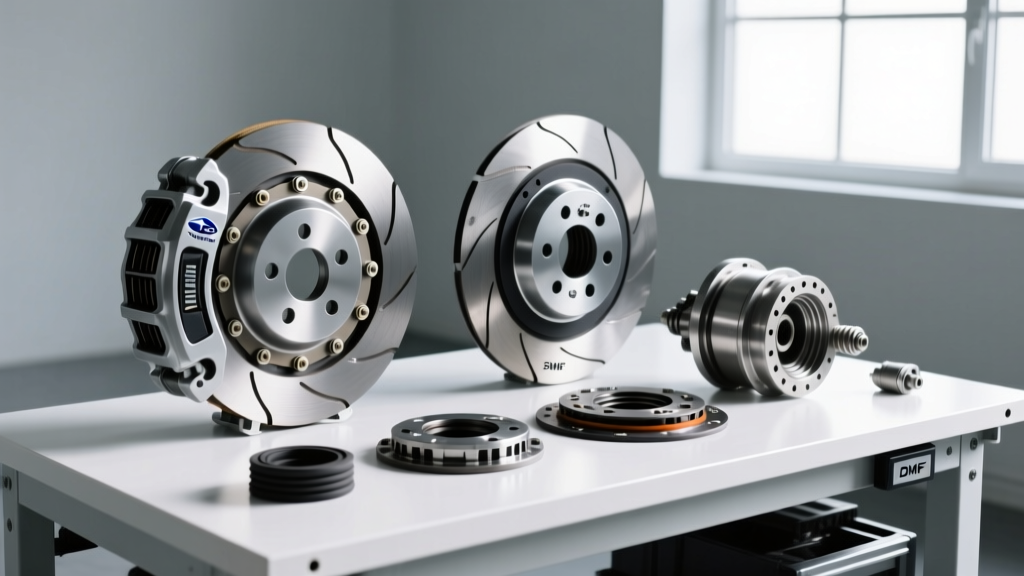
A critical decision during any WRX clutch replacement is whether to retain the factory Dual-Mass Flywheel (DMF) or convert to a Single-Mass Flywheel (SMF).
The OEM DMF Route: The DMF utilizes a spring-loaded internal mechanism to absorb torsional vibrations from the boxer engine's inherent firing pulses. For daily-driven WRX models (especially the FA20 and FA24 platforms), retaining the DMF is highly recommended to prevent gear rattle at idle and protect the transmission's synchronizers from harmonic shock. Exedy Global produces the OEM replacement DMF kits (e.g., Part # SUB023U for the EJ25 5MT), which offer factory-matched dampening and a guaranteed bolt-in fitment.
The Aftermarket SMF Conversion: For track-focused builds or those seeking immediate throttle response, an SMF conversion (such as the ACT SB033X lightweight flywheel) reduces rotational mass by up to 40%. However, as noted in extensive long-term testing documented on NASIOC, SMF conversions on street-driven WRX models almost always introduce noticeable gear rattle at idle and increased cabin NVH (Noise, Vibration, and Harshness). Furthermore, converting from DMF to SMF often requires a different clutch disc hub design (sprung vs. unsprung) to compensate for the lost dampening.
Preventive Assembly: Torque Specs and Clearances
Proper torque sequencing is non-negotiable. The boxer engine's layout means the transmission must be perfectly aligned with the engine block to prevent binding on the input shaft, which can crack the bellhousing or damage the pilot bearing.
Critical Torque Specifications (EJ25 / FA20 Platforms)
- Flywheel to Crankshaft: 54 Nm (40 ft-lbs) + 90 degrees of rotation. (Always use new OEM stretch bolts; never reuse flywheel bolts).
- Pressure Plate to Flywheel: 25 Nm (18 ft-lbs). Tighten in a star pattern gradually to avoid warping the diaphragm spring.
- Bellhousing to Engine Block: 37 Nm (27 ft-lbs). Ensure both dowel pins are seated perfectly to maintain concentricity.
- Clutch Fork Pivot Ball: 20 Nm (15 ft-lbs). Apply a high-temp molybdenum grease to the pivot ball contact pad and the throwout bearing collar.
- Driveshaft to Rear Differential: 31 Nm (23 ft-lbs). Mark the driveshaft flange before removal to maintain factory balance.
The Pivot Ball and Throwout Bearing Inspection
During a preventive WRX clutch replacement, inspect the clutch fork pivot ball for spherical wear. If the ball has developed a flat spot, the fork will bind, causing inconsistent clutch disengagement and accelerated throwout bearing wear. Replace the pivot ball (OEM Part # 30537AA010) and the throwout bearing sleeve if any grooving is present. Upgrading to a heavy-duty pivot ball from brands like Killer B Motorsport is a popular preventive measure for high-horsepower applications.
2026 Cost Analysis: Parts and Labor
Budgeting for a comprehensive clutch and flywheel replacement requires understanding the current market rates for OEM and premium aftermarket components. Below is an estimated cost breakdown for a professional-grade preventive replacement in 2026.
| Component Category | OEM / Premium Aftermarket | Estimated Cost Range |
|---|---|---|
| DMF Clutch Kit (Exedy OEM) | Includes DMF, PP, Disc, Bearing | $650 - $850 |
| SMF Conversion Kit (ACT / CM) | Includes SMF, PP, Sprung Disc | $700 - $950 |
| Hardware & Fluids | Flywheel bolts, Motul Gear 300 | $80 - $120 |
| Professional Labor | 6 - 9 Hours @ $130-$160/hr | $780 - $1,440 |
Preventive Tip: If your budget is constrained, it is vastly superior to resurface the existing OEM flywheel (if it is an SMF or a serviceable DMF variant) and purchase a high-quality clutch disc, rather than installing a premium clutch on an unmachined, glazed flywheel.
Post-Installation Break-In: The Ultimate Preventive Measure
The most meticulously executed WRX clutch replacement can be ruined in the first 50 miles if the break-in procedure is ignored. Organic and Kevlar-based friction materials require a thermal bedding process to transfer a uniform layer of resin onto the flywheel's mating surface.
The 500-Mile Bedding Protocol: Avoid full-throttle launches, aggressive downshifts, and sustained highway cruising in top gear. Instead, drive in moderate stop-and-go traffic, allowing the clutch to slip microscopically during normal engagement. This generates the low, consistent heat required to cure the friction material without glazing it.
By treating the flywheel as an equal partner to the clutch disc, utilizing precise torque specs, and adhering to a strict break-in protocol, you transform a standard WRX clutch replacement into a long-term preventive maintenance victory. Your drivetrain will reward you with buttery engagement, zero shudder, and tens of thousands of miles of reliable power transfer.