The Evolution of Class 8 Drivetrains and AMT Diagnostics
As of 2026, the North American Class 8 commercial vehicle market is overwhelmingly dominated by Automated Manual Transmissions (AMTs). Platforms like the Eaton Endurant HD, Volvo I-Shift, and ZF TraXon have revolutionized fleet efficiency, optimizing shift points for maximum fuel economy. However, this shift has fundamentally changed clutch system diagnostics. The traditional mechanical linkage has been replaced by complex pneumatic and electromechanical actuators, meaning clutch problems in heavy-duty vehicles now manifest as sophisticated electronic fault codes alongside physical degradation.
For fleet maintenance managers and performance drivetrain specialists, understanding the intersection of clutch wear, thermal overload, and next-generation upgrade paths is critical. When evaluating high-torque applications or specialized Power Take-Off (PTO) integrations, engineers frequently ask: what is dual clutch technology doing in the heavy-duty space, and how does it compare to traditional single-plate or twin-plate setups? This guide breaks down heavy-duty clutch symptoms, diagnostic protocols, and the performance upgrades reshaping commercial drivetrains.
What Is Dual Clutch Architecture in Commercial Drivetrains?
In the passenger vehicle sector, a Dual-Clutch Transmission (DCT) utilizes two separate clutches for odd and even gear sets to enable lightning-fast, uninterrupted power delivery. But what is dual clutch technology in the context of 80,000-pound Gross Combination Weight (GCW) commercial trucks?
In heavy-duty applications, 'dual-clutch' rarely refers to the odd/even gear-splitting DCTs found in sports cars. Instead, it refers to two distinct advanced architectures:
- Twin-Plate Ceramic Configurations: Often colloquially called dual-clutch setups by heavy-duty mechanics, these utilize two parallel friction discs and an intermediate floater plate to double the torque capacity without increasing the clutch diameter beyond the standard 15.5-inch bellhousing constraint.
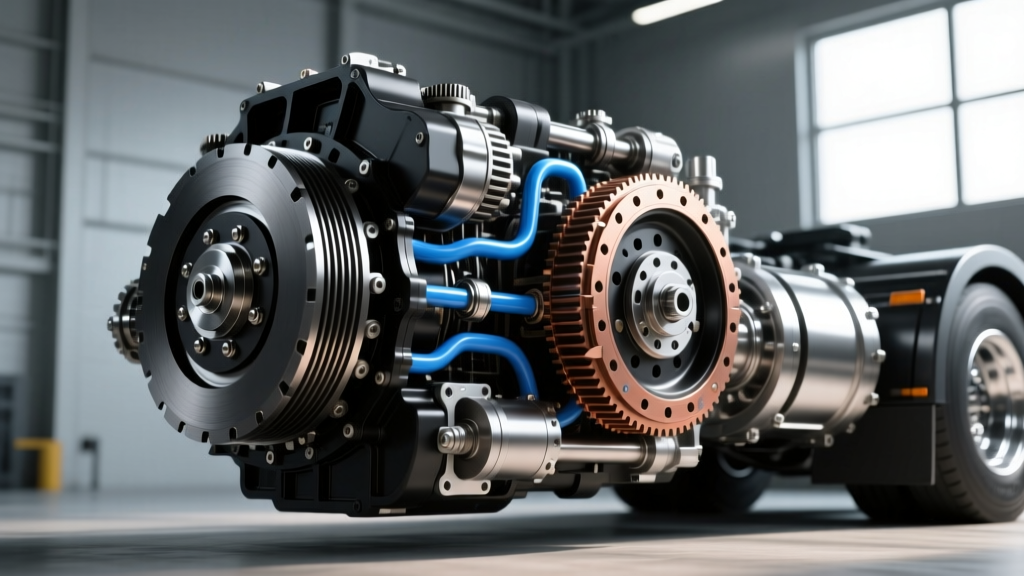
- Dual-Clutch Hybrid Modules: Emerging in 2026, specialized hybrid commercial drivetrains (such as advanced iterations of the ZF TraXon Hybrid) utilize a dual-clutch module to seamlessly decouple the internal combustion engine from the electric motor. This allows for regenerative braking, electric-only PTO operation, and torque smoothing during heavy-haul launches.
Diagnosing Heavy-Duty AMT Clutch Symptoms
Unlike passenger cars where a slipping clutch is immediately felt through the pedal, AMT clutches are actuated by the Transmission Control Module (TCM). Diagnostics require a combination of telematics analysis and physical inspection.
1. Pneumatic Actuator Faults and Position Errors
The most common electronic clutch symptom in AMTs is actuator failure. The TCM relies on precise position sensors to modulate clutch engagement. If the pneumatic cylinder or the electronic position sensor degrades, the truck will exhibit harsh engagements or fail to shift.
Common Diagnostic Trouble Codes (DTCs):
SPN 520234 FMI 18: Clutch Actuator Position - Data Valid but Below Normal Operating Range. Often indicates a pneumatic leak in the actuator cylinder or a failing release bearing.
SPN 520235 FMI 3: Clutch Actuator Sensor - Voltage Above Normal. Typically points to a short in the wiring harness near the bellhousing, exposed to extreme heat and road debris.
Diagnostic Action: Connect to the OEM diagnostic software (e.g., Eaton ServiceRanger or Volvo PTT). Command a clutch actuator stroke test. If the physical travel does not match the commanded travel within a 0.050-inch tolerance, the actuator assembly (e.g., Eaton Part # K-3459) must be replaced.
2. Thermal Overload and Friction Material Degradation
Heavy-duty clutches face immense thermal stress, particularly in vocational applications like logging, mining, or heavy-haul lowboy transport. When an organic 15.5-inch single-plate clutch is subjected to repeated high-torque launches, the friction material glazes, and the marcel springs (the wave springs between the friction facings) can collapse or melt.
Symptoms:
- Clutch Chatter (Shudder): Violent driveline vibration during 1st-to-2nd gear launches, typically occurring between 1,100 and 1,400 RPM. This is caused by uneven friction material transfer to the flywheel or collapsed marcel springs.
- Micro-Slipping: The TCM detects a discrepancy between engine RPM and transmission input shaft RPM. This triggers SPN 1761 FMI 2 (Clutch Slip). The TCM will often derate engine torque to protect the clutch, resulting in severe power loss on inclines.
Performance Upgrades: Twin-Plate vs. Hybrid DCT Modules
When a heavy-duty clutch reaches the end of its service life, fleet owners have a critical decision to make: replace with OEM organic, upgrade to a performance twin-plate, or integrate a hybrid module for specialized vocational use. Upgrading to a twin-plate ceramic setup is the heavy-duty equivalent of a performance clutch upgrade, offering massive gains in thermal capacity and torque holding power.
| Clutch Architecture | Friction Material | Torque Capacity (lb-ft) | Thermal Mass & Dissipation | Est. 2026 Parts Cost | Best Application |
|---|---|---|---|---|---|
| OEM Single Plate | Organic / Kevlar Blend | 1,850 - 2,050 | Low (Prone to glazing in high-slip) | $1,200 - $1,600 | Line-haul, Highway Logistics |
| Performance Twin-Plate | Ceramic Puck / Sintered Iron | 2,250 - 2,550+ | High (Intermediate floater plate) | $2,400 - $3,200 | Heavy Haul, Logging, Vocational |
| Dual-Clutch Hybrid Module | Wet Multi-Plate / Ceramic | 2,500+ (Combined ICE/E-Motor) | Extreme (Liquid Cooled / Oil Bath) | $8,500 - $12,000+ | PTO Operations, Hybrid EV Class 8 |
Upgrading from a single organic plate to a twin-plate ceramic clutch (such as the Eaton Solo series or LuK HD RepSet equivalents) eliminates the micro-slip associated with high-GCW launches. The ceramic pucks bite aggressively, while the intermediate floater plate effectively doubles the surface area for heat dissipation, preventing the thermal runaway that destroys organic facings.
Precision Installation: Torque Specs and Clearances
Heavy-duty clutch upgrades require meticulous adherence to torque specifications. A twin-plate ceramic clutch is highly unforgiving of improper installation. If the flywheel runout is excessive, the ceramic pucks will grab unevenly, causing catastrophic driveline shock and premature input shaft wear.
Critical Installation Metrics
- Flywheel Runout: Must not exceed 0.005 inches (0.127 mm). Measure with a dial indicator at the friction surface. If the flywheel exhibits heat checking (micro-cracks) or exceeds runout limits, it must be machined or replaced. Ceramic clutches do not absorb flywheel imperfections like organic clutches do.
- Flywheel to Crankshaft Torque: Typically 120 lb-ft, followed by an additional 90-degree turn (yield bolts). Always use new OEM stretch bolts.
- Pressure Plate to Flywheel Torque: 35 to 45 lb-ft. Crucial: Must be tightened in a strict star/crisscross pattern, one full turn at a time, to ensure the diaphragm spring is seated evenly without warping the cover.
- Release Bearing Clearance: AMT actuators require a specific air gap between the release bearing face and the clutch brake/diaphragm fingers. For most 15.5-inch setups, this gap must be set precisely to 0.500 - 0.550 inches using the manufacturer's alignment tool. Failure to set this gap will result in the actuator constantly dragging the clutch brake, leading to immediate pneumatic actuator burnout.
Cost Analysis and Fleet ROI
The upfront cost of a performance twin-plate upgrade or a specialized hybrid dual-clutch module is significantly higher than a standard OEM replacement. A complete OEM organic clutch kit (disc, pressure plate, release bearing) costs between $1,200 and $1,600. In contrast, a heavy-duty ceramic twin-plate kit ranges from $2,400 to $3,200. When factoring in bellhousing labor (which requires dropping the entire axle assembly or using a specialized transmission jack, costing $1,500 to $2,500 in shop time), the total invoice for a heavy-duty clutch replacement easily lands between $4,500 and $6,500.
However, the ROI for vocational fleets is undeniable. A heavy-haul truck that destroys an organic clutch every 120,000 miles due to high-torque launches will pay for the twin-plate ceramic upgrade on the very first replacement cycle. By eliminating the downtime associated with premature clutch slip, derate codes, and actuator failures, fleets maintain route efficiency and protect downstream driveline components from the shockloads of slipping and grabbing.
Summary: The Future of Commercial Clutch Systems
Understanding heavy-duty clutch diagnostics requires moving beyond simple mechanical wear and embracing the electronic and thermal realities of modern AMTs. Whether you are troubleshooting a SPN 520234 actuator fault, measuring flywheel runout for a ceramic twin-plate upgrade, or evaluating the integration of dual-clutch hybrid modules for PTO applications, precision and data-driven diagnostics are paramount. By selecting the correct friction architecture for your specific GCW and vocational demands, you can transform a chronic maintenance liability into a reliable, high-performance asset.