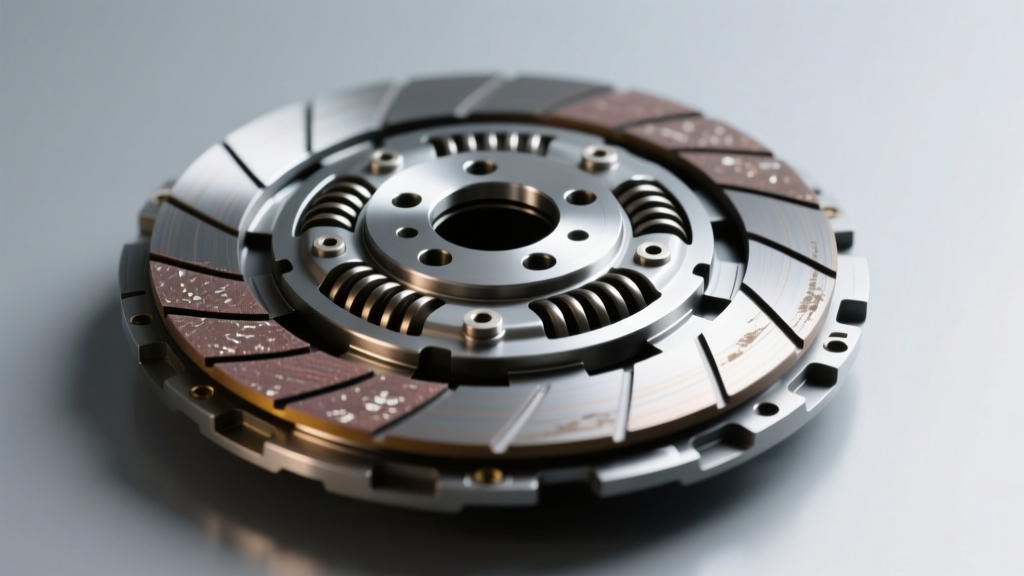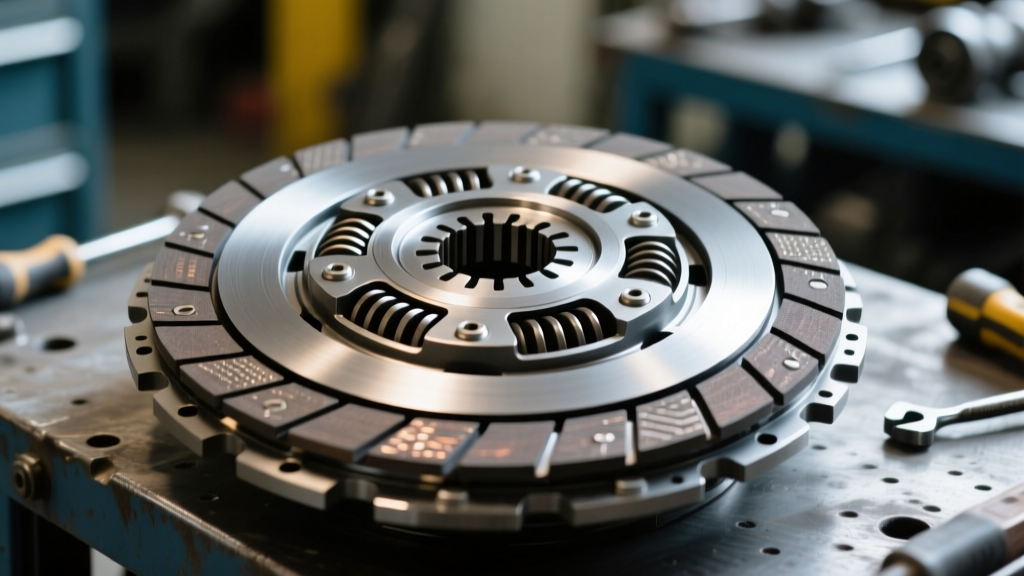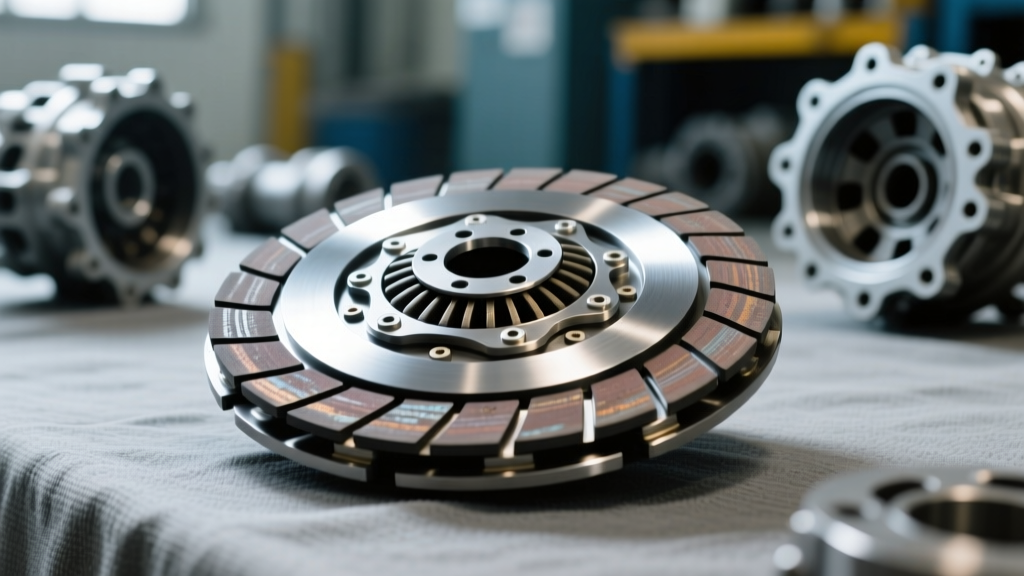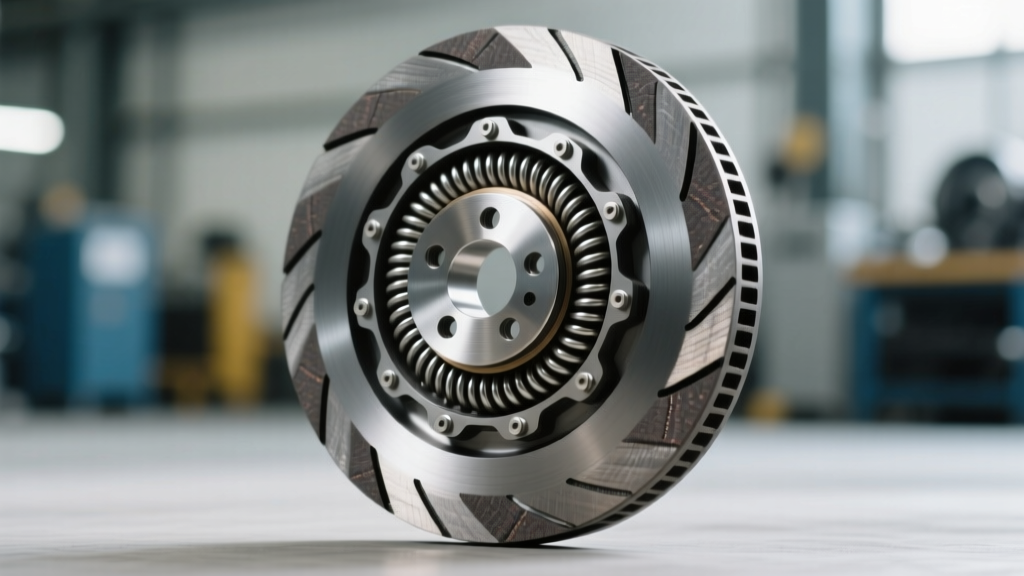
The Basics: What is Clutch Plate Pressure?
If the engine is the heart of your vehicle, the clutch is the gatekeeper. At the center of this system is the pressure plate, a heavy-duty spring mechanism responsible for clamping the clutch friction disc against the flywheel. When we talk about clutch plate pressure, we are referring to the clamp load—measured in pounds (lbs)—that the pressure plate exerts to lock the engine's rotational force to the transmission input shaft.
For beginners, think of the pressure plate as a massive mechanical hand squeezing two pieces of sandpaper together. If the squeeze (clamp load) is too weak, the sandpaper slips under heavy load, generating immense heat and wearing out the friction material. If the squeeze is too strong, you will need a hydraulic leg press just to push the clutch pedal in, making daily driving a miserable experience. Finding the exact balance between clamping force and pedal effort is the core challenge of clutch selection.
The Big Three: Pressure Plate Types Compared
Not all pressure plates are created equal. The automotive aftermarket and OEM manufacturers rely on three primary spring designs to generate clutch plate pressure. Understanding the mechanical differences between these designs is critical for matching the right component to your specific horsepower, torque, and drivability requirements.
1. Diaphragm Style (The Modern Standard)
The diaphragm pressure plate uses a single, large conical spring (often called a Belleville spring) with fingers radiating from the center. When the release bearing pushes against these fingers, the outer edge of the spring pulls away from the clutch disc, disengaging the drivetrain.
- Pros: Excellent pedal feel, smooth engagement, and consistent pressure across the entire friction surface. The diaphragm design actually increases clamp load slightly as the friction material wears, compensating for disc thinning.
- Cons: Can suffer from 'finger fatigue' or cracking at the base of the fingers under extreme, sustained high-RPM track use.
- Real-World Example: The Centerforce Dual Friction DF145216 (approx. $450-$550) is a legendary diaphragm upgrade for classic GM muscle cars, offering a 30% increase in clamp load over stock while maintaining a near-OEM pedal effort.
2. Multi-Finger / Borg & Beck Style (The Vintage & Drag Choice)
Before the diaphragm took over, the multi-finger (or Borg & Beck / Long style) pressure plate was the standard. This design uses multiple distinct coil springs and a series of heavy steel levers (fingers) to apply pressure. You will often see three prominent fingers protruding from the cover.
- Pros: Unmatched high-RPM stability. Because the coil springs are separate from the release levers, they are less prone to centrifugal distortion at 7,000+ RPM. This makes them the gold standard for drag racing and vintage restorations.
- Cons: Heavier pedal effort, harsher engagement, and they require more frequent adjustment as the clutch disc wears.
- Real-World Example: The McLeod Soft Loc 360502 (approx. $750-$850) is a staple in the drag racing world, utilizing adjustable base pressure and centrifugal weights to tune the exact clutch plate pressure needed for a perfect 60-foot time without bogging the engine.
3. Centrifugal Assist (The Heavy-Duty Hauler)
Centrifugal pressure plates are usually a variation of the diaphragm design, but they incorporate weighted levers on the pressure plate fingers. As engine RPM increases, centrifugal force pulls these weights outward, which in turn pushes the fingers inward, automatically increasing the clamp load on the clutch disc.
- Pros: Lower pedal effort at low RPM (great for stop-and-go traffic) but massive clamping force at high RPM to prevent slip under heavy loads or high boost.
- Cons: The engagement point can feel slightly inconsistent to drivers who are not used to the variable pressure curve. They are also heavier and more expensive to manufacture.
- Real-World Example: Heavy-duty diesel applications and high-HP street builds often use this. According to Centerforce, their patented centrifugal weight system can increase holding capacity by up to 30% at redline without increasing static pedal pressure.
Data Table: Clamp Load vs. Application Matrix
To visualize how these designs translate to real-world performance, review the data table below. Note that 'Pedal Effort' is relative to a standard 6:1 mechanical pedal ratio or a properly bled hydraulic system.
| Pressure Plate Type | Typical Clamp Load (lbs) | Pedal Effort | Best Application | Avg. Price Range |
|---|---|---|---|---|
| OEM Diaphragm | 1,800 - 2,400 | Light (25-35 lbs) | Daily driving, commuting, stock engines | $150 - $250 |
| HD Diaphragm | 2,800 - 3,600 | Medium (40-55 lbs) | Street/strip, mild boost, towing | $350 - $600 |
| Multi-Finger (Race) | 3,000 - 4,500+ | Heavy (60-90+ lbs) | Dedicated drag/track cars, high-RPM NA | $650 - $1,200 |
| Centrifugal Assist | 2,500 - 4,000 (RPM dependent) | Light-Medium (30-50 lbs) | Supercharged/Turbo street cars, heavy towing | $500 - $900 |
Step-by-Step Selection Framework for Your Build
Choosing the right pressure plate requires an honest assessment of how you drive. Follow this framework to avoid the most common beginner mistake: buying a 'race' clutch for a street car.
- Calculate Your Torque at the Flywheel: Take your engine's peak torque and multiply by 1.2 to 1.5 for a safety margin. A 400 lb-ft engine needs a clutch rated for at least 500-600 lb-ft of holding capacity.
- Define Your RPM Ceiling: If your engine rarely sees past 5,500 RPM (like a mild big-block V8 or a diesel), a standard or HD diaphragm is perfect. If you are shifting a solid-lifter small block at 7,500 RPM, you must upgrade to a multi-finger or a specialized high-RPM diaphragm to prevent centrifugal spring collapse.
- Assess Your Pedal Tolerance: If you drive in heavy traffic, avoid raw multi-finger race plates. As noted in McLeod Racing's technical documentation, a 3,500+ lb clamp load on a traditional Long-style pressure plate can generate over 80 lbs of pedal force, leading to severe driver fatigue and accelerated firewall flex.
Critical Installation Specs: Torque & Clearances
Even the most expensive pressure plate will fail prematurely if installed incorrectly. The mating surface and fastener torque are non-negotiable.
Flywheel Runout and Surface Prep
Before installing any pressure plate, you must measure the flywheel runout using a dial indicator. The maximum acceptable runout for most modern hydraulic clutch systems is 0.005 inches. Exceeding this will cause the release bearing to constantly ride against the pressure plate fingers, leading to catastrophic wear within a few thousand miles. Always have the flywheel resurfaced or replaced, and ensure the surface finish (RA value) matches your friction material (typically 32-64 microinches for organic, smoother for sintered iron).
Pressure Plate to Flywheel Torque Specs
Never use an impact wrench to install pressure plate bolts. You must use a calibrated torque wrench in a star-pattern sequence to prevent warping the pressure plate cover. Here are standard baseline specs for common platforms (always verify with your specific OEM or aftermarket manual):
- GM LS / Gen III-IV V8 (8mm x 1.25 bolts): 22 lb-ft (Some aftermarket HD plates with upgraded hardware may call for 25-28 lb-ft).
- Ford Modular 4.6L / 5.0L Coyote (8mm bolts): 21 lb-ft.
- Classic Chevy SBC / BBC (3/8"-16 bolts): 35 lb-ft.
- Import 4-Cylinder (e.g., Honda K-Series, 8mm): 19 lb-ft.
Pro-Tip: Apply a medium-strength threadlocker (like Loctite 243) to the pressure plate bolts. The harmonic vibrations of the engine can easily back out un-seated bolts over time.
Common Failure Modes & How to Avoid Them
Understanding why pressure plates fail will help you diagnose issues before they leave you stranded. According to drivetrain specialists featured in Hagerty's technical archives, most 'clutch failures' are actually secondary symptoms of pressure plate or hydraulic issues.
- Diaphragm Finger Grooving: Caused by a worn release bearing or improper clutch pedal free-play. The bearing constantly rubs against the spinning fingers, cutting deep grooves into the spring steel. Fix: Always replace the release bearing and verify 1/8" to 1/4" of free-play at the pedal.
- Thermal Cracking (Hot Spots): When a clutch is slipped excessively (e.g., trying to launch a heavy car on a steep hill), the friction disc generates immense heat. This heat transfers to the pressure plate face, causing the cast or nodular iron to crack or warp. Fix: Upgrade to a pressure plate with a thicker, high-mass friction face or switch to a sintered iron/ceramic disc that dissipates heat differently.
- Centrifugal Weight Seizure: On centrifugal-assist plates, dirt, clutch dust, and lack of lubrication can cause the pivot weights to seize. This results in a sudden, violent engagement or a complete inability to disengage at high RPM. Fix: Use enclosed or sealed weight designs for dusty/dirty environments, and stick to standard diaphragm plates for open-bellhousing track cars.
Final Thoughts on Clutch Plate Pressure
Mastering clutch plate pressure is about respecting the physics of friction and mechanical leverage. By matching the spring design (diaphragm, multi-finger, or centrifugal) to your specific torque output, RPM range, and driving environment, you ensure that your drivetrain operates smoothly and reliably. Always invest in high-quality hardware, adhere strictly to torque specifications, and remember that the pressure plate is only as good as the flywheel it mates to and the hydraulic system that controls it.