Redefining Clamp Load in Planetary Automatics
When enthusiasts and engineers discuss clutch systems, the term 'clamp load' typically evokes images of manual transmission diaphragm springs and heavy-duty pressure plates. However, when evaluating the role of a clutch plate in automatic transmission assemblies, the concept of clamp load shifts from mechanical spring tension to hydraulic fluid dynamics and precise mechanical clearances. In modern planetary automatics like the GM 6L80, Ford 10R80, or the ubiquitous ZF 8HP, the 'pressure plate' is effectively the hydraulic apply piston, and the clamp load is the total hydraulic force exerted against the clutch pack.
As of 2026, with torque outputs from factory turbocharged and hybrid powertrains routinely exceeding 600 lb-ft, understanding how to manipulate hydraulic clamp load and clutch pack clearance is no longer just for drag racers—it is a mandatory skill for durability in heavy-duty towing and high-performance street builds.
The Physics of Hydraulic Apply Force
To tune or diagnose a slipping clutch pack, you must first understand the math governing the apply force. The clamping force squeezing the friction and steel reaction plates against the backing plate (snap ring) is determined by a straightforward physics formula:
Force (lbs) = Line Pressure (PSI) × Piston Area (sq in) - Return Spring Pressure
Let us look at a real-world application: the GM 6L80 transmission, specifically the notorious 3-5-R clutch pack. The apply piston has an effective diameter of approximately 4.3 inches. Using the area formula (π × r²), the piston area is roughly 14.5 square inches. If the Transmission Control Module (TCM) commands a line pressure of 180 PSI during a 3-4 upshift, the raw hydraulic clamp load generated is 2,610 lbs of force.
If the transmission is modified to handle 800 horsepower, but the TCM tuning or pressure control solenoid (PCS) fails to proportionally increase line pressure, the clamp load remains static while input torque scales up. The result is micro-slippage, rapid friction material degradation, and catastrophic thermal failure.
Overcoming Return Spring Tension
Hydraulic pressure must first overcome the clutch return springs before any actual clamp load is applied to the clutch plate. In high-RPM applications, centrifugal force can cause heavy OEM return springs to bind or bow, inadvertently applying the clutch and causing overlap shifts. Upgrading to lightweight, high-tension aftermarket springs (such as those offered in Sonnax performance kits) ensures rapid clutch release when line pressure drops, but requires a slight bump in base apply pressure to maintain the same net clamp load.
Managing Clearance: The Automatic Equivalent of Preload
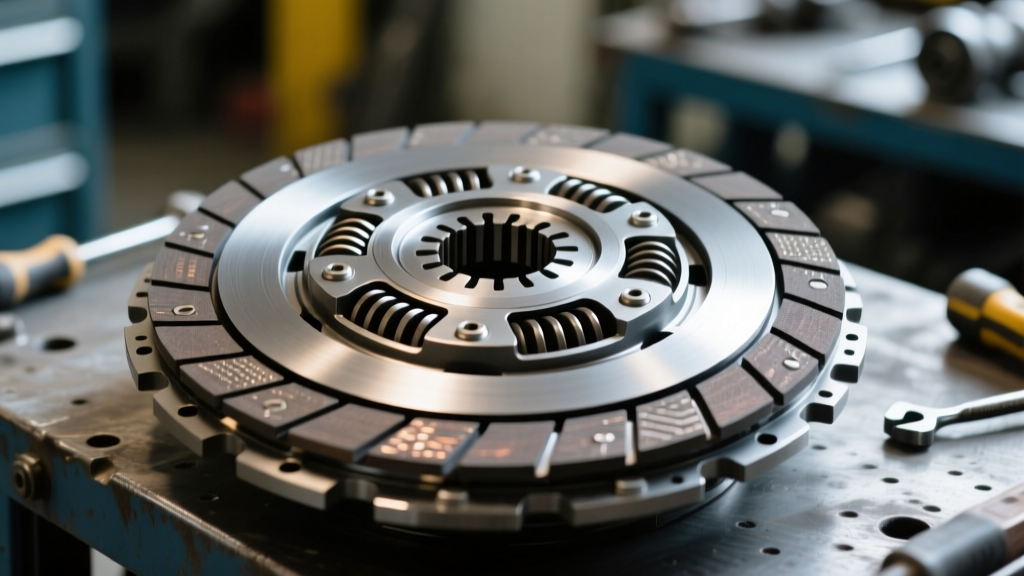
In a manual transmission, pedal freeplay dictates where the pressure plate begins to engage. In an automatic, this is managed via clutch pack clearance. If the clearance between the top steel reaction plate and the selective snap ring is too wide, the piston travels further, consuming hydraulic fluid volume and delaying shift timing. If it is too tight, the clutch plate in automatic transmission housings may experience drag, leading to premature wear and overheating.
Selective Snap Rings and Wave Plates
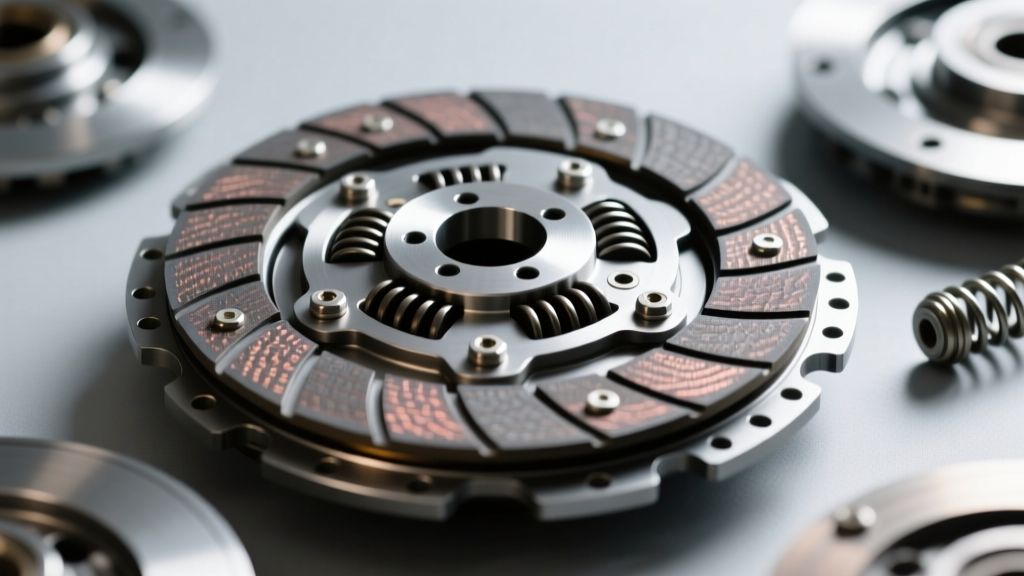
Clearance is adjusted using selective thickness snap rings or, in some ZF designs, adjustable backing plates. Furthermore, many OEM clutch packs utilize a 'wave plate' (a slightly conical steel ring) to cushion the initial apply. While wave plates smooth out shifts for daily driving, they absorb a portion of the hydraulic clamp load through elastic deformation. For severe-duty or racing applications, replacing the wave plate with a flat steel reaction plate and a thicker selective snap ring maximizes direct clamp load and yields firmer, faster shifts.
Comparative Specifications: OEM vs. Performance Targets
Below is a data table outlining baseline specifications for three common performance and heavy-duty automatic transmissions. These figures represent ideal targets for high-torque builds.
| Transmission Model | Target Clutch Pack | Est. Piston Area | Max Line Pressure | Target Clearance |
|---|---|---|---|---|
| GM 6L80 / 6L90 | 3-5-R (Input) | 14.5 sq in | 250 PSI (Tuned) | 0.040' - 0.060' |
| ZF 8HP70 / 8HP90 | Clutch A (1st/2nd) | 9.6 sq in | 275 PSI (Sport Mode) | 0.60mm - 0.80mm |
| Ford 10R80 | Clutch C (3rd/4th) | 12.1 sq in | 290 PSI (Tow/Haul) | 0.050' - 0.070' |
Note: Always verify clearances using a dial indicator and feeler gauges. Never rely solely on the 'feel' of the snap ring installation.
The Torque Converter Lockup: True Mechanical Clamp Load
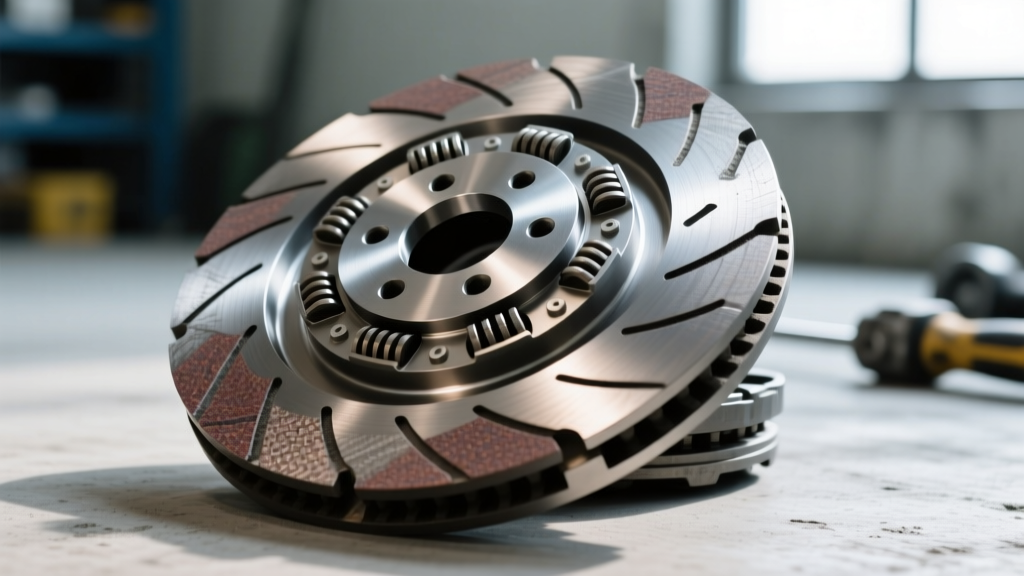
While planetary clutch packs rely entirely on hydraulics, the Torque Converter Clutch (TCC) lockup operates much closer to a traditional manual clutch. The TCC features a physical friction-lined clutch plate in automatic transmission torque converters that is mechanically and hydraulically clamped against the converter's front cover.
In modern multi-domain lockup converters (which slip at low RPMs for efficiency and lock completely at higher speeds), managing the TCC apply pressure is critical. If the TCC clutch plate experiences inadequate clamp load during high-torque towing, it will slip, generating immense heat that degrades the transmission fluid and destroys the converter. Upgrading to a billet front cover with a multi-disc internal clutch pack (like those from Circle D or Midwest Converters) exponentially increases the surface area, effectively multiplying the clamp load capacity without requiring dangerous spikes in hydraulic line pressure.
Diagnosing and Correcting Clamp Load Deficiencies
How do you know if your clutch plate in automatic transmission assemblies is suffering from inadequate clamp load? The symptoms are often masked by modern adaptive TCMs, but physical evidence remains undeniable.
Diagnostic Symptoms
- Flare Shifts: RPMs spike momentarily during an upshift. This indicates the releasing clutch is letting go before the applying clutch has generated sufficient clamp load to hold the torque.
- Dark, Burnt Fluid: Micro-slippage generates localized heat, baking the fluid and glazing the friction surfaces. According to the Automatic Transmission Rebuilders Association (ATRA), burnt fluid is the leading indicator of chronic hydraulic pressure loss or excessive clutch clearance.
- Adaptive Pressure Maxing Out: Using a bi-directional scan tool, check the TCM's adaptive pressure tables. If the computer is adding +20 PSI or more to the base line pressure for a specific gear, the transmission is actively trying to compensate for a physical clamp load deficiency (worn frictions, leaking piston seals, or ballooning converter).
Real-World Failure Case: The GM 6L80 3-5-R Clutch
The 3-5-R clutch pack in the GM 6L80 is infamous for burning up in tuned trucks and Camaros. The root cause is often a combination of inadequate OEM line pressure in the upper RPM ranges and the physical limitations of the OEM friction material. To resolve this, builders do not just add thicker snap rings; they increase the hydraulic clamp load via TCM tuning (commanding up to 250 PSI in 4th and 5th gears) and upgrade to Raybestos Powertrain GPZ or Pro-Series friction plates, which feature higher coefficients of friction and can withstand the immense heat generated by aggressive clamp loads.
Summary: The Balancing Act of Shift Quality and Durability
Optimizing the clamp load on a clutch plate in automatic transmission systems is a delicate balancing act. Too little hydraulic force results in slip, heat, and failure. Too much force, combined with overly tight clearances, results in harsh, driveline-shocking shifts that can snap output shafts or strip planetary gears. By mastering the math of piston areas, carefully measuring selective snap ring clearances, and utilizing modern TCM tuning to command precise line pressures, you can build an automatic transmission that handles immense torque while maintaining razor-sharp shift quality.