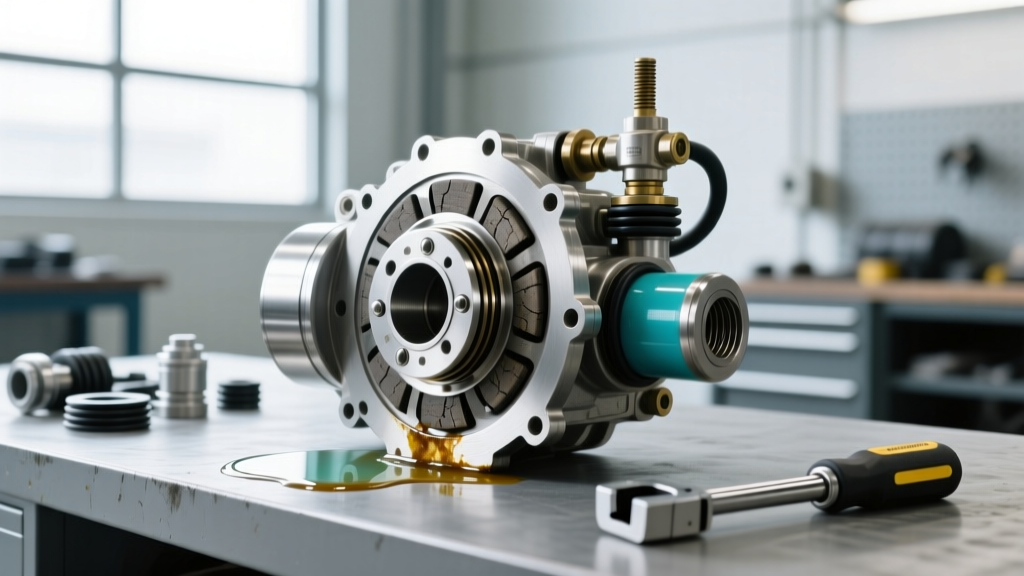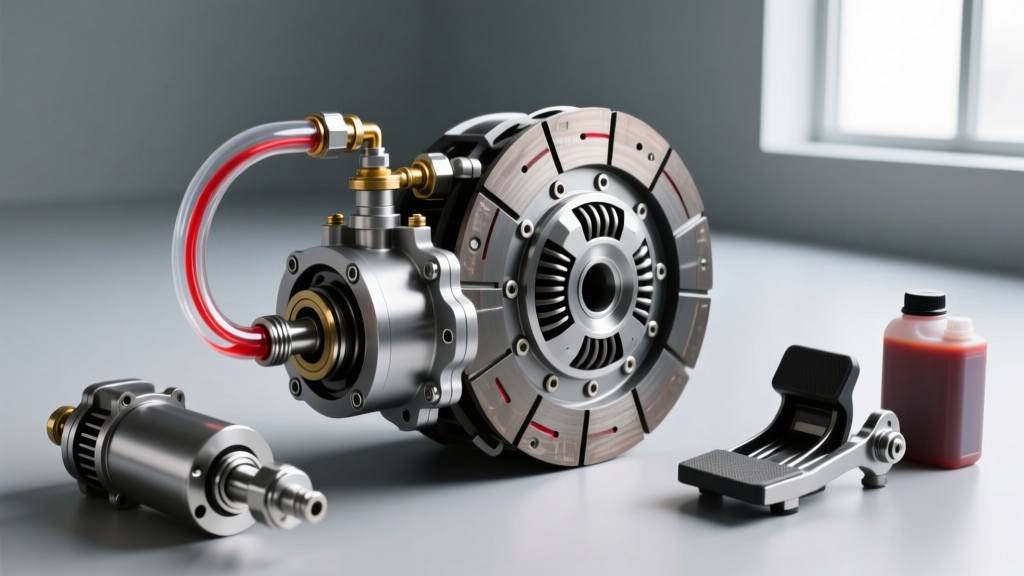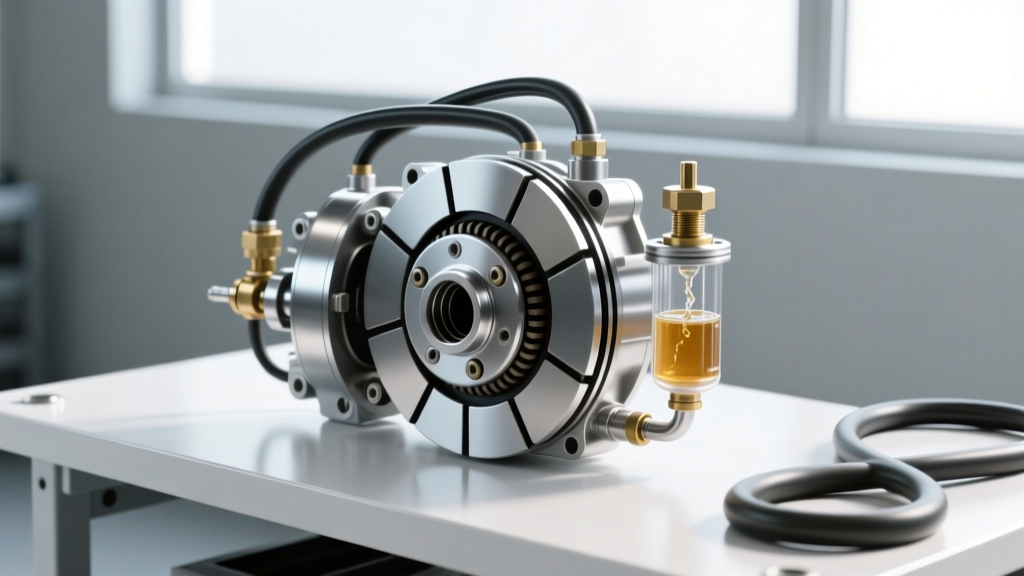
The Critical Role of Bore Sizing and Hydraulic Volume
When diagnosing a spongy pedal, incomplete disengagement, or premature throwout bearing wear, the master cylinder is often the culprit. However, selecting a replacement is not as simple as matching the year, make, and model. The internal architecture, bore diameter, and pushrod stroke dictate the hydraulic ratio, which directly impacts pedal feel and clutch actuation. Whether you are rebuilding a classic muscle car with a modern Tremec T56 Magnum swap or maintaining a daily-driven European manual, understanding the underlying engineering is mandatory.
Decoding the Hydraulic Clutch Master Cylinder Diagram
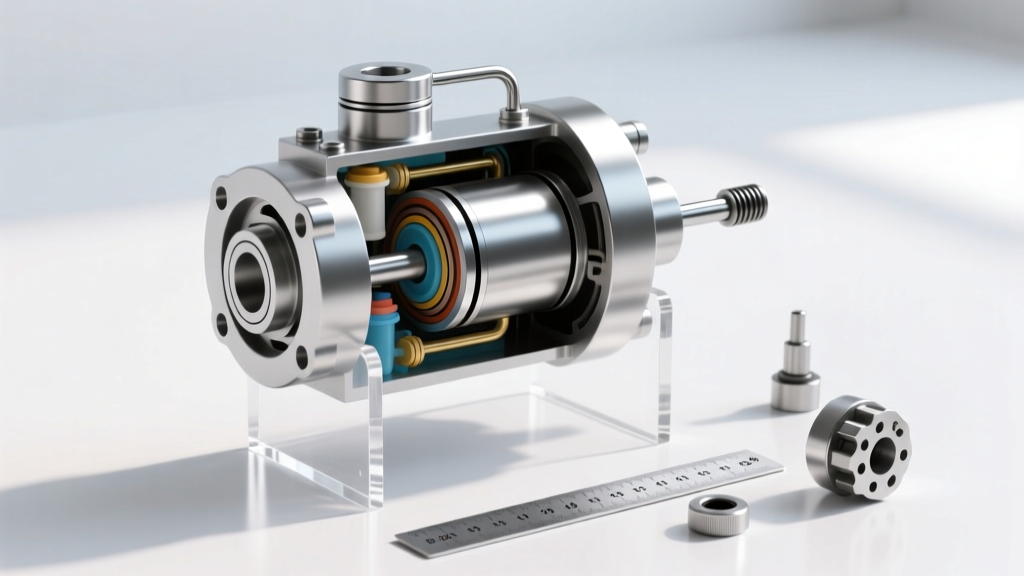
To understand why certain brands outperform others, we must first look at a standard hydraulic clutch master cylinder diagram. A cutaway schematic reveals several critical internal components that dictate performance and failure modes:
- Compensation (Bypass) Port: Connects the reservoir to the bore. When the pedal is released, fluid expands back into the reservoir. If this port is blocked by an improperly adjusted pushrod, hydraulic pressure builds, keeping the clutch partially disengaged and destroying the release bearing.
- Primary Cup and Seal Lip: High-end brands use EPDM (Ethylene Propylene Diene Monomer) rubber formulated specifically for glycol-based DOT fluids. Budget remanufactured units often use cheaper nitrile seals that swell and bypass under high-temperature track conditions.
- Return Spring and Piston Assembly: Dictates pedal return speed. Motorsport cylinders feature high-tension springs to ensure rapid fluid return during high-RPM shifts.
- Pushrod and Clevis Assembly: The mechanical link to the pedal. Adjustable pushrods are vital for setting the exact dead-play (typically 0.020 to 0.040 inches) required to keep the compensation port open.
Matching Master Bore to Slave Cylinder Volume
The most common mistake in aftermarket clutch swaps is ignoring the hydraulic ratio. The formula is simple: (Master Bore Area) / (Slave Bore Area) = Hydraulic Ratio. For example, pairing a 3/4-inch (0.750") Wilwood master cylinder with a 7/8-inch (0.875") slave cylinder yields a ratio that increases pedal effort but reduces pedal travel. This is ideal for heavy-duty dual-disc clutches like the McLeod RXT or Cerametallic discs behind a ZF S6-650 transmission, where high clamp loads require aggressive hydraulic leverage.
Tier 1: OEM and OES Market Leaders
For factory restorations and daily drivers, Original Equipment Supplier (OES) brands are the only logical choice. They guarantee exact factory stroke lengths and factory-spec plastic or cast-aluminum reservoir integration.
Sachs / ZF Aftermarket
Sachs (a division of ZF) is the dominant OES for GM, VW, and Audi applications. A common part number like the Sachs SH5003 (used in GM C/K trucks) features an integrated plastic reservoir with a specialized roll-over valve. Pricing typically ranges from $65 to $95. Sachs cylinders are renowned for their precise compensation porting, which prevents the dreaded 'sticky pedal' syndrome common in aging GM hydraulic lines.
LuK (Schaeffler Group)
LuK dominates the Ford and Chrysler OES market. Their master cylinders often feature a unique twist-lock reservoir design and integrated delay valves. The delay valve (or 'skip-shift' solenoid valve) slows clutch engagement slightly to smooth out shifts for NVH (Noise, Vibration, and Harshness) compliance. If you are tracking a Mustang, enthusiasts often delete the LuK delay valve, but for street use, their LMC-series ($80–$120) is bulletproof.
FTE Automotive
FTE is the go-to for European platforms, particularly BMW and Land Rover. Critical Warning: Many FTE master cylinders are designed for Mineral Oil (e.g., Pentosin CHF 11S), NOT DOT fluid. Flushing an FTE mineral oil system with DOT 4 will destroy the internal EPDM seals within 500 miles, resulting in catastrophic fluid leakage onto the clutch friction disc.
Tier 2: High-Performance and Motorsport
When factory plastic bodies crack under the stress of a 1,200 lb-ft twin-turbo setup, or when firewall flex ruins pedal consistency, you upgrade to billet aluminum.
Wilwood Engineering
Wilwood’s clutch masters are CNC-machined from 6061-T6 aluminum. The Wilwood 260-1304 (3/4" bore) is a staple in the LS-swap and resto-mod community. Priced around $135, it features a hard-anodized bore that resists scoring and pitting far better than cast iron. They utilize high-volume ports that allow for rapid fluid displacement, essential for sequential gearboxes or fast-shifting drag applications.
Tilton Engineering
Tilton’s 78-Series and 79-Series master cylinders ($280–$350) are the gold standard for professional motorsport. They feature an external bleed screw at the highest point of the casting, making gravity bleeding virtually foolproof. Tilton also offers adjustable ratio pedals, allowing the driver to tune the hydraulic leverage on the fly from the cockpit.
Tier 3: Economy and Remanufactured Options
Brands like Dorman and AMS Automotive fill the budget segment ($25–$45). While Dorman’s 'First Stop' line is adequate for a low-mileage commuter car, remanufactured units often suffer from bore pitting that was simply honed over rather than sleeved. We recommend avoiding remanufactured master cylinders for any vehicle producing over 300 lb-ft of torque, as the internal bypass seals tend to fail under high hydraulic line pressure.
2026 Brand Comparison Matrix
| Brand | Tier | Typical Bore Sizes | Body Material | Price Range (USD) | Best Application |
|---|---|---|---|---|---|
| Sachs (ZF) | OEM / OES | 5/8", 3/4" | Cast Aluminum / Polymer | $65 - $110 | Factory Restorations, Daily Drivers |
| LuK | OEM / OES | 11/16", 3/4" | Polymer w/ Delay Valve | $80 - $130 | Ford/Chrysler Street Applications |
| Wilwood | Performance | 3/4", 7/8", 1" | 6061-T6 Billet Aluminum | $130 - $160 | LS Swaps, Track Cars, Resto-Mods |
| Tilton | Motorsport | 5/8" to 1-1/8" | Hard-Anodized Aluminum | $280 - $350+ | Pro Racing, Heavy-Duty Twin Disc |
| Dorman | Economy | OEM Specific | Cast Iron / Plastic | $25 - $50 | Budget Commuter Replacements |
Installation Torque Specs and Fluid Selection
Proper installation goes beyond threading the hydraulic line. Firewall flex is a major cause of spongy pedals. When mounting an aftermarket billet master cylinder, use a steel reinforcement plate on the backside of the firewall. For standard M8 mounting hardware, torque to 18–22 lb-ft. For smaller M6 hardware (common in tight European engine bays), torque to 8–10 lb-ft using blue Loctite to prevent vibration-induced backing out.
Fluid Dynamics: DOT vs. Mineral
Expert Warning: Never flush a mineral oil hydraulic system (common in older BMW, Citroen, and specific FTE setups) with DOT 3, DOT 4, or DOT 5.1. Glycol-based DOT fluids will cause the mineral-compatible seals to swell and rupture. Always verify the reservoir cap stamping. For high-heat DOT applications, we recommend Motul RBF 600 or Castrol SRF for their superior dry boiling points (594°F and 590°F respectively).
Line Fittings and Bleeding
OEM systems typically use a 3/16-inch inverted flare or a proprietary quick-connect push fitting. When converting to a Wilwood or Tilton master, you will need to adapt to a -3 AN fitting (3/8-24 inverted flare). For bleeding, reverse-bleeding (pushing fluid from the slave cylinder bleeder screw up to the master reservoir) remains the most effective method for complex hydraulic routing, as it naturally forces trapped air upward and out of the system.
Sourcing and Verification
When sourcing components, always verify part numbers against authoritative catalogs to avoid mismatched pushrod depths. You can cross-reference Wilwood’s exact dimensional schematics via the Wilwood Clutch Master Cylinder Tech Pages. For OEM cross-referencing and daily driver pricing, the RockAuto Catalog remains an industry-standard database for verifying Sachs, LuK, and FTE part numbers across global applications.