The Physics of Trapped Air in Clutch Hydraulics
A spongy, inconsistent clutch pedal is the nemesis of precise manual gear changes. While many enthusiasts immediately blame the slave cylinder or the friction disc, the root cause of hydraulic inconsistency usually lies in improper bleeding of the clutch master cylinder and trapped air in the hydraulic lines. Unlike brake systems, which operate on a closed, high-pressure loop with multiple calipers, a clutch hydraulic system is a single, low-volume circuit that often suffers from poor routing and unfavorable master cylinder mounting angles.
In modern vehicles, such as the Ford Mustang GT (S197 and S550 platforms) or GM LS-swapped trucks using the ACDelco 15213953 master cylinder, the master cylinder is frequently mounted at an upward tilt. This angle creates a natural trap for air bubbles at the highest point of the bore, directly behind the primary piston cup. When you attempt standard pedal-pumping bleeding methods, the fluid simply bypasses the trapped air pocket, resulting in a permanently spongy pedal and incomplete clutch disengagement.
Expert Insight: Air is compressible; hydraulic fluid is not. Even a 2% air volume in your clutch hydraulic system can result in a 15% loss of piston stroke at the slave cylinder, leading to gear grind on upshifts and premature synchro wear in transmissions like the Tremec T56 Magnum or ZF S6-650.
Fluid Selection: Hygroscopy and Thermal Limits
Before you begin bleeding, you must verify the correct fluid. Using the wrong fluid will destroy internal EPDM rubber seals, particularly in OEM FTE Automotive or Sachs master cylinders. While DOT 3, DOT 4, and DOT 5.1 are glycol-based and intermixable, their wet and dry boiling points dictate their performance in high-heat environments (such as a bellhousing-adjacent slave cylinder).
| Fluid Type | Dry ERBP (°F) | Wet ERBP (°F) | Best Application | Avg. Cost (500ml) |
|---|---|---|---|---|
| DOT 3 (OEM Standard) | 401°F | 284°F | Daily drivers, low-RPM torque | $6 - $10 |
| DOT 4 (High Perf) | 446°F | 311°F | Track days, aggressive street driving | $12 - $18 |
| DOT 5.1 | 518°F | 356°F | Heavy-duty towing, extreme heat | $15 - $22 |
| DOT 5 (Silicone) | 500°F | N/A (Non-hygroscopic) | NEVER USE IN CLUTCH SYSTEMS | $18 - $25 |
For high-performance applications, we recommend Motul RBF 600 or Castrol SRF. These fluids resist vapor lock when the slave cylinder absorbs radiant heat from the exhaust or transmission tunnel. Always consult your factory service manual, as some European vehicles (like older BMWs or Magura-equipped motorcycles) require specific Mineral Oil (HSMO) and will fail catastrophically if exposed to glycol-based DOT fluids.
The Bench Bleeding Prerequisite
If you are installing an aftermarket unit, such as the Wilwood 7/8-inch bore master cylinder (Part # 260-1304), bench bleeding is non-negotiable. Because these cylinders are often mounted horizontally or at steep angles in custom firewall setups, air will remain trapped in the reservoir port.
- Secure the master cylinder in a vise using soft jaws to prevent marring the aluminum body.
- Fill the reservoir with fresh DOT 4 fluid.
- Using a blunt plastic rod or wooden dowel, slowly stroke the piston 15 to 20 times. Do not use metal tools, as scratching the bore will cause internal bypassing.
- Watch the compensation port (the small hole at the bottom of the reservoir). You will see a steady stream of micro-bubbles emerge. Continue stroking until the fluid is entirely bubble-free.
- Keep the reservoir full and cap it immediately to prevent moisture ingress.
The 'Zip-Tie' Bypass Method: A Game Changer
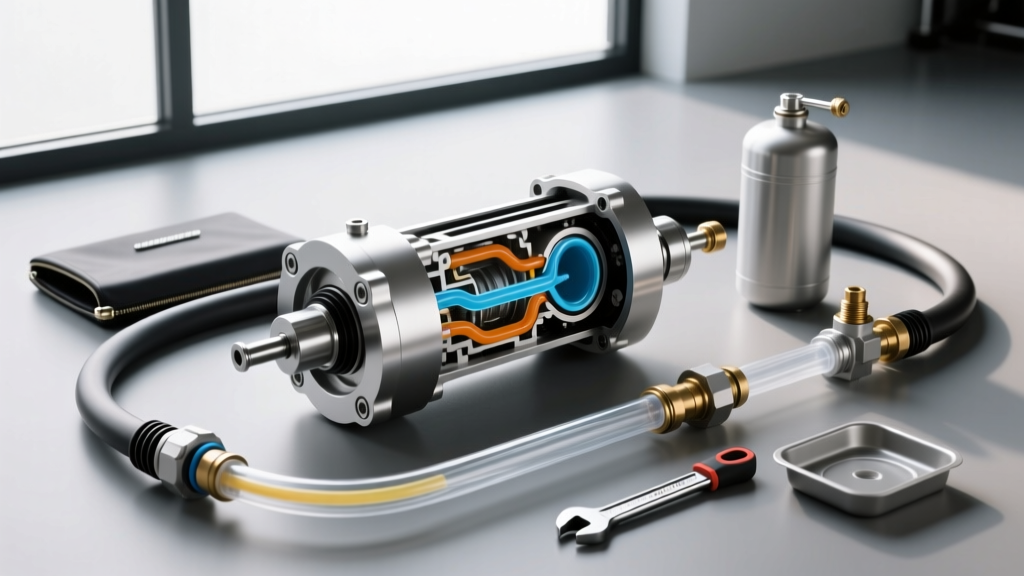
The most effective technique for bleeding a clutch master cylinder already installed on the firewall involves manipulating the internal compensation port. The compensation port connects the fluid reservoir to the pressure bore. When the pedal is fully released, this port is open. If air is trapped above the port, standard pressure bleeding will just push fluid from the reservoir into the lines without evacuating the trapped air.
Step-by-Step Zip-Tie Protocol
- Depress the Pedal: Use a heavy-duty zip-tie or a dedicated pedal depressor tool to hold the clutch pedal down exactly 1 to 1.5 inches. This moves the master cylinder piston past the compensation port, sealing the bore.
- Apply Pressure: Connect a pressure bleeder (like the Motive Products 0108) to the master cylinder reservoir cap. Pressurize the system to 10-12 PSI. Never exceed 15 PSI, or you risk blowing out the OEM plastic quick-connect fittings (such as the Dorman 800-181) at the slave cylinder.
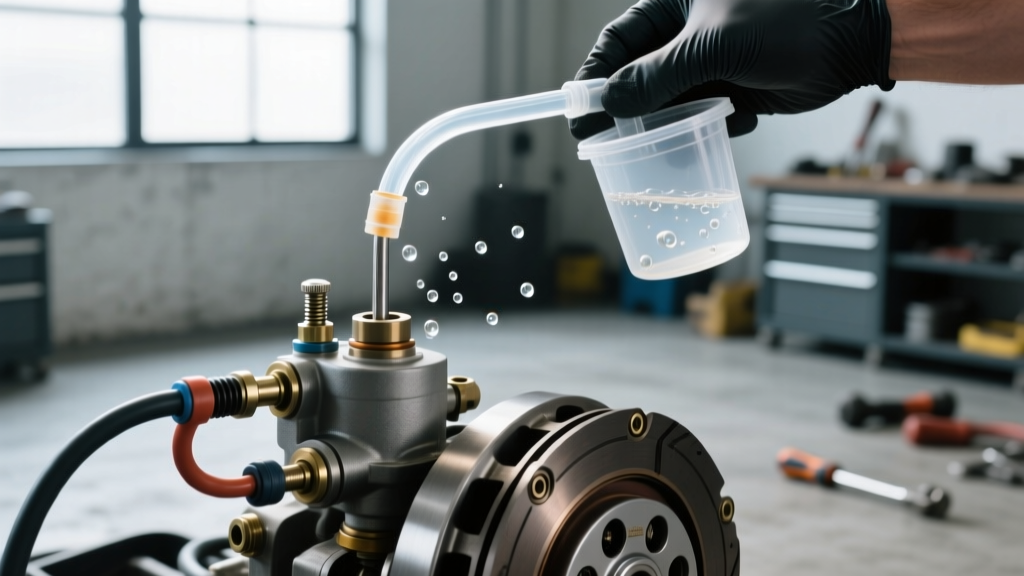
- Open the Bleeder: Attach a clear vinyl hose to the slave cylinder bleeder screw and submerge the other end in a catch bottle. Crack the bleeder screw open using an 8mm or 10mm flare wrench.
- Purge: Because the compensation port is sealed by the zip-tie, the pressurized fluid has nowhere to go but down the hard line, through the flexible hose, and out the bleeder screw, taking the trapped air with it.
- Release and Repeat: Close the bleeder, release the zip-tie, let the pedal return, and repeat the process 3-4 times until the fluid is crystal clear and devoid of micro-bubbles.
Reverse Bleeding: When Air Refuses to Budge
Sometimes, the hydraulic line routes upward and then downward (common in vehicles with the slave cylinder mounted outside the bellhousing, like the Jeep Wrangler JK or certain Toyota Tacomas). Air bubbles naturally want to rise. Pushing fluid from the master cylinder down to the slave cylinder forces the air to travel against its natural buoyancy.
In these scenarios, reverse bleeding is the ultimate solution. Using a vacuum/pressure pump like the Mityvac MV6840, you attach the hose to the slave cylinder bleeder screw and push fresh fluid up through the line and into the master cylinder reservoir.
Warning: When reverse bleeding, you must continuously monitor the master cylinder reservoir. If it overflows, glycol-based fluid will strip the paint off your firewall and fender in minutes. Use a fluid extraction syringe to keep the reservoir level just below the MAX line during this process.
Torque Specs and Hardware Best Practices
A perfect bleed is useless if the hardware fails under pressure. Hydraulic systems operate at pressures exceeding 1,200 PSI during aggressive clutch actuation. Below are the standard torque specifications for common clutch hydraulic components. Always use a calibrated inch-pound or low-range Newton-meter torque wrench.
| Component | Thread Size | Torque Spec (Nm) | Torque Spec (lb-ft) |
|---|---|---|---|
| Master Cyl to Firewall Nuts | M8 x 1.25 | 15 - 18 Nm | 11 - 13 lb-ft |
| Hard Line Flare Nut | M12 x 1.0 | 12 - 15 Nm | 9 - 11 lb-ft |
| Slave Cyl Mounting Bolts | M8 x 1.25 | 22 - 25 Nm | 16 - 18 lb-ft |
| Slave Bleeder Screw | M10 x 1.0 | 5 - 7 Nm | 4 - 5 lb-ft |
Pro Tip: Bleeder screws are notoriously fragile due to corrosion and heat cycling. Always apply a penetrant like PB Blaster or Kroil 24 hours before attempting to loosen a bleeder screw. If the hex head rounds off, you will be forced to replace the entire slave cylinder assembly.
Diagnosing Micro-Leaks and Quick-Connect Failures
If you have successfully bled the system but the pedal slowly sinks to the floor over 24 hours, you have a micro-leak or internal master cylinder bypassing. Inspect the plastic quick-connect fittings common on modern GM and Ford vehicles. The internal O-rings in these fittings degrade rapidly when exposed to high under-hood temperatures.
Upgrading to a braided stainless steel clutch line with AN-4 or AN-3 fittings eliminates the weak plastic OEM connections. For more advanced hydraulic theory and component upgrades, refer to the engineering guides available at Wilwood Engineering Tech Tips or the archival tech articles at Hagerty Media Maintenance & Tech.
Mastering the art of bleeding a clutch master cylinder requires patience, an understanding of fluid dynamics, and the right tools. By utilizing the zip-tie bypass method and respecting torque specifications, you will achieve a firm, predictable pedal that ensures lightning-fast, synchro-saving shifts for thousands of miles.