The Geometry of Engagement: CVT vs. Manual Alignment
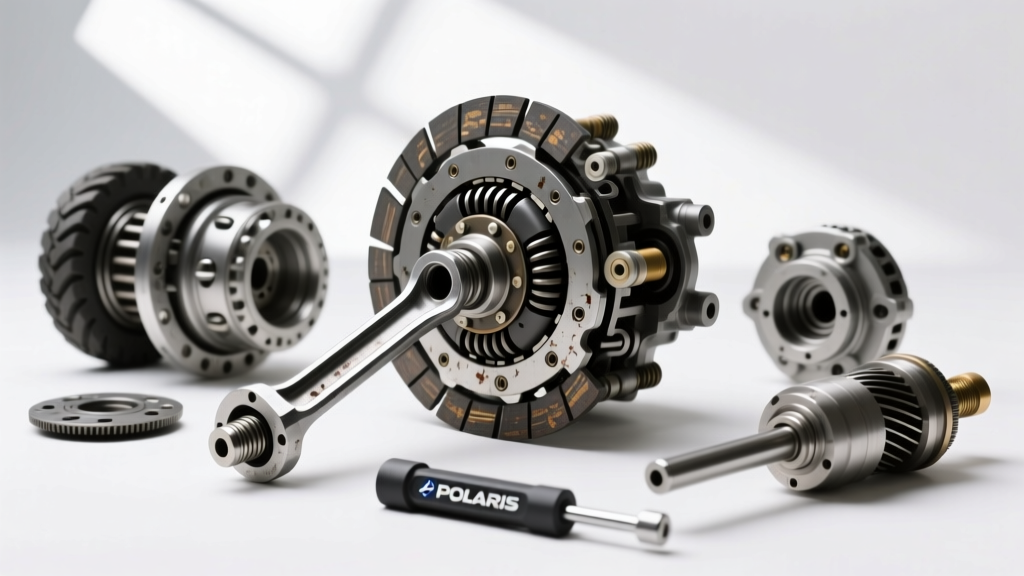
When off-road enthusiasts and UTV builders discuss drivetrain alignment, the Polaris RZR clutch alignment tool is widely considered the gold standard. This specialized tool ensures that the CVT primary and secondary sheaves are perfectly parallel, allowing the drive belt to track true without generating catastrophic heat or premature edge-wear. However, crossover enthusiasts who build both UTVs and manual sports cars often confuse these alignment procedures. Applying rotational, parallel-plane CVT logic to a manual transmission is a fundamental mistake.
Manual transmission clutch alignment is entirely about linear fulcrum geometry, pivot ball height, and fork sweep angle. When you experience clutch chatter, incomplete disengagement, or erratic pedal feel in a manual gearbox, the culprit is rarely the friction disc itself. More often than not, you are dealing with severe clutch fork and pivot issues. As of 2026, with manual transmissions like the Ford MT82 and Tremec T56 Magnum handling upward of 700 lb-ft of torque in aftermarket applications, the mechanical stress placed on the release linkage has never been higher. Understanding the precise wear limits and adjustment protocols for these components is critical for any serious drivetrain builder.
Core Symptoms of Clutch Fork and Pivot Degradation
Unlike a worn friction disc which typically slips under high load, a degraded clutch fork or pivot ball alters the physical geometry of the release system. This manifests in several distinct, often misdiagnosed symptoms:
- Clutch Chatter on Engagement: As the pivot ball develops a flat spot or the fork pivot pad wears unevenly, the fulcrum point shifts dynamically under load. This causes the throwout bearing to apply uneven pressure to the pressure plate fingers, resulting in violent chassis shudder during first-gear launches.
- Incomplete Disengagement (Gear Crunch): If the clutch fork fingers wear a groove deeper than 0.030 inches, the fork effectively loses travel. The hydraulic or mechanical linkage reaches its physical limit before the pressure plate is fully retracted, making it impossible to engage first gear or reverse without grinding synchronizers.
- Erratic Pedal Dead-Zone: A worn pivot stud allows the clutch fork to tilt slightly on its axis rather than sweeping in a perfect arc. This translates to a pedal that feels 'notchy' or exhibits a wandering bite point, particularly when the transmission fluid is cold and viscous.
- High-RPM Release Bearing Squeal: When the fork geometry is compromised, the throwout bearing may not sit perfectly square against the pressure plate diaphragm springs. At high RPMs, this angular misalignment causes the bearing to wear eccentrically, producing a metallic squeal that is often misattributed to a bad bearing rather than a bad fork.
Diagnostic Measurements and 2026 Wear Limits
Proper diagnosis requires removing the transmission and inspecting the release components with calipers and a straight edge. Visual inspection is insufficient; the human eye cannot reliably detect 0.015 inches of pivot ball flat-spotting. Below are the industry-standard wear limits and current market replacement costs for 2026.
| Component | OEM Material | Maximum Wear Limit | 2026 Replacement Cost |
|---|---|---|---|
| Clutch Fork (Fingers) | Cast Iron / Stamped Steel | 0.030' Groove Depth | $85 - $160 |
| Pivot Ball / Stud | Hardened Steel | 0.015' Flat Spotting | $15 - $45 |
| Fork Pivot Pad | Nylon / Sintered Bronze | Flush to Base Metal | $20 - $60 |
| Release Bearing Collar | Aluminum / Steel | 0.020' Scoring | $40 - $120 |
| Adjustable Pivot (Aftermarket) | Chromoly Steel | N/A (Replace if stripped) | $90 - $150 |
Expert Case Studies: Ford MT82 and Tremec T56 Magnum
Ford MT82 Pivot Ball and Fork Wear
The Ford MT82, found in 2011-2023 Mustangs, is notorious for clutch fork and pivot issues when paired with upgraded clutches. The OEM stamped steel fork and nylon pivot pads degrade rapidly under the increased diaphragm spring pressure of aftermarket twin-disc setups. The OEM pivot stud (Part # BR3Z-7A548-A) is torqued to 23 lb-ft. If this stud backs out even two threads due to improper threadlocker application, the entire fulcrum geometry collapses, leading to immediate disengagement failure.
Expert Fix: Replace the OEM setup with a chromoly adjustable pivot ball (such as the McLeod 1401-2) and a reinforced cast-iron fork. When installing the adjustable pivot, you must measure the distance from the bellhousing mounting face to the top of the pivot ball. For the MT82, the ideal pivot height is exactly 4.750 inches to ensure the release bearing maintains proper sweep without bottoming out the hydraulic slave cylinder.
Tremec T56 Magnum Release Bearing Preload
The Tremec T56 Magnum utilizes a hydraulic throwout bearing (HTOB) that eliminates the traditional mechanical fork in many bellhousing configurations. However, in applications that retain a mechanical fork (like certain retrofit kits), pivot alignment is paramount. Even in HTOB setups, the 'pivot' is effectively the bearing's internal piston travel. According to Tremec Technical Support, the air gap between the HTOB face and the pressure plate fingers must be strictly maintained between 0.100' and 0.150'.
If the HTOB is installed without checking this gap, and the clearance is zero, the bearing will constantly ride the spinning pressure plate, leading to catastrophic fluid overheating and bearing explosion within 500 miles. Conversely, if the gap exceeds 0.200', the piston will over-extend, bypassing its internal O-ring seals and dumping DOT 4 fluid directly into the bellhousing.
Hydraulic Throwout Bearings vs. Mechanical Forks
Understanding the difference between these two systems is vital for modern diagnostics. While a Polaris RZR clutch alignment tool aligns rotating masses to prevent belt deflection, manual transmission builders must align linear thrust vectors.
In a mechanical fork system, the pivot ball acts as a seesaw fulcrum. The ratio of the fork (distance from pivot to fingers vs. pivot to slave rod) dictates mechanical advantage. A worn pivot pad reduces this ratio, requiring more pedal effort. In a Hydraulic Throwout Bearing (HTOB) system, there is no fork. The bearing itself acts as the slave cylinder. Diagnostics here shift from measuring fork grooves to measuring piston stroke and internal seal integrity. If an HTOB exhibits a spongy pedal that slowly sinks to the floor while holding the clutch in at a stoplight, the internal cup seals have bypassed—a failure mode that mimics a worn master cylinder but requires dropping the transmission to fix.
Best Practices for Pivot Adjustment and Fork Alignment
To ensure longevity and precise engagement in high-torque manual applications, follow these expert best practices during assembly:
- Mandatory Threadlocker: Never install a pivot ball stud without medium-strength threadlocker (Loctite 243). The vibration harmonics of a manual transmission bellhousing will loosen a dry stud within 1,000 miles. Torque to the manufacturer spec (typically 20-25 lb-ft for most GM and Ford applications).
- Check Fork Sweep Angle: With the transmission on the bench, install the fork and pivot. Push the fork to simulate clutch engagement. The face of the throwout bearing must remain perfectly parallel to the pressure plate fingers throughout the entire sweep. If it tilts, the pivot ball height is incorrect, or the fork is bent.
- Lubrication Protocol: Do not use standard chassis grease on the pivot ball or the fork pivot pad. Standard grease melts and migrates onto the clutch disc under bellhousing heat. Use a high-temp molybdenum disulfide (moly) paste or a dedicated clutch release bearing grease (like Red Line 80402) sparingly. A single dab on the pivot contact point is sufficient.
- Bellhousing Runout: Even a perfectly adjusted fork and pivot will fail if the bellhousing is misaligned. Always check bellhousing runout with a dial indicator. Maximum allowable runout is 0.005'. If it exceeds this, use offset dowel pins to correct the alignment, ensuring the transmission input shaft and engine crankshaft share a perfect centerline.
By treating manual clutch linkage geometry with the same precision that UTV builders apply to CVT sheave alignment, you can eliminate drivetrain chatter, extend component life, and achieve a flawless, factory-feeling pedal response.
For further technical specifications on bellhousing tolerances and release system geometries, consult the Ford Performance Parts technical library or your specific transmission manufacturer's service documentation.