The Anatomy of Engagement: Mechanical Forks vs. Mechatronic Actuators
As we navigate the 2026 automotive landscape, the diagnostic divide between purist manual transmissions and automated dual-clutch systems has never been more pronounced. For automotive technicians and advanced DIYers, understanding the mechanical realities of clutch actuation is paramount. While traditional manual transmissions rely on a mechanical clutch fork and pivot ball to translate pedal effort into diaphragm spring pressure, modern automated systems utilize complex electromechanical or hydraulic actuators. However, when a driver complains of erratic engagement, chatter, or a "dead" pedal, the root cause often traces back to the physical pivot points of the release mechanism. In this expert guide, we will dissect traditional clutch fork and pivot issues, establish precise diagnostic wear limits, and contrast these mechanical failures with the equally complex actuator lever issues found in a dsg gearbox clutch system.
Identifying Clutch Fork and Pivot Ball Failure Modes
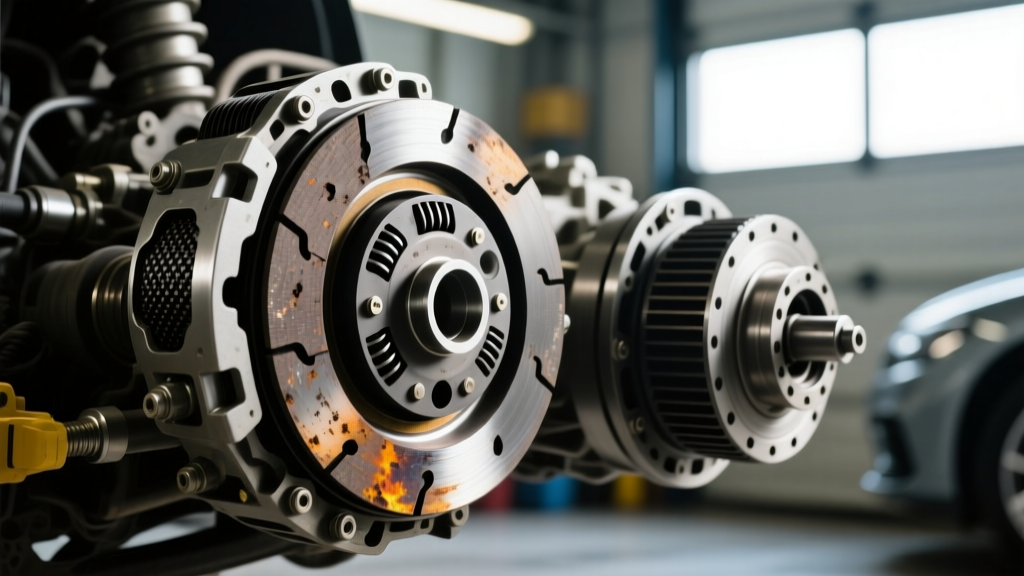
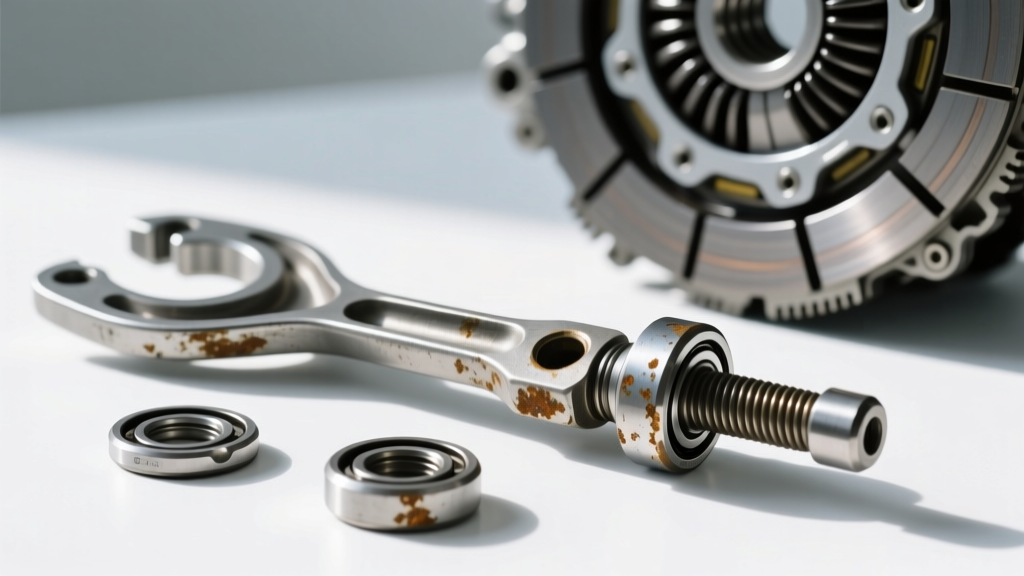
The clutch fork is a high-stress lever that pivots on a spherical stud (the pivot ball) to push the throwout bearing against the pressure plate. Over time, the friction between the fork's internal contact pads and the pivot ball leads to material degradation. This wear fundamentally alters the geometry of the clutch actuation system.
Symptom 1: Inconsistent Pedal Effort and "Dead Zones"
When the pivot ball wears flat or the clutch fork pads develop deep grooves, the fulcrum point of the lever shifts. This results in a clutch pedal that feels "notchy" or exhibits dead zones where pedal travel does not correspond to clutch disengagement. In high-horsepower applications, such as those utilizing the Ford MT-82 or Tremec T56 Magnum transmissions, the immense clamping force of aftermarket pressure plates (often exceeding 3,200 lbs) accelerates this wear exponentially.
Symptom 2: High-RPM Clutch Slip and Chatter
A worn pivot ball allows the clutch fork to flex laterally under load. This lateral deflection prevents the throwout bearing from applying perfectly even pressure to the diaphragm spring fingers. The result is uneven pressure plate clamping, manifesting as violent clutch chatter during first-gear launches or high-RPM slip in higher gears because the bearing is not fully retracting, effectively "riding" the spring fingers.
Diagnostic Framework: Measuring Fork Deflection and Pivot Wear
Visual inspection is insufficient for precision diagnostics. During a bellhousing-off service, technicians must use calipers and dial indicators to measure component degradation. Below are the industry-standard wear limits and OEM reference points for common manual transmissions.
| Component | Transmission Model | OEM Part Reference | Max Wear Limit | 2026 Avg. Part Cost |
|---|---|---|---|---|
| Clutch Fork (Stamped Steel) | Ford MT-82 | BR3Z-7515-A | 0.030" pad groove depth | $85 - $110 |
| Pivot Ball Stud (Steel) | Ford MT-82 | BR3Z-7505-A | 0.015" spherical wear | $25 - $40 |
| Clutch Fork (Cast Aluminum) | Tremec T56 Magnum | 1386-000-006 | 0.025" pad wear / no cracks | $140 - $180 |
| Pivot Ball (Nylon/Steel) | Tremec T56 Magnum | 1386-085-001 | Flattening > 0.010" | $15 - $30 |
Expert Tip: For track-driven vehicles, the aftermarket now offers heavy-duty bronze pivot sleeves and chromoly clutch forks that eliminate the nylon-on-steel or steel-on-steel friction points entirely, extending service intervals by up to 300%.
The DSG Gearbox Clutch Contrast: Actuator vs. Mechanical Wear
While diagnosing a manual clutch fork relies on physical measurement, troubleshooting engagement issues in a dsg gearbox clutch system requires an understanding of mechatronic actuation. Dual-clutch transmissions, such as the VW/Audi DQ250 (6-speed wet) and DQ200 (7-speed dry), do not use traditional foot-operated clutch forks. Instead, they utilize hydraulic pistons or electromechanical motors to push actuator levers that serve the exact same mechanical function as a manual clutch fork.
DQ250 Wet Clutch: Hydraulic Piston and Lever Wear
In the DQ250, the mechatronic unit houses hydraulic pistons that push against the clutch actuator levers. Over time, the pivot pins where these levers articulate inside the bellhousing can suffer from tribological wear, especially if the specialized DSG fluid (e.g., G 052 182) is degraded or contaminated with clutch friction material. When these pivot points wear, the mechatronic unit struggles to achieve the exact clutch kiss-point, triggering faults like P17BF (Clutch 1 Position Tolerance) or P173F. Unlike a manual fork, you cannot simply replace the lever; the entire mechatronic unit or bellhousing assembly often requires replacement or specialized remanufacturing.
DQ200 Dry Clutch: Electromechanical Actuator Fatigue
The DQ200 dry dsg gearbox clutch system uses two electric motors with worm gears to push mechanical levers against the dual-clutch pack diaphragm springs. The pivot bushings on these external actuator levers are notorious wear items. When the plastic or bronze pivot bushings degrade, the actuator motor over-travels to compensate for the lost mechanical clearance. Using diagnostic software like Ross-Tech VCDS, technicians can monitor the Clutch 1 and Clutch 2 adaptation values in Measuring Value Block (MVB) 95 and 96. If the adaptation limits exceed 13.5mm of actuator travel, the physical pivot wear has exceeded the software's ability to compensate, necessitating actuator replacement and a basic settings recalibration.
Expert Best Practices for Manual Reassembly and Torque Specs
If your diagnosis confirms manual clutch fork and pivot ball wear, precision during reassembly is critical to prevent immediate recurrence. According to Tremec's official service guidelines and OEM engineering manuals, adhere strictly to the following protocols:
- Pivot Ball Stud Torque: For the Tremec T56 Magnum, the pivot ball stud must be torqued to exactly 15 lb-ft with a medium-strength threadlocker (e.g., Loctite 243). Over-torquing can strip the aluminum bellhousing threads or distort the spherical head, causing immediate binding.
- Fork Lubrication: Never use standard chassis grease on the pivot ball or fork contact pads. High-temperature molybdenum disulfide (Moly) paste or specialized PTFE-based clutch fork grease is mandatory to withstand the friction and heat radiating from the clutch assembly.
- Bellhousing Alignment: A worn pivot ball is sometimes a symptom of a misaligned bellhousing. Always use a dial indicator to check bellhousing runout. Total Indicator Runout (TIR) must not exceed 0.005 inches. Excessive runout forces the clutch fork to operate at an angle, accelerating asymmetric pivot wear.
- Throwout Bearing Collar Check: Inspect the transmission input shaft bearing retainer collar. If the throwout bearing has been riding at an angle due to a worn fork, it will machine grooves into the aluminum or steel collar. A worn collar will destroy a new fork and pivot assembly within 5,000 miles.
Cost-Benefit Analysis: Manual Refresh vs. DSG Mechatronic Service
Understanding the financial implications of these repairs helps set accurate customer expectations in 2026. A manual clutch fork and pivot refresh is a labor-intensive but parts-cheap endeavor. Replacing the fork, pivot ball, and upgrading to a bronze sleeve kit typically costs between $120 and $250 in parts. However, because it requires transmission removal, labor costs (averaging 6-8 hours at $150/hr) push the total bill to $1,000 - $1,450.
Conversely, addressing actuator pivot wear in a dsg gearbox clutch system is significantly more capital-intensive. A DQ200 external actuator assembly replacement, including the necessary OEM software adaptation and basic settings reset, ranges from $1,800 to $2,600. For the DQ250, if internal mechatronic lever wear is suspected, the mechatronic unit replacement and subsequent clutch adaptation can easily exceed $3,500, highlighting the premium paid for automated shifting convenience.
Final Diagnostic Takeaways
Whether you are measuring the spherical degradation of a Tremec pivot ball with digital calipers or analyzing the adaptation travel limits of a VW mechatronic actuator via OBD-II, the underlying physics remain identical. Friction, heat, and immense clamping forces degrade the pivot points that translate actuation force into clutch movement. By respecting OEM torque specs, utilizing advanced metallurgy upgrades for manual applications, and leveraging factory-level scan tools for DSG systems, technicians can definitively solve complex clutch engagement anomalies and restore factory-level drivability.