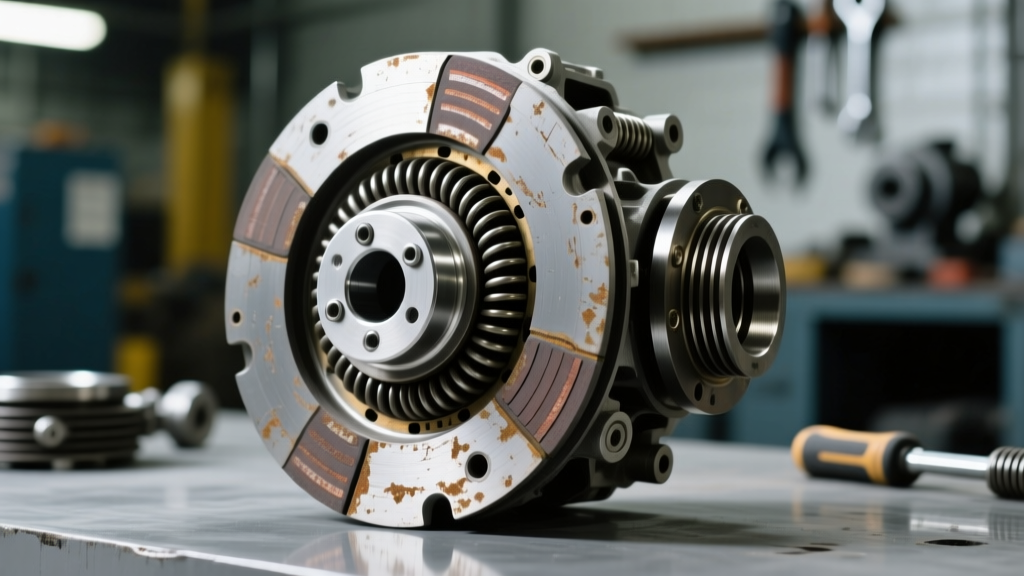
Every modern manual transmission driver eventually asks a fundamental question: do i need to press clutch to start car? The short answer is yes. Since the early 1990s, automakers have mandated the use of a clutch interlock switch (or clutch start cancel switch) to prevent vehicles from lurching forward if accidentally left in gear during cranking. However, when you press the pedal to the floor and the starter still refuses to engage, the issue is rarely the electrical switch itself. More often than not, you are experiencing a catastrophic mechanical failure deep inside the bellhousing—specifically, clutch fork and pivot ball degradation.
As an automotive transmission specialist, I see this misdiagnosis constantly. Drivers assume the interlock switch is broken because the pedal is fully depressed, yet the circuit remains open. What they fail to realize is that a sheared pivot stud or a fatigued clutch fork alters the kinematic geometry of the entire hydraulic linkage, preventing the master cylinder from achieving the physical travel required to close the interlock switch circuit. In this expert guide, we will bridge the gap between electrical starting requirements and mechanical bellhousing failures, providing actionable diagnostic frameworks for 2026.
The Kinematics of the Interlock Switch and Linkage
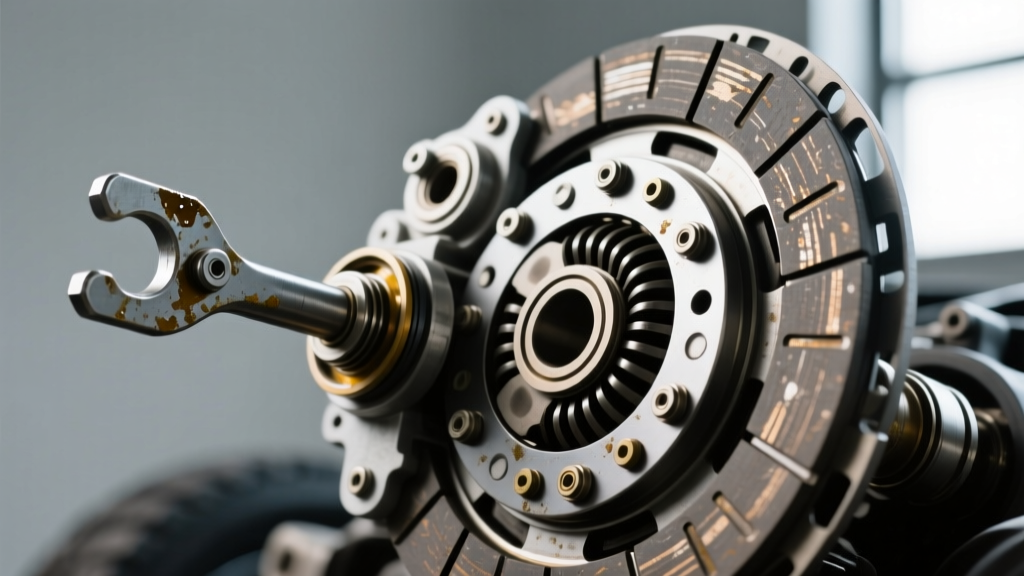
To understand why a mechanical failure prevents the car from starting, you must map the hydraulic and mechanical travel. When you press the clutch pedal, a pushrod activates the clutch master cylinder. Fluid travels through the hard line to the slave cylinder (either external or concentric). The slave cylinder pushes the clutch release fork, which pivots on a pivot ball (or stud) to force the release bearing against the pressure plate fingers.
The clutch interlock switch is typically mounted at the top of the pedal box, featuring a plunger that requires between 15mm and 22mm of pedal travel to close the internal contacts and complete the starter solenoid circuit. If the clutch fork bends, or if the pivot ball shears off its mounting point, the hydraulic pressure bypasses the mechanical resistance of the pressure plate. The pedal drops to the floor, but because the system has lost its mechanical 'stop', the master cylinder pushrod may over-extend or bind, failing to trigger the interlock switch plunger correctly. The result? A dead starter and a confused driver.
Common Fork and Pivot Failure Profiles by Transmission
Different transmission architectures exhibit unique failure modes regarding the clutch fork and pivot assembly. Recognizing these platform-specific quirks is essential for rapid diagnosis.
Ford MT82 (2011-2023 Mustang 5.0L / EcoBoost)
The MT82 is notorious for its factory plastic pivot stud. Ford part number BR3Z-7A548-A is a composite plastic stud that threads into the transmission case. Under the high clamp-load of modern performance clutches (like the McLeod RST or Centerforce DYAD), the plastic stud develops micro-fractures, eventually shearing completely. When this happens, the fork slips off its axis. The slave cylinder continues to push, but the fork simply pivots uselessly against the transmission case wall.
GM TREMEC T56 Magnum / TR6060
In the TREMEC ecosystem, the pivot ball is typically a hardened steel stud threaded into the bellhousing. While the stud rarely breaks, the clutch fork pivot pocket (the dimple on the fork that rides on the ball) is prone to severe wear. According to TREMEC OEM Service Documentation, excessive pocket wear leads to fork deflection. This deflection causes clutch chatter, uneven bearing wear, and a loss of effective travel that can trick the pedal-mounted interlock switch into reading an 'open' state even when the pedal is on the floor.
Honda K-Series (Civic Si / Accord Euro)
Honda utilizes a unique lost-motion assembly and a stamped steel fork that rides on a spherical pivot ball mounted to the bellhousing. The primary failure here is the pivot ball retainer clip fatiguing and popping off, allowing the ball to migrate. This creates a massive dead-zone in the pedal travel, entirely bypassing the interlock switch engagement threshold.
Diagnostic Matrix: Switch vs. Mechanical Linkage
Use the following diagnostic matrix to isolate whether your no-crank condition is an electrical interlock fault or a mechanical fork/pivot failure.
| Symptom Profile | Electrical Switch Fault | Mechanical Fork/Pivot Fault |
|---|---|---|
| Pedal Feel | Normal resistance, crisp engagement. | Mushy, drops to floor, or lacks the final 'spring' resistance. |
| Interlock Click | Audible click from pedal box when pressed. | No click, or click occurs only when pedal is manually pulled upward. |
| Slave Cylinder Travel | Extends fully (approx. 18-22mm). | Extends fully but fork does not move, or slave bottoms out prematurely. |
| Gear Engagement (Engine Off) | Shifts smoothly into 1st/Reverse. | Grinding or impossible to engage 1st/Reverse (clutch not disengaging). |
Expert Torque Specs and Measurement Tolerances
If you have dropped the transmission or are inspecting the bellhousing via a borescope through the slave cylinder mounting hole, adhere strictly to these manufacturer tolerances. Improper torque on pivot components guarantees premature failure.
- Ford MT82 Pivot Stud (Aftermarket Steel): Torque to 18 lb-ft using blue Loctite 243. Do not exceed 20 lb-ft, as the aluminum case threads will strip. (Source: Ford Performance Parts Catalog).
- TREMEC T56/TR6060 Pivot Ball: Torque to 28 lb-ft. Inspect the ball diameter; if wear grooves exceed 0.015 inches in depth, replace the ball and the fork simultaneously.
- Clutch Fork Deflection Limit: Place a straight edge across the fork pads. If the fork exhibits a bend or twist exceeding 0.030 inches, it must be replaced. A bent fork alters the release bearing angle, leading to premature throw-out bearing failure and inconsistent interlock switch travel.
- Release Bearing Preload (Concentric Slaves): Ensure the hydraulic system is bled to achieve exactly 1/8 to 3/16 inch of gap between the bearing face and the pressure plate fingers (where applicable) to prevent the fork from resting under constant load on the pivot ball.
Step-by-Step Borescope Inspection Best Practices
Before authorizing a $600+ transmission removal job, perform a non-invasive borescope inspection to confirm fork and pivot health.
- Locate the Inspection Point: Remove the external slave cylinder (typically held by two 10mm or 13mm bolts) or remove the bellhousing dust cover.
- Insert the Borescope: Feed the camera through the slave cylinder pushrod hole, angling it toward the pivot stud.
- Check the Pivot Base: Look for white plastic dust (indicative of MT82 plastic stud disintegration) or metallic shavings near the base of the steel stud.
- Observe Dynamic Movement: Have an assistant press the clutch pedal while you watch the screen. The fork should pivot smoothly on the ball. If the fork lifts off the ball, slides laterally, or the ball moves with the fork, the pivot assembly has failed.
- Inspect the Fork Pads: Verify that the pads contacting the release bearing are symmetrical and not worn into a concave dish, which indicates severe misalignment.
The Danger of Bypassing the Interlock Switch
When faced with a no-crank condition, many DIY forums suggest jumping the interlock switch harness or zip-tying the plunger down to bypass the do i need to press clutch to start car requirement entirely. This is a dangerous band-aid. If the underlying issue is a failing clutch fork or a sheared pivot ball, bypassing the switch will allow the car to start, but the clutch will not disengage. Attempting to force the vehicle into gear with the engine running will result in catastrophic synchro damage, sheared input shafts, or a vehicle that immediately launches through a garage wall. The interlock switch is a symptom monitor; ignoring it masks severe mechanical degradation.
Replacement Costs and 2026 Upgraded Components
As of 2026, the aftermarket has largely recognized the OEM shortcomings in clutch fork and pivot designs. When replacing these components, always opt for upgraded metallurgy.
- OEM Plastic Pivot Stud (Ford): ~$15 (Not recommended for any application).
- Aftermarket Billet Steel Pivot Stud (Steeda / MGW): $45 - $85. Features a radiused base to prevent stress risers and shear points.
- Heavy-Duty Stamped Fork (TREMEC Applications): $120 - $180. Look for forged or thick-gauge stamped steel with replaceable pivot contact pads.
- Labor Costs: Because the transmission must be separated from the engine block to access the bellhousing, expect shop labor to range from $450 to $850 depending on whether the vehicle is RWD (easier) or AWD (requires front differential/transfer case removal).
Final Diagnostic Takeaways
If you are asking yourself whether you need to press the clutch to start your car, and the answer is 'yes, but it still won't start,' stop troubleshooting the pedal box wiring immediately. Grab a borescope, check the slave cylinder travel, and inspect the clutch fork pivot geometry. By understanding the direct mechanical link between the bellhousing pivot stud and the pedal-mounted interlock switch, you can accurately diagnose the failure, select the correct upgraded components, and restore safe, reliable operation to your manual transmission vehicle.