The Deceptive Symptom: Clutch Cable Problems vs. Internal Wear
When drivers experience a slipping clutch, an erratic bite point, or a pedal that feels unusually stiff, the immediate instinct is to blame the clutch cable. Clutch cable problems and adjustment procedures are among the most common entry points for manual transmission diagnostics. However, as we navigate the 2026 automotive repair landscape, experienced transmission specialists know that external cable adjustments often mask a much more severe internal failure: a worn clutch fork pivot ball. Understanding the mechanical relationship between your clutch cable, the release fork, and the pivot ball stud is critical for accurate diagnostics and avoiding wasted labor costs.
Clutch Cable Problems: Symptoms and Adjustment Protocols
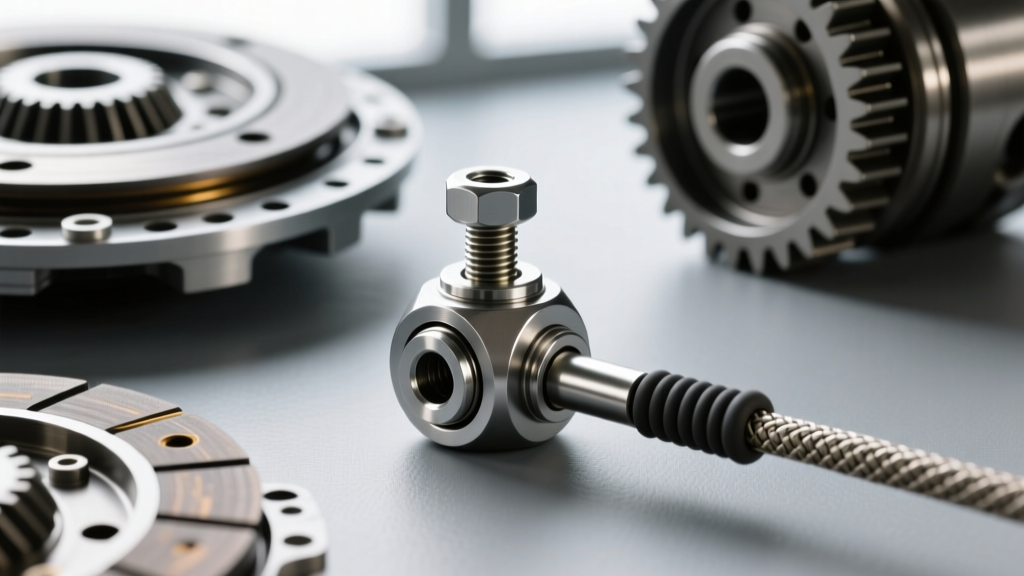
Before tearing into the bellhousing, you must definitively rule out clutch cable problems. Over time, the steel braided wire inside the cable housing stretches, and the inner lining of the cable sheath can degrade, causing friction and binding. This is especially prevalent in older vehicles, classic restomods, and heavy-duty commercial trucks that still utilize mechanical linkage rather than hydraulic slave cylinders.
Signs of Clutch Cable Degradation
- Inconsistent Pedal Feel: The pedal feels notchy or binds at specific points in its travel arc.
- Excessive Freeplay: You can pull the clutch pedal up more than 1.5 inches before feeling resistance from the release bearing.
- Failure to Disengage: The cable has stretched beyond the adjustment limit of the firewall or bellhousing nut, preventing the throwout bearing from fully depressing the pressure plate diaphragm.
Standard Adjustment Procedure
Proper clutch cable adjustment requires setting the freeplay at the pedal or the release fork. For most mechanical setups (such as the classic Ford Mustang T5 applications or Honda cable-actuated manuals), you should measure the freeplay at the release fork itself. The industry standard is typically 1.0 to 1.5 inches of freeplay at the fork before the throwout bearing makes contact with the pressure plate fingers. If you have maxed out the threads on the cable adjuster nut and still cannot achieve this spec, the cable has permanently yielded and requires replacement. A standard OEM replacement clutch cable costs between $35 and $85, and a mobile mechanic or shop will typically charge 0.8 to 1.2 hours of labor ($130 to $270 at 2026 rates) to swap it.
The Hidden Variable: Clutch Fork Pivot Ball Wear
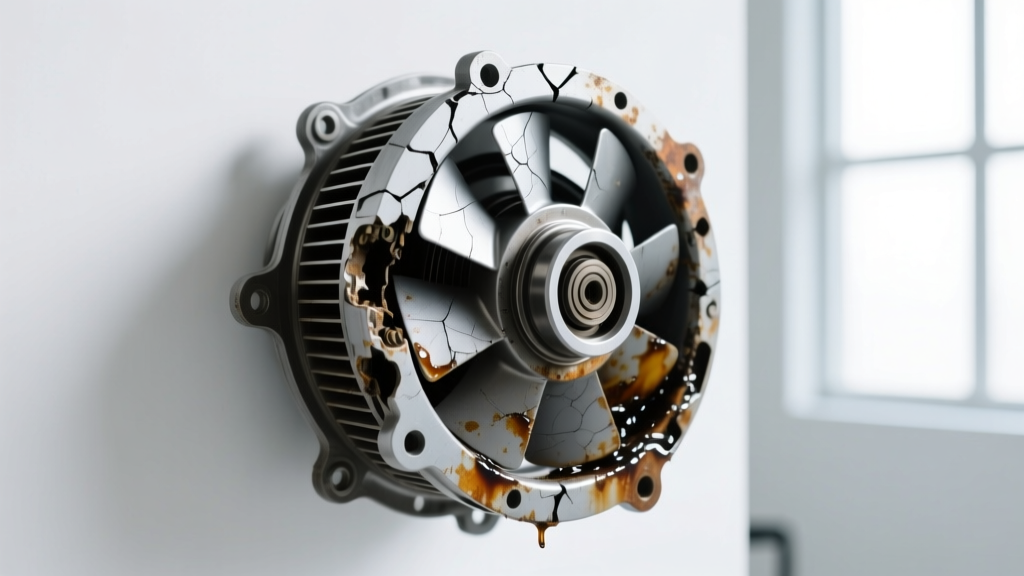
Here is where the diagnostic trap springs. Suppose your clutch cable is relatively new, the freeplay is set perfectly to 1.25 inches, but the clutch still slips under heavy load or chatters violently during engagement. The culprit is likely the clutch fork pivot ball. The release fork acts as a lever, pivoting on a steel or aluminum ball stud threaded or pressed into the bellhousing. Over 80,000 to 120,000 miles, the constant friction and extreme clamping force of the pressure plate cause the dimple in the clutch fork to wear a groove into the pivot ball, or the ball itself 'mushrooms' and galls.
When the pivot ball mushrooms, the fulcrum point of the lever shifts. This alters the throw ratio. Even if your clutch cable is pulling the fork the exact correct distance, the worn geometry means the throwout bearing is not traveling far enough to fully disengage the clutch, or it is applying uneven pressure, resulting in chatter. Furthermore, a severely worn pivot ball will generate a distinct, rhythmic metallic squeaking or grinding noise emanating from the bellhousing whenever the pedal is depressed.
2026 Cost Breakdown: Cable vs. Pivot Ball Replacement
The financial disparity between fixing a clutch cable and executing a clutch fork pivot ball replacement is massive, primarily due to labor accessibility. On 95% of modern and classic rear-wheel-drive manual transmissions (including the Tremec T5, T56, and BorgWarner T10 families), the pivot ball is located deep inside the bellhousing. There is no shortcut; the driveshaft, crossmember, shifter, and transmission must be completely removed from the vehicle to access the pivot stud.
| Service Procedure | Parts Cost (2026) | Labor Hours | Estimated Total Cost |
|---|---|---|---|
| Clutch Cable Adjustment | $0 | 0.3 - 0.5 hrs | $50 - $115 |
| Clutch Cable Replacement | $35 - $85 | 0.8 - 1.2 hrs | $165 - $355 |
| Pivot Ball Replacement (Labor Only) | $15 - $45 (Stud) | 4.5 - 7.0 hrs | $750 - $1,620 |
| Complete Clutch Kit & Pivot Ball Job | $300 - $750 (Kit + Fluids) | 5.5 - 8.5 hrs | $1,200 - $2,650+ |
Note: Labor rates are based on the 2026 national average of $165 to $230 per hour for specialized drivetrain shops. Dealership rates may exceed $250/hr.
Because the transmission must be dropped to replace a $25 pivot ball, it is universally mandated by Tremec and other transmission manufacturers to replace the entire clutch assembly (disc, pressure plate, release bearing, and pilot bearing) while the system is apart. Reusing a clutch disc that has been subjected to the uneven wear caused by a bad pivot ball will lead to premature failure and a repeat of the massive labor bill.
OEM vs. Aftermarket Part Numbers and Upgrades
When sourcing parts for a clutch fork pivot ball replacement, you have options ranging from basic OEM replacements to heavy-duty aftermarket upgrades designed to eliminate future wear. According to the RockAuto Parts Catalog, standard replacement studs are inexpensive, but upgraded materials offer superior longevity for high-torque applications.
- Standard OEM Replacement: For classic Ford applications, the standard pivot ball (Part # F4ZZ-7517-A) is a direct press-in or thread-in replacement. It costs around $18 to $25 but is prone to the same mushrooming issues over high mileage.
- Heavy-Duty Upgraded Studs: Ford Performance offers the Heavy Duty Clutch Fork Pivot Ball (Part # M-7515-A). This unit is machined from higher-grade steel and features a slightly larger radius to distribute the load more evenly across the clutch fork dimple. Priced around $45.
- Roller Pivot Upgrades: For high-performance or track vehicles, aftermarket companies manufacture clutch forks with integrated roller bearings that ride on the pivot stud. This eliminates sliding friction entirely, reducing pedal effort and completely preventing the mushrooming wear pattern. These upgraded fork/ball combos range from $150 to $280.
Critical Torque Specifications for Reassembly
Improper torque during reassembly of the bellhousing and pivot stud can lead to catastrophic misalignment, input shaft binding, and rapid wear of the new pivot ball. Always adhere to manufacturer specifications rather than guessing with an impact wrench.
Pivot Ball Stud Installation
If your bellhousing utilizes a threaded pivot stud, clean the threads in the bellhousing casting thoroughly with a tap and brake cleaner. Apply a medium-strength threadlocker (such as Loctite 243) to the stud threads to prevent it from backing out under the vibration of the drivetrain. The standard torque specification for most 3/8-inch or M10 pivot ball studs is 15 to 22 lb-ft. Do not overtighten, as the cast aluminum of many modern bellhousings will strip easily.
Bellhousing to Engine Block Torque
The alignment of the bellhousing is critical to the life of the pivot ball and the transmission input shaft. If the bellhousing is cocked even slightly, the release fork will ride on the edge of the pivot ball rather than the center, accelerating wear. When bolting the bellhousing (or transmission case) back to the engine block, tighten the bolts in a star pattern. For standard M10x1.5 bellhousing bolts, the torque spec is typically 35 to 40 lb-ft. For larger M12x1.75 bolts found on heavy-duty diesel applications (like those mated to G56 or NV5600 transmissions), torque specs jump to 60 to 75 lb-ft. Always verify runout with a dial indicator if the vehicle is equipped with a high-horsepower aftermarket setup.
Final Diagnostic Takeaway
Clutch cable problems and adjustment procedures are vital first steps in manual transmission diagnostics. However, if your cable is properly adjusted and the clutch still exhibits slipping, chatter, or bellhousing noise, do not ignore the internal geometry. A worn clutch fork pivot ball fundamentally alters the mechanical advantage of the clutch linkage. By understanding the 2026 cost implications and the necessity of a complete clutch kit overhaul during a pivot ball replacement, you can make informed, cost-effective decisions and restore your vehicle's drivetrain to factory-level precision.