The 'Clutch Car Spa' Illusion vs. Mechanical Reality
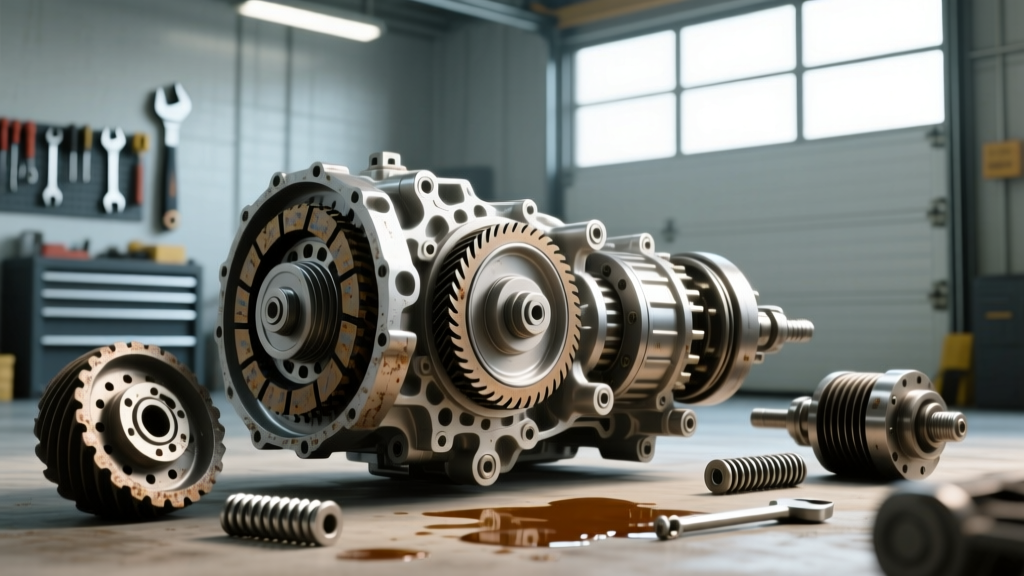
In the automotive enthusiast community, treating your vehicle to a premium interior detail and ceramic coating is often jokingly referred to as a 'clutch car spa.' While a meticulous detail might make your pedal box look pristine and your shift knob shine, no amount of cosmetic care can mask or repair underlying mechanical failure. If your manual transmission is grinding, slipping, or shuddering, you are dealing with critical clutch engagement and disengagement issues that require a wrench, not a microfiber towel.
As a beginner, understanding the difference between a clutch that won't let go (disengagement) and a clutch that won't grab (engagement) is the first step toward accurate diagnostics. In this 2026 guide, we will strip away the fluff and dive deep into the exact hydraulic pressures, mechanical clearances, and torque specifications required to diagnose and fix your clutch system.
The Anatomy of Clutch Engagement: A Beginner Breakdown
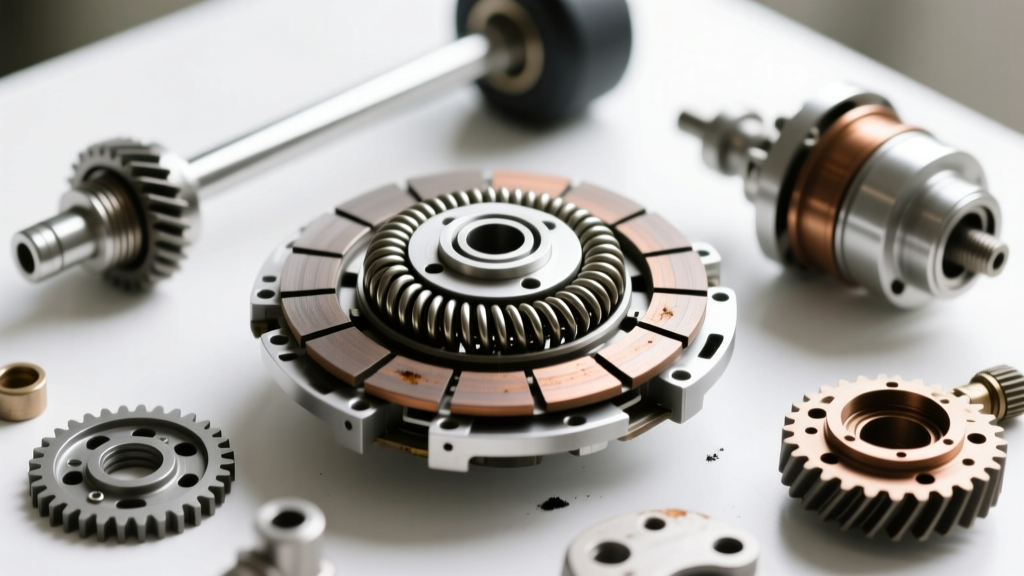
Before diagnosing a fault, you must understand the forces at play. When your foot is off the pedal, the diaphragm spring inside the pressure plate exerts immense clamping force—often exceeding 2,500 pounds of pressure—sandwiching the friction disc against the flywheel. This is engagement. The engine's rotational energy is now locked to the transmission input shaft.
When you press the pedal, the hydraulic system pushes the release bearing against the fingers of the diaphragm spring. This retracts the pressure plate, releasing the friction disc. This is disengagement, allowing you to change gears without destroying the synchronizers. When either of these phases fails, the vehicle becomes undrivable.
Disengagement Issues: When the Clutch Won't Let Go
Disengagement failure means the friction disc is still partially or fully mated to the flywheel even when the pedal is depressed to the floor. This is highly dangerous and damages transmission internals.
Primary Symptoms
- Grinding into gear: Especially noticeable when shifting into 1st or Reverse from a standstill.
- Vehicle creep: The car pulls forward while in gear with the clutch pedal fully depressed.
- Stiff or spongy pedal: Indicates a failure in the hydraulic transfer of force.
The Mechanical Culprits
The most common cause is air in the hydraulic line. Unlike brake fluid, clutch fluid (typically DOT 3 or DOT 4) absorbs moisture over time, leading to vapor lock under high ambient temperatures. Another frequent culprit is a failing master cylinder internal seal. If the primary cup seal bypasses fluid internally, the slave cylinder will not receive the necessary hydraulic volume to fully actuate the release fork. Finally, a bent release fork or a worn pivot ball can alter the geometry, preventing the throw-out bearing from traveling the required 0.450 to 0.550 inches needed to disengage the diaphragm spring.
Engagement Issues: When the Clutch Won't Grab
Engagement failure occurs when the pedal is released, but the clamping force is insufficient to handle the engine's torque output, or the friction surface is compromised.
Primary Symptoms
- RPM Flare (Slipping): Engine RPMs surge without a corresponding increase in vehicle speed, usually under heavy load in 3rd or 4th gear.
- Chatter on Takeoff: Violent shuddering when releasing the pedal in 1st gear.
- High Engagement Point: The clutch only 'bites' when the pedal is almost completely released.
The Mechanical Culprits
Slipping is almost always caused by friction material wear or oil contamination. A leaking rear main seal or transmission input shaft seal will coat the disc in engine oil or gear oil, destroying the coefficient of friction. Chatter, on the other hand, is frequently traced back to flywheel hot spots or excessive flywheel runout. If the flywheel surface is warped beyond the SAE standard limit of 0.005 inches (0.13 mm), the disc cannot mate smoothly, resulting in aggressive grabbing and releasing.
Diagnostic Matrix: Symptom to Solution
Use this structured diagnostic table to pinpoint your exact failure mode before ordering parts.
| Symptom | Primary System | Likely Culprit | Diagnostic Tool / Test |
|---|---|---|---|
| Grinding into 1st/Reverse | Disengagement | Air in hydraulics / Worn Master Cylinder | Pedal feel test & gravity bleed check |
| RPM Flare under load | Engagement | Glazed disc / Weak Diaphragm Spring | Road load test (3rd gear at 2,000 RPM) |
| Violent Chatter on takeoff | Engagement | Flywheel hot spots / Broken DMF springs | Dial indicator runout measurement |
| Pedal stuck to floorboard | Disengagement | Blown slave cylinder seal | Visual inspection of bellhousing weep hole |
| Difficulty shifting at high RPM | Disengagement | Centrifugal ballooning of hydraulic line | Inspect rubber flex hose for bulging |
Real-World Fixes: Hydraulics, Hardware, and Torque Specs
Fixing these issues requires precision. Let's look at the exact specifications for one of the most common manual platforms on the road: the GM LS-powered manual (e.g., Camaro SS, Corvette) and the Ford 5.0L Coyote.
Hydraulic System Overhaul
Never reuse old hydraulic components during a clutch replacement. As of 2026, OEM-equivalent hydraulic kits from Schaeffler LuK and Sachs are widely available. For a GM LS application, the LuK LMC425 Master Cylinder and LSC308 Slave Cylinder are the gold standard. Bleeding Protocol: Gravity bleeding is rarely sufficient for modern concentric slave cylinders (CSC). You must use a pressure bleeder set to 15-20 PSI, pushing high-quality DOT 4 fluid (like Motul RBF 600) from the master cylinder down to the slave, followed by 30 manual pedal pumps to clear trapped air from the CSC accumulator.
Flywheel Runout and Resurfacing
Before installing a new friction disc, mount a magnetic dial indicator to the engine block and measure the flywheel face. If lateral runout exceeds 0.005 inches, the flywheel must be machined or replaced. Note on Dual-Mass Flywheels (DMF): If you are driving a BMW N54 or a Ford 6.7L PowerStroke with a manual swap, a failing DMF will cause severe engagement chatter due to worn internal damping springs. While you can resurface a single-mass flywheel, a DMF must be replaced outright, or converted to a Single-Mass Flywheel (SMF) using a solid-hub disc conversion kit.
Critical Torque Specifications
Improper torque leads to warped pressure plates and catastrophic engagement failure. Always use a calibrated torque wrench.
- GM LS Flywheel to Crank: 74 lb-ft (Use new M10x1.5 bolts with threadlocker).
- GM LS Pressure Plate to Flywheel: 26 lb-ft (Tighten in a crisscross pattern gradually to avoid warping the diaphragm spring).
- Ford 5.0 Coyote Flywheel to Crank: 74 lb-ft plus an additional 90-degree turn (Torque-to-yield).
- Ford 5.0 Coyote Pressure Plate: 22 lb-ft.
2026 Cost Expectations for Clutch Repairs
Understanding the financial landscape helps you avoid predatory shop quotes. While supply chain issues of the early 2020s have largely stabilized, labor rates have increased.
- Parts (OEM / Premium Aftermarket): A complete LuK RepSet (Disc, Pressure Plate, Release Bearing, Pilot Bearing) typically ranges from $250 to $450 on platforms like RockAuto. Add $180 for a hydraulic master/slave kit.
- Flywheel Replacement: A new OEM Single-Mass Flywheel costs $150–$300. A DMF can range from $600 to $1,200.
- Labor: Dropping a transmission requires 4.5 to 7.0 hours of book time. At current 2026 independent shop rates of $150–$220 per hour, expect labor to range from $675 to $1,540.
Total out-the-door pricing for a complete clutch and hydraulic overhaul generally lands between $1,200 and $2,500, depending on the vehicle's drivetrain layout (RWD vs. transverse FWD/AWD).
Final Thoughts: Skip the Spa, Grab a Wrench
A 'clutch car spa' might make your interior smell like lavender and your shift boot look brand new, but it will not fix a bypassing master cylinder or a glazed friction disc. Proper diagnosis requires a methodical approach: test the hydraulic travel, measure the flywheel runout, and inspect the friction surfaces for contamination. By understanding the distinct differences between engagement and disengagement failures, you can confidently source the right parts, apply the correct torque specs, and get your manual transmission shifting flawlessly for another 100,000 miles.