The Actuation Divide: Mechanical Cables vs. Fluid Dynamics
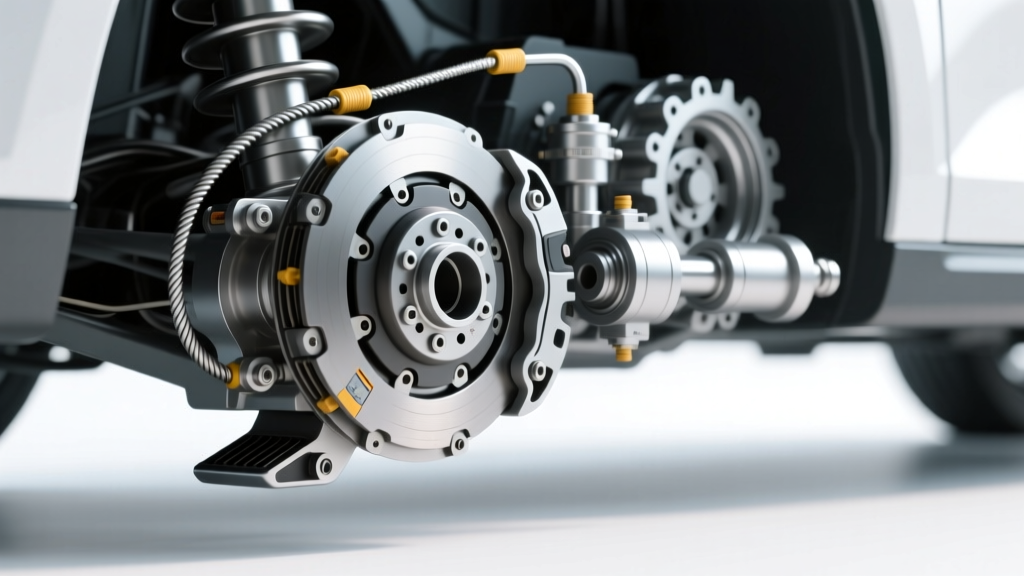
When diagnosing manual transmission engagement issues, the actuation system is the primary suspect. For decades, mechanical linkages and cables were the industry standard. However, as torque ratings climbed and firewall routing became more complex, automakers shifted to hydraulic systems. Today, enthusiasts and mechanics frequently weigh the cost of resolving chronic clutch cable problems against the long-term benefits and maintenance of a hydraulic setup. Understanding the financial and mechanical realities of both systems is critical for accurate troubleshooting and budgeting in 2026.
Anatomy of Clutch Cable Problems
Clutch cables, commonly found in classic muscle cars, Foxbody Mustangs (1979-1993), and early Mazda Miatas (NA/NB chassis), rely on a steel inner wire sliding within a Teflon-lined outer housing. Over time, these systems degrade, leading to distinct drivability symptoms that mimic internal transmission failures.
Common Failure Modes and Symptoms
- Fractured Inner Strands: Results in a spongy pedal feel or sudden loss of engagement. Often caused by sharp bends in the firewall routing or improper crimping at the pedal box.
- Binding and Fraying: Dirt ingress or lack of lubrication causes the cable to stick, leading to harsh, erratic gear changes and premature synchro wear in transmissions like the BorgWarner T-5.
- Stretch and Slack: Cables naturally elongate under repeated high-effort loads (e.g., heavy-duty pressure plates like the McLeod Street Twin). This causes incomplete disengagement, gear grinding, and difficulty engaging reverse.
Environmental Degradation and Cable Routing Physics
A frequently overlooked cause of clutch cable problems is thermal degradation. In tight engine bays—such as the Chevy S10 or classic Camaros with long-tube headers—radiant heat can exceed 300°F near the firewall. This heat softens or melts the internal Teflon liner of the cable housing. When the liner deforms, friction coefficients spike, leading to a pedal that requires over 40 lbs of effort to depress. Proper routing mandates a minimum 3-inch clearance from exhaust manifolds, and the use of DEI Titanium exhaust wrap or reflective heat shielding on the cable housing is highly recommended for high-performance builds.
Cost Breakdown: Clutch Cable Repair and Replacement
Addressing clutch cable problems is generally less expensive upfront than a full hydraulic conversion, but it requires precise mechanical adjustment. The industry standard for clutch pedal free-play is between 1/16-inch and 1/8-inch at the pedal pad. Exceeding this tolerance risks riding the throwout bearing, leading to catastrophic bearing failure and bellhousing damage.
| Component / Service | Part Number / Spec | Estimated Cost (Parts) | Labor Time & Cost |
|---|---|---|---|
| OEM Replacement Cable (e.g., Ford Foxbody) | Dorman 74400 / Motorcraft | $35 - $65 | 1.5 hrs ($180 - $250) |
| Heavy-Duty Adjustable Cable (Aftermarket) | Maximum Motorsports MMCL-1 | $90 - $140 | 1.5 hrs ($180 - $250) |
| Quadrant and Firewall Adjuster Kit | Steeda Billet Aluminum | $110 - $160 | 2.0 hrs ($240 - $320) |
| Cable Lubrication and Rerouting | White Lithium Grease / Loom | $15 - $25 | 1.0 hr ($120 - $160) |
The Shift to Fluid: Hydraulic Clutch Adjustment and Conversion
When cable replacement becomes a recurring annual expense, many owners opt for a hydraulic conversion. Modern performance transmissions, such as the Tremec T56 Magnum and TKX, are engineered with hydraulic release bearings or external hydraulic slave cylinders. Unlike cables, a hydraulic clutch adjustment is largely self-compensating, relying on fluid displacement and master cylinder pushrod preload rather than manual turnbuckles.
Hydraulic System Pricing and Specifications
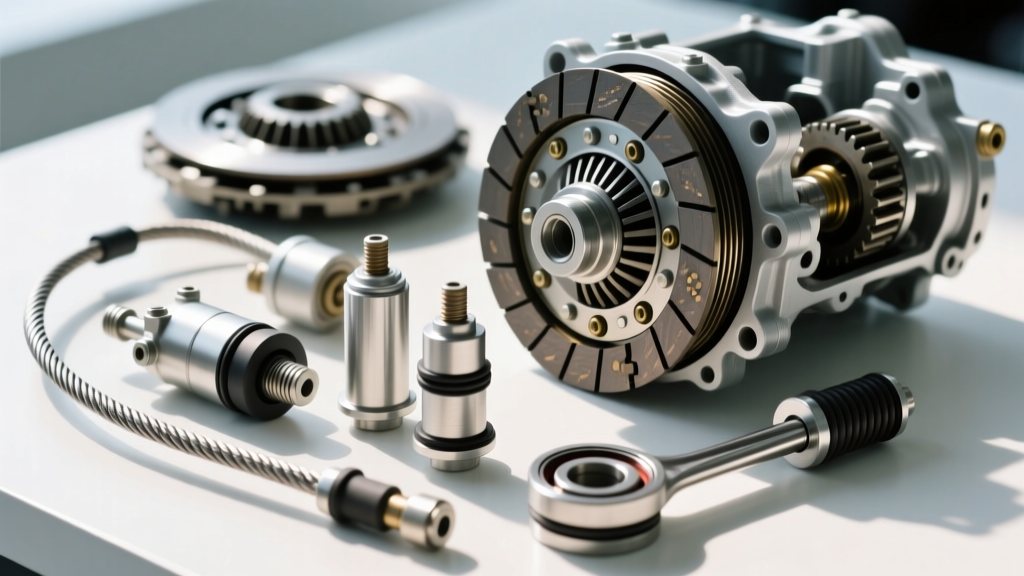
Converting from a mechanical cable to a hydraulic system requires a master cylinder, hard lines, a slave cylinder (or hydraulic throwout bearing), and high-temp brake fluid. According to Wilwood Engineering, selecting the correct master cylinder bore size is critical; a 7/8-inch bore (Part #260-1304) is standard for most single-plate ceramic setups, while a 3/4-inch bore is required for heavy multi-plate clutches to reduce pedal effort.
| Hydraulic Component | Part Example | Price Range | Installation Notes |
|---|---|---|---|
| Pedal Box / Master Cylinder | Wilwood 7/8 inch Bore | $110 - $180 | Torque mounting nuts to 18-22 lb-ft. |
| External Slave Cylinder | Tilton 7/8 inch Bore | $140 - $220 | Requires precise pushrod gap measurement. |
| Hydraulic Release Bearing (HRB) | McLeod 139303 | $350 - $450 | Shimming required (0.050 to 0.100 preload). |
| Stainless Steel Line Kit & Fittings | Goodridge -3 AN | $80 - $130 | Use Teflon tape on NPT, flare torque to 12 lb-ft. |
Advanced Hydraulic Bleeding and Bench Bleeding Protocols
While hydraulic systems eliminate the friction and stretch associated with cables, they introduce new diagnostic variables. A proper hydraulic clutch adjustment involves setting the master cylinder pushrod free-play (typically 1/16-inch to prevent port blockage) and bleeding the system to remove micro-bubbles. Gravity bleeding is rarely sufficient for HRB setups due to the upward routing of the lines. Mechanics must use a pressure bleeder (like the Motive Power Bleeder) set to 15 PSI. Furthermore, utilizing DOT 5.1 fluid is highly recommended; it boasts a dry boiling point of 500°F compared to DOT 3's 401°F, which is critical for hydraulic release bearings sitting inside a hot bellhousing near the exhaust pipe.
Transmission Crossmember and Bellhousing Torque Specs
Sometimes, what appears to be a clutch adjustment issue is actually drivetrain misalignment. If the transmission crossmember is torqued unevenly, it can twist the bellhousing, binding the clutch fork or throwout bearing. Before performing any cable or hydraulic clutch adjustment, verify the following torque specifications to ensure the drivetrain is square:
- GM Bellhousing to Engine Block: 35 lb-ft
- Ford Modular Bellhousing: 30-35 lb-ft
- Transmission Crossmember to Frame: 45-55 lb-ft
- Driveshaft Flange Bolts: 70-85 lb-ft
Diagnostic Decision Framework: Cable vs. Hydraulic
When a customer presents with a dragging clutch or a pedal that goes to the floor, use this diagnostic tree to determine the most cost-effective repair path:
- Inspect the Firewall and Pedal Box: In cable systems, the plastic firewall adjuster often cracks under high line pressure (common in vehicles producing over 400 lb-ft of torque). If cracked, upgrade to a billet aluminum firewall adjuster ($65) rather than replacing the entire cable.
- Measure Pedal Ratio: Manual cable setups require a 6:1 or 7:1 pedal ratio. If the vehicle has been swapped to a high-clamp-load pressure plate (e.g., 2,400 lbs), the cable will stretch and snap. This is the exact threshold where a hydraulic conversion becomes financially and mechanically justified.
- Check for Fluid Leaks: If diagnosing a hydraulic setup, inspect the bellhousing inspection cover. A leaking hydraulic throwout bearing (HRB) requires transmission removal (4.5 - 6.0 hours labor), whereas an external slave cylinder can be replaced in under an hour without dropping the transmission.
Expert Insight: 'The most common mistake I see in restomod builds is pairing a heavy-duty diaphragm pressure plate with a stock mechanical cable and plastic quadrant. The cable will inevitably snap at the crimped end. Upgrading to a hydraulic system or, at minimum, a steel-backed quadrant and heavy-duty cable is mandatory for any build exceeding 350 lb-ft of torque.' — Drivetrain Engineering Bench Notes
Final Cost Verdict
Resolving standard clutch cable problems will typically cost between $215 and $450 out the door, making it the budget-friendly choice for stock or mildly modified vehicles. However, for high-torque applications or daily drivers requiring consistent pedal feel, a hydraulic conversion (ranging from $650 to $1,200 installed) offers superior longevity. Mastering both mechanical cable tensioning and hydraulic clutch adjustment protocols ensures you can accurately quote, diagnose, and repair any manual transmission actuation system on the lift today.
For further reading on manual transmission actuation tolerances, refer to the Tremec Technical Resource Library or consult RockAuto's OEM replacement catalogs for specific chassis routing diagrams and updated part numbers.