The Hidden Economics of Manual Clutch Cable Maintenance
In the modern automotive landscape, hydraulic clutch systems have largely become the standard for manual transmissions. However, millions of vehicles on the road today—ranging from classic 1994-2004 Ford Mustangs to iconic 1988-2000 Honda Civics and early Mazda Miatas—still rely on mechanical clutch cables. When these cables stretch, fray, or fall out of adjustment, the financial implications extend far beyond a simple replacement part. As a senior transmission diagnostician, I frequently see drivers ignore early warning signs of cable fatigue, leading to catastrophic drivetrain damage when they resort to emergency starting methods.
For many manual transmission owners, popping clutch to start car models with a dead battery or failed starter motor is considered a standard emergency workaround. Commonly known as bump starting or push starting, this technique relies on the sudden mechanical coupling of the transmission to the engine. However, if your clutch cable is maladjusted or suffering from internal fraying, the shock load of a bump start can snap the cable, damage the firewall, or even bend the clutch fork. Understanding the cost analysis of clutch cable adjustment, replacement, and the secondary damages caused by neglect is critical for any manual vehicle owner in 2026.
2026 Clutch Cable Service Cost Breakdown
The cost to service a mechanical clutch cable varies significantly based on whether the vehicle requires a simple adjustment, a full cable replacement, or the replacement of associated hardware like the clutch quadrant or firewall adjuster. Below is a comprehensive cost matrix based on current national labor rates (averaging $110 to $165 per hour) and parts pricing.
| Service Type | Average Parts Cost | Estimated Labor Time | Total Estimated Cost |
|---|---|---|---|
| Cable Adjustment (Manual Thread) | $0 | 0.3 - 0.5 hrs | $45 - $85 |
| Aftermarket Cable Replacement | $35 - $75 | 1.5 - 2.5 hrs | $200 - $480 |
| OEM Cable Replacement | $85 - $160 | 1.5 - 2.5 hrs | $250 - $575 |
| Clutch Quadrant Replacement (e.g., Foxbody Mustang) | $40 - $90 | 1.0 - 1.5 hrs | $150 - $330 |
| Aftermarket Firewall Adjuster Kit | $45 - $80 | 0.5 - 1.0 hrs | $100 - $245 |
The Physics of Bump Starting and Cable Shock Loads
Why does popping the clutch to start a car pose such a severe threat to a mechanical cable system? When you bump start a manual vehicle, you are essentially using the rotational mass of the vehicle and the drivetrain to force the engine to turn over. This creates a massive, instantaneous shock load through the transmission input shaft, the clutch disc, the pressure plate, and finally, the clutch fork and cable.
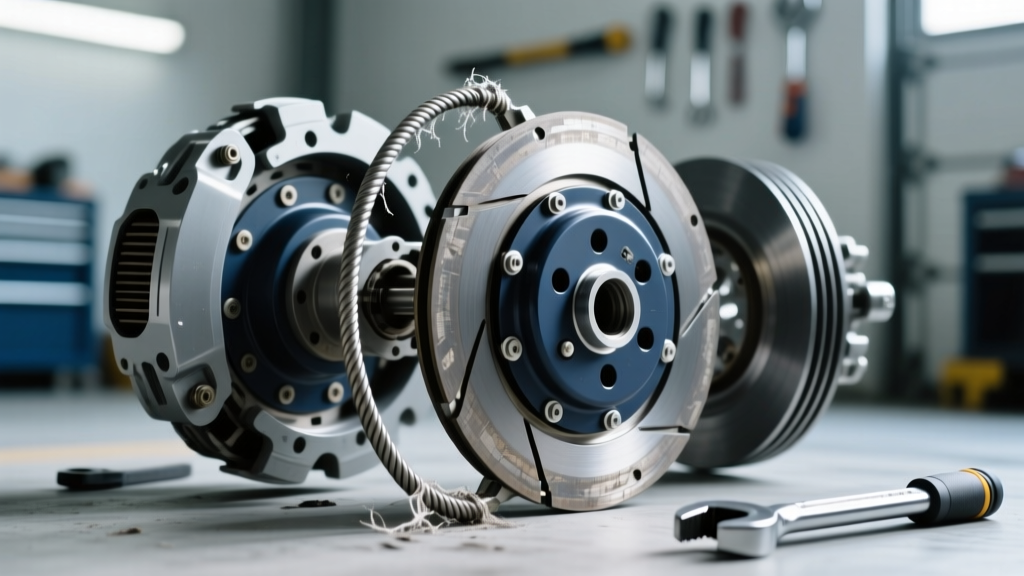
If the clutch cable is already stretched or the self-adjusting mechanism (such as the plastic ratcheting quadrant found in SN95 Mustangs) has skipped teeth, the clutch may be partially engaged even when the pedal is fully depressed. This condition, known as 'riding the throw-out bearing,' means the cable is under constant, low-level tension. When the violent shock of a bump start occurs, the sudden spike in tensile force can cause the aged steel strands of the inner cable to snap. According to diagnostic data compiled by Consumer Reports Auto Repair, sudden clutch cable failure under load frequently results in the cable whipping back through the firewall, damaging interior trim, pedal boxes, and brake lines, turning a $200 repair into a $1,500+ nightmare.
OEM vs. Aftermarket: Analyzing the Parts Market
When a cable replacement is inevitable, the debate between Original Equipment Manufacturer (OEM) and aftermarket parts heavily influences the final invoice. Let us look at specific market examples for popular cable-clutch vehicles.
Ford Mustang (1994-2004) Applications
The Mustang of this era is notorious for clutch cable stretching and quadrant failure.
- Aftermarket (e.g., Dorman 938-000): Priced around $45 to $65 on platforms like RockAuto. These cables are cost-effective but often utilize lower-grade polymer sheathing that can become brittle in extreme cold, leading to binding.
- OEM (Motorcraft): Typically ranging from $110 to $145. The OEM cable features superior internal lubrication and a more robust end-hook design that resists fatigue at the pedal box.
- Performance Upgrade (e.g., Maximum Motorsports or Steeda): Enthusiasts often opt for heavy-duty cables paired with a billet aluminum firewall adjuster ($70-$95). This eliminates the unreliable factory self-adjusting quadrant entirely, allowing for precise, tool-free adjustments at the firewall.
Honda Civic / Acura Integra (1988-2001) Applications
Honda's cable clutches are renowned for their longevity, but when they fail, routing the new cable through the dense engine bay can be labor-intensive.
- Aftermarket (e.g., ATP Y-259 or Pioneer): Generally $30 to $50. Adequate for daily drivers, though the rubber grommets may not seal the firewall as tightly as OEM, leading to cabin noise and water intrusion.
- OEM Honda: $90 to $130. Honda OEM cables maintain the exact factory bend radii, ensuring the inner cable does not scrape against the outer sheath, which is the primary cause of pedal stiffness.
Precision Adjustment Specifications and Labor Variables
A common misconception is that clutch cables should be adjusted as tightly as possible to ensure full disengagement. This is a critical error. Over-tightening a clutch cable removes the necessary free play, causing the throw-out bearing to constantly press against the pressure plate fingers. This leads to premature bearing failure and pressure plate wear, easily adding $800 to $1,200 in clutch replacement labor and parts down the line.
Master Technician Specification: Proper clutch cable adjustment requires exactly 3/4-inch to 1-inch (19mm to 25mm) of free play measured at the top of the clutch pedal pad before any resistance is felt. This ensures the throw-out bearing retracts fully when the pedal is released.
Labor costs for adjustment are relatively low, but access can dictate the price. On vehicles where the cable adjustment nut is located deep within the engine bay near the bellhousing, mechanics may charge up to 1.0 hour of labor simply due to the difficulty of reaching the M8 or M10 adjustment nuts. When reinstalling the cable bracket to the transmission bellhousing, the M8 x 1.25 bolts must be torqued to exactly 15-22 lb-ft. Over-torquing these bolts into an aluminum bellhousing can strip the threads, necessitating a helicoil repair or bellhousing replacement.
Diagnostic Checklist: When to Adjust vs. Replace
Before authorizing a full cable replacement, a thorough diagnostic inspection can save hundreds of dollars. Look for these specific failure modes:
- Symptom: Pedal feels 'notchy' or binds halfway up.
Diagnosis: The inner cable is fraying inside the sheath. The individual steel wires are catching on the inner Teflon liner. Action: Immediate replacement required. Do not attempt to lubricate a frayed cable. - Symptom: Engagement point is near the very top of the pedal travel.
Diagnosis: Normal cable stretch over time, or the self-adjusting quadrant has failed to ratchet. Action: Manually adjust the cable at the firewall or bellhousing to restore 1-inch of free play. If the adjuster is maxed out, replace the cable. - Symptom: Clutch fails to disengage after popping the clutch to start the car.
Diagnosis: The shock load of the bump start has likely stretched the cable beyond its yield point or pulled the end-hook partially out of the pedal box slot. Action: Inspect the pedal hook for deformation and replace the cable if tensile integrity is compromised. - Symptom: Squeaking noise at the pedal box.
Diagnosis: Lack of lubrication at the plastic pivot bushing or the cable end-hook. Action: Apply white lithium grease or PTFE spray to the pivot points. Cost: $0 in parts, 10 minutes of labor.
Conclusion: The ROI of Proactive Cable Maintenance
Maintaining a mechanical clutch cable system is an exercise in preventive economics. While the convenience of hydraulic systems is undeniable, cable systems offer a direct, mechanical feel that enthusiasts still crave. However, this mechanical link demands respect. Avoid the temptation of aggressively popping the clutch to start your car if you suspect cable fatigue; the transient savings of avoiding a tow truck will be entirely erased by the cost of a snapped cable, a damaged firewall, or a ruined clutch fork. By adhering to strict free-play specifications, investing in high-quality OEM or premium aftermarket replacement parts, and addressing adjustment needs promptly, manual transmission owners can ensure their drivetrain remains reliable and cost-effective for hundreds of thousands of miles.