Beyond the Textbook: The Real Clutch Definition for a Car
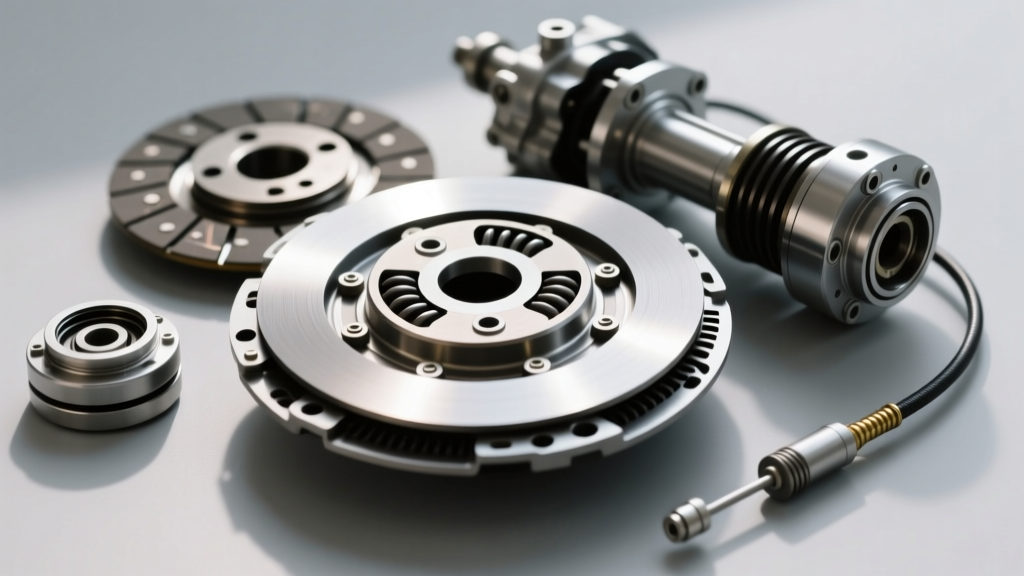
When enthusiasts and students first search for a basic clutch definition for a car, they usually encounter a rudimentary explanation: a mechanical device that engages and disengages the power transmission between the engine and the drivetrain. However, as any seasoned transmission technician will tell you, the functional definition of a clutch system extends far beyond the friction disc and pressure plate inside the bellhousing. For millions of manual vehicles on the road—particularly iconic platforms from the 1990s and 2000s—the true bottleneck of clutch performance lies in the actuation system, specifically the clutch cable.
In 2026, as the average age of manual transmission vehicles continues to climb, cable-actuated clutches are presenting unique diagnostic and financial challenges. Unlike modern hydraulic systems that rely on fluid dynamics and self-adjusting slave cylinders, mechanical clutch cables require physical adjustment, suffer from specific fatigue failures, and demand precise tensioning. Understanding the cost analysis of clutch cable problems, from minor adjustments to full replacements, is critical for both DIY mechanics and professional shop owners.
The Financial Reality: Clutch Cable Replacement vs. Adjustment Costs
Before tearing into the firewall or crawling under the chassis, it is vital to understand the financial landscape of clutch cable repairs. Labor rates in 2026 have shifted significantly, with national averages for independent manual-transmission specialists hovering between $135 and $165 per hour. Because clutch cables often route through tight engine bays and complex pedal boxes, labor times can vary wildly depending on the vehicle platform.
Below is a detailed cost breakdown for three of the most popular cable-actuated manual platforms, utilizing data aggregated from RepairPal and current OEM aftermarket pricing from RockAuto.
| Vehicle Platform | OEM / Premium Part Number | Part Cost (2026) | Est. Labor Time | Total Shop Cost |
|---|---|---|---|---|
| 1999-2005 Mazda Miata (NB) | NC14-41-200D (OEM) | $45 - $75 | 0.8 Hours | $155 - $210 |
| 1996-2000 Honda Civic (EK) | 54610-S04-003 (OEM) | $35 - $60 | 0.6 Hours | $115 - $160 |
| 1994-2004 Ford Mustang (SN95) | F4ZZ-7A552-A (Motorcraft) | $65 - $110 | 1.4 Hours | $250 - $340 |
Cost-Saving Insight: If your issue is strictly related to pedal free-play or minor binding, a professional clutch cable adjustment typically costs between $80 and $120 (roughly one hour of shop time). Always request a pedal-travel diagnostic before authorizing a full cable replacement.
Anatomy of a Clutch Cable Failure
To accurately diagnose whether a cable needs adjustment or outright replacement, you must understand how these components fail. A clutch cable is not just a simple wire; it is a complex assembly consisting of a high-tensile steel inner wire, a PTFE (Teflon) or nylon inner liner, a compressive steel outer housing, and rubber weather boots.
Common Failure Modes
- Swage Fitting Fatigue: The most catastrophic failure occurs where the inner wire is swaged (crimped) into the threaded adjuster or the clutch fork clevis. Repeated high-load cycling causes microscopic stress fractures, leading to sudden snapping at the transmission end.
- Outer Housing Collapse: If the vehicle is driven with excessive pedal free-play, the driver compensates by applying lateral force to the pedal. This transfers side-loading to the outer housing near the firewall grommet, causing the steel winding to unspool or collapse inward, pinching the inner wire.
- PTFE Liner Degradation: Over 100,000 miles, the inner liner wears through. Without lubrication, the raw steel wire rubs against the outer steel housing, resulting in a stiff, notchy pedal feel that mimics a failing pressure plate.
- Pedal Box 'Z-Bend' Fraying: Inside the cabin, the cable terminates in a 'Z' bend that hooks into the clutch pedal arm. If the plastic pivot bushing wears out, the metal-on-metal friction will slice through the inner wire strands one by one.
Self-Adjusting vs. Manual Adjusters: The Mustang vs. Import Divide
When discussing the clutch definition for a car in the context of actuation, we must differentiate between manual threaded adjusters and self-adjusting mechanisms. This distinction drastically alters your diagnostic and repair costs.
Japanese imports like the Honda Civic and Mazda Miata utilize a simple threaded rod with a locknut located either at the pedal box or the transmission bellhousing. These are cheap to replace and easy to adjust but require periodic manual intervention.
Conversely, the 1994-2004 Ford Mustang (SN95) utilizes a ratcheting self-adjusting quadrant mechanism located behind the dashboard. As the clutch disc wears and the cable stretches, a pawl gear clicks over a toothed quadrant to maintain tension. The hidden cost: If the clutch is 'ridden' or subjected to high-performance launches, the plastic quadrant gear strips its teeth. A stripped quadrant requires dropping the steering column and replacing the entire quadrant assembly (Part # F4ZZ-7550-A, approx. $140), turning a simple $80 cable job into a $400 interior teardown.
Precision Adjustment: Specs, Measurements, and Torque
Improper clutch cable adjustment is a leading cause of premature throw-out bearing failure and clutch disc glazing. If the cable is too tight, the throw-out bearing rides constantly against the pressure plate fingers. If it is too loose, the clutch drags, causing gear grind and synchronizer damage in the transmission.
Here are the exact factory specifications and torque requirements for precise adjustment:
1999-2005 Mazda Miata (NB)
- Pedal Free-Play Measurement: 0.39 - 0.59 inches (10 - 15 mm) measured from the pedal's resting position to the point of initial resistance.
- Adjustment Point: Threaded rod at the transmission bellhousing clutch fork.
- Locknut Torque Spec: 10 Nm (7.4 lb-ft). Over-torquing the 10mm locknut will strip the relatively soft threads of the inner adjuster rod.
1996-2000 Honda Civic (EK)
- Pedal Free-Play Measurement: 0.59 - 0.98 inches (15 - 25 mm).
- Push Rod Play: 1.0 - 3.0 mm at the master cylinder (if equipped with a hybrid cable/hydro setup) or at the pedal stop.
- Locknut Torque Spec: 9 Nm (7 lb-ft). Always apply a drop of medium-strength threadlocker (e.g., Loctite 243) to the adjuster threads, as Honda's engine bay vibrations frequently back off unsecured locknuts.
Preventative Maintenance: Lubrication Costs and Techniques
Can you salvage a binding cable without spending $200 at the shop? In some cases, yes. If the inner wire is intact but the pedal feels stiff and notchy, the PTFE liner may simply be dry or contaminated with road grime.
Using a specialized cable luber tool (available for under $15 at most auto parts stores), you can clamp onto the outer housing near the firewall and inject a high-viscosity synthetic lubricant. Crucial Warning: Never use WD-40, graphite powder, or silicone spray on clutch cables. Graphite clumps when exposed to moisture, and thin solvents wash away the factory grease. Instead, use a dedicated PTFE-suspended cable lube or a light synthetic gear oil (75W-90), which adheres to the wire and survives the high-heat environment of the engine bay.
When to Replace vs. Adjust: The Decision Matrix
To summarize the diagnostic process, use this framework to determine your next step:
- Adjust Only: Pedal free-play is outside the 10-25mm spec, engagement point is too high or too low, but pedal return is smooth and there is no audible 'popping' at the firewall.
- Replace Cable: Visible fraying at the Z-bend, outer housing rubber boots are cracked/missing, pedal sticks to the floor in cold weather, or you hear a metallic 'crunch' when depressing the pedal.
- Replace Cable + Quadrant/Hardware: (Mustang specific) The pedal feels loose and makes a ratcheting clicking sound behind the dash, or the cable cannot hold tension despite tightening the adjuster rod to its maximum thread limit.
Ultimately, expanding your personal clutch definition for a car to include the vital nuances of the cable actuation system will save you hundreds of dollars in misdiagnosed transmission repairs. Whether you are turning a wrench on a vintage Civic or diagnosing a sticky Mustang pedal, respecting the torque specs, free-play measurements, and material limits of the clutch cable is the hallmark of true drivetrain expertise.