The Panic of the Burn: Driveline vs. HVAC Misdiagnosis
There are few sensations more alarming to a driver or automotive technician than the acrid stench of burning friction material wafting through the cabin vents or from beneath the hood. In the realm of clutch system diagnostics, a burning smell is universally treated as a red flag for catastrophic driveline failure. Whether you are driving a vehicle with a traditional manual transmission or a modern automatic with a complex torque converter clutch (TCC), the immediate assumption is that the friction discs are slipping, glazing, or incinerating.
However, one of the most common—and costly—misdiagnoses in modern automotive repair is attributing a severe electrical or friction burn odor to the transmission when the true culprit is mounted on the front of the engine. Specifically, a failing air conditioning compressor clutch coil can overheat, melt its internal winding insulation, and produce a noxious burning smell that perfectly mimics a slipping driveline clutch. Before you drop a ZF 8HP transmission or split the bell housing on a Tremec T56, it is critical to perform a proper differential diagnosis to isolate the source of the odor.
Anatomy of a Burning Clutch Smell
To accurately diagnose clutch system symptoms, technicians must rely on their olfactory senses as much as their scan tools. The chemical composition of the burning material dictates the odor profile. Understanding the difference between organic friction materials, automatic transmission fluid (ATF), and electromagnetic coil enamels is the first step in accurate troubleshooting.
Odor Profile Comparison Chart
| Component Source | Material Burning | Odor Profile | Accompanying Symptoms |
|---|---|---|---|
| Manual Clutch Disc | Organic/Kevlar Friction Material | Burnt toast, harsh asbestos-like dust, acrid brake smell | RPM flaring under load, loss of acceleration, high pedal bite point |
| Automatic TCC / Driveline | Degraded ATF & Paper/Carbon Friction Linings | Sweet, sickly chemical odor, burnt varnish | TCC slip codes (e.g., P0741), shudder at 40-50 mph, dark/burnt ATF on dipstick |
| AC Compressor Clutch Coil | Polyurethane, Copper Enamel, Melting Plastic | Sharp electrical ozone, melting plastic, localized hot metal | Warm cabin air, AC compressor cycling rapidly or not engaging, visible smoke at pulley |
Why the Air Conditioning Compressor Clutch Coil Fails
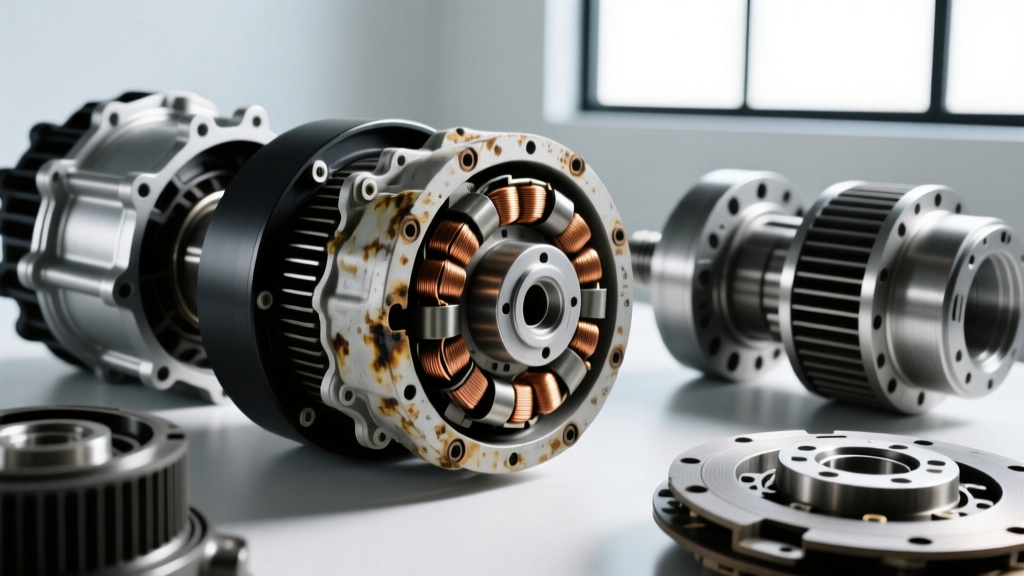
The air conditioning compressor clutch coil is an electromagnetic device responsible for engaging the clutch hub to the driven pulley, which is belt-driven by the engine crankshaft. When the coil receives 12V from the HVAC control module, it generates a magnetic field that pulls the friction plate against the pulley face. When this system fails, it generates immense heat.
Electrical Degradation and Resistance Spikes
A healthy AC clutch coil typically exhibits a resistance between 3.2 and 4.8 Ohms at 68°F (20°C). Over time, exposure to under-hood heat cycles, road salt, and moisture can degrade the protective epoxy and the microscopic enamel coating the copper windings. If the coil develops an internal short or excessive resistance, it will draw abnormal current or fail to generate sufficient magnetic force. According to technical bulletins from the Mobile Air Climate Systems Association (MACS), a weak magnetic field causes the clutch friction plate to slip continuously against the spinning pulley. This slip generates friction heat exceeding 400°F (204°C), rapidly melting the coil's plastic housing and burning the copper winding insulation, releasing a highly pungent, toxic smoke.
Excessive Air Gap and Compressor Head Pressure
Another primary cause of coil burnout is an excessive air gap between the pulley and the clutch hub. As the friction material on the clutch face wears down over 100,000+ miles, the air gap widens beyond the factory specification (typically 0.3mm to 0.6mm). The coil must work exponentially harder to bridge this gap, leading to thermal overload. Furthermore, if the AC system is overcharged or the condenser is blocked, compressor head pressures can spike above 350 PSI. The mechanical resistance of turning the compressor piston against this pressure can overpower the magnetic clutch, causing slip and subsequent thermal destruction of the coil assembly.
Step-by-Step Differential Diagnosis
When a customer complains of a burning smell, follow this structured diagnostic path to separate driveline faults from HVAC faults.
Step 1: Isolate the Driveline
First, verify the transmission's health. For manual transmissions, perform a stall test in a high gear (3rd or 4th) at low RPM to check for clutch slip. If the engine bogs down and stalls rather than flaring, the manual clutch is likely intact. For automatics (such as the GM 6L80 or Ford 10R80), use a bi-directional scan tool to monitor the Torque Converter Clutch (TCC) slip RPM. TCC slip should be near 0 RPM when locked in higher gears. If the TCC slip is within spec and the ATF is clean and red, rule out the transmission.
Step 2: HVAC System Isolation and Visual Inspection
Turn the vehicle's air conditioning to the maximum cold setting and turn the blower motor on high. Pop the hood and locate the AC compressor. Observe the center hub of the compressor clutch. Is it engaged and spinning with the pulley? If the pulley is spinning but the center hub is stationary, or if the hub is engaging and disengaging rapidly (short-cycling), you have found your suspect. Look for signs of melted plastic, brown discoloration on the coil housing, or a distinct ozone smell radiating directly from the compressor snout.
Step 3: Multimeter Testing of the Coil
Disconnect the electrical connector to the air conditioning compressor clutch coil. Set your digital multimeter to the Ohms (Ω) setting and probe the terminals on the coil side (not the harness side).
- Reading 3.2Ω to 4.8Ω: Coil resistance is normal. The issue may be a voltage drop on the supply side or a mechanical air gap issue.
- Reading OL (Open Loop) or Infinite: The internal copper winding has snapped or melted completely. The coil is dead and must be replaced.
- Reading Below 2.5Ω: Internal short circuit. The coil is drawing excessive amperage, which will melt the wiring harness and blow the HVAC fuse.
Next, perform a voltage drop test on the supply circuit with the AC commanded ON. You should see battery voltage (13.5V - 14.2V) at the connector. If you read 9V or 10V, you have a bad ground or corroded relay, which starves the coil of the amperage needed to hold the clutch engaged, resulting in slip and burn.
Replacement Costs, Part Numbers, and Torque Specifications
If the diagnosis confirms a burnt air conditioning compressor clutch coil, you must decide between replacing just the coil/clutch assembly or the entire compressor. As noted by Denso Auto Parts, replacing just the clutch assembly is viable if the compressor shaft seal is not leaking and the internal swash plate bearings are quiet.
- Clutch Coil Only: $35 - $75 (Parts). Requires specialized snap-ring pliers and a clutch puller.
- Complete Clutch Assembly (Pulley, Coil, Hub): $120 - $250 (Parts). Highly recommended to ensure proper air gap and bearing integrity.
- Full Compressor Assembly: $350 - $850 (Parts). Required if the coil burnout was caused by internal compressor seizure or if the shaft seal is compromised.
- Labor Time: 0.8 to 1.5 hours for clutch replacement (no refrigerant recovery needed). 2.5 to 4.0 hours for full compressor replacement (requires EPA 609 certification, recovery, vacuum, and recharge).
Critical Torque Specs and Air Gap Adjustments
When installing a new clutch hub onto the compressor shaft, precision is mandatory. Over-torquing the center retaining bolt can bind the internal swash plate, while under-torquing will allow the hub to fret and destroy the shaft splines.
- Sanden SD7V16 Compressors: Center hub bolt torque specification is 11 - 15 Nm (8 - 11 lb-ft).
- Denso 10S17C / 10PA17C Compressors: Center hub bolt torque specification is 12 - 16 Nm (9 - 12 lb-ft).
- Air Gap Verification: Always use a feeler gauge to measure the gap between the pulley face and the friction plate in at least three equidistant points. The gap must strictly adhere to the 0.3mm - 0.6mm (0.012" - 0.024") specification. If the gap is too wide, remove the hub and shave down the internal shim washer to restore proper magnetic engagement.
Expert Verdict: When to Suspect the Transmission Instead
While the air conditioning compressor clutch coil is a frequent imposter in clutch burning smell diagnosis, you must not ignore the driveline if the evidence points elsewhere. If the burning smell is accompanied by a loss of vehicle momentum, a spongy clutch pedal, a check engine light with TCC solenoid codes (e.g., P0740, P2757), or a distinct vibration during highway cruising, the fault lies within the transmission bell housing. However, if the smell is sharp, electrical, localized to the front accessory drive, and accompanied by warm cabin air, save your customer thousands of dollars in unnecessary transmission teardowns by testing the AC clutch coil first. Accurate symptom diagnosis separates the parts-changers from the true automotive diagnosticians.