The Chemistry of a Clutch Burning Smell
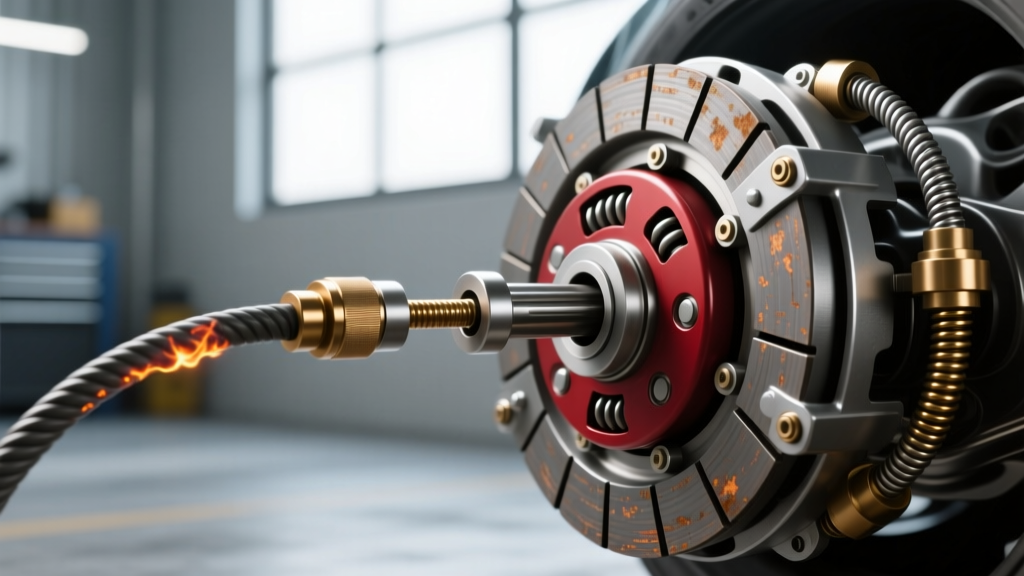
There is no mistaking the acrid, eye-watering stench of a burning clutch. Unlike brake dust or burning oil, a slipping clutch disc emits a highly specific chemical odor caused by the thermal breakdown of phenolic resins. Most organic and Kevlar-reinforced clutch friction materials use these resins as a binder. When the clutch slips under load, localized surface temperatures on the friction disc can rapidly exceed 500°F (260°C). At this threshold, the phenolic resin begins to vaporize and off-gas, creating the unmistakable 'burnt clutch' smell that permeates the cabin and engine bay.
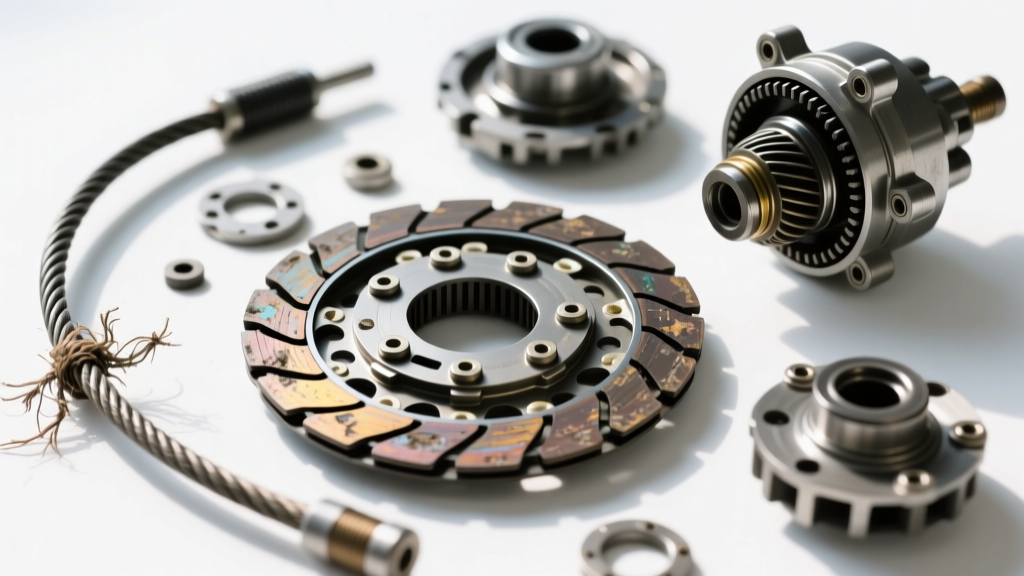
While aggressive driving or 'riding' the pedal are common culprits, a persistent burning smell during normal driving indicates a mechanical failure in the actuation system. In vehicles utilizing cable-actuated manual transmissions—such as the Foxbody Mustang 5.0 with the BorgWarner T-5, classic Jeep CJs with the Tremec T-176, or early Chevy S10 pickups—the root cause is frequently a binding, frayed, or improperly adjusted clutch cable that prevents full pressure plate engagement.
Why Cable-Actuated Systems Cause Premature Slip
Modern hydraulic clutch systems (like those found in the Tremec TR-6060 or Getrag-equipped vehicles) are self-adjusting; the hydraulic fluid inherently compensates for minor disc wear. Mechanical clutch cables, however, do not self-adjust. Over time, the inner steel cable stretches, and the outer Teflon-lined housing can degrade, kink, or accumulate microscopic debris.
When a cable binds or lacks proper free-play, it continuously pulls on the clutch release fork. This keeps the throwout bearing (TOB) in light contact with the pressure plate diaphragm fingers. The resulting forward pressure slightly lifts the pressure plate away from the flywheel, reducing the clamping force. Under heavy throttle or high-gear cruising, the friction disc breaks traction, slips, and generates the extreme heat responsible for the burning smell.
Measuring Free-Play: The First Diagnostic Step
Before tearing into the bellhousing, you must verify the cable free-play. Insufficient free-play guarantees clutch slip; excessive free-play causes gear grind and incomplete disengagement. Below is a diagnostic reference table for common cable-actuated platforms.
| Vehicle Platform | Transmission Model | Target Free-Play Spec | OEM/OES Cable Part Number |
|---|---|---|---|
| Ford Mustang (1987-1993) | BorgWarner T-5 | 1/2' to 1' at pedal top | D9ZZ-7A553-A |
| Jeep CJ-7 (1980-1986) | Tremec T-176 | 1' to 1-1/2' at fork | 5356025 |
| Chevy S10 (1982-1993) | BorgWarner T-5 | 1/8' to 1/4' at fork | 15588044 |
Step-by-Step: How to Lubricate Clutch Cable Components
If your free-play is within spec but the pedal feels notchy, gritty, or fails to return smoothly, the cable is binding. Knowing how to lubricate clutch cable assemblies correctly can restore smooth operation, ensure full pressure plate engagement, and eliminate the slip causing your burning smell. Do not simply spray the exposed ends with aerosol grease; this attracts dirt and creates a grinding paste inside the housing.
Tools Required
- Inline Cable Lubricator Tool (e.g., Motion Pro or Lisle 19250)
- PTFE-based dry cable lubricant or synthetic motorcycle cable lube
- Shop rags and nitrile gloves
- 10mm or 13mm wrenches (for fork adjustment nuts)
The Lubrication Procedure
Step 1: Disconnect the Cable. Crawl under the vehicle and unhook the clutch cable from the bellhousing release fork. Remove any return springs. This relieves tension on the inner wire.
Step 2: Prep the Housing. Wipe down the exposed inner cable wire near the firewall. Slide the rubber collar of your inline cable lubricator over the outer cable housing and clamp it down securely using the tool's set screws.
Step 3: Inject the Lubricant. Attach your aerosol PTFE lubricant to the lubricator's injection port. Press the nozzle and hold. You will see the inner wire begin to travel through the housing as the lubricant forces its way through the entire length of the Teflon liner. Continue injecting until clean lubricant drips out of the lower end at the bellhousing.
Step 4: Work the Cable. Have an assistant slowly press and release the clutch pedal inside the cabin 10 to 15 times. This distributes the PTFE coating evenly across the entire wire strand, eliminating micro-frictions that cause binding.
Expert Warning: Never use standard WD-40, wet lithium grease, or heavy chassis lube inside a clutch cable housing. These wet lubricants trap road grit and clutch dust, eventually forming a solid sludge that will snap the inner cable under heavy pedal effort. Always use a dry-film PTFE or specialized synthetic cable lube.
Choosing the Right Lubricant Chemistry
The environment inside a clutch cable housing experiences high tensile loads and moderate heat radiating from the engine block and exhaust manifold. According to Motion Pro's engineering guidelines, dry-film Teflon (PTFE) lubricants are superior because they bond to the steel wire on a microscopic level, providing a zero-friction surface without the tackiness that attracts abrasive particles. Products like Finish Line Dry Teflon or dedicated automotive cable lubes are the industry standard for 2026 restorations and maintenance.
When Lubrication Fails: Flywheel Step Height & Clamping Force
If you have successfully lubricated the cable, verified the free-play, and the clutch burning smell persists, the friction material is likely glazed or worn to the rivets, or the flywheel step height is incorrect. The 'step height' is the distance between the flywheel's friction surface and the pressure plate mounting surface.
For example, on a Ford 5.0L V8 with a T-5 transmission, the required flywheel step height is typically 0.025' to 0.035'. If a machine shop resurfaces the flywheel but fails to check the step height, the pressure plate sits too low. This reduces the diaphragm spring's clamping force by hundreds of pounds, guaranteeing slip and a burning smell even with a brand-new clutch disc and a perfectly lubricated cable.
Clutch Replacement Costs and Part Numbers
When the phenolic resin is completely burnt out, lubrication will not save the disc. A full replacement is required. Based on current 2026 market pricing from RockAuto and Summit Racing, here is what you can expect to pay for common cable-clutch platforms:
- LuK RepSet (Part #04-111 for Foxbody 5.0): Includes OEM-grade pressure plate, organic disc, and TOB. Price range: $160 - $195.
- McLeod Street Twin (Ceramic/Metallic): For high-horsepower applications where organic resins fail. Price range: $650 - $850.
- Flywheel Resurfacing: Local machine shop rate: $45 - $85 (Must include step-height verification).
- Professional Labor (R&R Transmission): $450 - $800 depending on shop rates and crossmember rust.
Final Torque Specs for Reassembly
If the burning smell has led to a full clutch replacement, precision reassembly is critical to prevent warping the pressure plate, which causes chatter and localized hot-spots (leading to more burning smells). Always use a calibrated torque wrench.
- Pressure Plate to Flywheel Bolts (3/8'-16): 35 lb-ft, tightened in a strict crisscross star pattern over three progressive passes.
- Bellhousing to Engine Block (Ford 5.0): 28 to 38 lb-ft.
- Transmission to Bellhousing (T-5): 33 to 40 lb-ft.
- Clutch Fork Pivot Ball Stud: 25 to 30 lb-ft (Apply high-temp anti-seize to the ball pivot, but keep it strictly away from the friction disc).
By systematically diagnosing the burning smell, verifying cable free-play, and understanding exactly how to lubricate clutch cable systems with the correct PTFE chemistry, you can save hundreds of dollars in unnecessary transmission removals and extend the life of your manual drivetrain.