The Anatomy of a Burning Clutch Smell
There are few aromas more alarming to a manual transmission driver than the acrid, unmistakable stench of a burning clutch. Often described as smelling like hot brakes, burning asbestos, or scorched chemical resin, this odor is the direct result of thermal degradation. Specifically, it is the phenolic resin binder—the glue that holds the organic or ceramic friction materials to the steel backing plate—breaking down under extreme heat. When the friction surface exceeds its thermal threshold, typically around 400°F to 500°F (204°C to 260°C) for standard organic compounds, the resin begins to vaporize, creating that pungent smoke.
While aggressive launch control or riding the pedal in stop-and-go traffic are obvious culprits, a persistent burning smell during normal driving points to a deeper mechanical or hydraulic fault. As of 2026, with modern torque-heavy turbocharged engines and increasingly complex hydraulic actuation systems, the most common hidden cause of chronic clutch slip and subsequent burning is an improperly positioned or deteriorating clutch bite point.
How the Clutch Bite Point Triggers Overheating
The clutch bite point (or engagement point) is the exact pedal position where the throwout bearing presses the diaphragm spring fingers, releasing the clamping force on the friction disc. In a healthy system, this bite point should occur roughly 1 to 2 inches off the floorboard. When the bite point migrates to the very top of the pedal travel, it indicates severe wear or hydraulic failure, leading to two distinct burning scenarios:
1. Diaphragm Spring Fatigue and Micro-Slipping
As the friction disc wears down, the pressure plate diaphragm fingers extend further toward the transmission. To maintain engagement, the hydraulic system must push the throwout bearing further. When the disc reaches its minimum service thickness (often around 0.280" or 7mm depending on the application), the mechanical advantage of the diaphragm spring diminishes. The clamping force drops exponentially, meaning the clutch can no longer hold the engine's torque output under heavy load. This results in micro-slippage—imperceptible to the driver's foot but generating massive friction and heat at the flywheel interface.
2. Pre-Loaded Throwout Bearings (Zero Free-Play)
If your hydraulic system lacks an automatic adjuster, or if a master cylinder pushrod has been improperly adjusted, the clutch bite point may be artificially high. This leaves zero pedal free-play. Consequently, the throwout bearing rides constantly against the spinning diaphragm fingers. This not only destroys the bearing but also prevents the pressure plate from fully clamping the disc against the flywheel, causing continuous slip and a perpetual burning smell.
Expert Insight: According to diagnostic guidelines from Schaeffler (LuK), a high bite point combined with a spongy pedal feel is the primary indicator of aerated hydraulic fluid or a failing concentric slave cylinder (CSC), both of which prevent full clutch engagement and guarantee friction material overheating.
Diagnostic Protocol: Isolating the Burn Source
Before tearing into the bellhousing, perform this systematic diagnostic routine to confirm if the bite point and hydraulic system are at fault.
- The Ramp Test: Find a steep incline. Put the vehicle in 3rd gear, hold the brake, and slowly release the clutch pedal while applying moderate throttle (around 2,000 RPM). If the engine RPM climbs without the vehicle stalling or moving forward, the clutch is slipping. Note the pedal height where this occurs.
- Free-Play Measurement: Press the pedal by hand until you feel hydraulic resistance. You should measure between 0.5" and 1.0" of free-play at the pedal pad. If there is zero free-play, the master cylinder pushrod needs adjustment or the pedal stop is missing.
- Hydraulic Fluid Inspection: Check the clutch master cylinder reservoir. DOT 3 and DOT 4 fluids are hygroscopic. If the fluid is dark or has not been flushed in 2+ years, its boiling point has dropped significantly. Under heavy use, the fluid boils, creating vapor pockets that result in a spongy pedal and an incomplete bite point engagement.
Thermal Failure Thresholds: Friction Material Comparison
Not all clutch discs burn at the same temperature. The severity of the smell and the damage to the flywheel depends heavily on the friction material compound. Below is a breakdown of common 2026 aftermarket and OEM friction materials and their thermal limits.
| Material Type | Max Temp Threshold | Common Applications | Replacement Cost Range (Parts) |
|---|---|---|---|
| Organic (Full-Faced) | 400°F - 450°F | Daily drivers, OEM replacements | $150 - $300 |
| Kevlar / Aramid | 500°F - 600°F | Track days, light towing, modified NA | $350 - $600 |
| Ceramic (Puck/Sprung) | 700°F - 800°F | High-boost turbo, drag, drift | $400 - $750 |
| Sintered Iron | 900°F+ | Competition drag racing, no street use | $600 - $1,200 |
When an organic clutch exceeds its 450°F threshold, the phenolic resin literally cooks onto the flywheel surface, creating a hardened, glossy layer known as 'glazing.' Glazing reduces the coefficient of friction, which ironically causes the clutch to slip and burn even more once it cools down, creating a vicious cycle of failure.
Real-World Case Study: GM Tremec TR-6060 & CSC Failure
To understand how a failing hydraulic bite point causes a burning smell, let us examine a highly prevalent issue in the GM LS/LT ecosystem, specifically vehicles equipped with the Tremec TR-6060 or the newer T56 Magnum F (e.g., 2016-2023 Camaro SS, Cadillac ATS-V). These platforms utilize a Concentric Slave Cylinder (CSC) located inside the bellhousing.
As the internal seals of the CSC degrade, they allow microscopic amounts of air into the hydraulic line during the pedal's return stroke. This aeration pushes the clutch bite point higher and higher toward the dashboard. The driver, unconsciously adapting to the changing bite point, begins to rest their foot slightly on the pedal to find the engagement zone. This slight pressure overcomes the weakened hydraulic boundary, pulling the throwout bearing just millimeters into the diaphragm fingers.
The result? A constant, low-level slip at highway speeds under load. The friction disc overheats, and the burning smell permeates the HVAC intake. The fix is not just a new clutch; it requires replacing the CSC (GM Part # 24283090 or aftermarket equivalent from Tremec authorized distributors), flushing the system with fresh DOT 4 fluid, and utilizing a pressure bleeder set to 25-30 PSI to force the aerated fluid out of the complex master cylinder loop.
Flywheel Inspection: When Smell Turns to Steel Damage
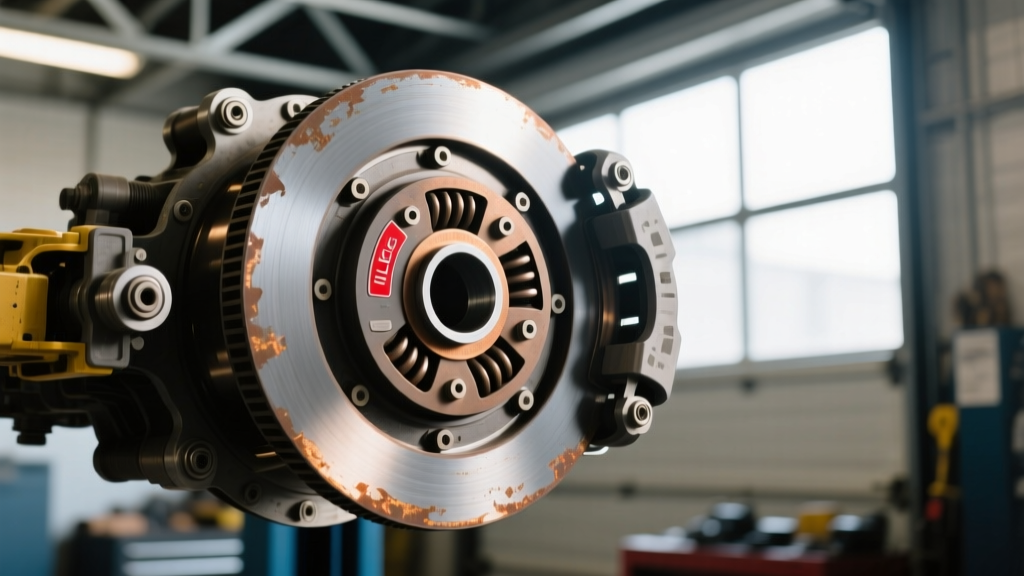
If you have ignored the burning smell and the clutch bite point issues for too long, the heat will transfer through the friction disc and into the flywheel. When cast iron or steel flywells reach approximately 550°F, they undergo a metallurgical color change known as 'bluing.'
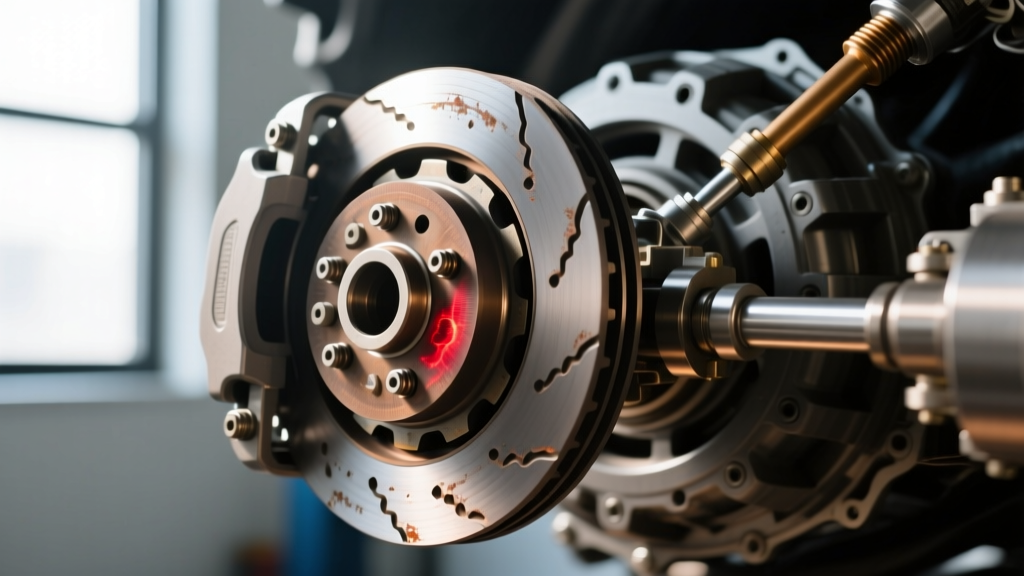
Bluing indicates that the steel has been annealed (softened) in localized spots. If you drop the transmission and inspect the flywheel, look for deep blue or purple heat marks. While minor surface glazing can be machined off on a brake lathe (removing no more than 0.010" to 0.015" of material), deep bluing and heat checking (micro-cracks) mean the flywheel's structural integrity is compromised. A warped flywheel will cause clutch chatter and prevent the new friction disc from seating evenly, leading to an immediate recurrence of the burning smell upon reassembly.
Repair vs. Replace: The 2026 Decision Matrix
Before authorizing a $1,500+ teardown, determine if the burning smell is a symptom of a cheap hydraulic fix or a catastrophic mechanical failure.
- Scenario A (Hydraulic Bypass): The bite point is high, the pedal feels spongy, and the smell only occurs after heavy traffic. Action: Perform a gravity bleed, flush with high-temp DOT 4 (like Motul RBF 600), and check the master cylinder pushrod for free-play. Cost: $30 in fluid and 1 hour of labor.
- Scenario B (Friction Exhaustion): The bite point is at the very top of the pedal travel, but the pedal feels firm. The RPMs flare during 3rd-to-4th gear WOT shifts. Action: The disc is worn out. You must replace the clutch kit (e.g., LuK RepSet or Sachs OE replacement), resurface or replace the flywheel, and install a new rear main seal while the engine is exposed. Cost: $800 - $1,400 depending on labor rates and AWD/RWD complexity.
Further Reading and Authoritative Data
For deeper dives into manual transmission maintenance, hydraulic bleeding procedures, and drivetrain diagnostics, consult the technical service bulletins available through Hagerty's Maintenance and Tech Archives, which provide excellent historical and modern context on drivetrain preservation. Always refer to your specific vehicle's factory service manual for exact pedal free-play measurements and torque specifications for bellhousing-to-engine block bolts (typically 35-50 lb-ft depending on the fastener size and engine block material).