The Universal Physics of Parasitic Loss
At AutoGearNexus, our primary focus is dissecting automotive drivetrain layouts, from the torque-vectoring nuances of modern AWD systems to the internal fluid dynamics of the ZF 8HP and GM 6L80 transmissions. However, the fundamental physics of power transfer and drivetrain efficiency and fuel economy are universal across all motorized platforms. Whether you are tuning a rear-wheel-drive sports car or maintaining a commuter motorcycle, understanding parasitic loss is critical. Today, we are answering a common crossover question from our powersports-riding audience: how to clean bike drivetrain components to reclaim lost fuel economy and horsepower.
Parasitic loss refers to the mechanical energy consumed by the drivetrain itself before it ever reaches the contact patch of the tire. In a sealed automotive environment, engineers combat this with low-viscosity synthetic fluids and precision-machined gears. On a motorcycle (commonly referred to as a 'bike' in the garage), the final drive is often exposed to the elements. A neglected, gritty chain acts as a mechanical brake, directly robbing your engine of efficiency and tanking your fuel economy.
Automotive vs. Powersports: Sealed vs. Exposed Drivetrains
To understand why cleaning your bike's drivetrain impacts fuel economy so drastically, we must compare it to automotive configurations. In a modern Front-Wheel-Drive (FWD) vehicle, the transmission and differential are housed in a single transaxle casing, bathed in low-viscosity fluid. The parasitic loss is relatively fixed—typically between 10% and 12% of crankshaft horsepower.
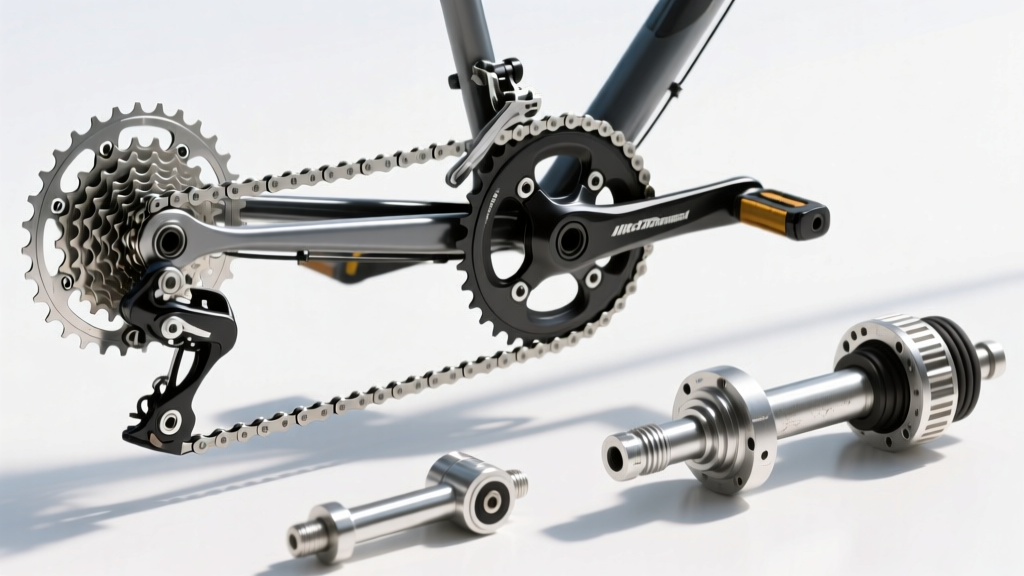
Conversely, a motorcycle's exposed final drive chain relies on boundary lubrication. When a chain accumulates abrasive road grime, sand, and oxidized lubricant, the friction coefficient between the sprocket teeth and the chain rollers skyrockets. Furthermore, the grit infiltrates the space between the link plates and the rubber sealing rings, increasing internal articulation friction. According to DID Drive Chain Technical Specifications, a poorly maintained chain can increase drivetrain power loss by up to 8% compared to a clean, properly lubricated unit. On a 60-horsepower commuter bike, that is nearly 5 horsepower lost purely to friction, forcing the engine to burn more fuel to maintain highway cruising speeds.
How to Clean Bike Drivetrain: The Step-by-Step Protocol
If you are wondering how to clean bike drivetrain systems without destroying the delicate rubber seals, you must abandon automotive degreasers. The following protocol is designed for modern O-ring and X-ring chains (such as the popular DID 525 VX3 or RK XW-Ring series).
Step 1: Solvent Selection and O-Ring Safety
Never use harsh automotive brake cleaners, gasoline, or standard WD-40 on a motorcycle chain. These solvents will swell, crack, and destroy the Nitrile Butadiene Rubber (NBR) O-rings that retain the factory-packed grease inside the chain pins. Instead, use a dedicated chain cleaner like Motul C1, or pure kerosene. Kerosene is the solvent of choice for most Japanese and European manufacturers because it effectively dissolves grime without compromising the rubber seals.
Step 2: Mechanical Agitation
Elevate the rear wheel on a paddock stand. Apply your solvent liberally and allow it to dwell for three to five minutes. Use a three-sided nylon chain brush (like the Grunge Brush) to agitate the top, bottom, and sides of the chain while slowly rotating the rear wheel. The nylon bristles are stiff enough to dislodge embedded silica and road tar, but soft enough to prevent scratching the side plates.
Step 3: Boundary Lubrication
Once the chain is clean, wipe it completely dry with a microfiber towel. A clean chain is a dry chain, and metal-on-metal contact will cause rapid elongation (stretch). Apply a high-quality PTFE or ceramic-based chain lube (e.g., Motul C2 or Maxima Chain Wax) to the inside of the lower chain run, directly targeting the O-rings and rollers. Rotate the wheel to distribute the lube, then let it flash off for 15 minutes before riding to prevent fling-off onto your rear tire and brake rotor.
Critical Torque Specs and Chain Slack Tolerances
Cleaning the drivetrain is only half the battle for maximizing fuel economy. If your chain is over-tensioned, you will create immense parasitic drag on the transmission output shaft bearing, mimicking the feeling of riding with the rear brake slightly applied. This destroys fuel economy and accelerates countershaft seal leaks.
- Chain Slack: Most street motorcycles require 25mm to 35mm (1.0 to 1.4 inches) of free play measured at the midpoint of the lower chain run. Always consult your specific owner's manual.
- Alignment: Ensure the index marks on the swingarm align perfectly on both sides to prevent sprocket edge-wear.
- Axle Nut Torque: This is critical for safety. For example, the Yamaha MT-07 / FZ-07 requires a rear axle nut torque of 105 Nm (77 lb-ft). The Honda CBR600RR requires 88 Nm (65 lb-ft). Always use a calibrated torque wrench and install a new cotter pin if applicable.
Drivetrain Efficiency and Parasitic Loss Comparison
How does an exposed bike drivetrain compare to the automotive layouts we cover daily? The table below illustrates the typical parasitic loss percentages and the fuel economy impact when these systems are neglected.
| Drivetrain Layout | Typical Parasitic Loss (Optimal) | Parasitic Loss (Neglected/Dirty) | Maintenance Interval | Fuel Economy Impact of Neglect |
|---|---|---|---|---|
| Automotive FWD (e.g., Honda F-Series) | 10% - 12% | 13% - 15% (Degraded Fluid) | 60,000 Miles | Minimal (2-4 MPG drop) |
| Automotive RWD (e.g., ZF 8HP70) | 14% - 16% | 17% - 19% (Fluid Shear) | 80,000 Miles | Moderate (3-5 MPG drop) |
| Automotive AWD (e.g., Haldex Gen 5) | 18% - 22% | 23% - 26% (Clutch Drag) | 40,000 Miles | Significant (5-8 MPG drop) |
| Motorcycle Chain Drive (Clean) | 4% - 6% | 12% - 18% (Grit/Dry) | 500 Miles | Severe (8-12 MPG drop) |
| Motorcycle Shaft Drive (e.g., BMW R1250GS) | 15% - 18% | 19% - 22% (Hypoid Gear Wear) | 12,000 Miles | Moderate (3-5 MPG drop) |
Data synthesized from EPA Fuel Economy Testing Methodologies and SAE International drivetrain efficiency papers.
The Real-World Fuel Economy Impact
Let us translate these engineering metrics into real-world fuel economy. Consider a standard 650cc twin-cylinder commuter motorcycle that achieves an EPA-estimated 60 MPG on the highway. If the rider neglects the chain, allowing it to become dry and caked with abrasive dust, the drivetrain parasitic loss increases from 5% to roughly 15%. The engine must now produce significantly more torque to overcome this internal friction at a steady 70 MPH.
In real-world testing documented by experts at RevZilla's Chain Maintenance Guide, a severely neglected drivetrain can drop a commuter bike's fuel economy by 10% to 15%. That means your 60 MPG bike is now burning enough fuel to achieve only 51 MPG. Over a 5,000-mile riding season, that is an extra 14 gallons of fuel wasted purely to overcome mechanical friction—costing you money and accelerating the wear on your $150 rear sprocket and $200 drive chain.
Conclusion: Efficiency is in the Maintenance
Whether you are analyzing the thermal efficiency of an automotive 10-speed automatic or learning how to clean bike drivetrain components in your garage, the goal is the same: minimizing parasitic loss. By dedicating 15 minutes every 500 miles to properly clean and lubricate your motorcycle's final drive, you are not just extending the life of your components; you are actively optimizing your vehicle's drivetrain efficiency and maximizing your fuel economy. Treat your exposed drivetrain with the same respect you would give to a sealed automotive differential, and the results at the fuel pump will speak for themselves.