The Evolution of SUV Drivetrains: Crossovers vs. Body-on-Frame
The automotive landscape has drastically shifted over the last decade, creating a distinct divergence in how power is routed to the wheels. When analyzing the modern Chevy Equinox drivetrain, we are looking at a sophisticated, unibody crossover architecture designed for fuel efficiency and on-road dynamics. Conversely, traditional body-on-frame trucks and heavy SUVs—like the Chevy Silverado and Tahoe—rely on robust, chain-driven transfer cases and solid axles to handle extreme towing and off-road articulation.
As an automotive drivetrain specialist, I frequently see owners and technicians confuse the maintenance requirements of these two vastly different systems. In this expert guide, we will dissect the core drivetrain components for trucks and SUVs, using the Chevy Equinox AWD system as our primary unibody case study, and contrast it with GM’s heavy-duty truck platforms.
Inside the Chevy Equinox Drivetrain: AWD Architecture
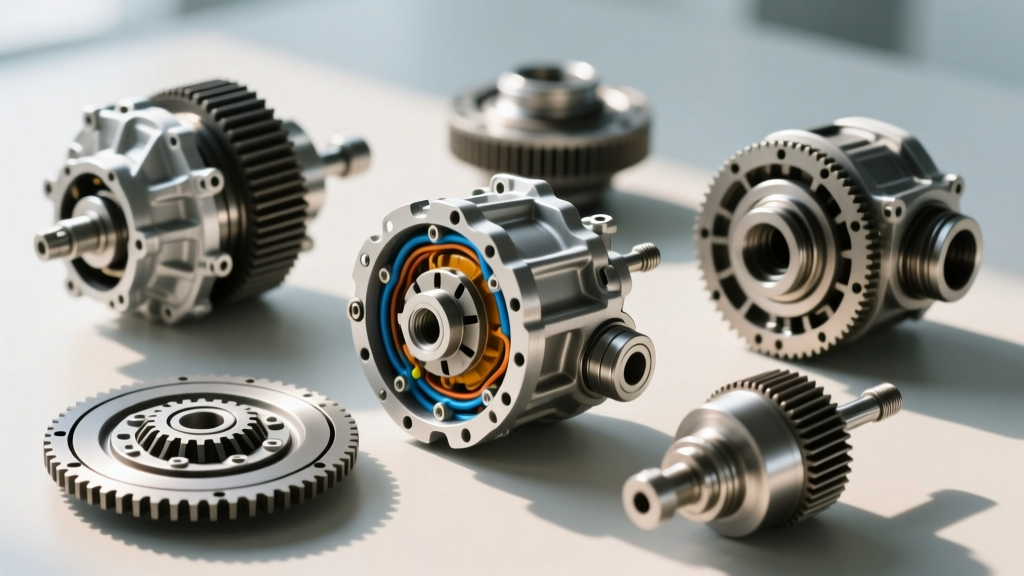
The Chevy Equinox utilizes a transverse engine layout, meaning the transmission and front differential are housed together in a single transaxle. To power the rear wheels, GM employs a compact Power Transfer Unit (PTU) and a Rear Drive Module (RDM).
The Power Transfer Unit (PTU)
Bolted directly to the side of the transaxle, the PTU uses a hypoid gear set to redirect rotational force 90 degrees to the rear propeller shaft. Because the PTU sits in close proximity to the catalytic converter and exhaust routing, it is highly susceptible to heat soak. In newer Equinox models (2018 and up), the AWD system features a disconnecting rear axle. This allows the vehicle to decouple the prop shaft and rear half-shafts during steady-state cruising, eliminating parasitic drag and improving fuel economy by up to 2 MPG.
Rear Drive Module (RDM) and CV Axles
The RDM acts as the rear differential, receiving power from the two-piece propeller shaft and distributing it to the rear wheels via CV (Constant Velocity) axles. Unlike solid axles, these CV axles must accommodate the full range of independent rear suspension travel, relying on complex ball-and-cage joints encased in thermoplastic boots.
Traditional Truck and Heavy SUV Drivetrain Components
Switching gears to body-on-frame platforms like the Chevy Tahoe, Suburban, and Silverado, the drivetrain layout is longitudinal. This allows for inline power delivery and significantly heavier-duty components.
Transfer Cases and Solid Axles
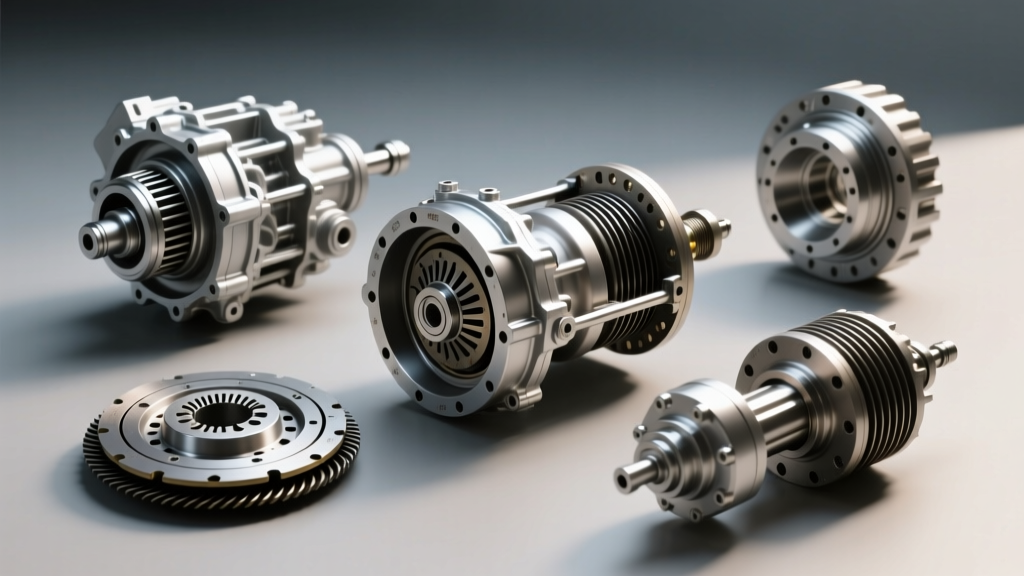
Instead of a compact PTU, trucks utilize a dedicated, chain-driven transfer case (such as the BorgWarner 4485 or the newer BW4493 found behind the 10L80 10-speed transmission). These transfer cases feature internal encoder motors for shift-on-the-fly 4WD engagement and utilize heavy-duty roller chains to transfer torque to the front driveshaft.
At the rear, trucks employ solid axles (like the AAM 11.5-inch or 9.5-inch semi-floating axles). Solid axles maintain constant wheel camber under heavy loads and feature massive ring and pinion gears capable of withstanding the shock loads of towing 10,000+ pounds.
Component Comparison: Crossover vs. Truck SUV
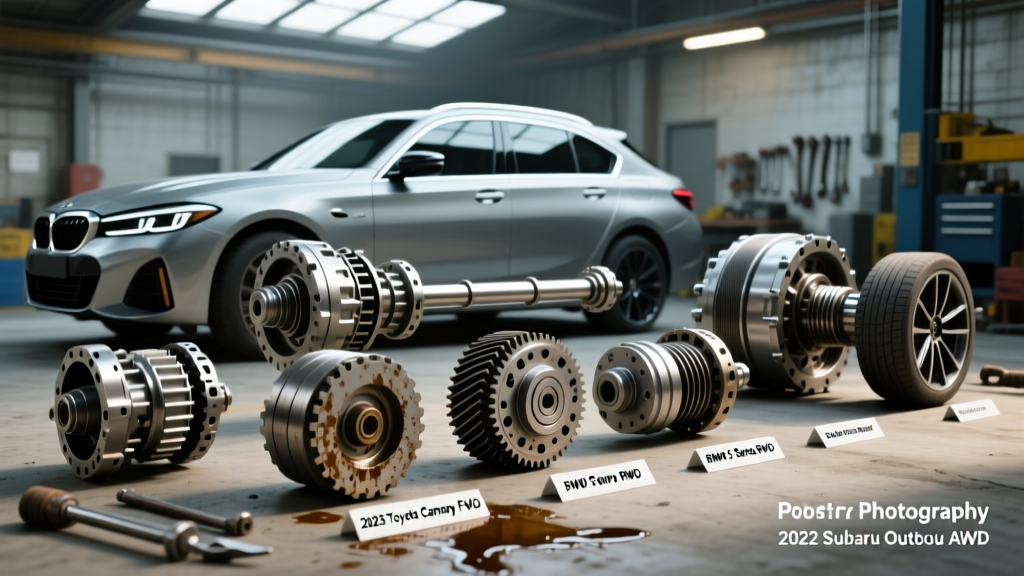
Understanding the mechanical differences is crucial for proper diagnosis and maintenance. Below is a structural comparison of the primary drivetrain components.
| Component | Chevy Equinox (Unibody SUV) | Chevy Tahoe/Silverado (Body-on-Frame) | Primary Failure Mode |
|---|---|---|---|
| Power Routing | PTU (Gear-driven) | Transfer Case (Chain-driven) | PTU bearing failure / TC chain stretch |
| Rear Axle Type | Independent RDM w/ CV Axles | Solid Axle (AAM 9.5 or 11.5) | CV boot tears / Pinion seal leaks |
| Driveshaft | 2-piece w/ center support bearing | 2-piece or 3-piece w/ slip yoke | U-joint bind / Slip yoke clunk |
| Fluid Capacity | PTU: ~0.7 qts | RDM: ~1.0 qt | TC: ~2.0 qts | Diff: ~2.75 qts | Fluid degradation from heat |
Expert Maintenance & Best Practices for Longevity
Whether you are servicing a compact crossover or a heavy-duty truck, adhering to strict maintenance intervals is the only way to avoid catastrophic drivetrain failures. The phrase 'lifetime fluid' is a marketing term, not an engineering reality.
Fluid Intervals and Specifications
- Equinox PTU: GM often labels PTU fluid as 'lifetime,' but expert consensus and GM Authority technical discussions recommend changing it every 30,000 to 45,000 miles. Use ACDelco Dexron ULV ATF or the specific GM PTU fluid (Part No. 88865618). The capacity is incredibly small (under 1 quart), meaning fluid degradation happens rapidly under high heat.
- Equinox Rear Diff (RDM): Service every 50,000 miles using ACDelco 75W-85 Synthetic Gear Oil (Part No. 10-4036).
- Tahoe/Silverado Transfer Case: For newer 10-speed models, use Dexron VI ATF. For older AutoTrak systems, strictly use AutoTrak II fluid to prevent clutch pack chatter. Service every 50,000 miles.
- Truck Solid Rear Axle: Drain and fill every 60,000 miles (or immediately after deep water fording) using 75W-90 Synthetic Gear Oil. If equipped with a G80 locking differential, do NOT add friction modifiers.
Critical Torque Specifications
Improper torque on drivetrain fasteners leads to fluid leaks, component separation, and catastrophic binding. Keep these specs in your shop manual:
- Equinox PTU Drain/Fill Plugs: 18 lb-ft (Do not overtighten; the casing is aluminum and strips easily).
- Equinox Prop Shaft to RDM Flange Bolts: 22 lb-ft.
- Silverado/Tahoe Rear Diff Cover Bolts: 22 lb-ft (Use a criss-cross pattern and RTV silicone if no gasket is present).
- Truck Driveshaft Flange Bolts (U-joint straps): 25 lb-ft for 1310/1330 series U-joints.
- Truck Pinion Nut: 250-300 lb-ft (Requires a specialized flange holder tool; never use an impact gun to remove or install, as you will destroy the crush sleeve and alter bearing preload).
Common Failure Modes and Diagnostic Tips
Overheating PTUs in Crossovers
The most common failure in the Chevy Equinox drivetrain is PTU bearing and seal degradation due to thermal cycling. Symptoms include a whining noise from the front passenger side that increases with vehicle speed, accompanied by a sulfurous burning smell. If caught early, a fluid flush and the installation of an aftermarket PTU fluid cooler line extension can save the unit. If the bearings are pitted, expect a replacement cost between $1,200 and $1,800 for a remanufactured unit and labor.
Transfer Case Chain Stretch and Slip Yoke Clunk
In body-on-frame trucks, a common complaint is a 'clunk' when shifting from Reverse to Drive. While often blamed on the transmission, this is frequently caused by a dry slip yoke on the rear driveshaft. Greasing the slip yoke splines with a specialized molybdenum-disulfide grease (GM Part No. 12377985) usually resolves the issue. Additionally, if you experience binding or hopping during tight, low-speed turns in 4WD High, the transfer case chain may be stretched, or the encoder motor calibration may be off. A professional scan tool recalibration or a chain replacement (roughly $600-$900 in parts and labor) will be required.
Expert Insight: Never ignore a slight vibration at highway speeds in an AWD crossover. Because the Equinox uses a disconnecting rear axle, a failing center support bearing or an imbalanced prop shaft can quickly destroy the splines on the disconnect collar inside the RDM, turning a $150 bearing job into a $2,500 rear axle replacement.
Final Verdict on Drivetrain Upkeep
While the Chevy Equinox drivetrain is a marvel of packaging and efficiency, its compact components demand stricter fluid maintenance than their heavy-duty truck counterparts. Trucks and large SUVs offer the advantage of massive fluid capacities and robust, serviceable components, but they require meticulous attention to torque specs and grease points. By understanding the fundamental differences between unibody PTU systems and longitudinal transfer cases, you can implement a proactive maintenance schedule that ensures your vehicle's drivetrain survives well past the 150,000-mile mark. For exact part numbers and updated fluid bulletins, always cross-reference with the ACDelco Parts Catalog before beginning service.