The "350 Torque Converter" Clarification: TH350 vs. 4L60E
When enthusiasts and DIY mechanics search for a 350 torque converter, they are usually navigating a crossroads of classic and modern automotive history. The term generally refers to one of two scenarios: you are either rebuilding a classic Turbo-Hydramatic 350 (TH350) transmission behind a 350 cubic-inch small-block V8, or you are diagnosing a 1990s-era GM vehicle (like a C1500 truck or Camaro) where a 350 V8 is paired with the electronic 4L60E transmission.
Here is the most critical distinction for beginners: the classic TH350 is a purely hydraulic transmission. It does not have an electronic Torque Converter Clutch (TCC), nor does it natively communicate with an OBD-II computer. Therefore, a stock TH350 will never throw a torque converter diagnostic trouble code (DTC). If you are scanning your vehicle and pulling TCC-related codes, you are almost certainly working with a 4L60E (or a later electronic variant) that has been swapped behind a 350 small-block, or you are using an aftermarket electronic lockup kit on a TH350.
In this 2026 beginner-friendly guide, we will focus on the electronic TCC systems found in the ubiquitous 4L60E and similar GM transmissions, breaking down the exact diagnostic trouble codes, real-world symptoms, and step-by-step troubleshooting methods.
What is the Torque Converter Clutch (TCC)?
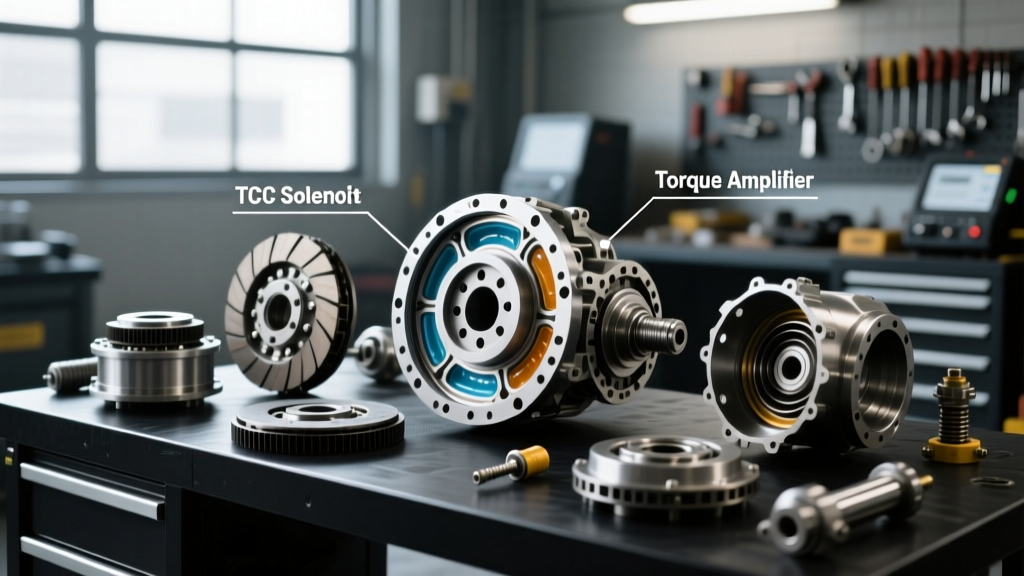
Think of a torque converter as a fluid coupling that allows your engine to keep spinning while the vehicle is stopped at a red light. However, fluid coupling creates slippage, which generates heat and reduces fuel economy. To fix this, modern automatic transmissions use a Torque Converter Clutch (TCC). Once you reach cruising speed (usually around 45-55 mph), the Powertrain Control Module (PCM) energizes a solenoid. This solenoid routes hydraulic fluid to lock the torque converter's internal friction clutch against the front cover, creating a direct 1:1 mechanical link between the engine and the transmission.
When this system fails, your PCM illuminates the Check Engine Light and stores a DTC. Let's look at the most common codes.
Common TCC Diagnostic Trouble Codes (DTCs) Explained
Below is a quick-reference chart of the most frequent torque converter clutch codes you will encounter when diagnosing a 350 V8-equipped GM vehicle.
| DTC Code | Description | Primary Symptom | Average 2026 Fix Cost |
|---|---|---|---|
| P0740 | TCC Circuit Malfunction | No lockup, poor highway MPG | $150 - $250 |
| P0741 | TCC Performance / Stuck Off | Slipping, high RPMs, shudder | $800 - $1,500 |
| P0742 | TCC Stuck On | Engine stalls at stoplights | $250 - $400 |
| P0743 | TCC Electrical Circuit | Intermittent lockup, wiring faults | $100 - $200 |
Deep Dive: P0741 and the Infamous "TCC Shudder"
Code P0741 is the most dreaded of the bunch. According to OBD-Codes.com, P0741 triggers when the PCM detects that the actual rotational speed of the transmission input shaft does not match the expected speed when the TCC is commanded ON. In plain English: the clutch is slipping.
Before the code even throws, you will likely feel the "TCC Shudder." This feels exactly like driving over a series of highway rumble strips at 50 mph. It happens because the friction material inside the torque converter is degraded, or the specialized friction-modifier additives in your transmission fluid have broken down. If caught early, a fluid and additive change might save the converter. If ignored, the clutch material will scour the inside of the converter, requiring a full replacement.
Deep Dive: P0742 and the "Stalling at Stops" Issue
Code P0742 means the torque converter is mechanically locked, but the PCM is commanding it to unlock. Imagine coming to a red light in a manual transmission car and forgetting to press the clutch pedal—the engine stalls. That is exactly what P0742 does to your automatic. This is usually caused by a stuck TCC apply valve in the valve body or debris holding the solenoid open.
Step-by-Step Beginner Diagnostic Routine
Before you throw expensive parts at your 350 V8's transmission, follow this logical diagnostic path.
Step 1: The Fluid Inspection (The Baseline)
The 4L60E requires ACDelco Dexron VI automatic transmission fluid. Total dry capacity is roughly 11.2 quarts, but a standard pan drop and filter change will only take about 5 to 6 quarts.
- Check the Level: With the engine running and the transmission at operating temperature (around 180°F), check the dipstick. Low fluid starves the TCC apply circuit, causing instant slippage and P0741 codes.
- Check the Smell and Color: Dexron VI should be bright red or light amber. If it is dark brown and smells like burnt toast, the internal TCC friction disc is likely destroyed. No solenoid will fix burnt fluid.
Step 2: Electrical Testing with a Multimeter
If the fluid is clean and full, you need to verify the electrical circuit. The 4L60E uses a Pulse Width Modulated (PWM) TCC solenoid to smoothly apply the clutch.
- Safely raise the vehicle on jack stands.
- Place a large drain pan underneath the transmission.
- Remove the 16mm pan bolts. Pro-Tip: The factory torque spec for these pan bolts is just 11 lb-ft (14 Nm). They strip easily, so use a hand ratchet, not an impact wrench.
- Once the pan is off, locate the TCC PWM solenoid (usually part number ACDelco 214-1893).
- Disconnect the solenoid's electrical pigtail.
- Set your multimeter to Ohms (Ω) and probe the two terminals on the solenoid. A healthy PWM solenoid should read between 10 and 15 ohms at room temperature. If it reads infinite (open) or near zero (shorted), the solenoid is dead.
Real-World Repair Costs and Part Numbers
When sourcing parts for a 350 torque converter setup, avoid cheap, no-name solenoids from overseas marketplaces. The PWM solenoid cycles hundreds of times per drive; cheap units will stick and cause immediate shudder. For verified OEM replacements, ACDelco's official catalog remains the gold standard for GM transmissions.
2026 Pricing Breakdown (Parts & Labor):
- ACDelco 214-1893 PWM Solenoid: $35 - $55
- ACDelco 214-1892 TCC Apply Solenoid: $25 - $40
- Transmission Filter & Gasket Kit: $20 - $45
- Dexron VI Fluid (6 Quarts): $45 - $60
- Professional Labor (Solenoid Replacement): $150 - $250
When to Replace the Entire Torque Converter
If your multimeter tests prove the solenoids and wiring are perfect, the fluid is clean, but you still have a P0741 code and highway shudder, the internal friction clutch of the torque converter is worn out. It is time for a replacement.
For a standard 350 small-block daily driver, a stock-replacement stall converter is ideal. However, if you have upgraded your 350 with a performance camshaft, you may need a higher stall speed (e.g., a 2,200 to 2,500 RPM stall) to allow the engine to reach its power band before the TCC locks. Retailers like Summit Racing offer excellent options from brands like B&M and TCI, typically ranging from $350 to $600.
Installation Torque Specs to Remember:
When installing the new converter, you must measure the flexplate-to-converter bolt depth. Ensure the converter is fully seated into the transmission oil pump (you should hear three distinct "clunks" as it passes the input shaft, stator support, and pump gears). The torque converter to flexplate bolts are critical safety items. For standard 3/8-inch Grade 8 bolts, torque them to 28-32 lb-ft using a thread-locking compound. For metric M10 bolts (common on later LS-swap flexplates), torque to 45 lb-ft.
Final Thoughts for the DIY Mechanic
Diagnosing torque converter DTCs on a 350-powered GM vehicle does not require a master's degree in electrical engineering. By understanding the difference between hydraulic and electronic systems, performing a rigorous fluid inspection, and using a basic multimeter to test the PWM solenoid, you can confidently isolate the root cause of your TCC issues. Whether it is a $40 solenoid swap or a full converter upgrade, approaching the diagnosis methodically will save you hundreds of dollars in unnecessary mechanic fees.