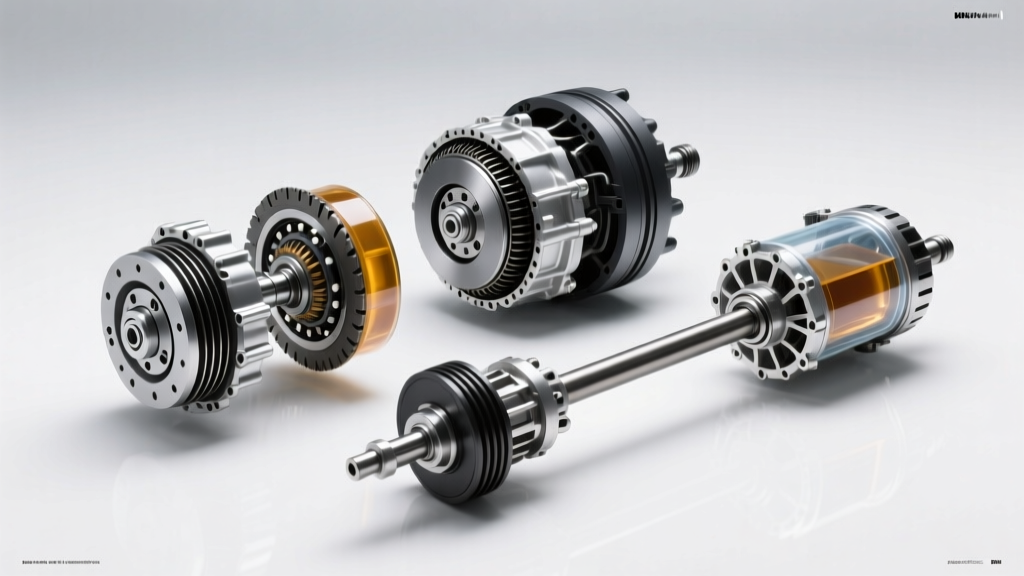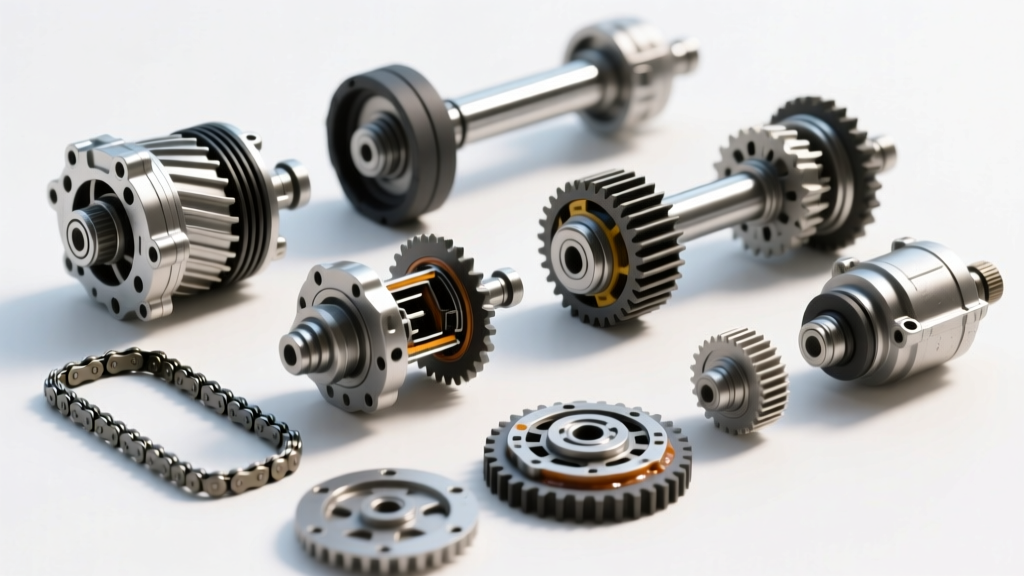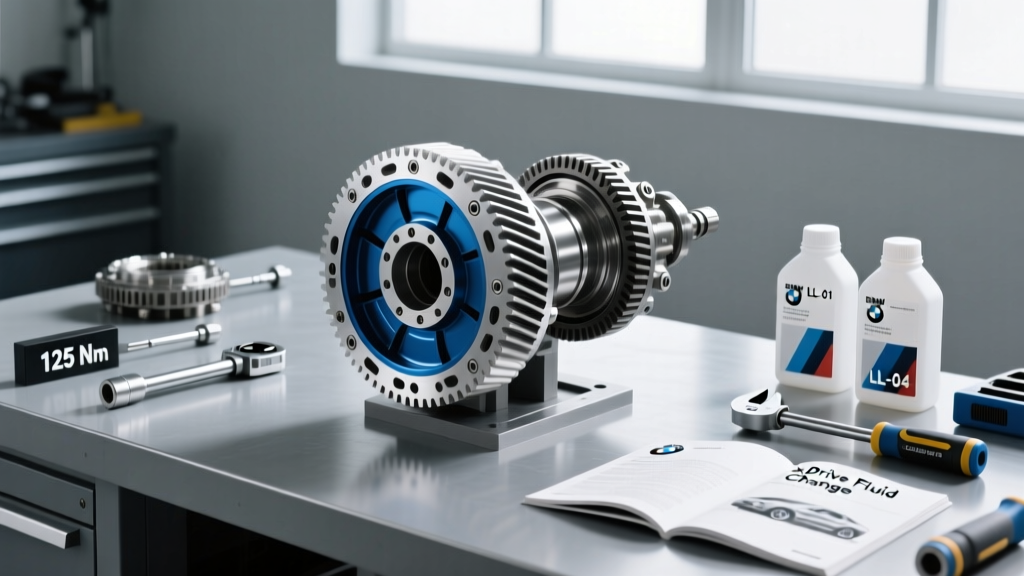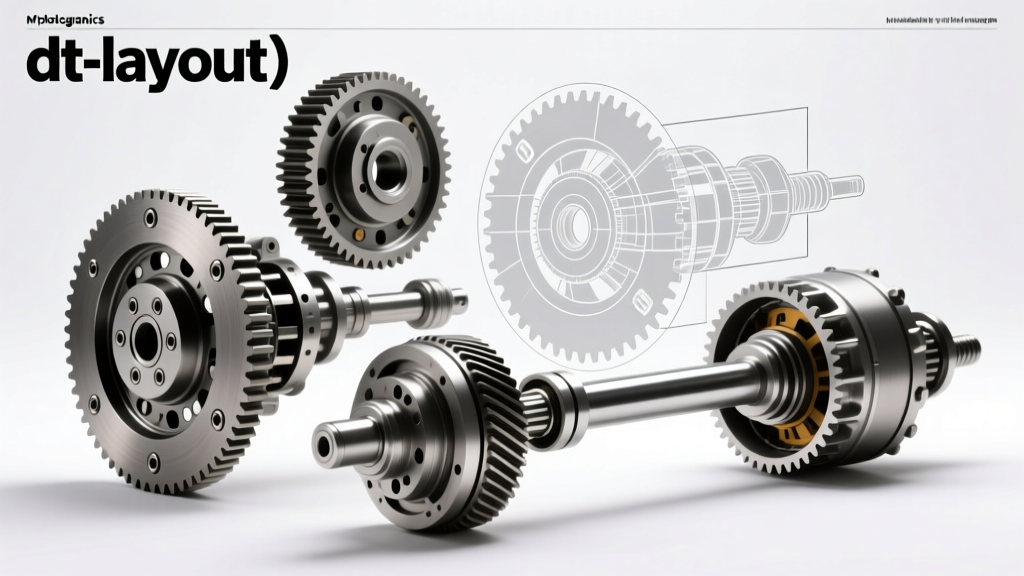
What Is a Drivetrain on a Car vs. a Heavy-Duty Truck?
When new owners and enthusiasts ask, "what is a drivetrain on a car," they are typically picturing a relatively simple front-wheel-drive (FWD) transaxle setup where the transmission and differential are housed in a single unit. However, when you transition from passenger sedans to heavy-duty trucks and off-road SUVs, the drivetrain architecture becomes exponentially more complex. In a longitudinal truck or SUV platform, the drivetrain encompasses every component that transfers power from the transmission output shaft to the wheels, including the driveshaft, transfer case, U-joints, CV axles, and solid or independent axle assemblies.
As we navigate the 2026 automotive landscape, modern trucks equipped with 10-speed automatics (like the Ford 10R80 or GM 10L90) and sophisticated torque-on-demand transfer cases require precise maintenance and specialized knowledge. This guide dives deep into the specific drivetrain components that separate heavy-duty trucks and SUVs from standard passenger cars, providing expert-level torque specs, fluid capacities, and troubleshooting best practices.
Transfer Case Deep Dive: NV261 and BW4485
The transfer case is the beating heart of any 4WD truck or SUV drivetrain. Unlike the simple FWD power take-offs found in crossovers, heavy-duty trucks utilize robust, chain-driven or gear-driven cases to split torque between the front and rear axles.
GM NV261 and NV241 Applications
Found in GM 2500/3500 HD trucks, the New Venture (NV) 261 is a manual-shift, chain-driven transfer case. A common failure mode in high-mileage units is chain stretch, which leads to a "jumping" sensation under heavy throttle and eventual case-machining wear from the slack chain rubbing the internal aluminum housing.
- Fluid Specification: While older manuals suggested Dexron III, modern rebuilds and 2026 best practices dictate using synthetic ATF like Dexron VI or specific transfer case fluids (e.g., AMSOIL Synthetic ATF) to maintain optimal friction coefficients for the internal clutch packs in Auto-Trak variants.
- Expert Tip: If servicing the rear output shaft nut on an NV261, the torque specification is a massive 210-230 lb-ft. Always use a heavy-duty flange holder tool; attempting to hold the yoke with a pipe wrench will distort the seal surface and guarantee a fluid leak.
Ford BorgWarner 4485 (Torque-On-Demand)
The BW4485 is ubiquitous in Ford Super Duty applications. It utilizes an internal clutch pack to vary front-axle torque engagement. A critical maintenance oversight is ignoring the friction modifier requirements.
- Fluid Requirement: Motorcraft Transfer Case Fluid (XL-12) is mandatory. Furthermore, if the clutch pack begins to shudder during tight, low-speed turns (a phenomenon known as "drivetrain bind"), adding 2-3 ounces of Motorcraft XL-3 Friction Modifier can often resolve the issue without a full teardown.
Driveshaft Dynamics: U-Joint Sizing and Torque Specs
Understanding what is a drivetrain on a car requires looking at the links between components. In cars, CV axles handle steering and suspension articulation. In solid-axle trucks, tubular steel driveshafts and Universal Joints (U-joints) do the heavy lifting. Upgrading or servicing these requires knowing your series limits.
| U-Joint Series | Cap Diameter | Typical Application | Strap Bolt Torque | Avg. Cost (2026) |
|---|---|---|---|---|
| Spicer 1310 | 1.062" | Half-ton trucks, Jeep Wrangler | 25-30 lb-ft | $35 - $55 |
| Spicer 1350 | 1.188" | 3/4-ton trucks, heavy SUVs | 45-50 lb-ft | $50 - $85 |
| Spicer 1410 | 1.188" (Wider cross) | 1-ton duallys, lifted off-road rigs | 70-80 lb-ft | $80 - $120 |
Expert Best Practice: When installing 1350 or 1410 series U-joints, never reuse the old strap bolts. The yield strength of these bolts is compromised upon initial torquing. Always apply a medium-strength threadlocker (blue Loctite 243) to the strap bolts to prevent them from backing out due to high-frequency driveline vibrations. For comprehensive installation procedures, always refer to the Spicer Installation Guides to ensure proper bearing cap seating.
Axle Assemblies: Dana 60 and Ford 10.5-Inch
The terminal point of the truck drivetrain is the axle assembly. While passenger cars use lightweight independent rear suspensions (IRS), heavy-duty trucks rely on massive solid axles like the Dana 60, Dana 80, or the Ford 10.5-inch Sterling axle to handle immense towing loads.
Ring and Pinion Setup & Torque
Re-gearing a truck for larger 35-inch or 37-inch tires is a common 2026 modification to restore drivability and keep modern 10-speed transmissions in their optimal power bands. When setting up a Dana 60 ring and pinion, precision is non-negotiable.
- Ring Gear Bolts: Must be torqued to 120-140 lb-ft in a crisscross pattern. Crucially, you must apply Red Loctite 271 to the threads. If these bolts back out under load, they will obliterate the differential housing.
- Pinion Nut Torque: This is a "crush sleeve" or "solid spacer" dependent spec. For crush sleeve setups, you are torquing to achieve a specific rotational bearing preload (typically 15-25 in-lbs of drag for new bearings). For solid spacer setups (highly recommended for off-road SUVs), the nut is torqued to a massive 250-300 lb-ft.
Differential Fluid and Additives
Heavy-duty axles generate immense heat, especially when towing. Standard 75W-90 is insufficient for modern 1-ton trucks.
- Viscosity: Upgrade to a full synthetic 75W-140 gear oil for any truck that tows over 5,000 lbs or sees sustained highway speeds in mountainous terrain.
- Limited-Slip Additives: If your SUV or truck features a clutch-type limited-slip differential (LSD), you must add a friction modifier (e.g., Ring-Pinion Tech Support recommends specific LSD additives to prevent chatter). Failure to do so will result in aggressive binding and tire chirping during low-speed cornering.
2026 Drivetrain Maintenance & Cost Matrix
Proactive maintenance is the difference between a drivetrain that lasts 300,000 miles and one that strands you on the trail. Below is an expert-recommended service matrix for heavy-duty trucks and SUVs.
| Component | Fluid / Service Type | Capacity (Approx) | Service Interval | Est. DIY Cost |
|---|---|---|---|---|
| Transfer Case (NV261) | Synthetic Dexron VI ATF | 2.0 Quarts | Every 50,000 miles | $25 - $40 |
| Front Axle (Dana 60) | 75W-140 Synthetic Gear Oil | 3.5 - 4.0 Pints | Every 60,000 miles (or post-submersion) | $60 - $90 |
| Rear Axle (Ford 10.5") | 75W-140 + XL-3 Modifier | 3.5 - 4.5 Pints | Every 60,000 miles | $70 - $100 |
| Driveshaft Slip Yoke | Molybdenum Disulfide (Moly) Grease | N/A (Grease until purged) | Every 15,000 miles or off-road trip | $15 (Tube) |
Expert Troubleshooting: Driveline Shudder and Bind
Because truck drivetrains span a much longer physical distance than car transaxles, they are highly susceptible to angle-related vibrations. If you have lifted your SUV or truck, you have likely altered the pinion angle.
Diagnosing Takeoff Shudder
If your truck experiences a low-frequency "thump" or shudder immediately upon accelerating from a stop, your rear axle pinion angle is likely pointing too far downward relative to the transfer case output shaft. The Fix: Install axle shims (typically 2 to 4 degrees) between the leaf springs and the axle perches to rotate the pinion upward. The goal is to have the pinion shaft and the driveshaft operating in near-parallel planes (within 1-2 degrees of each other) to allow the U-joints to cancel out their inherent velocity fluctuations.
Addressing 4WD Drivetrain Bind
"Bind" occurs when a part-time 4WD system is engaged on high-traction surfaces (dry pavement). Because the front and rear axles travel slightly different distances through a turn, a locked transfer case forces the tires to skip, transferring catastrophic stress to the driveshafts and axle gears. Best Practice: Never use part-time 4WD (4-High or 4-Low locked) on dry pavement. If your truck features an "Auto-4WD" mode (utilizing a clutch pack in the transfer case), this is the only safe mode for mixed-traction paved roads, as it allows for slip between the front and rear drivelines.
Final Thoughts on Truck Drivetrain Longevity
Understanding what is a drivetrain on a car is just the beginning; mastering the heavy-duty components of trucks and SUVs requires respect for torque specifications, fluid chemistry, and driveline geometry. By adhering to strict maintenance intervals, utilizing the correct synthetic lubricants, and respecting the mechanical limits of your U-joints and transfer cases, your 4WD drivetrain will deliver reliable, trail-worthy performance for hundreds of thousands of miles.