The AWD Charger's Forgotten Front End
As we navigate the 2026 automotive landscape, the legacy 5.7L and 6.4L HEMI V8 AWD Dodge Chargers (2015–2023) are entering their high-mileage golden years. These LX/LD platform muscle cars utilize a sophisticated all-wheel-drive system derived from Mercedes-Benz architecture, featuring a BorgWarner transfer case and a standalone front differential. If you own one of these AWD models, you have likely searched for the Dodge Charger rear differential fluid capacity (which sits at roughly 1.35 liters or 1.42 quarts for the standard limited-slip unit). However, the front differential is frequently ignored by owners and quick-lube shops alike until it begins to whine, bind, or fail entirely.
In this comprehensive cost analysis and service guide, we are pivoting away from the rear axle to focus entirely on the front differential fluid and service. We will break down the exact fluid specifications, real-world pricing for 2026, and the mechanical consequences of neglecting this critical drivetrain component.
Front Differential Architecture and Fluid Dynamics
The AWD Dodge Charger utilizes a front differential bolted directly to the front engine cradle, driven by a front propeller shaft originating from the transmission-mounted transfer case. Unlike the rear differential, which handles the bulk of the V8's torque output during hard launches, the front differential is responsible for pulling the vehicle out of low-traction scenarios and managing torque vectoring when the rear wheels slip.
Because the front differential is mounted in close proximity to the engine oil pan, exhaust manifolds, and the transfer case, it is subjected to immense ambient heat. This thermal load accelerates the oxidation and shear breakdown of the gear oil. According to drivetrain specialists on the LX Forums, front differential fluid in AWD Chargers often degrades 20% faster than rear differential fluid due to this localized heat soak, making strict adherence to service intervals vital for preventing bearing and ring-and-pinion wear.
Fluid Specifications & Capacity Matrix
To properly service the AWD system, you must understand the distinct requirements of each drivetrain node. Using the wrong fluid in the front differential can lead to seal degradation and actuator failure.
| Drivetrain Component | OEM Fluid Specification | Exact Capacity | Drain/Fill Plug Torque |
|---|---|---|---|
| Front Differential (AWD) | 75W-85 GL-5 Synthetic | 0.65 Liters (0.69 Qt) | 18 ft-lbs (24 Nm) |
| Rear Differential (LSD) | 75W-140 GL-5 Synthetic | 1.35 Liters (1.42 Qt) | 25 ft-lbs (34 Nm) |
| Transfer Case (BW 44-11) | Mopar ATF+4 | 1.60 Liters (1.70 Qt) | 20 ft-lbs (27 Nm) |
Note: The front differential requires a specific 75W-85 viscosity. Substituting a heavier 75W-90 or 75W-140 can cause sluggish engagement of the front axle disconnect actuator in cold climates, leading to transfer case binding.
Comprehensive Cost Analysis: DIY vs. Professional Service
When budgeting for drivetrain maintenance in 2026, AWD Charger owners have three primary routes for front differential service. The cost disparity between a dealership and a DIY approach is staggering, especially considering how simple the front diff service actually is.
1. The DIY Route: Maximum Savings
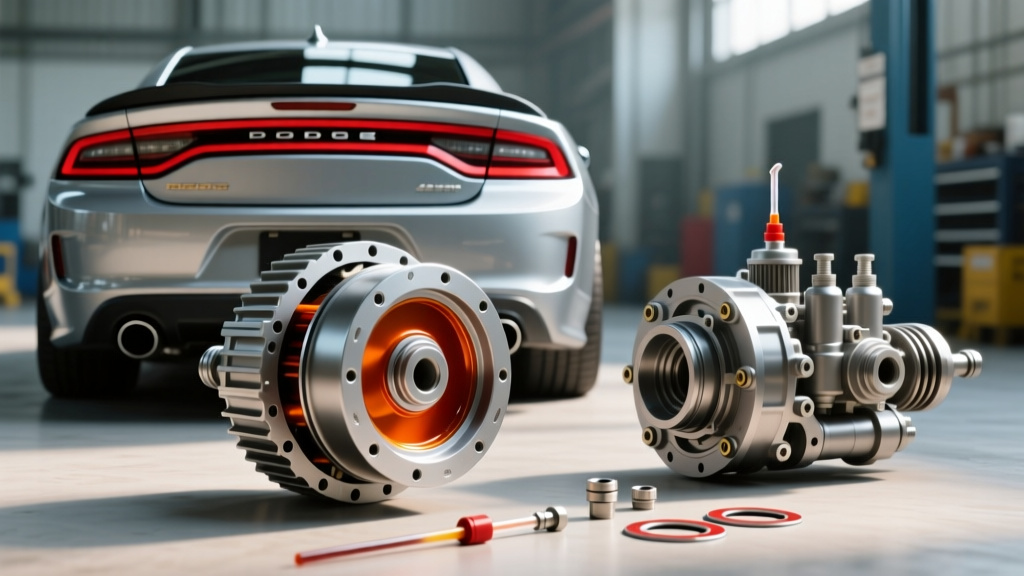
Servicing the front differential at home requires minimal tools and yields the highest return on investment. You will need one bottle of high-quality 75W-85 GL-5 gear oil. While Mopar's OEM fluid (Part # 68218655AB) is excellent, aftermarket synthetics like AMSOIL Severe Gear 75W-85 offer superior thermal stability for tuned or supercharged Chargers.
- Fluid Cost: $12.00 - $16.00 (1 Quart)
- Crush Washers: $4.00 (Mopar Part # 6507739AA, Qty 2)
- Tooling: 3/8-inch square drive socket or 8mm Hex (depending on exact casting year)
- Total DIY Cost: $16.00 - $20.00
2. Independent Drivetrain Specialist
A reputable independent shop will typically charge a flat rate or a half-hour of labor for a single differential drain and fill. However, many shops will insist on using bulk 75W-90, which is not ideal for the front unit. Always verify the viscosity before authorizing the work.
- Labor: 0.5 Hours @ $130/hr = $65.00
- Fluid & Markup: $35.00
- Total Indie Cost: $100.00 - $125.00
3. The Dealership Experience
Dealerships often bundle the front differential service into a massive "AWD System Flush" package that includes the transfer case and rear differential. If you request only the front differential service, the labor rate and OEM fluid markups will inflate the price significantly.
- Labor: 1.0 Hour @ $185/hr = $185.00
- OEM Fluid & Shop Supplies: $45.00
- Total Dealer Cost: $230.00 - $260.00
The True Cost of Neglect: Replacement vs. Maintenance
What happens if you ignore the front differential until it sounds like a failing jet turbine? The financial consequences are severe. The front differential housing on the LX/LD platform is an aluminum casting that integrates the axle tube passages. When the fluid degrades, the pinion and carrier bearings are the first to fail, sending metal shavings directly into the ring gear teeth.
'We see at least three AWD Charger front diffs a month that are completely trashed because the owner only ever serviced the rear end. Once the pinion bearing seizes, it cracks the aluminum housing. You can't rebuild those; you have to replace the whole assembly.' — Master Drivetrain Technician, Midwest AWD Specialists
If your front differential fails catastrophically in 2026, here is the replacement cost breakdown:
- Used OEM Front Differential (Junkyard): $450.00 - $700.00
- Labor for R&R (Remove & Replace): 4.5 Hours @ $150/hr = $675.00
- Axle Seals & Hardware: $85.00
- Fluid & Alignment: $120.00
- Total Replacement Cost: $1,330.00 - $1,580.00
Spending $18 on a bottle of 75W-85 and 20 minutes of your weekend is the ultimate financial no-brainer when weighed against a $1,500+ drivetrain repair bill.
Step-by-Step Front Differential Service Procedure
For the DIY enthusiast ready to tackle this job, follow these precise steps to ensure a clean, leak-free service. Always reference the official Mopar Chemicals and Lubricants documentation for your specific VIN.
Preparation and Extraction
- Lift and Level: Raise the front of the Charger using a hydraulic lift or jack stands. The vehicle must be perfectly level to ensure an accurate fluid fill.
- Remove the Fill Plug First: Critical Step. Always remove the upper fill plug before the lower drain plug. If the drain plug strips and you cannot remove the fill plug, you will be left with an empty differential and no way to refill it, requiring a tow to the shop.
- Drain the Fluid: Remove the lower drain plug (18 ft-lbs spec). Allow the 0.65 liters of fluid to drain completely into a catch pan. Inspect the magnetic tip of the drain plug. A fine, glitter-like metallic paste is normal for high-mileage vehicles; however, large metal chunks or shards indicate internal bearing failure.
Refilling and Torquing
- Install Drain Plug: Clean the threads, install a new copper crush washer, and torque the drain plug to exactly 18 ft-lbs (24 Nm). Do not overtighten, as the aluminum housing threads are easily stripped.
- Pump the Fluid: Using a hand-pump or a squeeze bottle with a flexible hose, feed the 75W-85 GL-5 fluid into the fill hole. The front diff takes roughly 0.69 quarts. Stop when the fluid begins to weep out of the bottom of the fill hole.
- Install Fill Plug: Wipe the area clean, install a new crush washer on the fill plug, and torque to 18 ft-lbs (24 Nm).
- Verify and Clean: Use brake cleaner to degrease the outside of the differential housing. This allows you to easily spot any future leaks from the axle seals or plug washers during your next oil change.
Final Thoughts on AWD Drivetrain Longevity
While knowing the Dodge Charger rear differential fluid capacity is essential for your standard maintenance checklist, the front differential demands equal respect. The AWD system in the Charger is a brilliant piece of engineering that transforms a heavy, rear-wheel-drive muscle car into a capable, four-season daily driver. By understanding the specific 75W-85 fluid requirements, adhering to the 18 ft-lbs torque specifications, and recognizing the massive cost savings of DIY maintenance, you can keep your AWD Charger's front end pulling smoothly for well past the 150,000-mile mark.