The Core Dilemma: Open vs. Limited Slip in the Challenger Platform
When enthusiasts and daily drivers alike search for the exact dodge challenger differential fluid capacity, the answer is rarely a single number. The modern Dodge Challenger (LC/LA platform) utilizes a variety of rear axle configurations depending on the trim level, engine output, and factory performance packages. Understanding the fundamental differences between an Open Differential and a Limited Slip Differential (LSD) is critical not only for traction and handling but also for establishing the correct maintenance intervals, fluid volumes, and additive requirements.
In this comprehensive 2026 buyer’s guide and technical comparison, we dissect the internal mechanics of the Challenger’s rear end, outline precise fluid capacities, and provide actionable data for those considering an aftermarket upgrade.
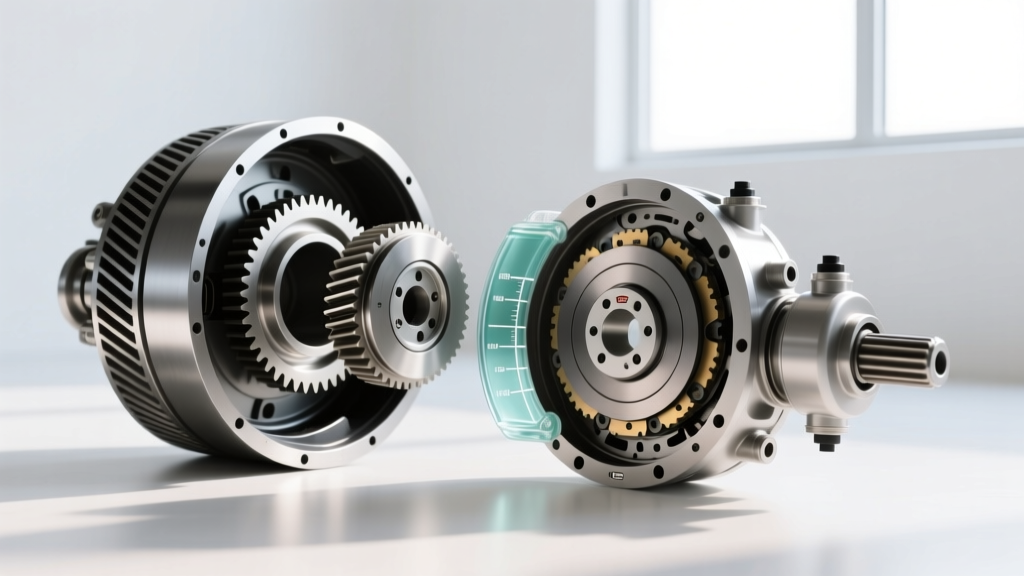
How the Open Differential Operates (and Fails)
The open differential is the standard equipment on base-model Challengers, such as the SXT and GT trims. Its primary engineering goal is to allow the left and right drive wheels to rotate at different speeds during cornering, preventing tire scrubbing and drivetrain binding. Internally, this is achieved via a set of spider gears mounted on a cross pin, which mesh with the side gears connected to the axle shafts.
The Traction Limitation: An open differential always routes torque to the path of least resistance. If the left wheel is on dry asphalt and the right wheel is on ice (or if you aggressively launch a 305-horsepower V6 on a damp road), the differential sends 100% of the available torque to the slipping wheel. This results in the infamous 'one-wheel peel' and severely limits straight-line acceleration.
Failure Modes: Open differentials are generally robust, but under high-torque V8 applications, the spider gears and cross pins can suffer from severe galling. If a wheel experiences sudden shock-loading (e.g., dropping the clutch on a sticky drag radial), the cross pin can weld itself to the differential case, leading to catastrophic housing failure.
The Limited Slip Advantage: Clutch-Pack Architecture
Factory-equipped on the R/T, Scat Pack, and Hellcat models, the Limited Slip Differential (typically a clutch-type Trac-Lok or similar Getrag/Chrysler design) solves the traction deficit. Inside the LSD, a series of alternating friction and steel clutch packs sit behind the side gears. A preload S-spring or coil spring pack forces these clutches together, creating a bias ratio that resists speed differentiation between the two wheels.
When one wheel begins to slip, the torque required to overcome the clutch pack's friction is transferred to the wheel with grip. This allows the Challenger to put power down evenly, drastically improving 0-60 mph times and corner-exit stability.
Dodge Challenger Differential Fluid Capacity & Specifications
The internal volume of the differential housing changes slightly depending on whether an open carrier or an LSD carrier is installed, as the clutch packs and preload springs occupy physical space within the fluid bath. Below is the definitive specification table for the Chrysler 8.75-inch (215mm) rear axle commonly found in the Challenger lineup.
| Trim / Configuration | Differential Type | Fluid Capacity | OEM Gear Oil Viscosity | Friction Modifier Required? |
|---|---|---|---|---|
| SXT / GT (V6) | Open | 1.25 Quarts (1.18L) | 75W-85 Synthetic | No |
| R/T (5.7L V8) | Clutch-Type LSD | 1.40 Quarts (1.32L) | 75W-140 Synthetic | Yes (4 oz) |
| Scat Pack / Hellcat | Clutch-Type LSD | 1.50 Quarts (1.42L) | 75W-140 Synthetic | Yes (4 oz) |
| Aftermarket Helical (e.g., Truetrac) | Helical LSD | 1.25 Quarts (1.18L) | 75W-90 / 75W-140 | No |
Note: Capacities are approximate and represent the volume required to reach the bottom edge of the fill hole on a level surface. Always verify with the Mopar Official Parts Catalog for your specific VIN.
Maintenance Realities: The Friction Modifier Factor
The most common maintenance error made by Challenger owners is ignoring the friction modifier requirement for clutch-type LSDs. The AMSOIL Technical Specifications database and OEM engineering documents explicitly state that standard 75W-140 gear oil lacks the necessary frictional characteristics for clutch-pack differentials.
What Happens When You Ignore the Modifier?
Without the specialized limited-slip additive (Mopar Part # 05010320AA or equivalent), the clutch packs will experience 'stick-slip' friction rather than smooth engagement. This manifests as a low-frequency groaning or chatter noise emanating from the rear axle during tight, low-speed turns (such as navigating a parking garage). Over time, this chatter causes the friction discs to glaze, permanently destroying their coefficient of friction and reducing the LSD to an expensive open differential.
Pro-Tip: If you experience chatter after a fluid change, the modifier may not have fully bled into the clutch packs. Perform a series of 10-15 tight figure-eight maneuvers in an empty lot to work the fluid into the S-springs and friction surfaces.
Diagnostic Road Testing: Open Whine vs. LSD Chatter
Diagnosing rear-end noise requires a trained ear. Use this framework to identify your differential's health status:
- Coast-Down Whine (Open or LSD): A high-pitched whine that occurs only when lifting off the throttle at highway speeds usually indicates worn ring and pinion gear teeth or incorrect backlash, not a fluid issue.
- Cornering Chatter (LSD Only): A rhythmic 'thump-thump-thump' or groaning during low-speed turns points directly to degraded friction modifier or glazed clutch packs.
- Clunk on Engagement (Open): A sharp metallic clunk when shifting from Reverse to Drive often indicates excessive wear on the spider gear thrust washers or a stretched cross-pin bore in the open carrier.
Buyer’s Guide: Upgrading from Open to LSD
For SXT and GT owners tired of one-wheel burnouts, upgrading the differential is the most transformative drivetrain modification available. In the current 2026 aftermarket landscape, you have two primary paths:
1. OEM-Style Clutch LSD Replacement
Sourcing a factory take-out Trac-Lok from a salvage yard or purchasing a rebuilt Auburn Gear clutch LSD. Cost: $350 - $600 for the unit. Maintenance: Requires strict adherence to the 75W-140 + Modifier regimen. Clutch packs will eventually wear out and require a rebuild every 60,000 to 80,000 miles of aggressive driving.
2. The Helical Upgrade (Eaton Detroit Truetrac)
The Eaton Truetrac (Part # 917A589 for the Chrysler 8.75" / 215mm housing) is widely considered the gold standard for street/strip Challengers. Instead of clutch packs, it uses a helical gear set that multiplies torque to the slipping wheel via gear-binding mechanics. Cost: $750 - $900 for the unit. The Fluid Advantage: Helical differentials do not require friction modifiers. You can run standard, high-quality 75W-90 or 75W-140 synthetic gear oil. This eliminates the risk of parking-lot chatter and simplifies your maintenance schedule, reverting your fluid capacity and service procedure to the simpler open-differential baseline.
Step-by-Step Service Protocol (Torque Specs & Fill Procedures)
Whether you are servicing an open diff or an LSD, precision is mandatory. Many Challenger rear axles do not feature a dedicated drain plug, requiring the removal of the differential cover. For those equipped with a drain plug, the process is straightforward.
Cover Removal and Cleaning
- Break loose the 13mm cover bolts in a crisscross pattern.
- Pry the cover gently. Expect roughly 0.5 quarts of residual fluid to remain in the housing sump.
- Use a brake cleaner and a lint-free rag to wipe the interior. Never use a wire brush on the ring gear or reluctor ring (used for ABS/wheel speed sensors), as metal shavings will cause catastrophic bearing failure.
- Clean the mating surfaces on the housing and cover. Use a high-quality RTV silicone (Permatex Black or Grey) or invest in a reusable Lube Locker gasket to prevent future leaks.
Reassembly and Torque Specifications
Overtorquing the differential cover bolts will warp the stamped steel cover, leading to persistent seepage. Use a calibrated torque wrench set to 21 lb-ft (28 Nm) for the cover bolts, tightening in a star pattern.
The Fill Procedure
Remove the 3/8-inch or 8mm Allen fill plug located on the front or side of the differential housing. Torque spec for the fill plug is 25 lb-ft (34 Nm). Using a fluid transfer pump, inject your chosen synthetic gear oil. If servicing an LSD, mix the 4 oz bottle of Mopar Friction Modifier (05010320AA) with the first quart of gear oil before pumping it into the housing to ensure proper distribution. Fill until the fluid begins to weep out of the bottom edge of the fill hole. Reinstall the plug, wipe the housing, and conduct your figure-eight bedding procedure if you have freshly installed clutch packs.
For further community-driven troubleshooting and real-world dyno data regarding Challenger drivetrain losses, the Challenger Forum Drivetrain Section remains an invaluable resource for owners pushing the limits of the ZF 8HP transmission and Chrysler 8.75-inch rear ends.