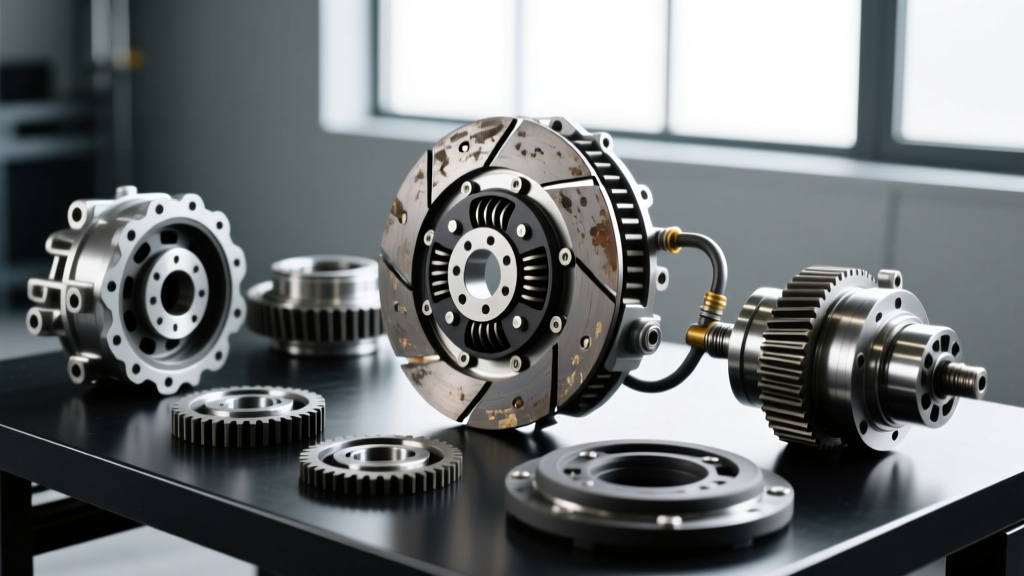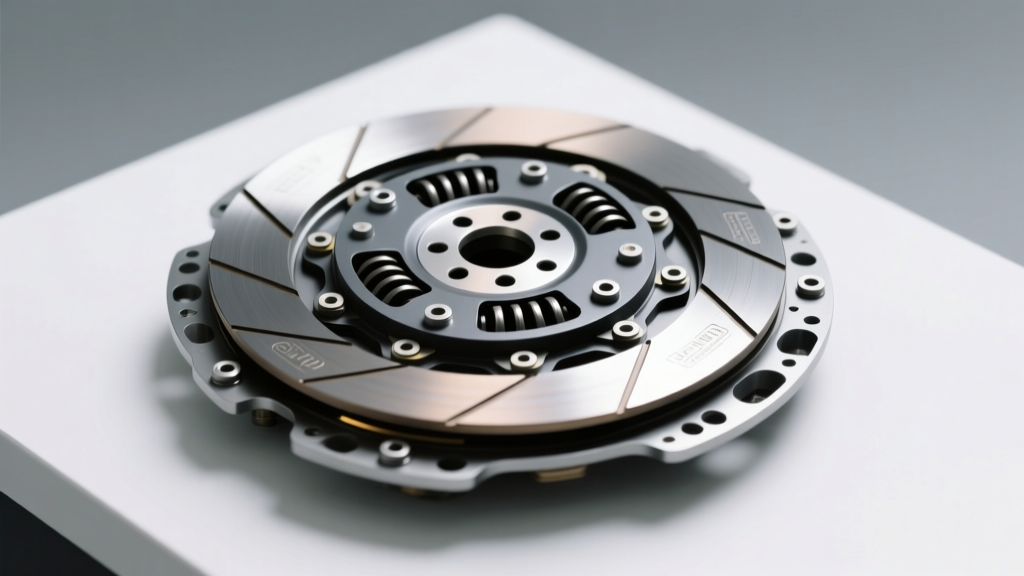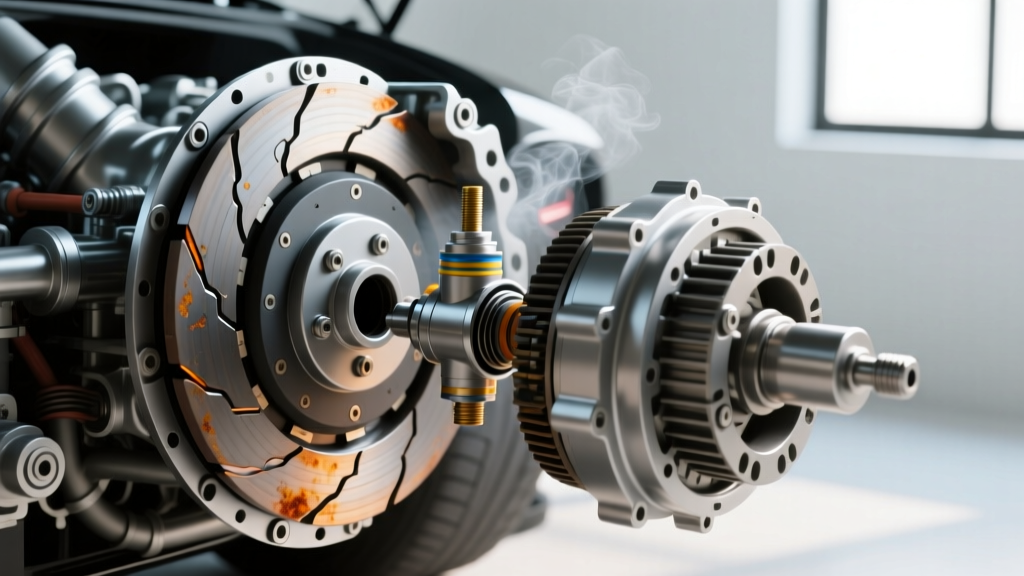
The Anatomy of a Burning Clutch Smell in the Dodge Challenger
There are few scents more alarming to a manual transmission enthusiast than the acrid, sulfurous stench of a burning clutch. In the Dodge Challenger platform—particularly models equipped with the 5.7L Hemi or 6.4L 392 V8 and the Tremec TR-6060 manual transmission—this smell is often misdiagnosed as driver error or a defective pressure plate. However, the root cause frequently traces back to a controversial factory component: the challenger clutch delay valve (CDV). When you detect that distinct 'burnt toast' or hot asbestos odor wafting through the HVAC vents after a spirited launch or stop-and-go traffic, you are smelling the phenolic resin binders in the friction disc undergoing thermal degradation. Temperatures at the friction surface can exceed 600°F during prolonged slip, glazing the disc and permanently compromising its coefficient of friction.
Why the Factory Clutch Delay Valve Causes Overheating
To understand why your Challenger is cooking its clutch, you must understand the hydraulic circuit. The factory clutch master cylinder pushes DOT 4 brake fluid through a hard line and flexible hose to the Concentric Slave Cylinder (CSC) inside the bellhousing. To reduce drivetrain shock and meet specific emissions testing parameters regarding shift smoothness, Dodge installed a restrictor orifice—the CDV—within the hydraulic line.
This valve artificially limits the flow rate of the hydraulic fluid. When you release the clutch pedal, the CDV prevents the slave cylinder from engaging the pressure plate instantly. Instead of a crisp, 0.3-second engagement, the clutch 'drags' into engagement over 1.5 to 2.5 seconds. During this extended slip zone, the friction disc is essentially acting as a brake pad against the spinning flywheel. The resulting kinetic energy is converted directly into extreme heat, leading to the notorious burning smell and premature wear.
Stock CDV vs. Bypass: Hydraulic Performance Data
| Metric | Factory CDV Equipped | CDV Bypass / Delete |
|---|---|---|
| Clutch Engagement Time | 1.8 - 2.5 seconds | 0.2 - 0.4 seconds |
| Fluid Flow Rate | Restricted (~0.6 GPM) | Unrestricted (~1.9 GPM) |
| Friction Surface Heat Generation | Extreme (High Slip Duration) | Minimal (Direct Engagement) |
| Drivetrain Shock | Dampened (Artificial) | Direct (Requires Driver Modulation) |
| Pedal Feel | Mushy / Inconsistent | Linear / Predictable |
Step-by-Step Diagnosis: Isolating the Burning Smell
Before tearing into the hydraulic system or dropping the transmission, a proper diagnostic sequence is required to confirm the CDV is the culprit and not a secondary mechanical failure.
1. Rule Out External Contaminants
Verify that the smell is indeed the clutch and not a leaking valve cover gasket dripping oil onto the hot exhaust manifolds, or a dragging brake caliper. A burning clutch smell is distinctly chemical and resinous, often entering the cabin through the cowl induction at the base of the windshield.
2. Inspect the DOT 4 Hydraulic Fluid
Open the reservoir located on the driver's side firewall. If the DOT 4 fluid is pitch black and carries a burnt odor, the excessive heat from the clutch slip zone has transferred through the slave cylinder and into the hydraulic fluid. This thermal breakdown lowers the fluid's boiling point, leading to a spongy pedal and further exacerbating the slip-smell cycle.
3. Evaluate Clutch Engagement Point
With the vehicle stationary and the parking brake engaged, put the car in first gear and slowly release the pedal. If the clutch does not begin to 'bite' until the pedal is almost entirely off the floor, the hydraulic system is sluggish. While this can indicate air in the lines, in the Challenger platform, it is a hallmark symptom of the flow restriction caused by the clutch delay valve.
The Fix: Challenger Clutch Delay Valve Removal
According to extensive drivetrain discussions on the Challenger Forumz Drivetrain Section, leaving the CDV in place while driving aggressively will inevitably lead to a shattered friction disc or a scored flywheel. Removing it is a mandatory modification for any manual Challenger owner.
Expert Warning: Do not attempt to drill out the CDV while it is still connected to the vehicle. Metal shavings will travel directly into the CSC, destroying the internal seals and requiring a complete transmission removal to replace the slave cylinder.
Recommended Bypass Methods
- The Line Replacement Method (Safest): The most reliable approach is to replace the entire factory hydraulic line assembly with a new OEM Mopar line where the CDV has been professionally extracted, or an aftermarket stainless steel braided line from vendors like Speedlogix that completely eliminates the restrictor. This typically costs between $60 and $120 for the part.
- The Extraction Tool Method: If you are retaining the factory plastic line, you must use a specialized pick tool to reach into the line fitting, grab the plastic CDV insert, and pull it out intact. This requires removing the line from the slave cylinder flare nut (Torque spec for reinstallation: 12-15 Nm / 106-132 in-lbs).
Post-Bypass Bleeding & Bedding Procedures
Once the challenger clutch delay valve is removed, the hydraulic system must be bled. The Tremec TR-6060's internal CSC is notorious for trapping air bubbles. Standard pedal pumping is often insufficient. We recommend a vacuum bleeder attached to the remote bleed screw located on the bellhousing. Draw at least 1.5 liters of fresh, high-boiling-point DOT 4 fluid (such as Valvoline SynPower or Motul RBF 600) through the system until zero micro-bubbles are visible.
Addressing Existing Glaze and Smell
If the burning smell was severe, your friction disc is likely glazed. After performing the CDV bypass, find a safe, empty road. Perform a series of controlled engagements: accelerate to 40 MPH in third gear, lug the engine slightly, and release the clutch firmly to generate enough friction to scour the glaze off the disc without overheating it. If the clutch still slips under wide-open throttle (WOT) in third gear, the friction material is permanently compromised.
2026 Replacement Cost Estimates
If diagnosis reveals that the CDV has already destroyed the clutch assembly, a full replacement is necessary. As of 2026, parts and labor for the LC/LA Challenger platform have stabilized, but dealership labor rates remain high.
- OEM Mopar/Sachs Clutch Kit (Disc, Pressure Plate, Alignment Tool): $450 - $650
- Flywheel Resurfacing or OEM Replacement: $150 (Resurface) / $400 (New)
- Concentric Slave Cylinder (CSC) & Throwout Bearing: $120 - $180 (Always replace while the transmission is out)
- Independent Shop Labor (6-8 Hours): $800 - $1,200
- Total Estimated Cost: $1,520 - $2,430
By understanding the mechanical flaw introduced by the factory restrictor, you can bypass the challenger clutch delay valve, eliminate the burning smell, and restore the precise, instantaneous engagement that a heavy V8 muscle car demands.