The Critical Link Between Fan Clutches and Drivetrain Survival
When automotive technicians think of clutch diagnostics, the mind immediately jumps to manual transmission friction discs or automatic torque converter lockup clutches. However, in heavy-duty diesel applications—such as the Cummins ISX15, Ford 6.7L Powerstroke, and Detroit Diesel DD15—the severe duty fan clutch is an unsung hero of the entire powertrain ecosystem. Modern heavy-duty trucks utilize integrated cooling stacks where the radiator, charge-air cooler, and transmission fluid cooler are packed tightly together. If your severe duty fan clutch fails to engage, the resulting heat soak doesn't just spike engine coolant temperatures; it rapidly degrades transmission fluid, glazes automatic clutch packs, and accelerates drivetrain failure.
As we move through 2026, thermal management systems are under more stress than ever due to tighter aerodynamic hood designs and increased towing capacities. This comprehensive buyer's guide and root cause analysis will dissect severe duty fan clutch failure modes, compare top-tier replacements, and provide the exact diagnostic protocols and torque specifications required to keep your heavy-duty rig running cool.
Standard vs. Heavy-Duty vs. Severe Duty: A Comparison Matrix
Before diagnosing a failure, it is vital to understand the engineering differences between fan clutch classifications. Installing a standard thermal clutch on a severe-duty application is a guaranteed recipe for transmission cooler failure.
| Clutch Classification | Engagement Mechanism | Max Torque Transfer | Typical Price Range (2026) | Best Application |
|---|---|---|---|---|
| Standard Thermal | Bimetallic Strip / Basic Valve | Low (Slip-heavy) | $80 - $130 | Light-duty V8 gas, daily commuters |
| Heavy-Duty Thermal | Thermostatic Coil / High-Viscosity Silicone | Medium (70% Lockup) | $140 - $220 | 3/4-ton trucks, light towing, RVs |
| Severe Duty Thermal | Advanced Thermostatic / Large Fluid Reservoir | High (85-90% Lockup) | $190 - $350 | Class 8 trucks, heavy towing, off-road |
| Electronic / ECM (PWM) | Electromagnetic Coil / Pulse Width Modulation | Variable (0-100% Precise) | $450 - $850+ | Modern Class 8, advanced emissions rigs |
Expert Insight: Never downgrade from an Electronic/PWM fan clutch to a thermal severe-duty clutch to save money. The engine control module (ECM) relies on precise PWM fan clutch engagement to manage EGR temperatures and prevent DPF (Diesel Particulate Filter) thermal runaway.
Root Cause Analysis: 4 Primary Fan Clutch Failure Modes
Diagnosing a fan clutch requires moving beyond the simplistic 'spin it by hand' test. True root cause analysis involves understanding the internal mechanics and fluid dynamics of the component.
1. Viscous Silicone Fluid Degradation and Shear Failure
The Symptom: The fan clutch remains perpetually disengaged (freewheeling) even when engine temperatures exceed 220°F (104°C), leading to rapid transmission cooler overheating.
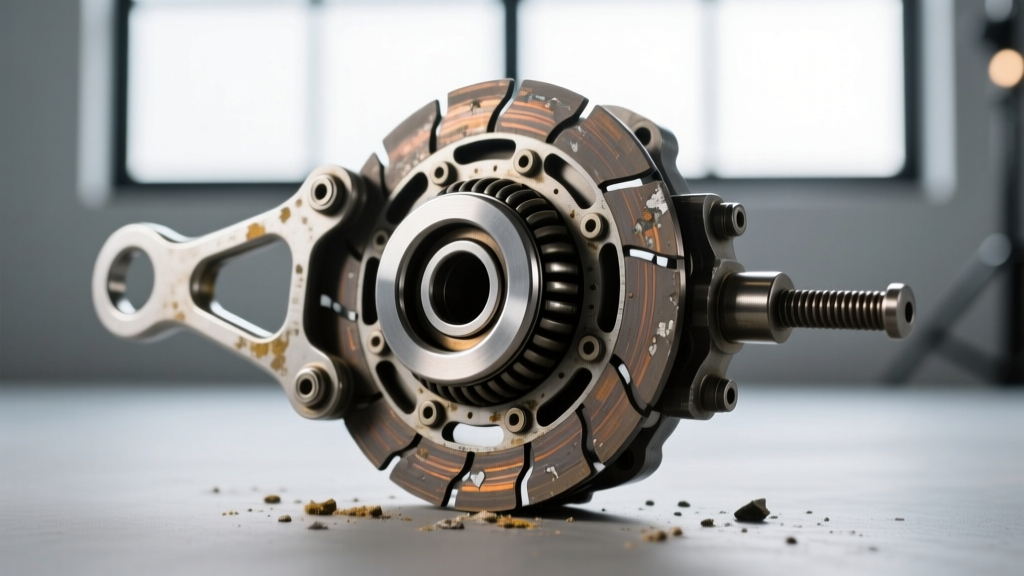
Root Cause: Thermal clutches rely on high-viscosity silicone fluid shearing between internal rotor plates to transfer torque from the water pump shaft to the fan blade. Over years of extreme thermal cycling (from -20°F winters to 240°F engine-bay heat soaks), the silicone fluid undergoes molecular breakdown. It loses its shear strength, effectively turning into a low-viscosity liquid that cannot transfer the rotational mass of a heavy-duty 32-inch fan blade. Additionally, microscopic scoring on the internal O-ring seals allows the fluid to weep out, visible as a greasy, dust-caked residue on the clutch housing.
2. Thermostatic Bimetallic Strip Fatigue
The Symptom: Delayed engagement. The engine and transmission fluids overheat on long grades before the fan clutch finally 'roars' to life.
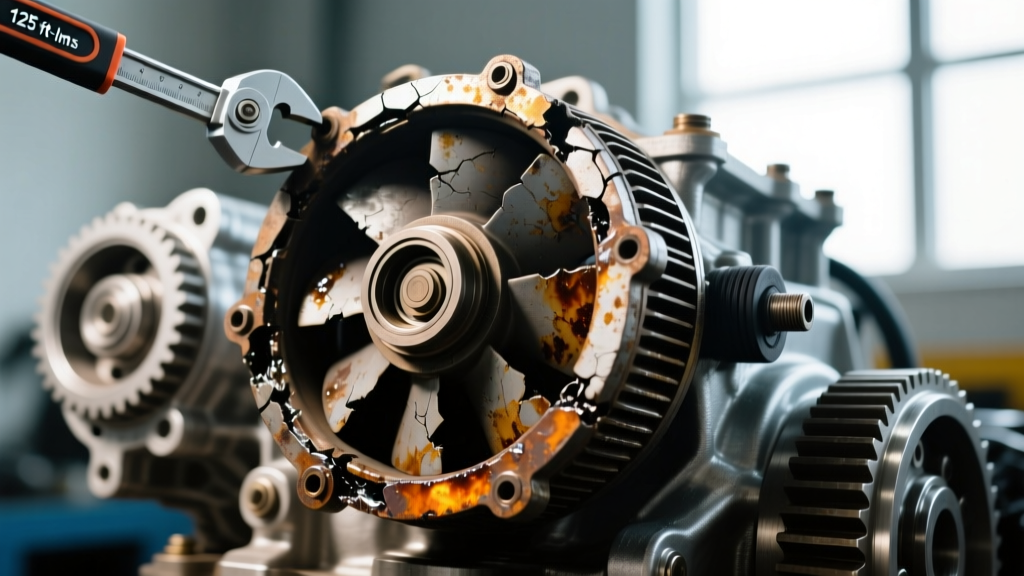
Root Cause: Thermal clutches use a bimetallic coil spring on the front face to actuate an internal valve. This strip is calibrated to expand at a specific temperature (usually around 180°F to 195°F air temp at the radiator face). Constant exposure to corrosive road salts, acidic diesel exhaust soot, and extreme UV radiation causes the bimetallic strip to lose its temper and elasticity. The strip physically fatigues, requiring significantly higher temperatures to open the fluid valve, resulting in a dangerous lag in cooling system response.
3. Electromagnetic Coil Burnout (PWM Fan Clutches)
The Symptom: The fan defaults to a limp-home mode (usually 20-30% engagement via internal mechanical detents) or stays locked at 100%, causing excessive parasitic horsepower loss and fuel economy drops.
Root Cause: Modern severe-duty applications use ECM-controlled electromagnetic clutches. The ECM sends a Pulse Width Modulated (PWM) signal to an internal electromagnet, which engages an internal friction liner or actuates a fluid valve. The root cause of failure here is rarely the clutch itself; it is usually wiring harness chafing near the water pump pulley or voltage spikes from a failing alternator diode bridge that melts the delicate copper windings inside the electromagnetic coil. Diagnostics require an oscilloscope to verify the PWM duty cycle signal reaching the pigtail connector.
4. Pilot Bearing and Hub Seizure
The Symptom: A high-pitched squealing or metallic grinding noise emanating from the front accessory drive (FEAD), often misdiagnosed as a bad water pump or idler pulley.
Root Cause: The fan clutch mounts to a pilot hub or directly to the water pump shaft. If the clutch is installed without proper thread lubrication, or if the mating surfaces are not cleaned of old Loctite, the clutch hub can gall and seize to the shaft. Furthermore, the internal pilot bearing that allows the disengaged clutch to freewheel can suffer from seal intrusion. Coolant leaks from a failing water pump weep directly into the fan clutch pilot bearing, washing out the grease and causing catastrophic seizure, which can snap the water pump shaft under the gyroscopic load of a heavy fan blade.
2026 Severe Duty Fan Clutch Buyer's Guide
When replacing a failed unit, matching the OEM torque transfer rating is critical. Here are the top-tier severe duty replacements trusted by fleet mechanics in 2026.
Hayden Automotive 2747 (Severe Duty Thermal)
- Application: Ford 6.0L / 6.4L Powerstroke, various Class 5-7 medium-duty trucks.
- Price Range: $195 - $240
- Specs: Features a heavier-duty thermostatic coil and a larger silicone fluid reservoir for sustained high-RPM engagement during heavy towing.
- Verdict: An excellent, cost-effective OEM replacement for thermal systems. Avoid for applications that originally called for electronic ECM control.
Horton Kysor HT650 (Electromagnetic / On-Off)
- Application: Freightliner Cascadia, Cummins ISX15, Detroit DD13/DD15.
- Price Range: $620 - $780
- Specs: Kysor-style electromagnetic actuation. Uses a heavy-duty friction liner for positive lockup. Includes integrated wiring harness pigtail.
- Verdict: The gold standard for Class 8 heavy-duty trucks. According to Horton's heavy-duty engineering specs, the HT650 provides millions of engagement cycles without friction liner degradation.
BorgWarner / Litens Electronic PWM Variable Speed
- Application: Modern Ram Cummins 6.7L, Ford 6.7L Powerstroke (2020+).
- Price Range: $550 - $850
- Specs: Infinite variable speed control via ECM PWM signal. Allows the engine to maintain precise thermal windows for optimal DPF regeneration.
- Verdict: Mandatory for late-model emissions-compliant diesels. Do not substitute with a thermal bypass.
Diagnostic Checklist and Installation Torque Specifications
Proper installation and diagnosis separate the professionals from the parts-changers. Use this checklist before condemning a fan clutch or transmission cooler.
The Infrared Thermometer Delta Test
- Bring the engine to full operating temperature (thermostat open).
- Using an IR thermometer, measure the air temperature directly at the center of the radiator core (target: 185°F+).
- Measure the fan clutch housing face temperature. If the delta between the radiator face and the clutch bi-metallic strip is greater than 15°F, the strip is shielded by debris or fatigued.
- Check the transmission cooler return line temperature. If trans fluid exceeds 210°F but the fan clutch remains disengaged, the clutch has failed internally.
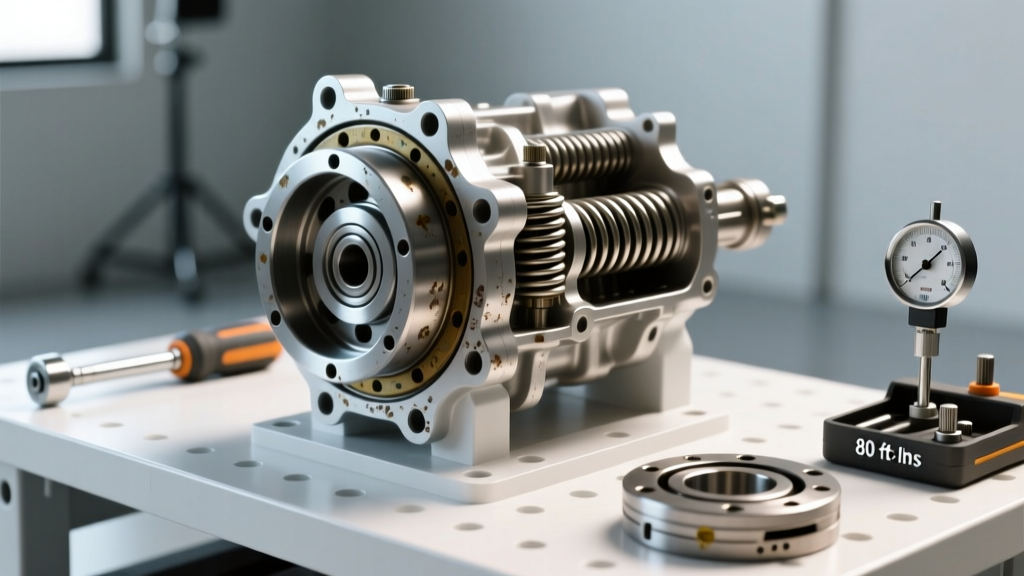
Critical Torque Specifications
Improper torque leads to hub galling, shaft snapping, or clutch wobble. Always reference OEM service manuals, but use these baseline severe-duty specs:
- Cummins ISX15 Fan Hub to Water Pump Shaft: 45 lb-ft (61 Nm). Apply a medium-strength threadlocker (blue) to the mounting bolts.
- Ford 6.7L Powerstroke Fan Clutch Nut: 85 lb-ft (115 Nm). WARNING: This is a LEFT-HAND thread. Turn clockwise to loosen, counter-clockwise to tighten.
- Ram 5.9L / 6.7L Cummins Fan Clutch to Pulley: 35 lb-ft (47 Nm). Ensure the pilot alignment dowel is perfectly seated before torquing to prevent harmonic vibration.
Pro-Tip from the Bay: When installing a new severe duty thermal clutch, always store it vertically (face up) before installation. Storing it horizontally can cause the internal silicone fluid to pool away from the metering valve, resulting in a false 'failed' diagnosis during the first cold start. For deeper diagnostics on integrated cooling systems, referencing Hayden Automotive's technical bulletins can help cross-reference part numbers and thermal engagement thresholds.
Final Thoughts on Drivetrain Thermal Management
A severe duty fan clutch is not merely an engine component; it is the primary defense mechanism for your transmission and drivetrain. By understanding the root causes of viscous shear failure, bimetallic fatigue, and electromagnetic burnout, technicians can accurately diagnose cooling stack issues before they cascade into catastrophic transmission failure. Invest in the correct OEM-equivalent severe duty or PWM replacement, adhere strictly to torque specifications, and your heavy-duty powertrain will conquer the steepest grades without breaking a sweat.