Defining the Core: What Is a Gearbox in a Car?
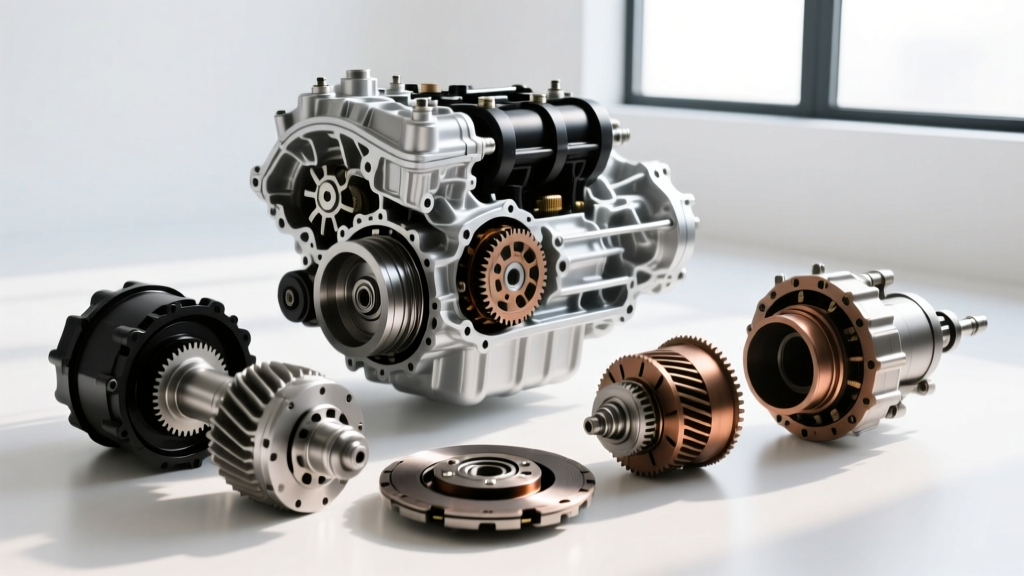
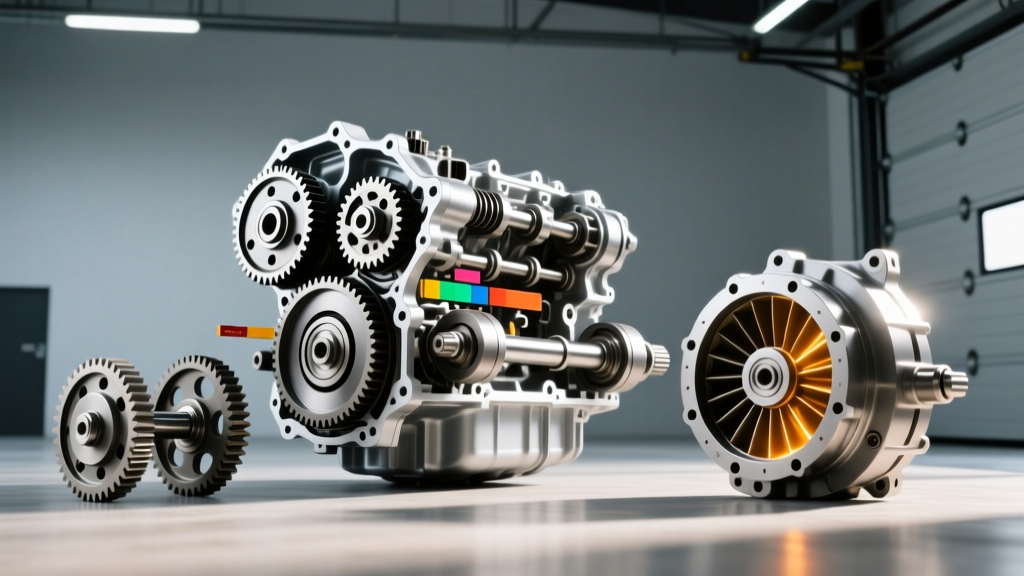
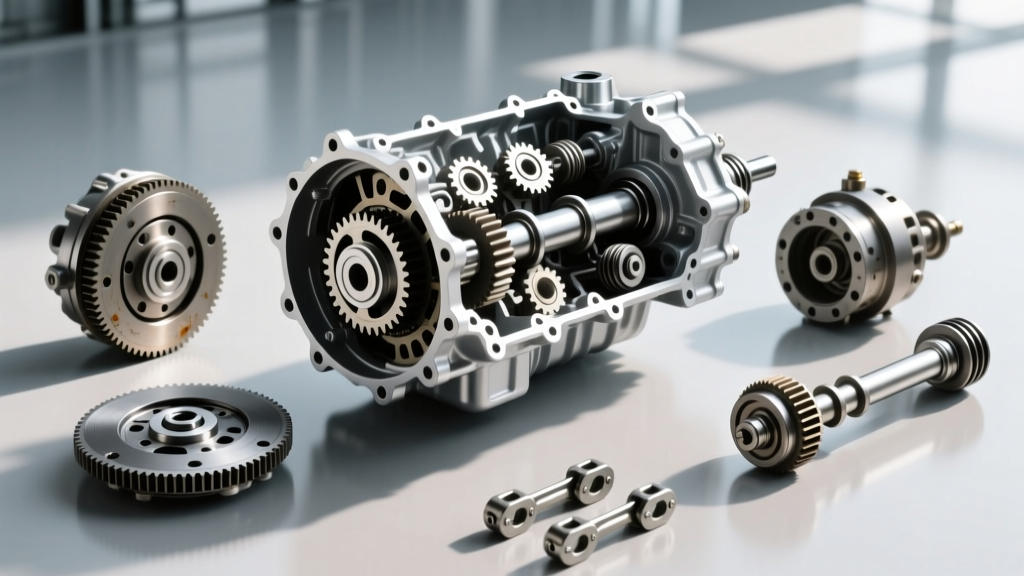
When novice builders and track-day enthusiasts ask, "what is a gearbox in a car," they are usually referring to the entire transmission assembly. Technically speaking, the gearbox is the specific internal enclosure housing the gear sets, shafts, and synchronizers, while the transmission encompasses the entire system—including the torque converter or clutch housing, valve bodies, and external coolers. From an engineering standpoint, the gearbox serves one critical function: torque multiplication and RPM management. Internal combustion engines (and electric motors) have narrow power bands; the gearbox allows the vehicle to multiply torque for acceleration while keeping the engine within its optimal volumetric efficiency range.
As we navigate the 2026 performance landscape, understanding the mechanical distinctions between transmission architectures is no longer just academic—it is the foundation of any serious drivetrain upgrade. Whether you are building a 1,000-wheel-horsepower drag car or optimizing a track-focused time-attack build, selecting and upgrading the correct gearbox type dictates your vehicle's reliability and lap times.
Manual Gearboxes: The Purist and Drag-Racing Standard
Manual transmissions remain the gold standard for driver engagement and raw drag-racing reliability. Unlike automatics that rely on hydraulic fluid coupling, a manual gearbox utilizes a direct mechanical link via a friction clutch and a system of dog rings or synchronizers to lock gears to the output shaft.
The Tremec T56 Magnum-F Benchmark
For high-horsepower V8 applications, the Tremec T56 Magnum-F (Part #TUET11095) is the undisputed king of the aftermarket. Rated for a massive 700 lb-ft of torque, it features widened helical-cut gears and robust carbon-fiber synchronizers. When upgrading to this gearbox, builders must pay strict attention to installation tolerances. The bellhousing-to-block bolts require exactly 35 lb-ft of torque, and the input shaft pilot bearing alignment must be within 0.005 inches to prevent catastrophic input shaft shear under heavy load.
- Clutch Upgrade Path: For builds exceeding 600 lb-ft, upgrade to a McLeod RXT twin-disc clutch (Part #691103, approx. $1,150). It provides organic friction material for streetability while doubling the clamping surface area.
- Fluid Spec: Fill with 3.0 quarts of Red Line MTL or DT Fluid to ensure proper synchro engagement at high RPMs.
Planetary Automatics: The Modern Powerhouse
Modern automatic transmissions have entirely eclipsed manuals in factory performance applications. Utilizing complex Lepelletier planetary gearsets, these gearboxes can execute shifts in milliseconds while handling immense torque loads. The secret to their performance lies in the valve body programming and the torque converter.
GM 10L90 and the ZF 8HP Architecture
General Motors’ 10-speed 10L90 (RPO code MQV) and the legendary ZF 8HP series (specifically the 8HP90 variant used in high-output applications) dominate the current era. The ZF 8HP90, rated for up to 738 lb-ft (1,000 Nm) of stock torque capacity, uses a combination of four planetary gearsets and five shift elements to achieve eight forward ratios. However, when tuners push Hellcat or Coyote-swapped platforms past 800 lb-ft, the stock ZF input shaft and A-clutch pack become the weak links.
Pro Tip: Never reuse torque-to-yield (TTY) flexplate bolts. When upgrading an automatic gearbox to a Circle D billet stall converter, always use new ARP 200,000 PSI flexplate bolts torqued to 74 lb-ft with red Loctite 271 to prevent converter detachment at 7,000 RPM.
To fortify an automatic gearbox for track use, upgrading the transmission cooler is mandatory. A Derale 14-Row Stacked Plate cooler (Part #13960) paired with Royal Purple Max ATF can drop fluid temperatures by up to 35°F during consecutive drag passes, preventing the clutch packs from glazing and slipping.
Dual-Clutch Transmissions (DCT): Track-Ready Precision
Dual-clutch gearboxes represent the pinnacle of motorsport-derived technology. A DCT essentially houses two manual gearboxes in one casing—one controlling the odd gears and the other the even gears. This allows for pre-selection of the next gear, resulting in shift times as rapid as 50 milliseconds.
The Porsche PDK (Porsche Doppelkupplung) and the Ford/Getrag 6DCT450 (MPS6) are prime examples. However, DCTs are incredibly sensitive to thermal degradation. In 2026, the most common failure mode in amateur track cars equipped with DCTs is clutch pack overheating, which triggers limp mode. Upgrading to a CSF Racing PDK-specific heat exchanger and utilizing Motul DCTF-II fluid are mandatory steps for any DCT-equipped vehicle seeing sustained lateral G-forces on a road course.
Continuously Variable Transmissions (CVT): The Performance Outlier
While it is important to understand all gearbox types, CVTs have virtually no place in the performance upgrade sphere. Instead of fixed gear ratios, CVTs use a steel push-belt running between two variable-width pulleys. Models like the Nissan Jatco JF016E are notorious for belt slip when subjected to torque spikes exceeding 250 lb-ft. For performance builders, a CVT swap to a conventional automatic or manual gearbox is often the only viable path to reliability.
Performance Gearbox Comparison Matrix
To help you decide which architecture suits your build, review the engineering metrics below:
| Gearbox Type | Example Model | Max Stock Torque | Shift Speed | Avg. Build/Upgrade Cost |
|---|---|---|---|---|
| Manual (Synchro) | Tremec T56 Magnum-F | 700 lb-ft | 300-500 ms (Human) | $3,500 - $5,000 |
| Planetary Auto | GM 10L90 (MQV) | 890 lb-ft | 120-150 ms | $4,000 - $8,500 |
| Planetary Auto | ZF 8HP90 | 738 lb-ft | 100-200 ms | $5,500 - $9,000 |
| Dual-Clutch (DCT) | Porsche PDK (7-Speed) | 590 lb-ft (varies) | 50-80 ms | $12,000+ |
| CVT (Push-Belt) | Jatco JF016E | ~250 lb-ft | Continuous / N/A | Not Recommended |
2026 Trends: EV-Swapped Manual Gearboxes
According to recent engineering papers from SAE International, one of the most fascinating performance trends emerging in 2026 is the adaptation of traditional manual gearboxes to high-torque electric vehicle (EV) crate motors. Because electric motors produce instantaneous peak torque and can rev to 15,000+ RPM, builders are utilizing heavy-duty manual gearboxes like the Tremec TKX to keep the EV motor in its most efficient power band while reducing overall battery draw. This requires custom bellhousing adapters and specialized high-RPM pilot bearings, bridging the gap between century-old manual gearbox concepts and cutting-edge electric propulsion.
Final Upgrade Protocols
Regardless of the gearbox type you choose, the foundation of performance is proper mating and lubrication. Always verify input shaft spline counts (e.g., 26-spline vs. 31-spline) before ordering clutches or torque converters. Furthermore, utilize a high-quality transmission mount, such as the Energy Suspension polyurethane mount, to limit drivetrain deflection under hard launches. By understanding the mechanical realities of what is a gearbox in a car, you can confidently engineer a drivetrain that survives the abuse of the track while delivering power exactly when you need it.