The Great NVH Illusion: Drivetrain vs. Accessory Drive
In the high-stakes world of performance vehicle builds, diagnosing Noise, Vibration, and Harshness (NVH) requires a meticulous, data-driven approach. One of the most frequently misdiagnosed issues in modified manual transmission vehicles—ranging from 600hp LS-swapped track cars to supercharged Coyote restomods—is clutch chatter. However, what the driver perceives as a failing friction disc or a warped flywheel is often a severe torsional vibration originating from the accessory drive system, specifically a binding or dragging car AC clutch. When the magnetic coil of the air conditioning compressor clutch engages under high-load conditions, it can introduce aggressive harmonic frequencies into the engine block. These frequencies travel through the bellhousing and mimic the exact sensation of a manual transmission clutch slipping and grabbing during engagement.
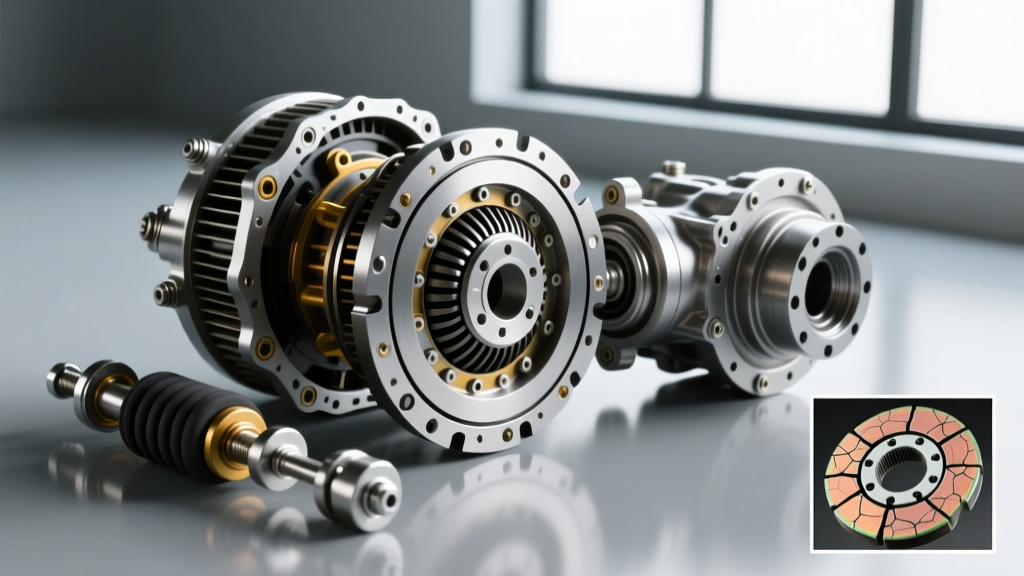
Upgrading to a high-performance twin-disc setup, such as a McLeod RXT or Centerforce DYAD, only amplifies this confusion. High-clamp-load ceramic and sintered iron friction materials are notoriously sensitive to drivetrain harmonics. If the crankshaft is experiencing microscopic torsional fluctuations due to a dragging car AC clutch pulley, the aggressive friction material will translate those harmonics directly into the chassis, resulting in violent 20-40 Hz chatter. In 2026, advanced NVH diagnostic software and oscilloscope integration have made it possible to isolate these accessory drive anomalies before unnecessarily tearing down the transmission.
Frequency Analysis: Identifying the Vibration Source
To accurately separate manual transmission clutch chatter from accessory drive interference, technicians must rely on frequency analysis rather than seat-of-the-pants feel. Manual clutch chatter is directly tied to engine RPM and typically manifests between 20 Hz and 45 Hz during the 1,200 to 1,800 RPM engagement window. Conversely, a failing car AC clutch or slipping serpentine belt introduces harmonics based on the accessory drive pulley ratio, often pushing the vibration frequency into the 35 Hz to 60 Hz range. Using an accelerometer-based NVH kit, such as those offered by Pico Technology, allows you to map the exact frequency and trace it to the rotating mass causing the disturbance.
| Vibration Source | Frequency Range | RPM Dependency | Sensory Feedback | Diagnostic Tool |
|---|---|---|---|---|
| Manual Clutch Chatter | 20 - 45 Hz | Direct Engine RPM | Pedal pulsation, chassis shake | Accelerometer on Bellhousing |
| Car AC Clutch Drag | 35 - 60 Hz | Accessory Drive Ratio | High-frequency buzz, steering wheel tick | Laser Tachometer on Pulley |
| Harmonic Balancer Slip | 15 - 30 Hz | Crankshaft Speed | Deep engine knock sensation | Timing Light / Degree Wheel |
Diagnosing Car AC Clutch Drag and Magnetic Binding
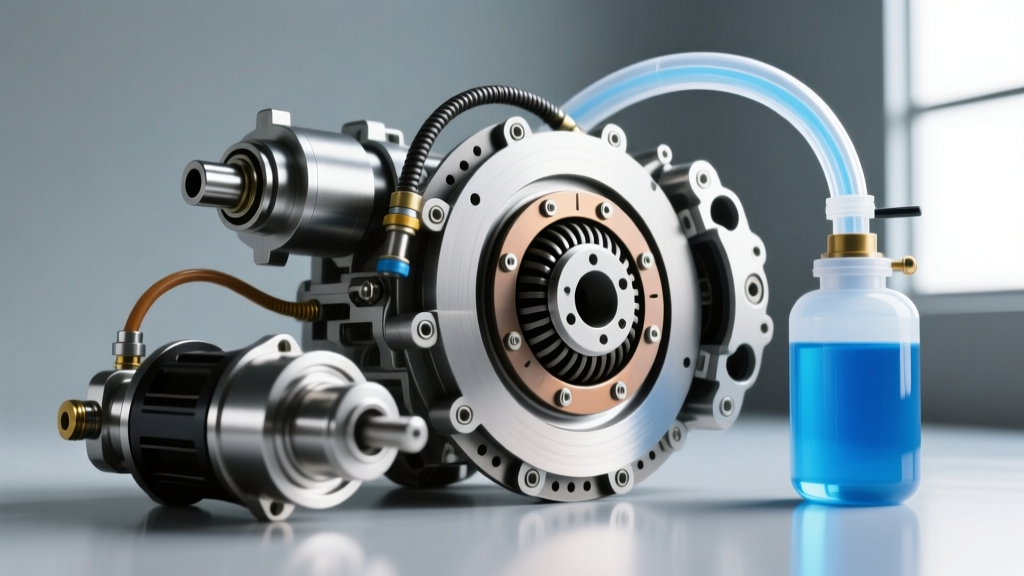
The magnetic engagement mechanism of a car AC clutch relies on precise tolerances and clean electrical delivery. In performance applications, the under-hood temperatures and increased electrical loads from fuel pumps and cooling fans can degrade the clutch coil's efficiency. When the coil weakens, the clutch plate fails to lock solidly against the pulley rotor. Instead, it micro-slips hundreds of times per minute, creating a high-frequency torsional shudder that travels down the crankshaft and into the transmission input shaft.
Air Gap, Coil Resistance, and Voltage Drop
Before condemning the manual transmission or replacing the flywheel, perform these critical diagnostic checks on the AC compressor clutch assembly:
- Air Gap Verification: Use a feeler gauge to measure the clearance between the clutch hub and the pulley rotor. The specification for most performance Sanden and Denso units is strictly 0.020 to 0.030 inches. An air gap below 0.015 inches will cause the clutch to drag at high RPMs, creating severe chatter.
- Coil Resistance Testing: Disconnect the wiring harness and measure the electromagnetic coil resistance with a digital multimeter. A healthy car AC clutch coil should read between 3.2 and 3.8 ohms at 68°F (20°C). Readings below 2.5 ohms indicate internal shorting, which causes erratic magnetic engagement and drivetrain shudder.
- Voltage Drop Analysis: Measure voltage at the clutch connector while the system is commanded ON. You must not see a voltage drop greater than 0.5V from the battery. Insufficient voltage causes the clutch to partially engage, slipping and grabbing continuously.
Oscilloscope Diagnostics for Clutch Coil Current
For advanced performance shops, utilizing an automotive oscilloscope with a current clamp provides the ultimate diagnostic clarity. By clamping the AC clutch power wire, you can observe the current ramp-up when the PCM commands the clutch relay. A healthy car AC clutch will show a sharp initial current spike (inductive kick) followed by a steady hold current of roughly 3.0 to 4.0 amps. If the waveform shows erratic fluctuations or a sawtooth pattern, the clutch air gap is dynamically changing due to worn compressor shaft bearings or a warped pressure plate. This mechanical instability is the root cause of the accessory drive chatter masking as transmission failure. For deeper HVAC system standards and diagnostic protocols, refer to the Mobile Air Climate Systems Association (MACS).
Performance Upgrades: Eliminating Compressor-Induced Chatter
For track-focused builds or high-horsepower street cars, the OEM car AC clutch is often insufficient to handle the extreme torsional vibrations generated by aggressive camshafts and high-compression setups. Upgrading the accessory drive components is mandatory to protect both the AC system and the manual transmission.
Heavy-Duty Clutch Coils and Dedicated Drive Systems
Replacing the factory Denso 10S17C clutch assembly with a heavy-duty Sanden SD7B10 magnetic clutch (Part #11814 or equivalent) provides a stronger electromagnetic hold and a reinforced steel pressure plate. These heavy-duty units resist the micro-slipping that causes high-frequency chatter. Furthermore, in supercharged applications exceeding 800hp, utilizing a dedicated front-drive system (FDS) that isolates the AC compressor onto its own belt and tensioner system completely removes the AC clutch from the main crankshaft harmonic loop.
Expert Insight: Never attempt to shim the air gap on a performance build without first verifying the compressor shaft end-play. Excessive internal thrust bearing wear will cause the clutch hub to migrate forward under high-RPM centrifugal force, closing the air gap dynamically and inducing violent accessory drive chatter.
Additionally, addressing crankshaft harmonics at the source is vital. Installing a high-performance harmonic balancer, such as those engineered by ATI Performance Products, absorbs the torsional spikes before they can reach the accessory drive pulleys or the transmission input shaft. A properly tuned elastomeric damper can reduce accessory drive induced chatter by up to 70%, ensuring your high-end ceramic clutch engages smoothly.
Step-by-Step Torque and Alignment Procedures
When reinstalling or upgrading the car AC clutch and compressor assembly, precise torque specifications are non-negotiable. Improper mounting stress can warp the compressor housing, leading to internal binding and external pulley misalignment. Mount the compressor to the engine block using Grade 10.9 M8 hardware, torqued to exactly 18 lb-ft in a crisscross pattern. When installing the new clutch hub onto the compressor shaft, apply a medium-strength threadlocker and torque the retaining nut to 11-15 lb-ft. Finally, use a laser pulley alignment tool to ensure the AC clutch pulley is perfectly coplanar with the harmonic balancer and tensioner pulleys. Even a 1mm misalignment will cause the serpentine belt to track erratically, generating a low-frequency flutter that is easily mistaken for a failing dual-mass flywheel or transmission mount.