The Paradigm Shift: EV Drivetrains vs. Traditional ICE Layouts
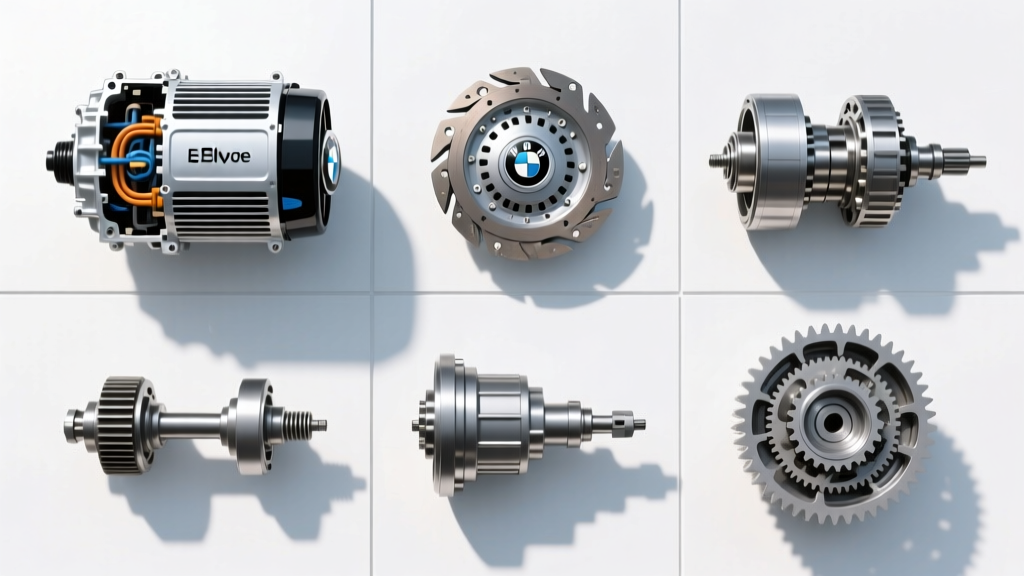
For decades, automotive enthusiasts and mechanics have focused on the intricacies of multi-speed internal combustion engine (ICE) drivetrains. Platforms like the ZF 8HP eight-speed automatic or the GM 6L80 six-speed require complex valve bodies, clutch packs, and torque converters to manage power delivery. However, the electric vehicle (EV) revolution has fundamentally rewritten the rules of drivetrain layout and configuration. In modern EVs, the transmission is typically replaced by a single-speed reduction gear integrated directly with the electric motor and inverter into a single unit, often referred to as an e-Axle or EDrive.
This architectural shift eliminates the need for gear shifts, reducing moving parts and increasing efficiency. Yet, it introduces a new set of high-voltage complexities. When a fault occurs, the vehicle's software triggers a failsafe mode. For BMW owners, this is infamously displayed as the 'BMW i3 drivetrain malfunction' warning on the iDrive display. Understanding the anatomy of electric drivetrains, and specifically the BMW i3's unique EDrive system, is critical for both current owners and prospective used EV buyers navigating the market in 2026.
Inside the BMW i3 EDrive: Architecture and Specifications
The BMW i3 utilizes a highly compact, rear-wheel-drive layout powered by a hybrid synchronous electric motor. Unlike permanent magnet synchronous motors (PMSMs) found in many competitors, the i3's motor uses an externally excited rotor, eliminating the need for rare-earth metals in the rotor assembly. This motor is mated to a single-speed helical reduction gearbox with a fixed ratio of 9.66:1.
Key EDrive Specifications:
- Motor Type: Hybrid Synchronous (Externally Excited)
- Peak Output: 125 kW (168 hp) / 184 lb-ft of torque (170 hp in later 120Ah models)
- Reduction Gear Ratio: 9.66:1
- Total EDrive Weight: Approximately 110 lbs (50 kg)
- Cooling System: Liquid-cooled stator jacket and dedicated Electric Motor Electronics (EME) cooling loop
The EDrive is mounted to the rear subframe using specialized high-stensity isolators to dampen high-frequency electromagnetic whine. The mounting bolts (typically M12) require precise torque specifications—usually 100 Nm plus an additional 90-degree turn—to prevent subframe harmonic resonance under heavy regenerative braking loads.
Decoding the 'BMW i3 Drivetrain Malfunction' Warning
Seeing the 'BMW i3 drivetrain malfunction' message can induce immediate panic, as the car will often limit speed to 15 mph or enter a complete immobilized state. While the warning suggests a catastrophic mechanical failure of the drivetrain, the root cause is frequently electrical or thermal. Below are the four most common culprits behind this warning, complete with diagnostic insights and repair costs.
1. The 12V Auxiliary Battery Degradation
Ironically, the most common cause of a high-voltage drivetrain malfunction is a failing 12V lead-acid or AGM auxiliary battery. The 12V system powers the vehicle's control modules and, crucially, the high-voltage (HV) contactors. If the 12V battery drops below 11.8V during the pre-charge sequence, the Battery Management System (BMS) will refuse to close the HV contactors to protect the inverter from voltage spikes. The iDrive system interprets this failure to engage the high-voltage system as a 'drivetrain malfunction.' Fix Cost: $200 - $350 for a new OEM-spec 12V battery and BMS registration.
2. Electric Motor Electronics (EME) Failure
The EME is the inverter responsible for converting DC power from the high-voltage battery into the AC power required by the motor. It houses the IGBT (Insulated-Gate Bipolar Transistor) modules. In early i3 models, the EME was susceptible to internal capacitor degradation and, in some cases, coolant ingress from the adjacent cooling manifold. A failed EME will immediately trigger the drivetrain malfunction and throw isolation fault codes (e.g., Isolation Fault HV). Part Number Reference: 9473978 (varies by model year). Fix Cost: $1,800 - $2,800 for a remanufactured unit, plus high-voltage labor.
3. Motor Position Sensor (Resolver) Faults
The resolver is a highly precise sensor that tracks the exact rotational position of the motor's rotor to within fractions of a degree. The EME relies on this data to synchronize the magnetic fields in the stator. If the resolver wiring harness degrades or the sensor fails, the EME cannot time the AC waveforms, resulting in immediate limp mode. Fix Cost: $400 - $600 (requires EDrive removal and partial teardown).
4. High-Voltage Contactor Welding
The main contactors inside the HV battery pack act as heavy-duty relays. Over years of high-amperage DC fast charging, the contacts can pit or weld together. If the BMS detects that a contactor is stuck open or closed, it will disable the drivetrain to prevent thermal runaway. Fix Cost: $3,500 - $6,000 (often requires battery pack opening or replacement).
EV Drivetrain Comparison: i3 vs. Bolt vs. Leaf
To understand where the BMW i3 sits in the broader EV landscape, it is helpful to compare its drivetrain configuration against other popular hatchbacks. As detailed in resources like the InsideEVs BMW i3 Archives, the i3's carbon-fiber reinforced plastic (CFRP) chassis necessitated a uniquely compact rear-drive layout, unlike the front-wheel-drive transaxle setups of its peers.
| Feature | BMW i3 (120Ah) | Chevrolet Bolt EV | Nissan Leaf (Plus) |
|---|---|---|---|
| Drive Layout | Rear-Wheel Drive (RWD) | Front-Wheel Drive (FWD) | Front-Wheel Drive (FWD) |
| Motor Type | Hybrid Synchronous | Permanent Magnet (PMSM) | AC Synchronous |
| Peak Torque | 199 lb-ft | 266 lb-ft | 250 lb-ft |
| Reduction Ratio | 9.66:1 | 7.05:1 | 7.93:1 |
| Common Drivetrain Fault | EME / 12V Logic | Reduction Gear Bearing Whine | Inverter Coolant Leaks |
The 2026 Used EV Buyer’s Drivetrain Checklist
Purchasing a used electric vehicle requires a fundamentally different inspection process than buying an ICE car. You will not be checking for transmission fluid leaks or worn clutch discs. Instead, focus your pre-purchase inspection (PPI) on the following drivetrain and high-voltage metrics:
- Scan for Shadow Codes: Even if the 'BMW i3 drivetrain malfunction' warning is not currently illuminated, use an EV-capable OBD2 scanner (such as a Foxwell NT510 or BimmerCode/Carly adapter) to check the EME and BMS modules for stored isolation faults or pre-charge timeout codes.
- Regenerative Braking Test: Perform a hard acceleration followed by heavy regenerative braking. The EDrive should handle the torque reversal smoothly. Any clunking from the rear subframe indicates worn EDrive isolators or excessive backlash in the reduction gear helical cut.
- Thermal Imaging: After a 20-minute highway drive, use a thermal camera to inspect the EDrive housing and the high-voltage cable connections at the EME. Hotspots exceeding 140°F (60°C) at the cable terminals indicate high resistance and impending connection failure.
- Coolant Loop Verification: The i3 utilizes a complex multi-loop cooling system. Verify that the EME coolant pump is actively circulating fluid and that there is no cross-contamination between the high-voltage cooling loop and the cabin heater loop.
Preventative Maintenance for Electric Axles
While EV drivetrains are often marketed as 'maintenance-free,' the reduction gear and cooling systems require attention to ensure longevity beyond 150,000 miles. The BMW i3 reduction gear is filled with approximately 1.2 liters of specialized high-voltage gear oil (often BMW Part Number 83222446673 or an equivalent 75W-85 GL-4 fluid with specific dielectric properties). Using standard automotive gear oil can lead to electrical tracking if the fluid seeps past the motor-to-gearbox seals and contacts the stator windings.
According to safety and maintenance guidelines outlined by the NHTSA Alternative Fuel Safety division, maintaining the integrity of high-voltage cooling loops is paramount. The coolant used in the EDrive loop must have low electrical conductivity. Over time, glycol-based coolants can degrade and become more conductive, triggering isolation faults that mimic mechanical drivetrain failures. Flushing the EDrive cooling loop every 60,000 miles with OEM-specified low-conductivity coolant is a vital, yet frequently overlooked, preventative measure.
Final Thoughts on EV Drivetrain Ownership
The 'BMW i3 drivetrain malfunction' warning is a blanket term that covers everything from a $200 12V battery swap to a $5,000 EDrive replacement. By understanding the distinct architecture of single-speed reduction gears, hybrid synchronous motors, and high-voltage inverters, buyers and owners can approach EV ownership with confidence rather than fear. As the automotive industry continues to pivot toward electrification, mastering the nuances of EV drivetrain layouts is no longer just for high-voltage certified technicians—it is essential knowledge for the modern automotive consumer.