The Structural Reality: Stamped Steel vs. 6061-T6 Billet
When pushing an automatic transmission beyond factory parameters, the torque converter cover becomes the weakest link in the drivetrain. Original equipment converters utilize stamped steel covers. Under high hydraulic pressure and extreme centrifugal force—typically exceeding 5,500 RPM or 450 lb-ft of torque—these covers experience "ballooning." The steel physically expands outward, which pushes the entire converter assembly forward against the transmission pump. This catastrophic flex crushes the pump thrust bearing, reduces torque converter clutch (TCC) clearance, and ultimately leads to total transmission failure.
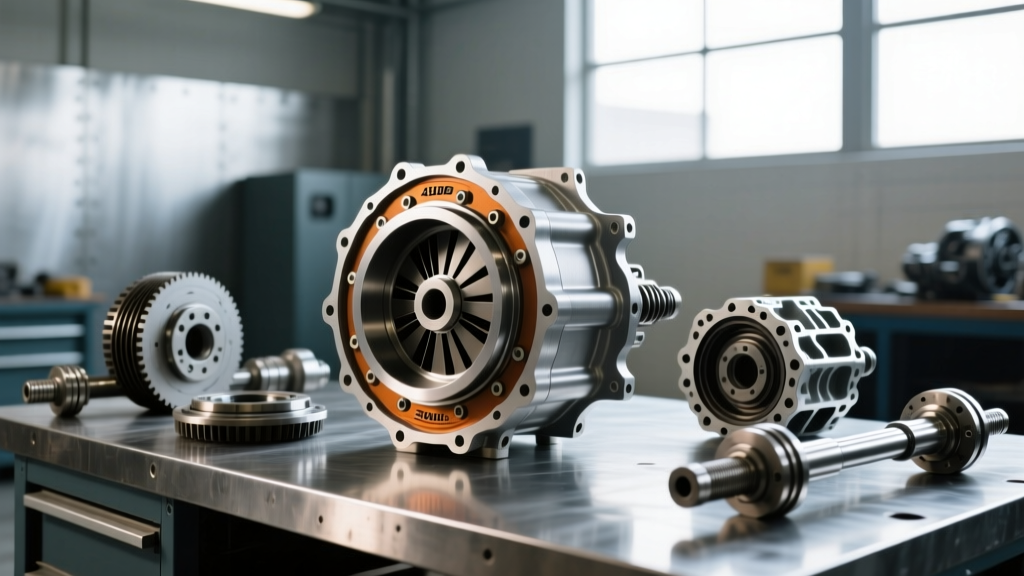
A billet torque converter solves this by machining the cover from a single block of 6061-T6 aerospace-grade aluminum. This material offers superior tensile strength and zero flex under extreme loads. Furthermore, billet covers allow for precise O-ring sealing and tighter internal clearances, which drastically reduces parasitic drag and improves hydraulic efficiency. According to engineering data from Circle D Specialties, a billet cover maintains structural integrity well past 8,000 RPM, making it mandatory for any forced-induction or high-compression naturally aspirated build.
Dialing in Flash Stall: The Camshaft Synergy
Selecting the correct stall speed is not about picking a random number; it is about matching the converter’s flash stall to your engine’s torque curve. Flash stall is the RPM at which the converter "flashes" or slips when the throttle is pinned at wide-open throttle (WOT) during a shift. If your camshaft produces peak torque at 4,200 RPM, your converter must flash as close to that number as possible to keep the engine in its powerband.
Below is a baseline framework for matching camshaft duration to stall speed in typical 350-400 cubic inch V8 applications:
| Camshaft Duration (@ 0.050) | Operating RPM Range | Ideal Flash Stall Target | Recommended Application |
|---|---|---|---|
| 215° - 224° | 1,500 - 5,500 RPM | 2,400 - 2,800 RPM | Street/Strip, Mild Bolt-ons |
| 225° - 235° | 2,500 - 6,500 RPM | 3,000 - 3,500 RPM | Aggressive Street, Nitrous, Mild Boost |
| 236° - 250°+ | 3,500 - 7,500 RPM | 3,800 - 4,500+ RPM | Dedicated Drag, High-Boost Turbo/Supercharger |
It is critical to note that stall speed is a byproduct of engine torque. A converter rated at 3,200 RPM behind a stock 5.3L LS might only flash at 2,600 RPM, but behind a built 408 stroker making 550 lb-ft, that exact same converter will flash at 4,000 RPM. Always consult the manufacturer with your exact dyno sheet or cam card.
Platform-Specific Billet Converter Strategies
GM 4L60E and 4L80E Applications
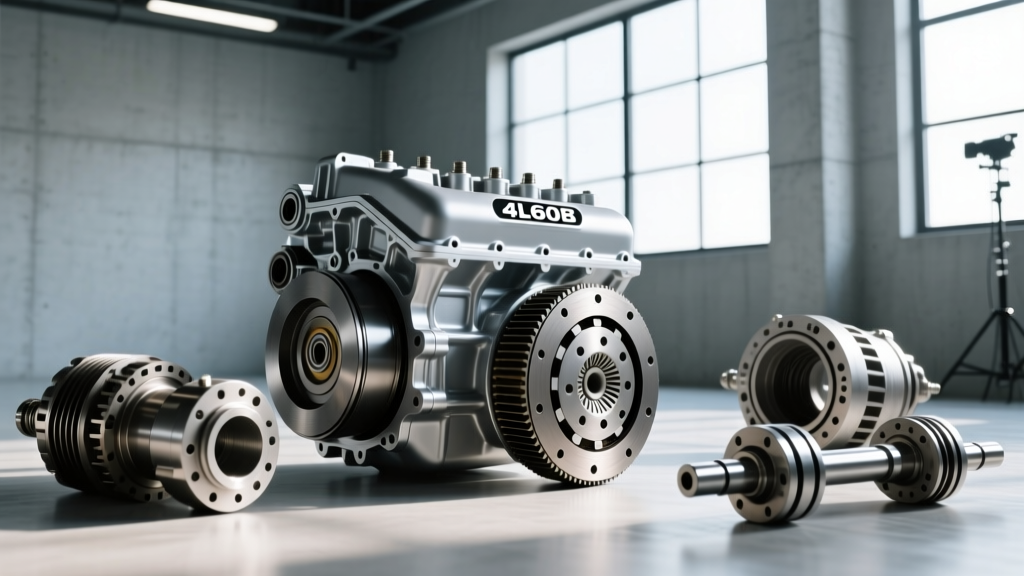
For the ubiquitous GM 4L60E and heavy-duty 4L80E, the standard 298mm (approx. 11.6-inch) converter footprint is retained, but internal fin angles are radically altered. Performance billet units utilize furnace-brazed fins to prevent separation under high-shear fluid loads. For a 4L80E handling 800+ WHP, manufacturers like TCI Automotive utilize a specialized high-fin stator that multiplies torque aggressively off the line while maintaining a tight lockup on the highway.
Modern 6L80, 6L90, and ZF 8HP Considerations
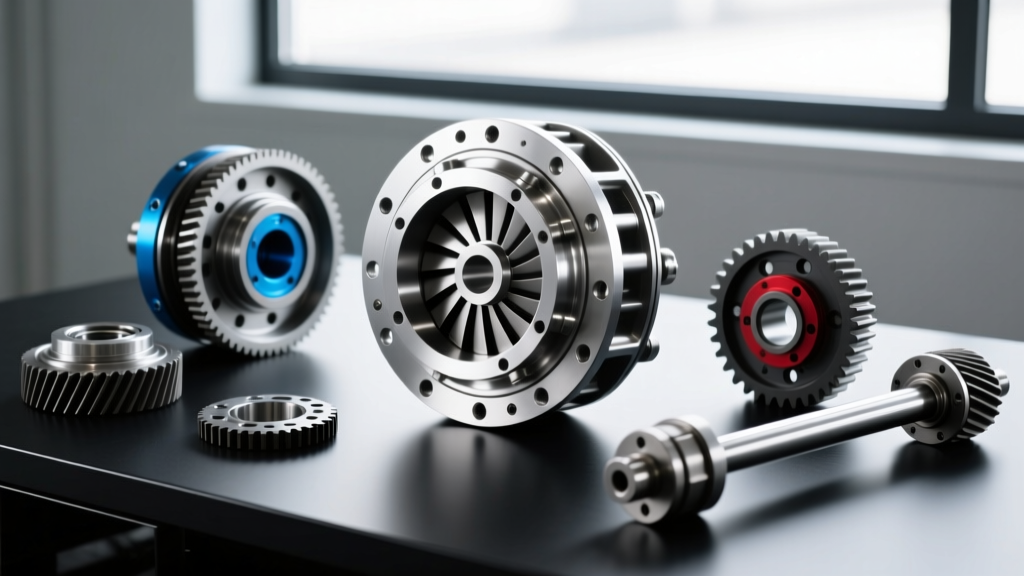
Upgrading modern electronically controlled transmissions requires a different approach. The GM 6L80/6L90 and the ZF 8HP (found in Dodge Charger/Challenger Hellcats and modern BMWs) rely heavily on pulse-width modulated (PWM) lockup strategies. A billet converter for these platforms must feature a multi-disk lockup clutch. A standard single-disk friction clutch will slip and burn up under the immense line pressure these transmissions generate at WOT. Upgrading to a triple-disk billet converter with carbon-fiber friction material allows the TCC to remain fully applied in 4th, 5th, and 6th gears, effectively turning the automatic into a direct-drive manual and dropping transmission fluid temperatures by 20°F to 30°F.
Friction Materials: Carbon, Kevlar, and Sintered Iron
The lockup clutch inside a billet torque converter dictates both its street manners and its holding capacity.
- Carbon Fiber / Kevlar Blends: The gold standard for street/strip builds. These materials offer smooth, progressive engagement, eliminating the aggressive "on/off" shudder associated with race converters. They hold up to 800 engine torque reliably.
- Sintered Iron / Metallic: Reserved for dedicated drag racing or high-boost applications exceeding 1,000 lb-ft. Engagement is violent and abrupt, which is ideal for shocking the tires on a trans-brake launch, but completely undrivable in stop-and-go traffic.
- Woven Carbon: Often used in high-end OEM replacement billet units, offering a factory-like lockup feel with a 30% increase in thermal capacity over standard paper-based friction rings.
Critical Installation Metrics: Avoiding Pump Destruction
Even a $2,000 billet torque converter will destroy your transmission in five miles if installed improperly. The alignment of the converter to the flexplate and the engine block is governed by strict measurements. Failure to verify these will result in immediate pump gear failure or thrust bearing collapse.
- Pilot Clearance: Once the transmission is bolted to the engine block, measure the gap between the converter mounting pads and the flexplate. This gap MUST be between 0.125" (1/8") and 0.187" (3/16"). If the converter is pulled forward more than 1/8" to meet the flexplate, it will bottom out inside the crankshaft pilot hole, destroying the front pump.
- Flexplate Torque Specs: For GM LS/LT applications, the M10x1.5 flexplate bolts must be torqued to 74 lb-ft using a high-strength threadlocker (e.g., Loctite 262). For Chrysler HEMI applications, the torque spec is typically 70 lb-ft.
- Converter to Flexplate Nuts: Use new Grade 8 or OEM-equivalent nuts. For standard 3/8"-16 hardware, torque to 30-35 lb-ft. For M10 hardware, torque to 35-40 lb-ft. Never use washers unless explicitly specified by the converter manufacturer, as they alter the critical pad-to-flexplate offset.
- Transmission Endplay: Before installing the converter, verify transmission output shaft endplay. It should read between 0.010" and 0.030" using a dial indicator. Excessive endplay will cause gear separation under load.
Investment Breakdown: What Does a True Billet Upgrade Cost?
As of 2026, the market for billet torque converters has stabilized, but pricing varies wildly based on internal components and lockup configurations. Beware of "remanufactured" units falsely advertised as billet; true billet units are built from scratch on CNC lathes.
- Entry-Level Street/Strip (Single-Disk Lockup): $750 – $1,050. Ideal for naturally aspirated 4L60E or TH350 builds making under 500 HP. Examples include the TCI Breakaway or Precision Industries Vigilante series.
- Mid-Level Pro-Street (Multi-Disk Lockup, Billet Stator): $1,100 – $1,600. Required for supercharged 6L80s, turbo 4L80Es, and builds in the 600-900 HP range. Features billet stators and reinforced hub splines.
- Elite Race / Drag Spec (Spragless, Pro-Mod): $1,800 – $2,800+. Designed for trans-brake applications, 8-second cars, and 1,500+ HP platforms. These often omit the lockup clutch entirely to reduce rotating mass and utilize spragless stators to prevent mechanical failure on the violent hit of a trans-brake release.
Upgrading to a billet torque converter is not just about achieving a higher stall speed; it is about fortifying the hydraulic coupling of your drivetrain against the catastrophic forces of high-horsepower motoring. By matching the stall to your camshaft profile, selecting the correct friction material, and adhering to strict installation tolerances, you ensure that every ounce of torque makes it to the pavement.