The Physics of Power Transfer: Hydraulic Multiplication vs. Friction Coupling
When evaluating powertrain configurations for high-horsepower GM platforms, builders frequently debate the merits of upgrading an automatic transmission versus executing a manual swap. At the heart of this debate lies a fundamental clash of physics: the fluid dynamics of a torque converter versus the mechanical friction of a manual clutch. While a traditional manual clutch relies on a dry friction disc clamped between a flywheel and pressure plate to create a 1:1 mechanical lock, a torque converter utilizes hydrokinetic principles to transfer and multiply engine torque.
In a modern automatic setup, the impeller (driven by the engine) accelerates transmission fluid outward via centrifugal force. This fluid strikes the turbine (connected to the transmission input shaft), transferring kinetic energy. The stator, situated between the impeller and turbine, redirects returning fluid to multiply torque during initial acceleration—a feat a dry manual clutch cannot replicate without severe slippage and catastrophic heat generation. However, the Achilles' heel of the automatic transmission has historically been parasitic loss and slippage at higher speeds. This is where the Torque Converter Clutch (TCC) and advanced aftermarket engineering enter the equation.
The 6L80 OEM Vulnerability: Stamped Steel and TCC Shudder Symptoms
The GM 6L80 (RPO MYC/MYD) is a robust six-speed automatic transmission capable of handling substantial power in trucks, Corvettes, and Camaros. However, the OEM torque converter features a stamped steel front cover. Under the immense torsional stress of modified LS or LT engines, this thin steel cover physically deflects and flexes.
This flex creates a critical failure point for the Torque Converter Clutch (TCC). The 6L80 utilizes a Pulse Width Modulated (PWM) TCC solenoid to gradually apply the clutch piston, smoothing out the lockup transition. When the stamped cover flexes under load, the TCC friction material loses uniform contact pressure against the mating surface. This results in a rapid, cyclical grab-and-release effect known as TCC shudder.
Identifying OEM TCC Shudder Symptoms
- Sensory Feedback: A rhythmic, 20-40 Hz vibration felt through the chassis, often described as 'driving over highway rumble strips,' typically occurring between 45 and 55 mph during light throttle application.
- Diagnostic Trouble Codes (DTCs): P0741 (Torque Converter Clutch System Stuck Off or Slipping) or P0742 (TCC System Stuck On).
- Fluid Degradation: Rapid darkening of the Dexron VI fluid due to the microscopic shearing of the TCC friction material, leading to a burnt odor and compromised valve body lubrication.
The Billet Torque Converter 6L80 Solution
To eliminate the inherent weaknesses of the OEM design, the aftermarket introduced the billet torque converter 6L80 upgrade. By CNC-machining the front cover from a single, solid block of 1045 carbon steel, manufacturers completely eradicate cover flex. This rigid platform ensures that the TCC piston applies uniform, unyielding pressure across the entire friction surface.
The result is a TCC lockup that mimics the direct, instantaneous mechanical connection of a manual clutch, but with the added benefit of hydraulic torque multiplication off the line. Modern billet converters also utilize advanced friction materials, such as carbon-fiber composite or sintered bronze linings, which can handle the aggressive PWM apply strategies commanded by custom ECM tuning without generating the heat that destroys OEM paper-based clutches.
Head-to-Head Comparison: Billet 6L80 TC vs. Twin-Disc Manual Clutch
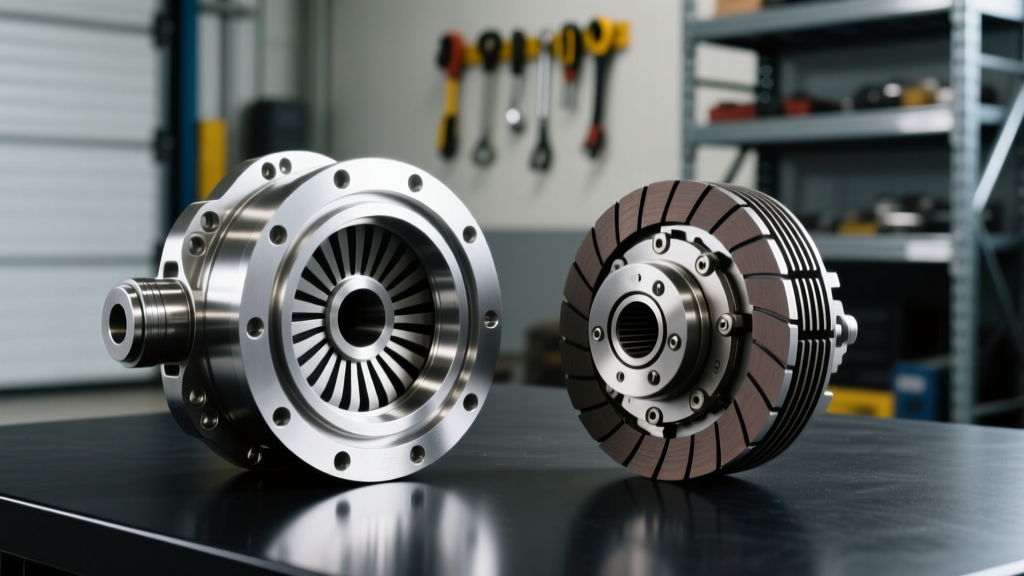
To understand how a highly optimized automatic setup compares to a dedicated manual transmission, we must look at the raw data. Below is a technical comparison between a premium 304mm billet torque converter 6L80 setup and a high-performance twin-disc dry manual clutch (e.g., McLeod RXT or B&M equivalent) in a 700-horsepower application.
| Metric | Billet Torque Converter 6L80 (304mm) | Twin-Disc Manual Clutch (Dry) |
|---|---|---|
| Torque Capacity | 850 - 1,000 lb-ft (TCC Lockup) | 1,000 - 1,200 lb-ft |
| Launch Multiplication | 2.0:1 to 2.4:1 (Hydraulic) | 1:1 (Mechanical) |
| Parasitic Loss (Cruising) | Near 0% (Locked TCC) | 0% (Fully Engaged) |
| Heat Generation (Stop-and-Go) | High (Fluid Shear in Stator) | Extreme (Friction Material Slippage) |
| Primary Failure Symptom | TCC Slip / Shudder / P0741 Code | RPM Flare / Burnt Clutch Odor |
| Average Replacement Cost (2026) | $1,100 - $1,600 (Drop-in Unit) | $1,800 - $2,500 (Plus Machining) |
While the manual clutch holds a slight edge in raw static torque capacity and zero parasitic loss, the billet 6L80 torque converter dominates in launch efficiency and streetability, effectively bridging the gap between automatic convenience and manual-like lockup response.
Symptom Diagnostics: Scan Tool Data and Failure Modes
As transmission specialists, diagnosing power delivery issues requires looking beyond physical sensations and diving into OBD2 PID data. The symptoms of a failing billet TCC versus a slipping manual clutch manifest entirely differently on a scan tool.
Diagnosing TCC Slip in the 6L80
When a billet torque converter's internal seals or friction materials begin to fail, the 6L80's Transmission Control Module (TCM) detects a discrepancy between engine speed and turbine speed. To diagnose this, monitor the following PIDs via a bi-directional scan tool:
- TCC Slip Speed: Calculated as Engine RPM minus Turbine Speed (Input Shaft RPM). During commanded lockup in 5th or 6th gear, slip should be within +/- 20 RPM. Sustained slip > 100 RPM indicates internal seal blow-by or friction material failure.
- TCC PWM Duty Cycle: If the TCM detects slip, it will aggressively ramp up the PWM duty cycle to 100% in an attempt to force lockup. If slip persists at 100% duty cycle, the hydraulic circuit is compromised.
- Transmission Fluid Temperature (TFT): Excessive TCC slip generates immense heat. A TFT reading consistently exceeding 220°F (104°C) during highway cruising is a definitive symptom of a failing TCC lockup mechanism.
Manual Clutch Slip Symptoms
Conversely, a manual clutch lacks electronic oversight. The primary symptom is an uncommanded RPM flare under heavy load (e.g., pulling a grade in 4th gear) without a corresponding increase in vehicle speed. Because there is no fluid to absorb and dissipate this energy, the kinetic energy converts directly into thermal mass, rapidly glazing the ceramic or Kevlar friction discs and warping the chromoly flywheel.
Installation Realities: Torque Specs and Clearances
Whether you are installing a billet torque converter into a 6L80 or a twin-disc clutch onto an LT1 crankshaft, precision is non-negotiable. Improper installation will destroy either system within miles.
6L80 Billet Converter Installation Specs
When mating a billet torque converter to the 6L80, verifying pump engagement is critical. The converter must fully seat into the transmission oil pump gears. You should feel three distinct 'drops' or clicks as the converter passes through the turbine splines, the stator support, and finally into the pump drive gear. Failure to fully seat the converter will result in immediate pump destruction upon engine start.
- Flexplate to Torque Converter Bolts: M10 x 1.5mm. Torque to 46 lb-ft (62 Nm) using medium-strength threadlocker (e.g., Loctite 243). Ensure the billet cover pads are perfectly aligned to avoid inducing runout.
- Transmission to Engine Block Bolts: M12 x 1.75mm. Torque to 37 lb-ft (50 Nm). Use a straight edge to verify the bellhousing alignment; excessive dowel pin misalignment will bind the input shaft and cause premature TCC drag.
- Fluid Capacity & Flush: The 6L80 requires approximately 11.2 quarts of Dexron ULV or Dexron VI (depending on the specific TCM calibration and aftermarket cooler volume). Always perform a fluid exchange after the initial 500-mile break-in period to remove microscopic friction material particulates.
Conclusion: Choosing the Right Coupling for Your Build
The decision between a manual clutch and an automatic transmission ultimately hinges on the vehicle's intended use case. For dedicated drag racing or track cars where weight reduction and absolute mechanical connection are paramount, a twin-disc manual clutch remains a viable option. However, for the modern street/strip build, tow rig, or daily-driven high-horsepower application, the automatic platform reigns supreme.
By upgrading to a billet torque converter 6L80 system, you effectively eliminate the historic weaknesses of hydraulic coupling. The rigid billet cover ensures shudder-free TCC lockup, delivering the instantaneous, 1:1 power transfer previously exclusive to manual clutches, all while retaining the invaluable off-the-line torque multiplication that only a fluid coupling can provide. Understanding the distinct failure symptoms, diagnostic data, and installation requirements of these systems is the key to building a reliable, high-performance drivetrain in 2026 and beyond.
For further technical documentation on torque converter clutch systems and hydraulic circuit diagnostics, consult the Sonnax Technical Resources library or review industry standards published by the Automatic Transmission Rebuilders Association (ATRA). Premium billet converter manufacturing standards can also be explored via industry leaders like Circle D Specialties.