As automotive transmission engineers who spend our days analyzing torque converter slip in a GM 6L80 or gear mesh friction in a ZF 8HP70, we often look at micro-mobility—specifically bicycles and e-bikes—as fascinating case studies in raw mechanical efficiency. While an automotive powertrain manages hundreds of horsepower and thousands of pound-feet of torque, a bicycle drivetrain operates on a razor-thin margin of human wattage or battery capacity. In both worlds, the enemy of efficiency is parasitic loss. For the everyday rider or e-bike commuter, mastering the art of cleaning bicycle drivetrain components is the single most effective way to maximize mechanical efficiency and improve what we can call two-wheeled 'fuel economy.'
The Physics of Parasitic Loss: Automotive vs. Bicycle
In automotive engineering, parasitic loss refers to the power consumed by the drivetrain itself before it reaches the wheels. This includes fluid churning in the differential, bearing friction, and gear mesh resistance. If you neglect to change the 75W-90 synthetic gear oil in your rear differential, metal particulates and degraded fluid increase drag, directly reducing your vehicle's miles per gallon (MPG).
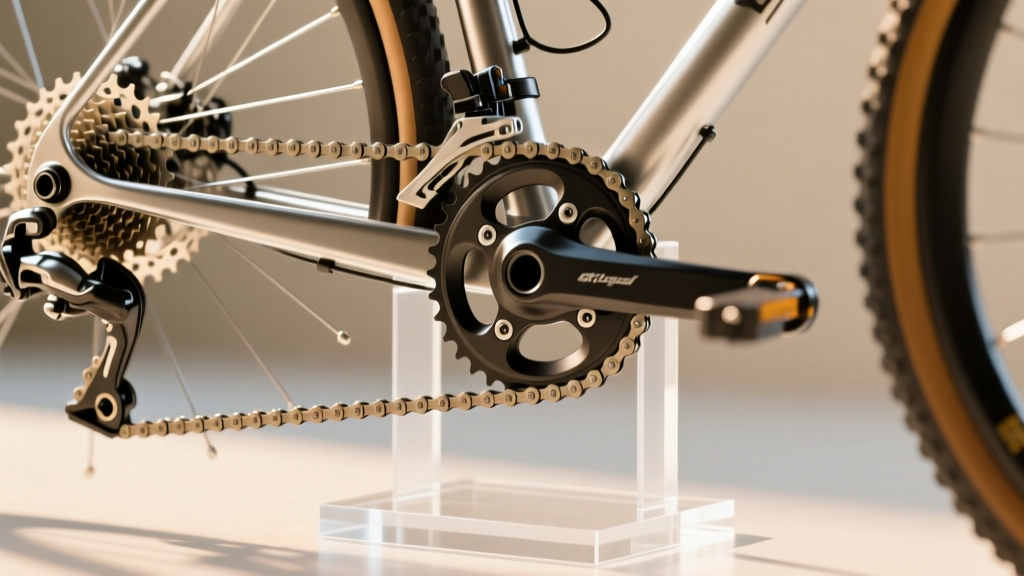
The exact same thermodynamic principles apply to a bicycle. When it comes to cleaning bicycle drivetrain systems, you are actively fighting articulation friction. A standard 11-speed or 12-speed bicycle chain consists of over 100 individual moving pivot points (inner plates, outer plates, pins, and rollers). When road grit, silica dust, and old lubricant mix, they form a black, abrasive paste. This paste acts as a lapping compound, increasing the coefficient of friction at every single link. According to extensive dynamometer testing by CeramicSpeed's Friction Facts, a heavily soiled chain can consume 8 to 12 watts of power at a standard 250W rider output. That represents a 3% to 5% drop in pure mechanical efficiency—simply because the chain is dirty.
Defining 'Fuel Economy' on Two Wheels
Because bicycles don't burn gasoline, how do we define fuel economy? In the micro-mobility sector, fuel economy is measured in two distinct ways depending on your propulsion source:
- Human-Powered (Acoustic) Bicycles: Measured in caloric efficiency and wattage transfer. A 5-watt loss to chain friction means you must output 255 watts to maintain the same speed that a clean drivetrain would achieve at 250 watts. Over a 100-mile century ride, this equates to burning hundreds of extra calories and experiencing premature muscular fatigue.
- E-Bikes (Pedelecs): Measured in Watt-hours per mile (Wh/mi) and total battery range. E-bike 'fuel economy' is directly tied to battery capacity.
Drivetrain Efficiency & 'Fuel Economy' Impact Matrix
| Drivetrain State | Parasitic Loss (at 250W) | Human Efficiency Impact | E-Bike Range Impact (625Wh Battery) |
|---|---|---|---|
| Immaculate (Ultrasonic + Wax) | ~5 Watts (2%) | Baseline Optimal | Baseline (e.g., 65 Miles) |
| Moderately Dirty (Dry Lube + Dust) | ~8 Watts (3.2%) | Noticeable Fatigue on Climbs | -3 Miles Range |
| Heavily Soiled (Wet Lube + Grime) | ~12+ Watts (4.8%+) | Sluggish Acceleration | -6 to -8 Miles Range |
The Mid-Drive E-Bike Factor: Torque and Wear
The importance of cleaning bicycle drivetrain hardware is exponentially magnified if you ride a mid-drive e-bike. Unlike hub-motor e-bikes that apply power directly to the rear wheel, mid-drive systems (like the Bosch Performance Line CX or Shimano EP8) route both human and motor power through the chain. These motors routinely output 85 Nm (Newton-meters) of torque. When a chain is caked in abrasive grime, the combination of high motor torque and silica contamination accelerates wear on the chain pins and cassette teeth by up to 300%. This not only destroys expensive components but forces the motor to draw more current from the battery to overcome the mechanical resistance, severely degrading your electrical 'fuel economy.'
The Engineering Protocol: Step-by-Step Cleaning
To restore peak mechanical efficiency, we must look beyond a simple rag and spray bottle. Proper maintenance requires a systematic approach to solvent chemistry and mechanical agitation. For a comprehensive baseline, the Park Tool Drivetrain Cleaning Guide remains an industry-standard reference, but we will break down the engineering rationale behind each step.
Step 1: Bulk Grime and Solvent Selection
Begin by removing the bulk of the exterior grime using a stiff-bristled brush and a bio-degradable citrus degreaser. Warning: If your bicycle features an Internal Gear Hub (IGH) like the Rohloff Speedhub or Shimano Alfine 11, avoid harsh citrus solvents near the hub seals, as they can degrade the rubber O-rings and allow contaminant ingress into the sealed planetary gearset. Use OEM-approved mineral spirits or specific IGH cleaners in these scenarios.
Step 2: Ultrasonic Cavitation (The Deep Clean)
For the chain itself, surface cleaning is insufficient. The critical friction points are inside the microscopic gaps between the pin and the inner plate. Automotive machining shops use ultrasonic cleaners to clean fuel injectors; you can use a benchtop 40kHz ultrasonic cleaner for bicycle chains. Submerging the chain in a heated (60°C) solution of Simple Green or a dedicated ultrasonic degreaser for 10 minutes causes cavitation—microscopic vacuum bubbles that implode and blast grit out of the chain rollers. This restores the chain to bare metal, preparing it for optimal lubrication.
Step 3: Lubrication Chemistry (Wax vs. PTFE)
Once perfectly clean and dry, the choice of lubricant dictates future efficiency. Traditional 'wet' lubes containing Teflon (PTFE) suspended in petroleum carriers are sticky and attract dirt, creating a grinding paste over time. For maximum efficiency, the current engineering consensus favors paraffin wax emulsions or hot-melt waxes (like Molten Speed Wax or Silca Secret Chain Blend). These lubricants contain friction modifiers like Molybdenum Disulfide (MoS2) and Tungsten Disulfide (WS2). They dry completely hard, meaning zero dirt adhesion, keeping articulation friction at the absolute physical minimum.
Reassembly and Precision Torque Specifications
A common mistake beginners make after cleaning bicycle drivetrain parts is reassembling them without a torque wrench. In automotive applications, we use click-type torque wrenches to ensure CV axle nuts and flywheel bolts are seated correctly. Bicycles require the same precision, especially given the use of lightweight aluminum and carbon fiber components. Over-tightening can strip threads or crush carbon spiders; under-tightening leads to creaking and catastrophic failure under load.
Use a calibrated micro-click torque wrench (typically ranging from 2 Nm to 25 Nm) and adhere to the following manufacturer specifications:
- Cassette Lockring (Shimano HG / SRAM XD/XDR): 40 Nm. (Use a splined cassette tool and a breaker bar. Ensure the splines are fully seated to prevent rounding).
- Chainring Bolts (Standard M5 Steel): 12 to 14 Nm.
- Direct Mount Chainring (Shimano/SRAM 12-Speed): 5 to 7 Nm (Apply a drop of medium-strength blue threadlocker, such as Loctite 243, to prevent vibration loosening).
- Pedal Threads (M14x1.25): 35 to 40 Nm. (Always apply copper anti-seize compound to the threads to prevent galvanic corrosion between steel pedal spindles and aluminum crank arms).
Conclusion: Efficiency is a Discipline
Whether you are tuning a 10-speed automatic transmission for a heavy-duty truck or maintaining a 12-speed e-bike drivetrain for your daily commute, the physics of friction remain universal. By treating cleaning bicycle drivetrain maintenance as a precise engineering discipline rather than a chore, you eliminate parasitic loss, extend the lifespan of expensive cassettes and chainrings, and squeeze every possible mile out of your battery or your legs. Keep your pivots clean, your torque specs accurate, and your mechanical efficiency maximized.
For further reading on historical bicycle drivetrain mechanics and gear terminology, the Sheldon Brown Drivetrain Glossary remains an invaluable, time-tested resource for enthusiasts and engineers alike.