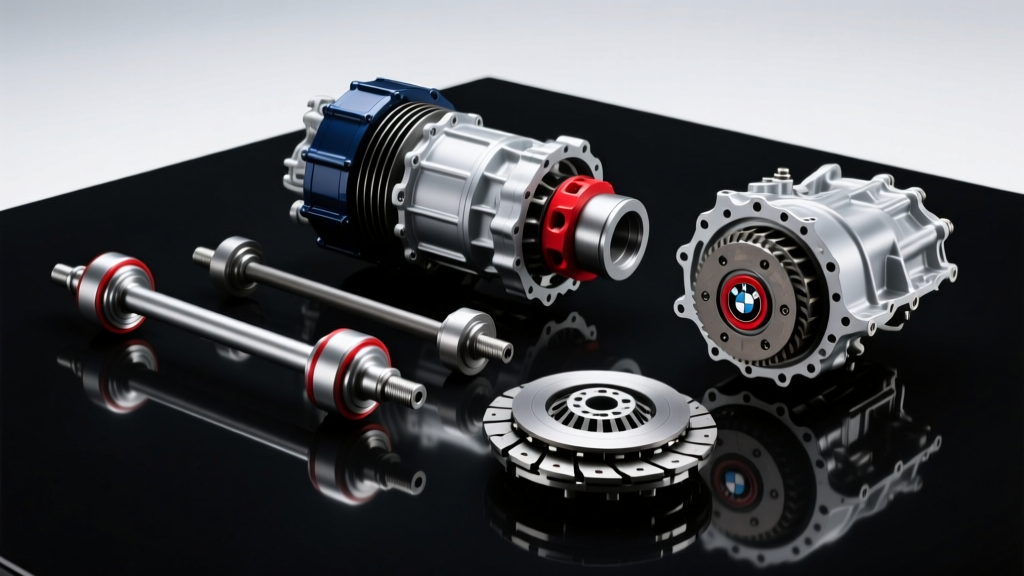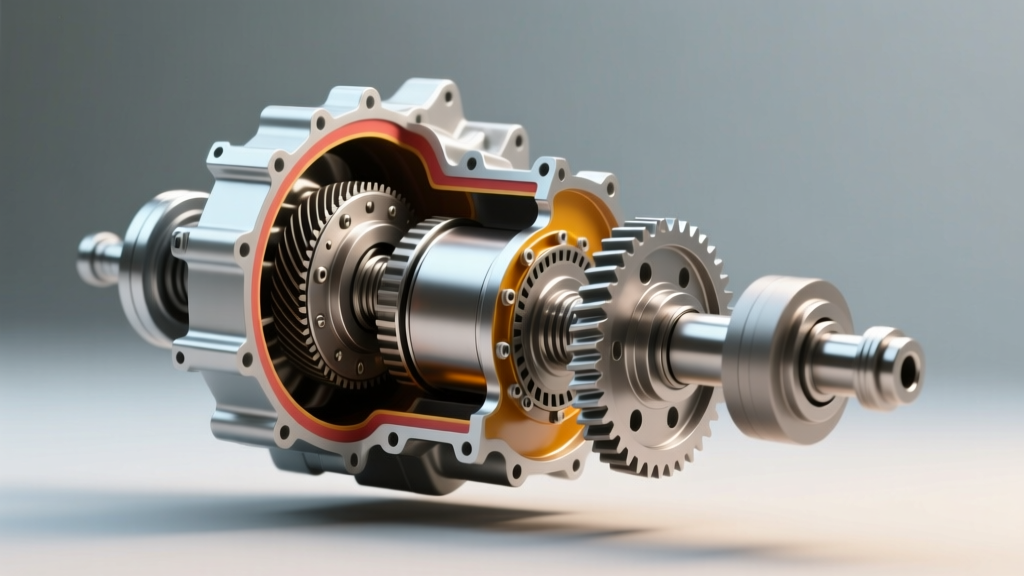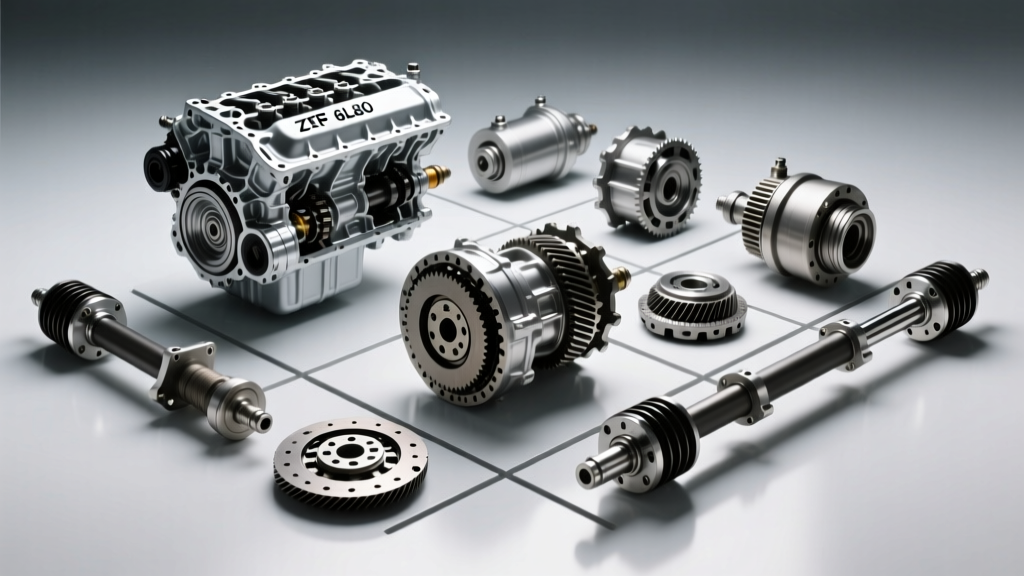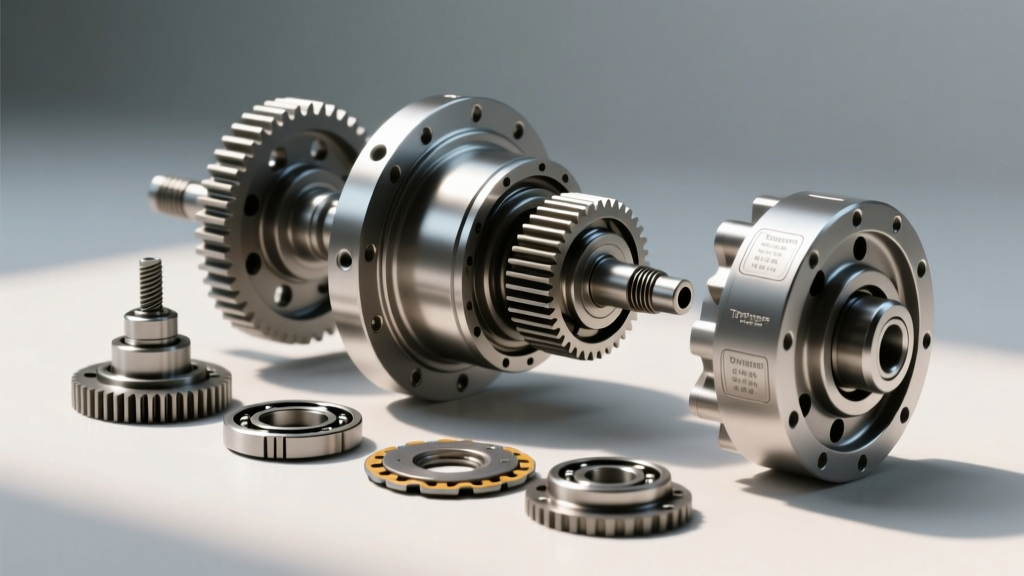
The Architecture of Modern 4WD Front Differentials
The front differential in a 4WD truck or SUV operates in one of the most punishing environments of any drivetrain component. Unlike the rear axle, which only manages longitudinal torque transfer, the front differential must route power through steering angles, articulate over uneven terrain, and engage via complex disconnect mechanisms. Whether you are maintaining a solid-axle Dana 44 in a Jeep Wrangler or an Independent Front Suspension (IFS) GM 8.25-inch unit in a Silverado 2500HD, understanding the precise engineering tolerances is critical for longevity.
As we move through 2026, the shift toward high-torque turbocharged and hybridized truck powertrains has placed unprecedented stress on front ring and pinion sets. The days of simply draining and refilling gear oil are over; modern 4WD front differential maintenance requires a proactive approach to bearing preload, gear metallurgy, and thermal management.
Solid Axle vs. IFS: Platform-Specific Vulnerabilities
Solid Axle Platforms (Dana 44, Dana 60, AAM 9.25)
Solid front axles, predominantly found in heavy-duty trucks like the Ram 2500 and Ford F-250, utilize a rigid housing that houses the differential carrier, ring gear, and pinion. The primary vulnerability here is the pinion seal and the steering knuckle u-joints. When a 4WD system is engaged on high-traction surfaces, the binding forces can snap standard 1310-series U-joints, sending shockloads directly into the differential carrier bearings.
IFS Platforms (GM 8.25, Ford 8.8, Ram AAM 9.25)
IFS differentials are mounted directly to the chassis or crossmember, utilizing CV axles to transfer power to the wheels. The most common failure point in these units is the internal actuator fork responsible for the Central Axle Disconnect (CAD). In GM trucks, the electronic actuator motor frequently suffers from moisture intrusion, leaving the front differential partially engaged. This causes severe binding, accelerated wear on the hypoid gears, and catastrophic CV axle failure.
Precision Setup: Backlash, Pinion Depth, and Preload
Setting up a front differential is not a task for guesswork. The hypoid gear design requires precise alignment to ensure the contact pattern centers on the drive and coast sides of the ring gear teeth. A deviation of just 0.002 inches in pinion depth can result in premature gear whine and eventual tooth shearing under load.
Below is a reference chart for two of the most common truck front differentials serviced in professional drivetrain shops. Always verify with the specific OEM service manual, as aftermarket gear ratios may dictate slight adjustments.
| Setup Parameter | Spicer Dana 44 (Solid) | GM 8.25 in. IFS |
|---|---|---|
| Ring Gear Bolt Torque | 70-90 ft-lbs (w/ Loctite 262) | 77 ft-lbs (w/ Loctite 242) |
| Backlash Specification | 0.006 in. - 0.010 in. | 0.005 in. - 0.009 in. |
| Pinion Bearing Preload (Used) | 15-25 in-lbs (Rotational) | 10-20 in-lbs (Rotational) |
| Carrier Bearing Cap Torque | 60-80 ft-lbs | 74 ft-lbs |
Expert Tip: Never reuse a crush sleeve to set pinion bearing preload. Always use a solid pinion spacer kit (available from manufacturers like Yukon Gear or Ratech). Solid spacers eliminate the risk of the sleeve over-crushing during heavy towing or off-road impacts, which would otherwise destroy your pinion bearing and ruin the pinion seal.
Crucial Tools for the Drivetrain Builder
To achieve the tolerances listed above, you must invest in the correct instrumentation. A standard half-inch drive torque wrench is useless for measuring pinion preload. Your toolkit must include:
- Inch-Pound Torque Wrench: Essential for measuring the rotational drag (preload) of the pinion bearings. A 0-100 in-lb dial or digital beam-style wrench is mandatory.
- Dial Indicator with Magnetic Base: Required for measuring ring gear backlash to the thousandth of an inch. Mount the base securely to the differential housing, not the axle tube, to prevent flex readings.
- Setup Bearings: These are carrier and pinion bearings that have been honed out slightly on a lathe. They allow you to press the bearings on and off by hand during the pattern-checking phase, saving hours of labor and preventing damage to the final production bearings.
- Gear Marking Compound: Use a high-contrast yellow or white compound specifically designed for hypoid gears to read the heel, toe, flank, and face contact patterns.
Lubrication Science and Thermal Management
The front differential in a 4WD system often runs hotter than the rear due to its proximity to the engine exhaust manifolds and the added friction of the CAD mechanisms. According to AMSOIL's technical tribology data, standard 80W-90 mineral oils suffer from severe viscosity shear under sustained high-load conditions, such as towing a 10,000-lb trailer up a 6% grade.
For modern trucks, a full synthetic 75W-90 or 75W-140 GL-5 rated gear oil is mandatory. The GL-5 designation ensures the presence of extreme pressure (EP) additives, typically zinc and phosphorus, which create a sacrificial boundary layer on the gear teeth to prevent metal-on-metal welding. If your front differential is equipped with a limited-slip differential (LSD) or a helical gear locker like the Eaton Truetrac, you must add the manufacturer-specified friction modifier to prevent chatter during low-speed turns.
Diagnosing Front Differential NVH (Noise, Vibration, Harshness)
Front differential noise is notoriously difficult to isolate because the sound travels through the solid chassis and steering linkage directly into the cabin. Use this diagnostic framework to pinpoint the failure before tearing down the unit:
- Drive-Side Whine (Under Acceleration): Indicates the pinion depth is too shallow, or the backlash is too tight. The contact pattern is riding too high on the tooth face.
- Coast-Side Whine (Deceleration): Suggests the pinion depth is too deep, or the backlash is excessive. The pattern is pushed toward the root of the tooth.
- Continuous Pitch-Whine (Speed Dependent): A classic symptom of pinion bearing failure. The rollers have developed brinelling (indentations) on the bearing race, often caused by a leaking pinion seal that allowed moisture contamination.
- Low-Frequency Rumble (Above 45 MPH): Usually points to worn carrier bearings or a mismatched gear set that was not lapped properly at the factory.
Heavy-Duty Upgrades: Lockers and Chromoly Shafts
If you are pushing your truck beyond factory GVWR limits or running oversized 35-inch+ tires on the trail, the factory open differential and standard carbon-steel axle shafts will become the weakest link. Upgrading the front end requires a holistic approach.
First, replace the open carrier with a selectable locking differential. The Dana/ARB Air Locker (such as the RD147 for the Dana 44) provides 100% torque biasing when engaged, but operates as a smooth open differential on the street, preventing the dangerous steering bind associated with automatic lunchbox lockers.
Second, upgrade the outer axle shafts to 4340 Chromoly steel. Factory shafts typically fail at the spline intersection near the steering knuckle. A high-quality 4340 Chromoly shaft from a reputable brand will yield up to 35% more tensile strength, allowing you to engage the front locker without instantly snapping the axle under heavy throttle.
The Economics of a Professional Rebuild
For fleet managers and DIY enthusiasts alike, understanding the cost breakdown of a front differential rebuild is essential for budgeting. As of 2026, a complete front differential overhaul for a standard 3/4-ton truck typically breaks down as follows:
- Ring and Pinion Gear Set (4.10 or 4.56 ratio): $280 - $450
- Master Rebuild Kit (Timken bearings, seals, shims): $160 - $220
- Solid Pinion Spacer Kit & Hardware: $45 - $75
- Synthetic Gear Oil & Additives: $60 - $90
- Professional Labor (Setup and Installation): $800 - $1,200
Attempting to save money by reusing old carrier shims or skipping the setup bearing tool will almost always result in a second teardown. The front differential is the steering and driving nexus of your 4WD truck; treat its internal geometry with the exact precision it demands, and it will deliver hundreds of thousands of miles of reliable torque transfer.