The Direct Answer: How Speed Sensors Dictate Shift Logic
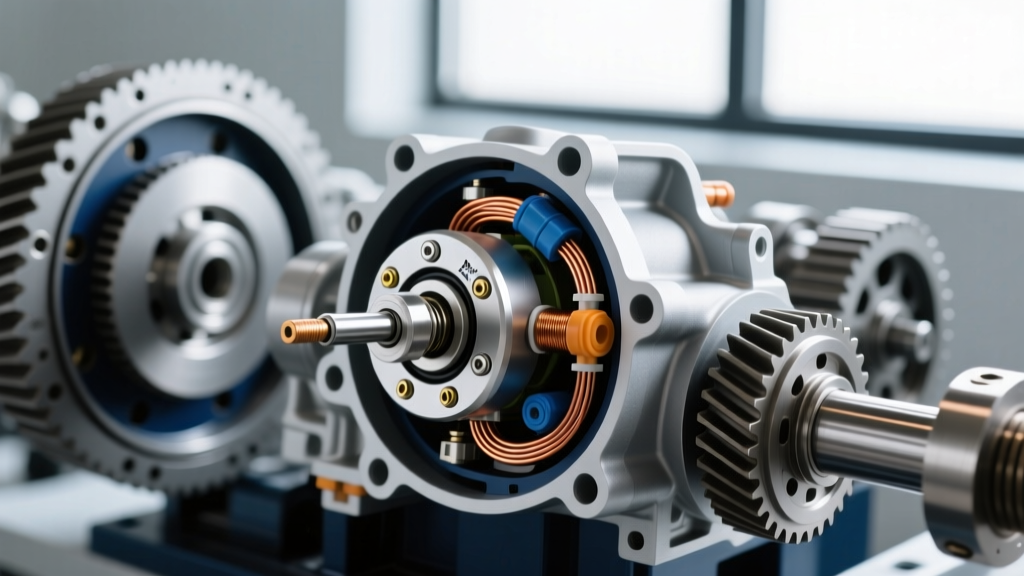
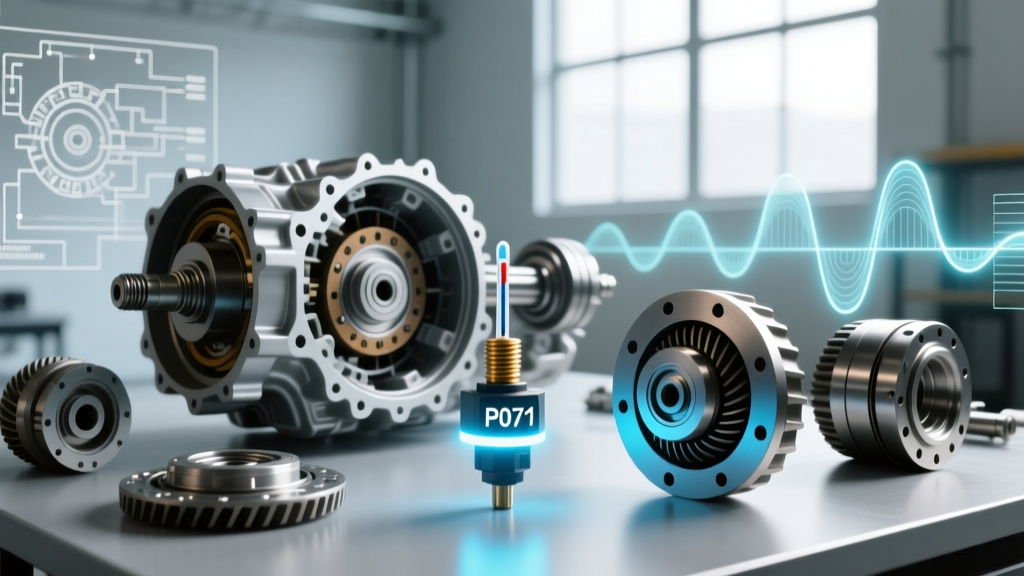
When drivers and technicians ask, "can a bad speed sensor cause transmission not to shift?" the definitive answer from a diagnostic standpoint is yes. Modern automatic transmissions no longer rely on mechanical governor pressure or vacuum modulators to dictate shift points. Instead, the Transmission Control Module (TCM) operates as a high-speed data processor, relying entirely on the Input Speed Sensor (ISS) and Output Speed Sensor (OSS) to calculate clutch slip, command shift solenoids, and regulate line pressure.
If either sensor drops its signal, experiences electromagnetic interference, or suffers internal thermal degradation, the TCM immediately aborts the shift schedule. Without knowing the exact RPM of the input shaft versus the output shaft, the TCM cannot calculate the slip rate. To protect the hardware from catastrophic friction material destruction, the TCM triggers a failsafe "limp mode," often locking the transmission in a single gear (usually 2nd or 3rd) and commanding maximum line pressure, resulting in harsh, jarring engagements and a complete refusal to upshift or downshift.
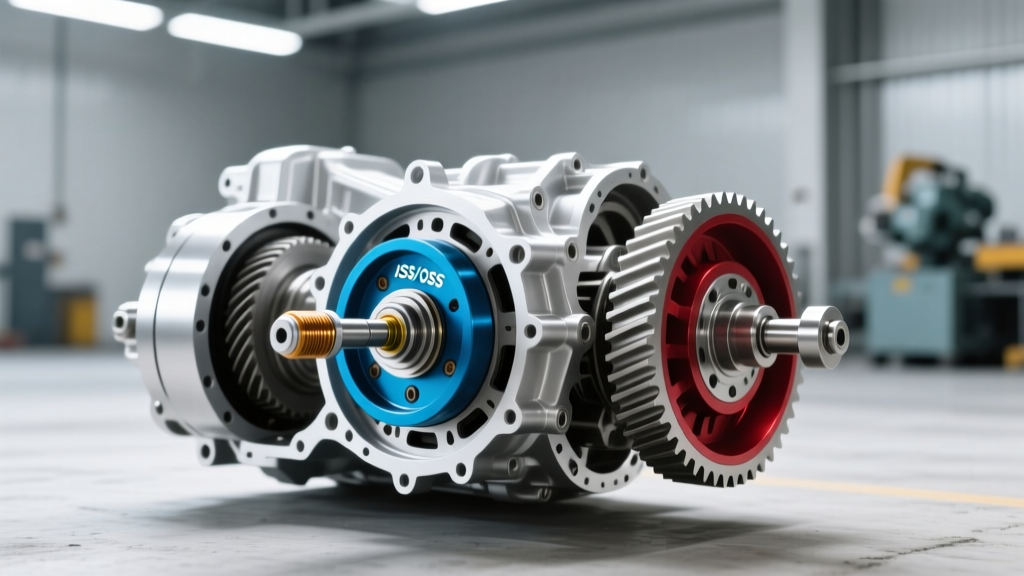
ISS vs. OSS: Understanding the Sensor Duo
To effectively diagnose transmission sensor and shifting problems, you must understand the distinct roles of the two primary speed sensors:
- Input Speed Sensor (ISS): Also known as the Turbine Shaft Speed Sensor, this reads the rotational speed of the torque converter turbine shaft. It tells the TCM exactly how much power is entering the transmission gearset.
- Output Speed Sensor (OSS): This reads the rotational speed of the transmission's output shaft or park gear. It is the primary metric the TCM uses to determine vehicle speed, shift timing, and Torque Converter Clutch (TCC) lockup scheduling.
The TCM continuously compares the ISS and OSS signals against the currently commanded gear ratio. If the TCM commands 3rd gear (a 1:1 ratio), and the ISS reads 2,500 RPM while the OSS reads 1,200 RPM, the TCM recognizes massive clutch slip. If the OSS fails entirely, the TCM assumes a mechanical failure or electrical fault and inhibits further shifting.
Sensor Failure Symptoms & TCM Failsafe Modes
Different transmission architectures handle sensor loss in unique ways. Below is a comparison of how popular transmission models respond to speed sensor failures, complete with common Diagnostic Trouble Codes (DTCs) and OEM part references.
| Transmission Model | Sensor Architecture | Common DTCs | Failsafe (Limp) Mode Behavior | OEM Part / Component |
|---|---|---|---|---|
| GM 4L60E / 4L80E | Variable Reluctance (VR) | P0722 / P0717 | Locked in 2nd or 3rd gear, max line pressure, speedometer loss | ACDelco 24207054 (OSS) |
| Ford 6R80 | Hall-Effect IC | P0720 / P0715 | Locked in 3rd gear, disabled TCC lockup, harsh shifts | Motorcraft 7L1Z-7M101-A |
| ZF 8HP45 / 8HP70 | Integrated Hall-Effect | P0716 / P0721 | Single gear lock, max clutch pressure, dash warning lights | ZF Mechatronic Conductor Plate |
| Chrysler 68RFE | Hall-Effect IC | P0720 / P0715 | Limp-in mode (locked in 3rd), no TCC lockup | Mopar 05179267AC |
For deeper code-specific troubleshooting, the OBD-Codes P0720 Reference provides excellent baseline definitions for output speed sensor circuit malfunctions across various OBD-II compliant vehicles.
Buyer’s Guide: OEM vs. Aftermarket Speed Sensors (2026 Market Snapshot)
When a speed sensor is confirmed dead, the next critical decision is sourcing the replacement. The market is flooded with options, but transmission electronics are highly sensitive to signal degradation.
The Case for OEM (Original Equipment Manufacturer)
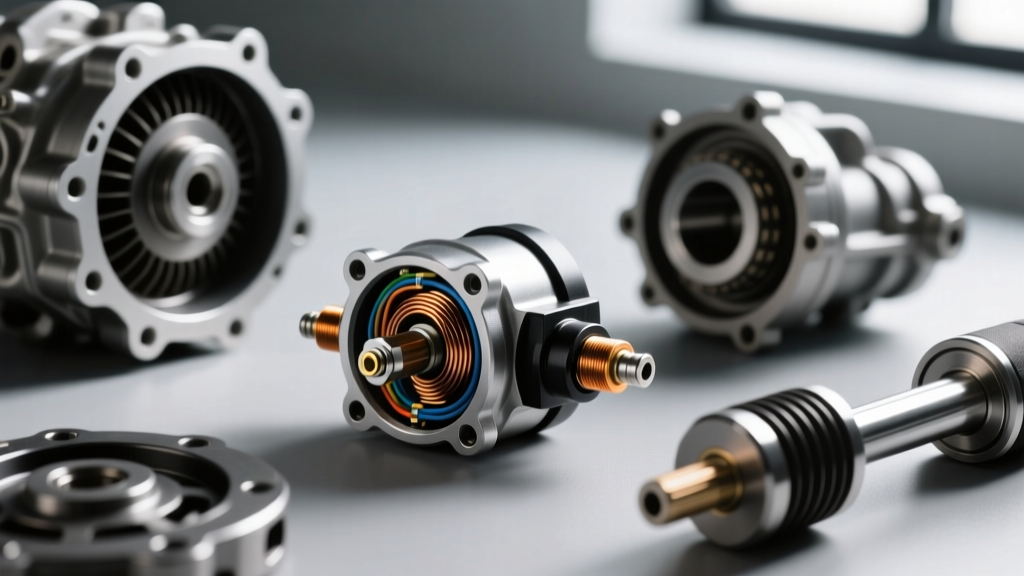
OEM sensors (ACDelco for GM, Motorcraft for Ford, ZF/Mopar for Chrysler) utilize high-grade rare-earth magnets and precision-wound stators or automotive-grade Hall-effect ICs. They are calibrated to operate reliably in transmission fluid temperatures exceeding 220°F (104°C). Pricing: $45 to $130 depending on the application.
The Aftermarket Gamble: Premium vs. White-Box
- Premium Aftermarket (Standard Motor Products / Intermotor, WVE): These are often reboxed OEM components or built to exact OE specifications. They are a safe, cost-effective alternative, typically pricing between $30 and $70.
- Economy / White-Box (eBay, Amazon no-name brands): Avoid these at all costs. Economy VR sensors often use weak ceramic magnets that lose their magnetic field strength when the transmission fluid reaches operating temperature. This results in an intermittent P0722 code that only appears after 30 minutes of highway driving. Replacing the sensor twice will cost you more in labor and fluid than simply buying the OEM part initially.
For comprehensive wiring and signal testing procedures before purchasing a replacement, the AA1Car Transmission Sensor Diagnostics guide remains an industry-standard reference for independent technicians.
Diagnostic Framework: Proving the Sensor is Dead
Do not throw parts at a no-shift condition. Speed sensors are frequently misdiagnosed when the actual culprit is a damaged wiring harness or a failing TCM. Follow this diagnostic sequence:
- Visual Inspection: On the GM 4L60E, the internal wiring harness that routes to the ISS and OSS is notorious for chafing against the valve body casting or the sun gear shell, causing a short to ground. On the ZF 8HP, check the external Mechatronic sealing sleeve for fluid leaks that can wick into the electrical connector and short the signal pins.
- Multimeter Testing (VR Sensors): Set your multimeter to Ohms. Disconnect the sensor and measure resistance across the two pins. A healthy 4L60E VR sensor should read between 1,400 and 2,000 Ohms at room temperature. If it reads infinite (open) or zero (shorted), the sensor is dead.
- Oscilloscope Testing (Hall-Effect Sensors): Back-probe the signal wire with the transmission in gear and wheels spinning. You should see a clean, square 0-5V or 0-12V waveform. If the square wave has rounded edges or drops out at specific RPMs, the sensor's internal IC is failing or the reluctor ring is damaged.
- The 5V Reference Check: If the TCM's 5V reference wire is pulled down to 0V when the sensor is plugged in, the sensor has an internal short and must be replaced.
Expert Diagnostic Tip: If your scan tool shows the OSS reading 0 MPH while the ISS reads 2,000 RPM in gear, but the vehicle is physically moving, you have a confirmed OSS failure or a stripped output shaft reluctor ring. Do not ignore the data PID stream.
Installation Realities: Torque Specs, Fluid Loss, and Hidden Costs
Replacing a speed sensor is rarely a simple "unbolt and swap" job. It requires dropping the transmission pan, which introduces fluid costs and specific torque requirements.
GM 4L60E / 4L80E Replacement
The OSS is located on the driver's side of the case, near the output shaft. You must drop the pan to access the hold-down bolt.
- Fluid Loss: Expect to lose 5 to 6 quarts of Dexron VI ATF. Budget $45–$60 for fluid.
- Torque Spec: The OSS hold-down bolt is small (usually M6). Torque to 8 Nm (71 lb-in)
- Crucial Step: Always install a new transmission filter and pan gasket while the pan is off.
ZF 8HP (Chrysler / BMW / Audi) Replacement
The speed sensors on the ZF 8HP are not standalone components; they are integrated directly into the Mechatronic unit's conductor plate. Furthermore, the transmission pan is made of plastic, and the filter is permanently welded to it.
- Fluid Loss: The entire system holds roughly 8.5 to 9.5 liters of ZF 8-Speed fluid (Shell M-1375.4 equivalent).
- The Hidden Cost: You cannot reuse the plastic pan. You must purchase the complete Pan/Filter assembly (OEM Part # 2411 7 624 192), which costs between $150 and $250.
- Torque Spec: The aluminum pan bolts are one-time-use stretch bolts. They must be torqued to 4 Nm (35 lb-in) plus a 45-degree turn, following a strict criss-cross pattern to prevent cracking the mechatronic housing.
For detailed architectural insights into these integrated sensor systems, review the ZF 8HP Technical Documentation provided by the manufacturer.
Final Verdict: Fixing the No-Shift Condition
A bad speed sensor will absolutely prevent a modern transmission from shifting, as the TCM refuses to command clutch apply without verified RPM data. By utilizing an oscilloscope to verify the failure, investing in OEM or premium aftermarket sensors, and adhering to strict torque specifications during installation, you can restore full shift logic and protect your drivetrain from secondary mechanical damage. Never ignore a P0720 or P0715 code; what starts as an intermittent sensor glitch will inevitably end in a stranded vehicle stuck in limp mode.